When you’re chasing violent storms, your engine determines whether you intercept or retreat. You’ll need high torque for rapid acceleration, thermal resilience for extended idling, and fuel efficiency for 500-mile repositioning runs. The 5.3L V8 consistently delivers across all three demands, balancing power output with reliability in flooded, muddy, and high-desert terrain. Your AWD system also depends heavily on engine capability to distribute torque effectively. There’s much more to uncover ahead.
Key Takeaways
- The 5.3L V8 engine balances horsepower and fuel efficiency, supporting long-range pursuits up to 500 miles between storm systems.
- High torque output enables rapid acceleration and sustained high-speed repositioning, essential for intercepting fast-moving storm systems.
- Robust cooling systems prevent thermal shutdown during prolonged high-RPM operation across extreme temperature ranges and conditions.
- AWD systems paired with strong torque output distribute power dynamically, maintaining momentum on flooded, muddy, and unstable surfaces.
- Engine reliability across violent storms, debris-laden air, and thermal shock risks is non-negotiable for storm chasing survival.
Why Engine Choice Makes or Breaks a Storm Chase
When you’re racing toward a rotating supercell or repositioning ahead of a fast-moving tornado, your engine isn’t just a mechanical component—it’s your lifeline. The wrong powerplant leaves you stranded, outpaced, or dangerously underpowered when conditions turn violent.
You need an engine that delivers instant torque for rapid acceleration, sustained horsepower for highway repositioning, and reliable output across extreme temperature ranges. Fuel consumption directly impacts your operational range—a thirsty engine forces unnecessary stops during critical intercept windows, costing you data and potentially your safety.
Consistent engine maintenance isn’t optional in storm chasing; it’s tactical preparation. A neglected cooling system or worn fuel injectors can fail precisely when you need maximum performance. Your engine choice defines your capability, your range, and ultimately, your survival margin in the field.
What to Look for in an SUV Engine for Storm Chasing?
Selecting the right SUV engine for storm chasing demands more than raw horsepower—you’ll need a precise combination of torque delivery, fuel efficiency, thermal resilience, and mechanical reliability.
Beyond interior comfort and aesthetic appeal, your engine must perform under brutal conditions where failure isn’t an option.
Beyond aesthetics, your engine must endure brutal conditions—because in storm chasing, failure is simply not an option.
Prioritize these critical engine attributes:
- High torque output: Ensures rapid acceleration and sustained power during high-speed intercepts
- Thermal resilience: Prevents overheating during extended idling or prolonged high-RPM operation
- Fuel efficiency: Extends operational range without compromising chase capability
- Mechanical reliability: Guarantees consistent performance across flooded roads, muddy terrain, and extreme weather exposure
Engines like the 5.3L V8 deliver this balance effectively.
You’re choosing freedom of movement—pick an engine that won’t surrender when conditions turn violent.
The 5.3L V8: Why Storm Chasers Keep Coming Back to It
When you’re running down a supercell at 90 mph, the 5.3L V8‘s balance of horsepower and fuel efficiency keeps you in the chase without constant fuel stops.
Its high-torque output lets you accelerate hard on highway on-ramps and maintain speed through crosswinds that would bog down smaller engines.
You’ll also count on it for the 500-mile repositioning drives between storm systems, where its proven reliability and reasonable fuel economy make the engine storm chasers consistently trust.
Power Meets Efficiency
How does an engine earn a cult following among storm chasers? The 5.3L V8 does it by delivering raw power without sacrificing fuel efficiency. You get relentless torque for high-speed intercepts and long-haul reliability when you’re pushing hundreds of miles through open terrain.
Consistent engine maintenance keeps it performing under brutal conditions, and its compatibility with aerodynamic vehicle profiles reduces drag during critical pursuits.
Here’s why storm chasers keep returning to it:
- Balanced power output sustains high speeds across unpredictable storm corridors
- Fuel efficiency extends operational range without frequent stops
- Strong torque handles heavy storm-detection gear without strain
- Vehicle aerodynamics paired with this engine optimize stability in violent crosswinds
You don’t compromise when storms don’t wait — the 5.3L V8 ensures you won’t have to.
High-Speed Chase Performance
Storm chasers don’t get second chances at intercept windows, and the 5.3L V8 makes sure you won’t need one. When a supercell accelerates unexpectedly, you need instant throttle response and sustained power delivery across varying speeds and road conditions.
The 5.3L V8 delivers that consistently. Its torque curve stays broad and accessible, letting you sprint from highway cruising to full pursuit without gear-hunting hesitation. Climate adaptation becomes critical here — this engine performs reliably whether you’re cutting through humid Gulf air or chasing drylines across high desert elevations.
Vehicle customization further amplifies its capability. Chasers routinely tune intake systems, exhaust configurations, and cooling components without sacrificing the engine’s core reliability. You’re not just chasing storms — you’re commanding a precision platform built for exactly this pursuit.
Long Haul Reliability
Chasing storms isn’t a sprint — it’s a multi-day, multi-thousand-mile campaign across unpredictable terrain. You need an engine that won’t quit when you’re 600 miles from the nearest dealership. The 5.3L V8 delivers exactly that — proven long-haul reliability that keeps you mobile and mission-ready.
Here’s why storm chasers trust it repeatedly:
- Engine maintenance intervals are extended, reducing downtime between deployments
- Consistent power output holds steady across elevation changes and extreme temperatures
- Vehicle customization options are vast, letting you tailor cooling systems and fuel management
Robust engineering minimizes catastrophic failure risks during sustained high-load driving.
You’re not just buying an engine — you’re investing in operational freedom. The 5.3L V8 earns that trust mile after grueling mile.
Top SUV Engines Ranked for High-Speed Storm Intercepts
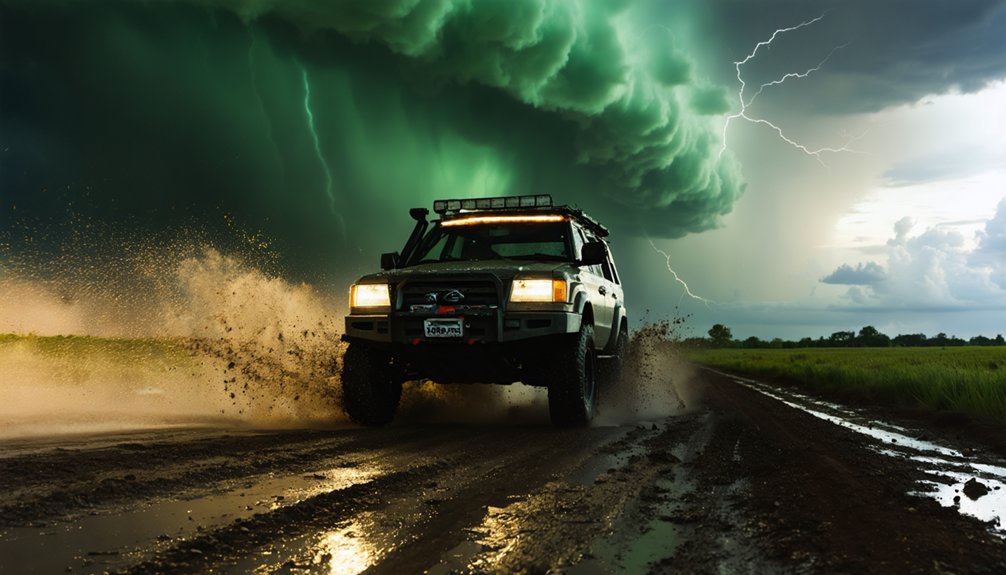
When selecting an SUV engine for high-speed storm intercepts, power delivery, reliability, and sustained performance under extreme conditions are your top priorities. You’ll want engines that deliver immediate torque without hesitation when a supercell demands rapid repositioning.
The 5.3L V8 remains a top-ranked option, balancing raw output with fuel efficiency during extended chases.
Toyota’s 4Runner drivetrain excels in multi-terrain responsiveness, while the Jeep Grand Cherokee’s powertrain handles aggressive acceleration across compromised roads.
Electric innovation is reshaping the field, with hybrid systems offering instant torque advantages, though emission standards and range limitations still challenge full adoption in remote intercept zones.
Prioritize engines with proven thermal management and consistent power curves — your safety and data collection depend on mechanical precision when conditions deteriorate rapidly.
Why Torque Matters More Than Horsepower When Hauling Gear
Hauling heavy storm-detection gear demands torque, not peak horsepower, because torque defines your engine’s rotational pulling force at low RPMs — exactly where towing and load-bearing stress occur. When you’re loaded with Doppler equipment and racing toward a supercell, engine tuning optimized for low-end torque keeps you moving without straining your drivetrain or wrecking fuel economy.
- High torque at low RPMs prevents transmission overworking under heavy loads
- Proper engine tuning shifts torque curves lower, maximizing pulling efficiency
- Better fuel economy results when torque delivery matches load demands precisely
- Vehicles like the Jeep Grand Cherokee’s 7,200-pound towing capacity leverage torque-first engineering
You need an engine built to pull hard immediately — not one that peaks at redline while your gear-laden SUV struggles through muddy storm corridors.
How AWD and Engine Power Work Together on Flooded Roads
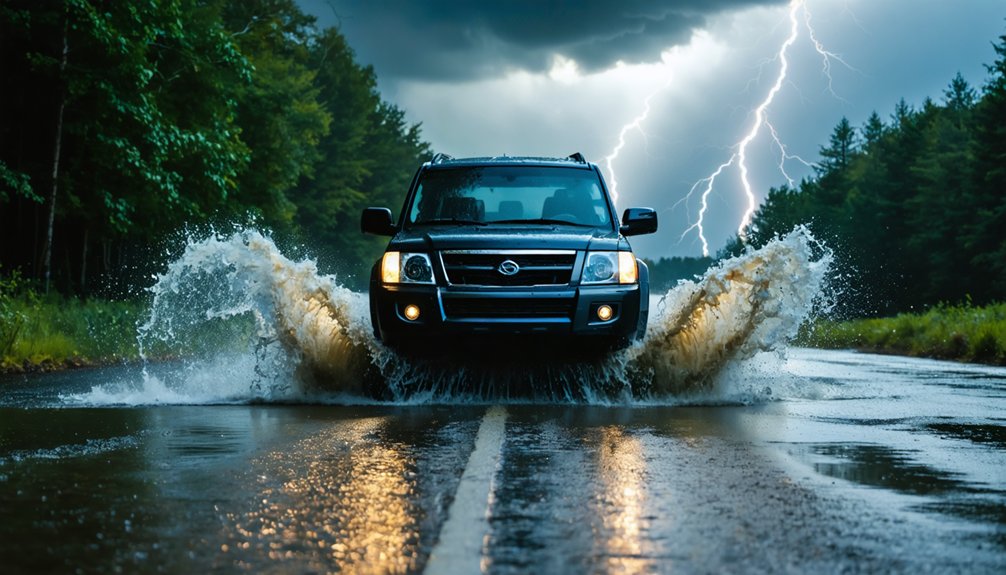
When you’re steering flooded roads, your AWD system continuously distributes torque to the wheels with the most traction, preventing wheel spin that can leave you stranded mid-chase.
Your engine’s power output must stay consistent under load, because water resistance against your tires demands immediate throttle response and sustained torque delivery.
The Ford Explorer’s advanced AWD system pairs directly with its engine management to maintain momentum on saturated surfaces, keeping you in control when conditions deteriorate fast.
AWD Traction On Floods
Flooded roads test every system in your SUV simultaneously, and that’s where AWD and engine power must work in unison to keep you moving. Engine maintenance becomes critical here — a poorly tuned engine loses torque precisely when you need it most. Weather adaptation isn’t optional; it’s survival.
Your AWD system distributes power dynamically across all four wheels, preventing wheel spin on submerged surfaces. Here’s what keeps you in control:
- Torque management redirects power instantly to wheels with traction
- Ground clearance determines how deep you can push through standing water
- Throttle response must stay smooth to avoid hydroplaning
- Differential locks maintain forward momentum when surfaces become unpredictable
Master these systems, and flooded roads become passable rather than impassable.
Engine Power Meets Water
Mastering flooded roads means understanding how your engine and AWD system operate as one cohesive unit rather than separate components. When water infiltrates your path, your engine’s torque output directly determines whether your AWD system can distribute power effectively across all four wheels.
Monitor your engine noise carefully — unusual sounds signal water intrusion into critical components, compromising performance when you need it most. Your cooling systems face amplified stress during flood navigation, as water splashing against hot engine components creates thermal shock risks that can trigger mechanical failures mid-chase.
The Ford Explorer’s AWD system actively reads wheel slip data and adjusts torque distribution within milliseconds, letting you maintain momentum through standing water. Keep your RPMs steady, protect your cooling systems, and let your drivetrain work the way it’s engineered to.
Fuel Efficiency vs. Raw Power: Which Actually Matters More?
Storm chasers constantly debate whether fuel efficiency or raw power matters more, but the answer depends on the mission profile. You’ll need raw power for rapid intercepts, but fuel conservation keeps you operational during extended pursuits.
Engine noise signals performance thresholds you can’t ignore when closing on a rotating wall cloud.
Consider these mission-critical factors:
- High-speed intercepts demand maximum torque output, prioritizing power over efficiency
- Long-range deployments require fuel conservation strategies to extend operational range
- Flooded terrain navigation needs controlled power delivery, not brute force
- Equipment payload increases fuel consumption, forcing efficiency compromises
The 5.3L V8 balances both demands effectively. You’re not choosing one over the other — you’re managing both simultaneously based on real-time storm dynamics and terrain conditions.
Best SUV Engines for Off-Road Storm Terrain
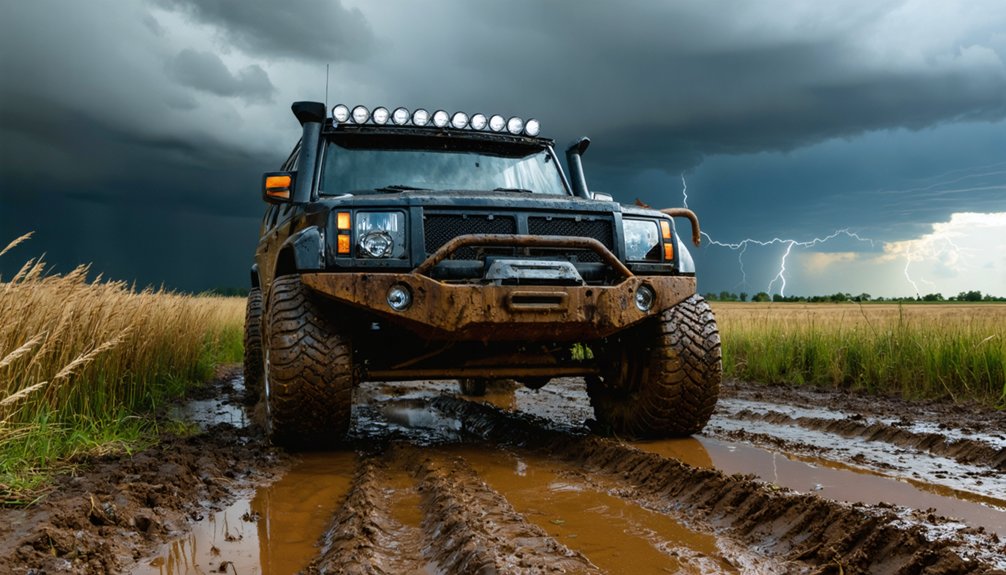
When you’re steering flooded washes, muddy approaches, and debris-strewn roads, engine selection directly determines whether you intercept the storm or get stranded chasing it. Toyota 4Runner’s Multi-Terrain Select system optimizes torque delivery across shifting surfaces, keeping traction consistent when conditions deteriorate fast.
The Jeep Grand Cherokee’s high-output V8 pushes through resistance that stops lesser platforms cold.
You’ll also want vehicle customization options that let you configure drivetrain settings and suspension response to match specific terrain demands. Don’t overlook interior comfort either—extended chase missions demand functional, organized cabins that reduce fatigue and keep your focus sharp.
Land Rover Defender’s terrain response system reads surface conditions and adjusts engine output automatically, giving you precise control without manual guesswork. Choose engines built for adaptability, not just raw acceleration.
Engine Specs That Keep You Safe When Storms Turn Violent
As conditions escalate from severe to violent, your engine specs stop being a preference and start being a survival variable. Engine noise becomes critical feedback — irregular sounds signal stress before your gauges react. Fuel additives maintain injector performance when debris-laden air compromises combustion efficiency.
Key specs that keep you operational when storms turn violent:
- High-torque output sustains acceleration through wind-resistance loads exceeding normal driving conditions
- Robust cooling systems prevent thermal shutdown during prolonged high-RPM pursuits
- Fuel additives stabilize combustion consistency in compromised atmospheric pressure zones
- Engine noise monitoring provides real-time mechanical feedback when dashboard sensors lag behind actual stress
Your engine isn’t just moving you — it’s your exit strategy. Spec it accordingly, maintain it relentlessly, and trust nothing less than peak mechanical reliability when violent weather demands everything your vehicle has.
Frequently Asked Questions
Can Storm Chasing SUV Engines Handle Saltwater Flooding Without Damage?
Your SUV’s engine won’t naturally handle saltwater flooding without damage. Saltwater corrosion can destroy components fast, so you’ll need engine waterproofing modifications to protect critical systems and maintain reliable performance during intense storm chasing operations.
How Often Should Storm Chasers Service Their SUV Engines Between Seasons?
Stay ahead of the curve—service your SUV engine every season. You’ll want to change engine oil every 5,000 miles, check tire pressure monthly, and inspect all systems before chasing begins.
Are Diesel Engines Ever Preferred Over Gasoline for Storm Chasing Vehicles?
Yes, you’ll find diesel advantages in torque and range valuable for long chases, but gasoline efficiency dominates most storm chasing SUVs, delivering faster throttle response and lighter powertrains you’d need for rapid, unpredictable pursuit maneuvers.
What Engine Modifications Do Professional Storm Chasers Most Commonly Install?
While stock engines seem capable, you’ll want upgrades: enhanced engine cooling systems prevent overheating during intense chases, while fuel efficiency tuners maximize range. Professional chasers commonly install performance exhausts, high-flow air intakes, and ECU remaps for optimized power delivery.
How Does Extreme Heat Affect SUV Engine Performance During Storm Chases?
Extreme heat strains your SUV’s engine cooling system, reducing performance and risking overheating. You’ll need heat resistance upgrades like reinforced coolant systems and high-performance radiators to maintain power output during intense, prolonged storm chases.
References
- https://crazystormchasers.com/reliable-storm-chasing-suvs-for-sale/
- https://crazystormchasers.com/best-vehicles-for-chasing-supercell-storms/
- https://www.reddit.com/r/stormchasing/comments/12ykc89/what_are_some_good_vehicles_to_go_storm_chasing/