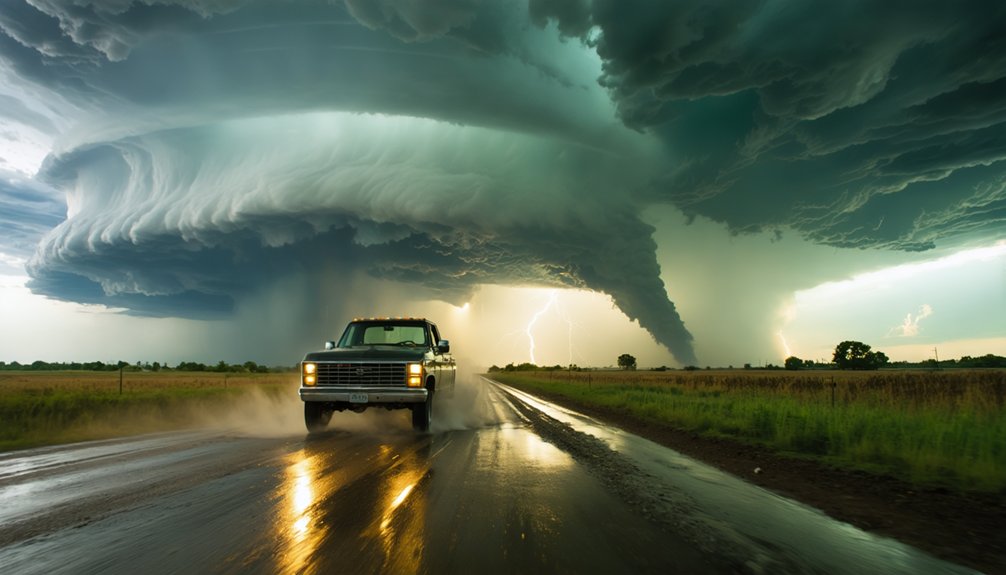
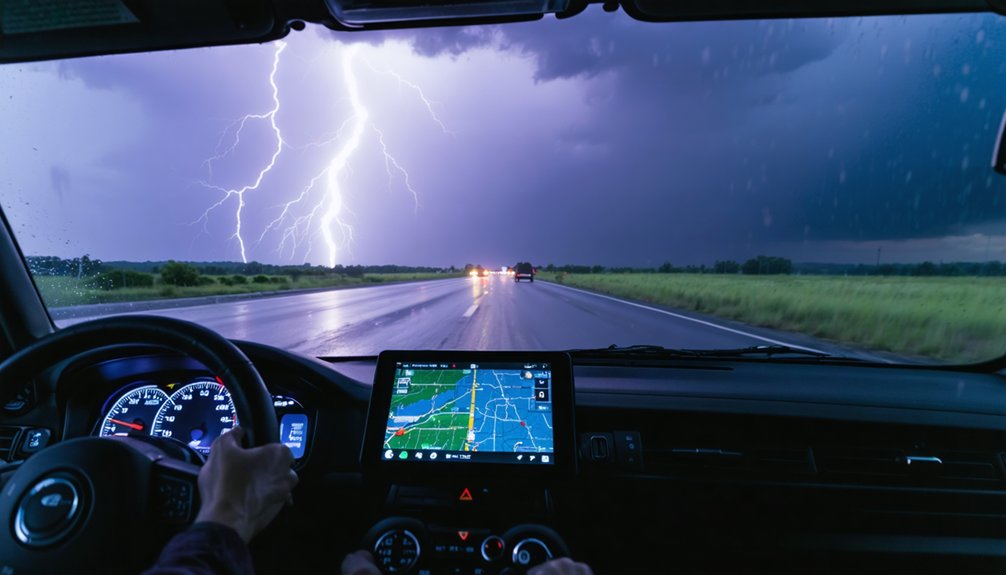
Tornado Alley puts you in the role of a storm chaser, tracking and intercepting severe weather systems at a price point of £11.99. You’ll navigate open roads, manage risk levels, and position your vehicle using real-time situational awareness. Storm behavior leans toward meteorological authenticity, though technical limitations like frame drops and texture pop-ins hold it back. It’s functional, lean, and best suited for methodical players who value atmospheric tension over production value — and there’s plenty more worth knowing before you decide.
Key Takeaways
- Players take on the role of a storm chaser, tracking and intercepting severe weather systems with real-time decision-making and adjustable risk levels.
- Storm realism relies on credible meteorological behavior, with dynamic visuals including funnel geometry, debris fields, and atmospheric lighting enhancing immersion.
- Vehicle handling is functional but inconsistent, with input lag and crosswind effects reducing precision during high-stress storm pursuit scenarios.
- Technical performance suffers during peak storm activity, with frame rates dropping below 30fps and texture pop-ins disrupting atmospheric continuity.
- Priced at £11.99, the game suits budget-conscious weather enthusiasts valuing atmospheric tension, though limited content and no multiplayer reduce long-term appeal.
How Does the Storm Chasing Gameplay Actually Work?
At its core, Tornado Alley Game positions you as a storm chaser responsible for tracking, intercepting, and observing severe weather systems across open terrain. You’ll monitor developing storm cells, reposition your vehicle along rural routes, and close distance on rotating supercells before conditions deteriorate.
Track. Intercept. Observe. Tornado Alley Game puts you behind the wheel, chasing severe weather across unforgiving open terrain.
The gameplay loop demands constant situational awareness — misjudge your approach angle and you’re outpaced or overwhelmed.
Weather accuracy appears central to the simulation’s identity, shaping how storm systems behave and escalate. Tornado formation follows a visible progression, giving you observable cues rather than arbitrary spawns.
The thrill factor emerges organically from that tension: you’re choosing risk levels freely, pushing closer or retreating based on real-time reads. Controls handle vehicle navigation and camera orientation, both critical when seconds determine safe positioning versus catastrophic exposure.
Does Tornado Alley Capture Real Storm Behavior?
Gameplay mechanics only matter if the underlying systems feel grounded, and that’s where Tornado Alley’s weather simulation faces its sharpest scrutiny. Storm realism hinges on whether tornado formation, movement patterns, and atmospheric conditions reflect credible meteorological behavior rather than scripted spectacle.
You’ll notice quickly whether the game respects supercell development or simply spawns funnels for dramatic effect. Weather accuracy matters here because it directly shapes your decision-making — route selection, approach angles, and escape timing all depend on predictable storm logic.
If the systems feel arbitrary, the simulation loses its core tension. Budget-tier releases like this often cut corners on dynamic weather modeling, so you should evaluate whether Tornado Alley delivers genuine atmospheric authenticity or relies on visual shorthand to suggest realism it hasn’t fully earned.
Does It Actually Feel Good to Drive?
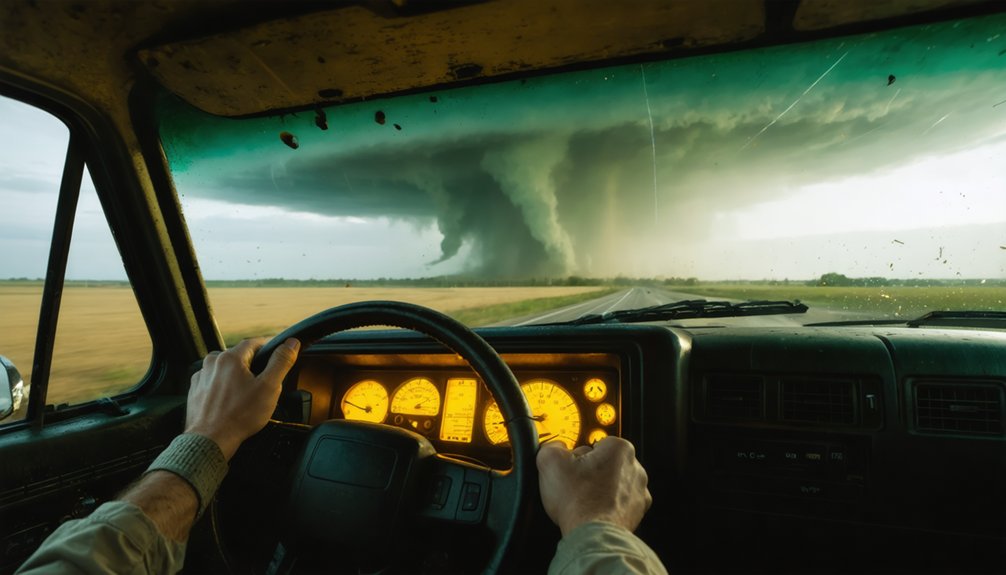
When you take the wheel in Tornado Alley, steering response becomes your first real test of the simulator’s mechanical credibility. You’ll notice quickly whether input lag, oversteer, or dead zones undermine your ability to intercept storm cells with precision.
Control comfort under high-speed pursuit conditions ultimately determines whether the driving loop feels purposeful or frustrating.
Vehicle Handling Feel
Driving in a storm-chasing simulator lives or dies on how the vehicle responds under pressure, and *Tornado Alley Game* delivers a handling model that’s functional but uneven. You’ll notice the vehicle physics feel competent on open roads, giving you enough control to reposition quickly when weather dynamics shift unexpectedly. Steering input registers without significant lag, and braking responds predictably on flat terrain.
However, the model loses consistency when conditions intensify. Crosswinds from approaching tornadoes don’t translate convincingly into vehicle behavior, breaking immersion at the exact moments tension should peak. Surface changes also expose stiffness in the suspension simulation.
You’re never fighting the controls outright, but you’re rarely rewarded with precision either. It’s a handling system that stays out of your way without actively enhancing the experience.
Steering Response Quality
Steering response is where handling feel becomes personal, and in *Tornado Alley Game*, it’s a mixed result. Control responsiveness varies depending on conditions — calm stretches feel tight, but near storm cells, input lag undermines precision.
Key observations worth noting:
- Deadzone sensitivity: Center-point steering feels slightly loose, reducing confidence during sharp course corrections.
- Weather accuracy impact: Wind-driven vehicle drift reacts inconsistently to actual storm proximity, breaking immersion.
- Speed-based feedback: High-speed turns lack progressive resistance, making rapid direction changes feel disconnected.
You’ll notice these issues most during active tornado pursuit, where split-second steering decisions matter. The core mechanics aren’t broken, but the responsiveness ceiling is clearly capped by budget-tier development constraints. If you demand precision handling, manage expectations accordingly.
Control Comfort Test
Beyond raw responsiveness, overall control comfort determines whether *Tornado Alley Game* actually rewards extended play sessions. You’ll notice quickly whether the control layout supports sustained chase sequences or fights against you during critical storm visualization moments.
Comfortable input mapping lets you track weather dynamics without cognitive friction — you’re reading the environment, not wrestling with buttons. Analog sensitivity, dead zones, and trigger feedback all shape how naturally you inhabit the storm chaser role. If these elements align, extended sessions feel intuitive and immersive.
If they don’t, fatigue sets in fast. The budget £11.99 price point doesn’t excuse poor ergonomic design — comfort is non-negotiable regardless of cost tier. Ultimately, control comfort separates a simulator worth returning to from one you abandon after a single session.
Is There Enough Content to Stay Interesting?
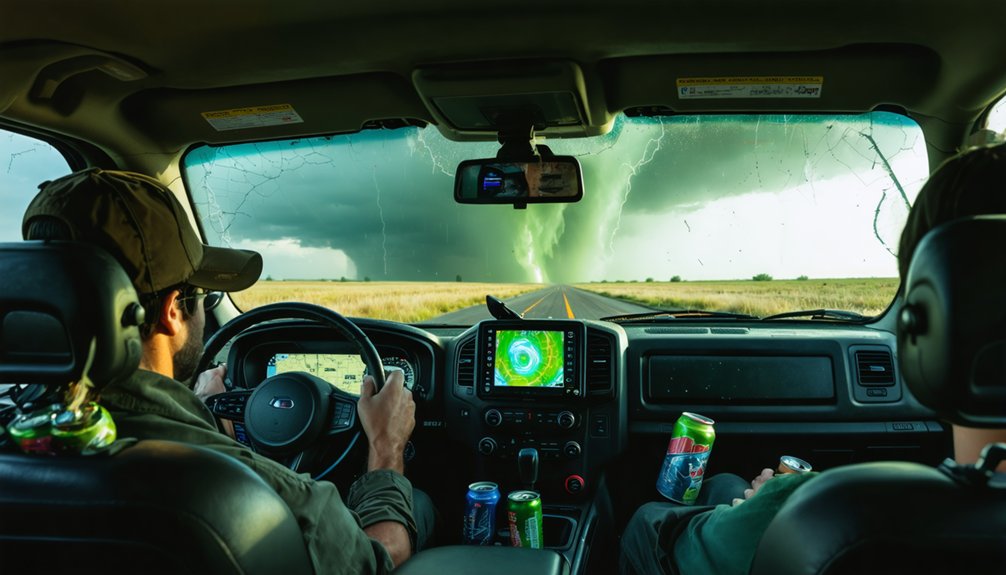
Whether a simulator holds your attention long-term depends almost entirely on content depth, and Tornado Alley raises some valid questions in that department. At £11.99, you’re not expecting AAA volume, but you still need enough mechanical variety to justify repeat sessions.
Key content factors worth evaluating include:
- Mission variety: Does the game diversify pursuit scenarios, or does every run feel structurally identical?
- Map scope: Limited geography accelerates fatigue faster than weak graphics quality or inconsistent sound design ever could.
- Progression systems: Without unlockables or escalating difficulty, replayability collapses quickly.
Your freedom to explore the simulation meaningfully depends on whether the developers built sufficient layers beneath the surface loop.
Early impressions suggest the content is functional but lean, which makes the budget price point its strongest ongoing justification.
Do the Storms Look and Run Well?
When you’re chasing storms in a simulation title, visual fidelity and frame stability aren’t optional extras—they’re core to the experience. You’ll want to assess whether the tornado formations render with convincing detail and whether the weather effects hold up under pressure without dropping frames.
At its £11.99 price point, you shouldn’t expect AAA-grade rendering, but consistent performance during peak storm sequences remains a fair technical benchmark.
Storm Visual Quality
Storm visuals carry a lot of weight in a chasing simulator—they’re not just backdrop decoration, they’re functional feedback. In Tornado Alley, weather realism depends heavily on how well the visual effects communicate storm intensity, rotation, and proximity.
You’ll want to assess three core visual benchmarks:
- Tornado rendering: Does the funnel geometry and debris field respond dynamically to storm progression?
- Atmospheric layering: Are cloud formations, lighting shifts, and precipitation visually distinct across storm stages?
- Performance stability: Do visual effects maintain frame consistency during peak storm activity?
Weak visual effects break immersion and undermine your situational awareness mid-chase. If the storm doesn’t read clearly on screen, your decision-making suffers.
Strong weather realism keeps you locked in and responding to genuine visual cues rather than guessing.
Performance During Storms
Visual fidelity means nothing if the engine can’t sustain it under load. When you’re driving into a wedge tornado with full visual effects active, frame stability becomes non-negotiable.
Storm simulations demand real-time rendering of particle systems, dynamic lighting, and layered atmospheric geometry simultaneously — that’s a significant processing burden.
If the engine buckles during peak storm activity, weather accuracy becomes irrelevant because you can’t read the environment clearly enough to react. Dropped frames during debris scatter or lightning strobing break immersion and impair decision-making.
On PS4, budget-tier simulators often struggle at these thresholds. You’ll want to assess whether the game maintains consistent performance precisely when stakes are highest — mid-chase, inside rotation, maximum visual load.
That’s the true performance test.
How Does the Storm Chasing Simulator Perform on Console?

Console performance is a make-or-break factor for simulators like this, and on PS4, the results are mixed. You’ll notice frame drops during intense storm sequences, which directly undermines game immersion when it matters most.
Console performance on PS4 is mixed — expect frame drops during storm sequences when immersion matters most.
Weather accuracy holds up visually, but the engine struggles to maintain stability under heavy particle loads.
Key performance observations on PS4:
- Frame rate: Dips below 30fps during active tornado rendering, disrupting pursuit precision
- Load times: Map transitions run longer than expected for a budget-tier title at £11.99
- Visual consistency: Weather textures occasionally pop in late, breaking atmospheric continuity
You’re not getting a locked, polished experience here. The simulator functions, but console optimization clearly wasn’t the priority.
If performance headroom matters to you, manage your expectations accordingly.
Is £11.99 a Fair Price for This Storm Chasing Simulator?
Performance issues noted, but they don’t automatically disqualify the £11.99 asking price — value depends on what that cost actually delivers. At this budget tier, you’re not expecting AAA production, but you do expect functional core mechanics.
Weather accuracy is the central measure here — if storm behavior feels arbitrary or visually unconvincing, the simulation premise collapses regardless of price.
Graphics style also factors in; a distinctive visual approach can compensate for technical limitations, giving the experience identity even at lower fidelity.
Storm-chasing simulators occupy a narrow market, meaning competition is limited and tolerance for imperfection is marginally higher.
If the gameplay loop holds together — tracking, intercepting, surviving — £11.99 represents a reasonable entry point.
If it doesn’t, no budget price fully justifies your time investment.
How Does Tornado Alley Compare to Other Niche Simulators?
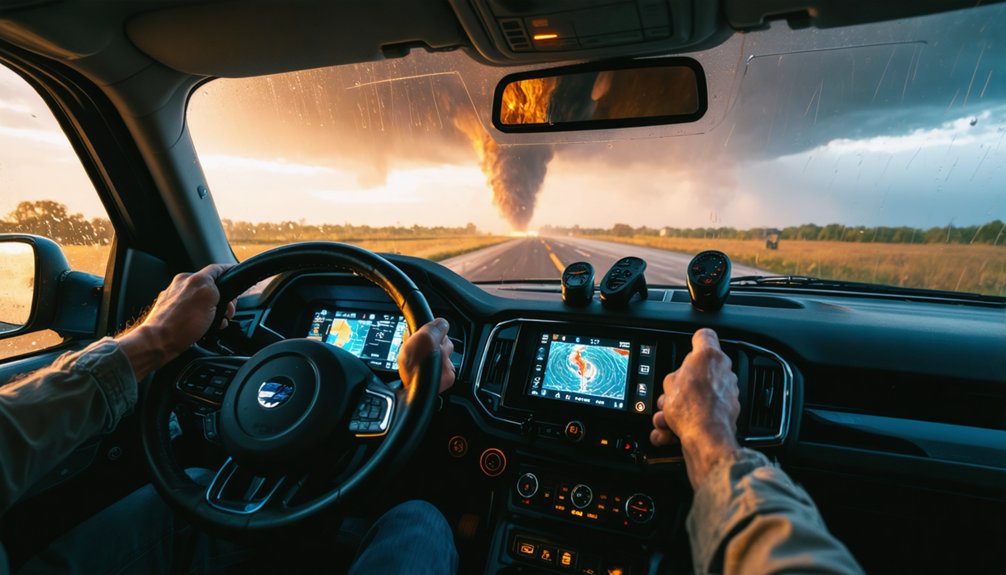
Storm-chasing simulators sit well outside the mainstream simulation market, which means Tornado Alley‘s closest competitors aren’t farming or trucking titles but a much thinner field of weather and disaster-focused games. Within that narrow field, you’ll notice that weather accuracy and gameplay depth become the defining benchmarks rather than fleet management or crop yields.
Storm-chasing simulators occupy a niche where weather accuracy and gameplay depth matter far more than mainstream benchmarks.
When you stack Tornado Alley against comparable niche titles, three distinctions emerge:
- Weather accuracy: Storm visualization and tornado behavior determine credibility against rival titles
- Gameplay depth: Mission variety and risk mechanics shape long-term engagement
- Budget positioning: At £11.99, it competes directly with other indie simulation releases
That thinner competitive field works in Tornado Alley’s favor. You’re not measuring it against industry giants—you’re measuring it against a smaller, more forgiving peer group.
Who Should Actually Buy Tornado Alley Game?
If you’re drawn to weather systems, atmospheric dynamics, or the procedural tension of route-planning under hazard conditions, Tornado Alley targets your interests directly. Its gameplay mechanics reward methodical decision-making over reflexive action, making it better suited for simulation-focused players than casual arcade audiences.
If weather accuracy matters to you, you’ll engage more critically with what the game attempts to model.
Budget-conscious players get reasonable value at £11.99, particularly on PS4, where niche simulator options remain limited.
However, if you prioritize high production quality, deep mission variety, or competitive multiplayer, this title likely falls short of your threshold.
You’re the right buyer if you value atmospheric tension, independent storm-chasing agency, and a low-cost entry point into a genuinely underserved simulation niche.
Frequently Asked Questions
Can Multiple Players Chase Storms Together in a Co-Op Mode?
0 confirmed co-op modes exist. You can’t currently team up for multiplayer gameplay in storm chasing sessions. Available data doesn’t verify cooperative features, so you’re steering tornado pursuit solo based on documented sources.
Is There an In-Game Tutorial for Beginners Unfamiliar With Storm Chasing?
Confirmed tutorial details aren’t available, but you’d typically expect gameplay tutorials covering storm chasing mechanics in simulators like this. If you’re a beginner, checking community guides or YouTube walkthroughs can supplement any in-game onboarding.
Does the Game Include Real-World Tornado Alley Locations and Maps?
Confirmed details on weather accuracy and map realism aren’t fully verified, but you’d expect real-world Tornado Alley locations to anchor the simulation, giving you authentic geographic freedom to chase across recognizable storm corridors.
Are There Any Post-Launch Updates or DLC Planned for the Game?
There’s no confirmed data on post-launch updates or DLC. You’ll want to monitor official channels, as expanded weather simulation zones or enhanced storm prediction tools could meaningfully broaden your freedom to explore future content independently.
What Accessibility Options Are Available for Players With Disabilities?
Available data doesn’t confirm specific accessibility options. You won’t find verified details on visual impairments support or customizable controls features. Check the official platform listing directly to identify what accessibility tools you can actually use.
References
* https://www.youtube.com/watch?v=0RZqRFr0t7Q