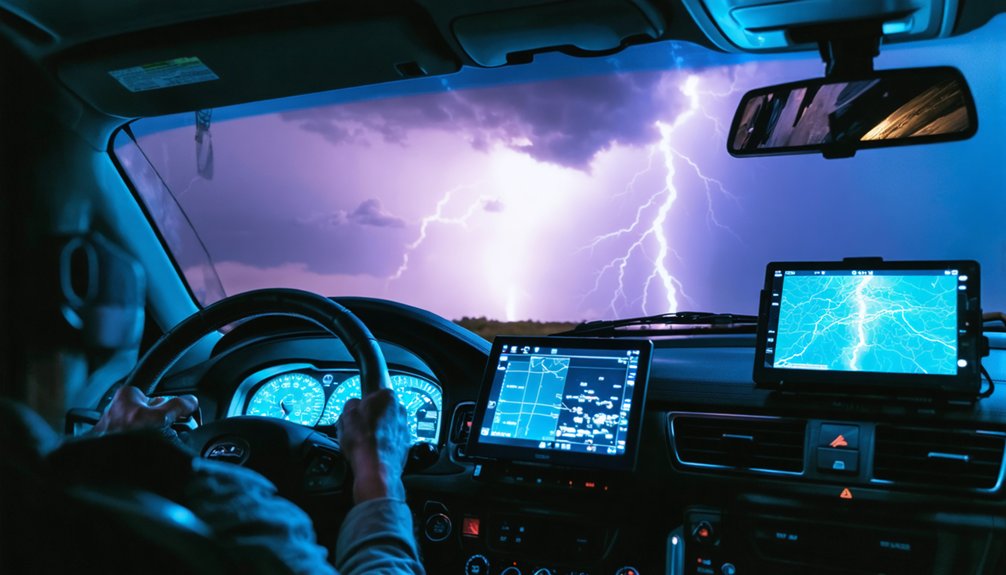
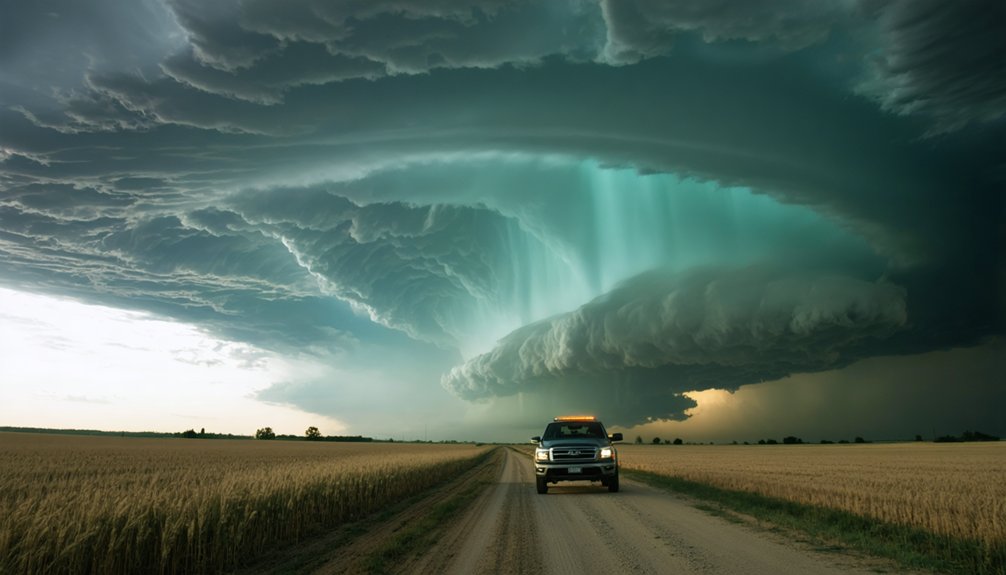
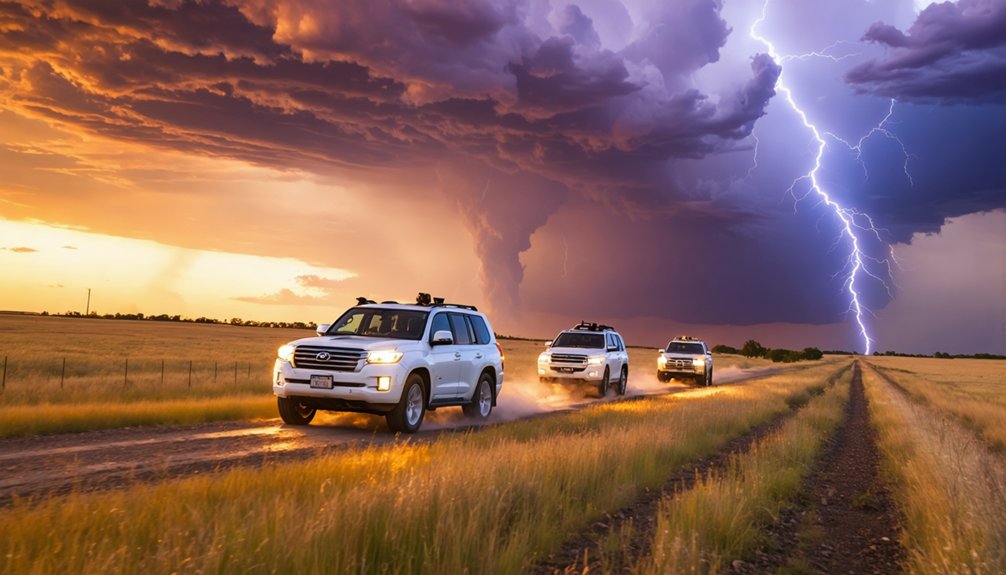
The 2026 tornado season has already logged 451 confirmed tornadoes by April 24, with activity front-loaded into March and early April rather than the traditional May peak. You’ll need to prioritize southern corridors through Texas, Oklahoma, and the Mid-South earlier than usual. April’s outbreaks—including an 80-tornado event on April 17–18—have rewritten conventional chase strategies entirely. The full tactical breakdown of where, when, and how to chase safely this season is ahead.
Key Takeaways
- The 2026 tornado season is front-loaded, with 451 confirmed tornadoes already logged by April 24, compressing peak activity into earlier months.
- Chasers should prioritize southern Plains and Mid-South corridors, targeting Texas, Oklahoma, Alabama, Mississippi, and Tennessee through May.
- The April 17–18 outbreak produced 80 tornadoes, disrupting conventional chase strategies and demanding earlier deployment windows.
- Additional hazards including golf-ball-sized hail, 70+ mph straight-line winds, and flash flooding require thorough equipment protection and exit route planning.
- Fast-moving storm systems demand proactive safety positioning, including pre-established escape routes and a hard east-bias exit strategy.
What the 2026 Tornado Forecast Actually Means for Chasers
Three core variables define the 2026 season for chasers: a near-average total tornado count, a front-loaded temporal distribution, and a La Niña exit that’s collapsing the frequency of classic synoptic setups.
With 451 confirmed tornadoes already logged by April 24, you’re watching storm patterns compress activity into March and early April rather than distributing it across a traditional May peak.
451 tornadoes by April 24—activity is front-loading fast, compressing what used to be a May-dominated season.
That compression matters for your deployment strategy. Tornado dynamics this season are favoring southern Plains and Mid-South corridors early, before the storm belt shifts north into Nebraska and Kansas by May.
You’re chasing a tighter window with fewer high-percentage days. The Enid EF4—170–175 mph winds across a 9.46-mile damage path—confirms violent events remain possible.
Plan accordingly, target precisely, and stay mobile.
Where to Target Tornadoes This Season and When to Go
Targeting this season demands a tiered geographic strategy built around the front-loaded temporal distribution already playing out in the data.
Through May, your chase strategies should prioritize the South and Dixie Alley tornado hotspots—Texas, Oklahoma, Alabama, Mississippi, and Tennessee—where peak activity windows run March through May. The April 17–18 outbreak‘s 80 confirmed tornadoes and the Enid EF4 confirm this corridor remains violently productive.
Once May hits, shift your operational focus north into the classic Plains belt—Kansas, Nebraska, and Missouri—where peak windows extend through June. The Midwest and Great Lakes become viable June targets.
You’re working a shrinking window in the South, so don’t hesitate. La Niña’s rapid exit means the front-loaded pattern won’t sustain itself indefinitely—move early, move decisively.
How April’s Violent Outbreaks Rewrote the 2026 Chase Calendar
April didn’t just deliver tornadoes—it dismantled every conventional assumption about how the 2026 chase calendar should unfold.
The April Outbreaks forced chasers to abandon standard Chase Strategies entirely.
Three data points that rewrote everything:
- April 17–18 produced 80 confirmed tornadoes, overwhelming standard positioning models across multiple regions simultaneously.
- NWS La Crosse issued 26 tornado warnings on April 17 alone—unprecedented since the office opened in 1995.
- Enid’s EF4 carved a 9.46-mile damage path with 170–175 mph winds during the April 22–24 outbreak.
You can’t apply May’s Plains-centric playbook to April’s front-loaded chaos.
Adjust your deployment windows earlier, prioritize southern corridors aggressively, and recognize that the season’s defining moments already arrived ahead of schedule.
Hail, Straight-Line Winds, and Flash Floods Chasers Must Plan Around
Tornadoes dominate the headlines, but hail, straight-line winds, and flash flooding will end your chase day faster and more decisively than any rotational threat.
In 2026, hail damage risks extend from southern states through the central United States, with golf-ball-plus stones capable of destroying your vehicle’s glass instantly.
Hail doesn’t care about your schedule — golf-ball-sized stones will shatter your windshield and end your chase instantly.
Wind patterns from straight-line outflow regularly exceed 70 mph, snapping trees and collapsing power lines across corridors you’re traversing.
Flood risks compound when repeated storm systems drop heavy rainfall in quick succession, turning rural escape routes into impassable waterways.
Your storm preparation must account for all three hazards before you leave.
Map your exit routes, protect your equipment, monitor stream gauge data, and never position yourself where terrain funnels water.
These threats kill chasers who underestimate them.
How to Position Yourself Safely During 2026’s Unpredictable Outbreaks
Positioning safely during 2026’s outbreaks demands a different mental framework than typical chase seasons, because the front-loaded, fast-moving pattern has compressed decision windows and reduced margin for repositioning errors.
Your safety protocols must account for violent, rapid-cycling storms like the EF4 that struck Enid with 170–175 mph winds across a 9.46-mile path.
Prioritize these chase logistics checkpoints:
- Establish escape routes before intercept — April’s fast-moving systems eliminate reactive planning.
- Monitor NWS warning velocity — La Crosse issued 26 warnings in a single day; warning density signals when you’re oversaturated.
- Set hard east-bias exits — 2026’s storms are outrunning westward repositioning attempts entirely.
You’ve got one margin. Don’t gamble it.
Frequently Asked Questions
What Equipment Do Storm Chasers Need for a Successful 2026 Season?
Like a soldier heading into battle, you’ll need weather radar, safety gear, GPS, dash cams, and communication devices to chase successfully in 2026’s fast, violent season featuring EF4-level storms reaching 175 mph.
How Do Storm Chasers Coordinate With Local Emergency Management During Active Outbreaks?
You’ll coordinate storm tracking by monitoring NWS emergency broadcasts, sharing real-time spotter reports via Spotter Network, and following local safety protocols. Contact county emergency managers before outbreaks—your ground-truth data directly supports their life-saving decisions.
What Licenses or Certifications Are Recommended for Professional Storm Chasers?
No universal license exists, but you’ll want first aid certification, a valid driver’s license, and weather spotter training. Master storm chasing ethics and safety protocols to operate responsibly and maintain your freedom in the field.
How Does La Niña’s Exit Specifically Affect Storm Chaser Photography and Documentation Opportunities?
Like a fading ember, La Niña’s exit shrinks your classic tornado-producing setups, directly cutting La Niña impacts on documentation chances. You’ll adapt your photography techniques toward shorter, sporadic windows rather than sustained outbreak opportunities.
What Communication Tools Help Chasers Stay Connected During Remote Plains Operations?
You’ll rely on satellite phones, radio communication, mobile apps, and social media to stay connected during remote Plains operations, ensuring you’re receiving real-time storm data and transmitting your documentation independently, regardless of cellular infrastructure limitations.
References
- https://www.ecoflow.com/us/blog/tornado-season-forecast-and-safety-prep
- https://www.iweathernet.com/tornadoes/2026_tornado_season
- https://www.youtube.com/watch?v=VuPkueBvGZM
- https://www.weather.gov/arx/apr1726
- https://en.wikipedia.org/wiki/Tornadoes_of_2026