Storm chasing tours give you direct access to live atmospheric data that no lab can replicate. You’ll measure wind speed, pressure gradients, temperature differentials, and humidity levels using instrumented vehicles and portable sensor arrays. Professional chasers guide your real-time decision-making while structured protocols guarantee systematic data collection. Top operators like Ultimate Storm Chasing Tours, Tempest Tours, and Tornadic Expeditions offer peak-season availability. Keep exploring to uncover everything you need to maximize your scientific experience in the field.
Key Takeaways
- Storm chasing tours offer direct access to real-time meteorological data, including wind speed, pressure gradients, temperature differentials, and humidity levels.
- Operators like Ultimate Storm Chasing Tours and Tempest Tours structure expeditions to align with peak storm seasons for maximum scientific exposure.
- Instrumented vehicles and portable sensor arrays enable hands-on data collection unavailable in controlled laboratory environments.
- Comprehensive safety training covers emergency procedures, radio communication, and vehicle positioning to ensure secure field operations.
- Last-minute openings from operators like Tornadic Expeditions provide budget-friendly opportunities for science enthusiasts to join active chase teams.
What Makes Storm Chasing Tours Worth It for Scientists?
Storm chasing tours deliver direct scientific value by putting you in the field alongside professional chasers who maintain meteorological data collection equipment, including radios and protective gear, during active weather events.
You’re not observing from a distance—you’re embedded in the operation, logging real-time atmospheric variables as conditions develop.
You’re not on the sidelines—you’re inside the storm, capturing atmospheric data as conditions unfold in real time.
This level of scientific collaboration gives you access to raw, unfiltered data that lab environments simply can’t replicate.
You’ll work within structured protocols designed for extreme weather, ensuring your data collection remains accurate and systematic even under rapidly shifting conditions.
Professional chasers guide your methodology, helping you interpret readings with precision.
For scientists who value autonomy and field-based inquiry, these tours convert passive interest into active research participation—without the logistical overhead of organizing an independent expedition.
The Best Storm Chasing Tour Operators to Book Right Now
Once you’ve committed to field-based data collection, selecting the right operator determines the quality of your access, equipment, and scientific output.
Tour operator comparisons reveal three strong options: Ultimate Storm Chasing Tours deploys from Oklahoma City and Denver during peak season, June through August. Tempest Tours operates out of Arlington with mid-July availability. Wild Photo Adventures, led by Brian Barnes, emphasizes professional-grade field teams.
For booking tips, prioritize operators offering immediate mid-July availability if you’re targeting peak convective activity. Tornadic Expeditions posts last-minute openings with discounts reaching several hundred dollars, giving you cost-efficient access without sacrificing data quality.
Each operator provides trained chasers, meteorological equipment, and emergency protocols. Match your scientific objectives to the operator’s deployment region and seasonal scheduling before committing.
Meteorological Data You’ll Collect on Every Storm Chasing Tour
Every tour you join puts you in direct contact with live meteorological data that most researchers only access remotely. You’ll measure core meteorological variables including wind speed, pressure gradients, temperature differentials, and humidity levels as storms develop in real time.
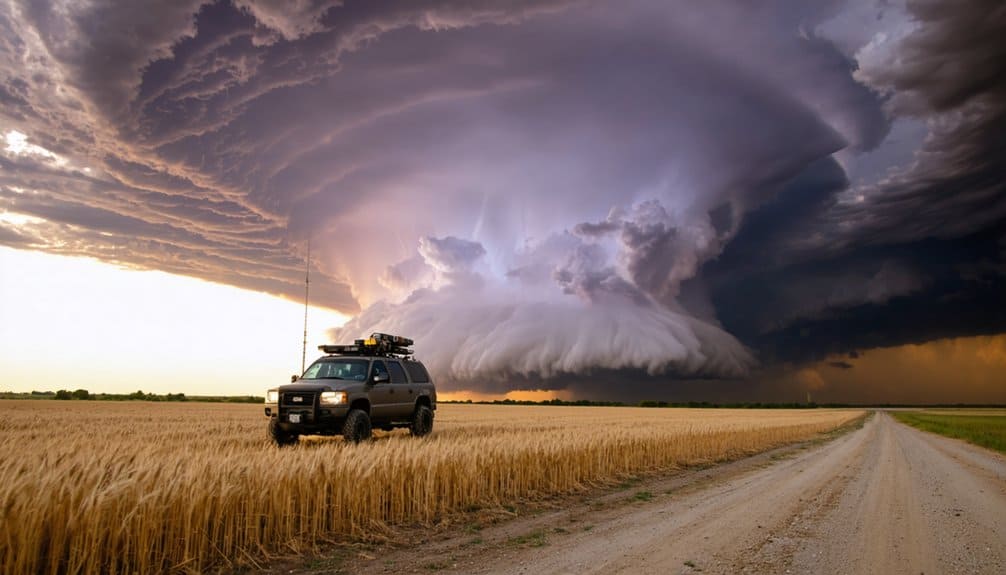
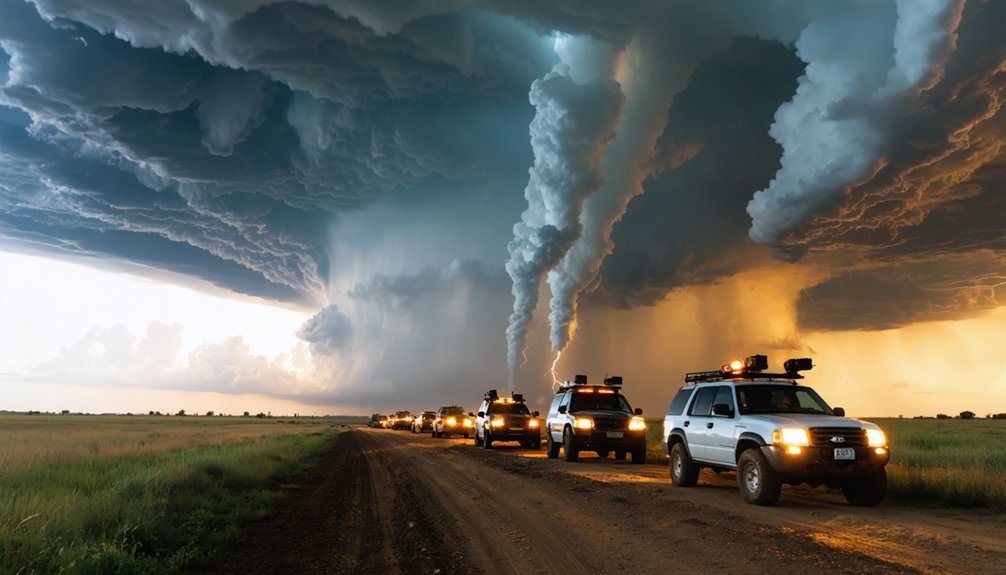
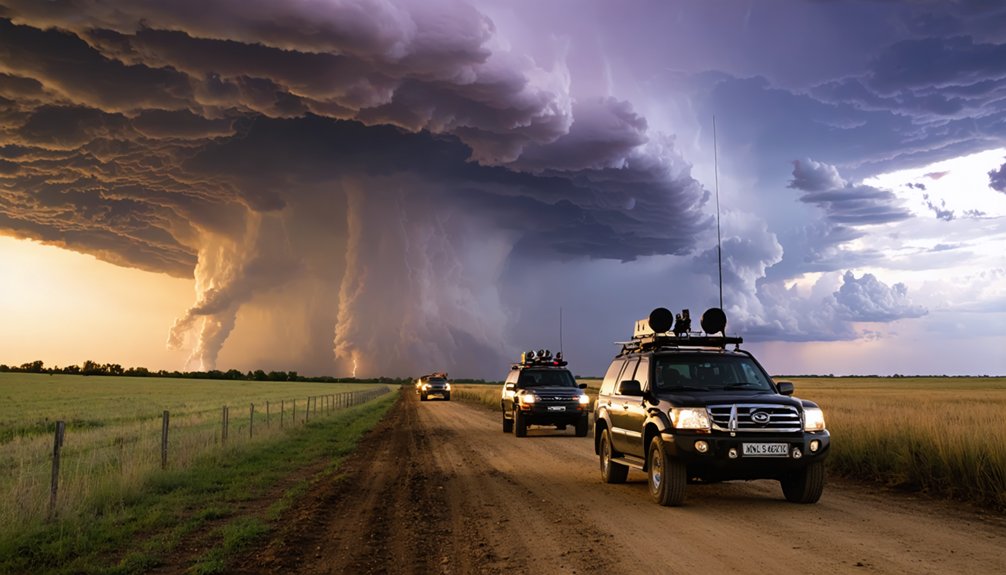
Professional chasers deploy instrumented vehicles and portable sensor arrays, giving you direct access to raw data streams. You’re not observing from a distance — you’re collecting from within the storm’s dynamic environment.
From instrumented vehicles to portable sensor arrays, you’re not watching the storm — you’re inside it, collecting raw data in real time.
That data feeds directly into post-chase data analysis, where patterns in tornadic formation and supercell structure become visible across multiple datasets.
You’ll leave each expedition with quantifiable records, not just visual memories. For science enthusiasts who demand hands-on engagement, this fieldwork produces the kind of granular atmospheric insight no classroom replicates.
Storm Chasing Tour Safety Training: What to Expect
Before you set foot near a supercell, world-class storm chasers walk you through a structured safety training protocol covering emergency procedures, equipment operation, and real-time decision-making under extreme weather conditions.
These training standards aren’t optional briefings—they’re operational requirements that keep you functional in the field.
You’ll learn radio communication protocols, vehicle positioning relative to storm vectors, and rapid egress procedures when conditions deteriorate faster than models predict.
Safety protocols cover protective gear usage, atmospheric pressure monitoring, and team coordination signals that eliminate guesswork during high-intensity situations.
Professional chasers drill you on reading visual storm indicators so you’re not dependent solely on instrumentation.
You’ll enter the field informed, equipped, and operationally prepared—maximizing your scientific data collection window while maintaining the situational awareness necessary to stay mobile and free.
How to Book a Last-Minute Storm Chasing Tour
Timing is everything when you’re chasing last-minute availability in tornado season. Tornadic Expeditions regularly posts last-minute deals with discounts of several hundred dollars, so monitoring their listings daily maximizes your options.
For booking tips, act fast — single-day openings with Ultimate Storm Chasing Tours out of Oklahoma City and Denver move quickly during peak season. Tempest Tours in Arlington also carries mid-July availability, giving you multiple operators to cross-reference simultaneously.
Set price alerts, bookmark operator booking pages, and check listings each morning during June through August. You’ll want flexibility in your schedule to capitalize on sudden openings.
Contacting operators directly often reveals unpublished availability. The data is clear: last-minute slots exist, but they reward those who stay proactive and move decisively.
Frequently Asked Questions
What Physical Fitness Requirements Must Participants Meet Before Joining Storm Chasing Tours?
The knowledge doesn’t specify fitness requirements, but you’ll need to pass a fitness assessment before joining. Storm safety protocols demand you’re physically capable of handling extreme weather conditions and emergency evacuations efficiently.
Are Storm Chasing Tours Suitable for Children or Minors With Scientific Interests?
The knowledge base doesn’t confirm minor participation policies. You’ll want to directly contact tour operators about family safety guidelines. However, if permitted, tours offer strong educational value through real-time meteorological data collection and scientific research exposure.
What Weather Conditions Will Automatically Cancel or Postpone a Scheduled Storm Chasing Tour?
Like a double-edged sword, safety protocols cut both ways—protecting you while limiting access. Weather forecasting data drives cancellation decisions; you’ll face postponements when tornado activity becomes unpredictably dangerous, lightning threatens proximity, or visibility drops below safe operational thresholds.
Can International Visitors Participate in American Storm Chasing Tours Without Special Permits?
You don’t need special permits for international eligibility on American storm chasing tours. Tour regulations primarily require valid identification and liability waivers. Contact operators like Tempest Tours or Ultimate Storm Chasing Tours directly to confirm your specific entry requirements.
What Personal Equipment Should Science Enthusiasts Bring on Storm Chasing Expeditions?
You’ll want to prioritize storm safety with layered weatherproof clothing, sturdy boots, and a personal first aid kit. Your equipment essentials should include a GPS device, notebook, portable charger, and sunscreen for extended field data collection sessions.
References
- https://www.stormtours.com
- https://extremetornadotours.com
- https://stormchasing4science.com/weeklong-chase
- https://www.reddit.com/r/stormchasing/comments/1hntxlv/2025_storm_chasing_tour_recommendations/
- https://www.stormchasing4science.com
- https://www.youtube.com/watch?v=4_TLvUz0pRU
- https://www.stormtours.com/information/tour-descriptions/
- https://www.silverliningtours.com
- https://www.youtube.com/watch?v=OVf2a1HzUQk
- https://www.severeweathercountry.com