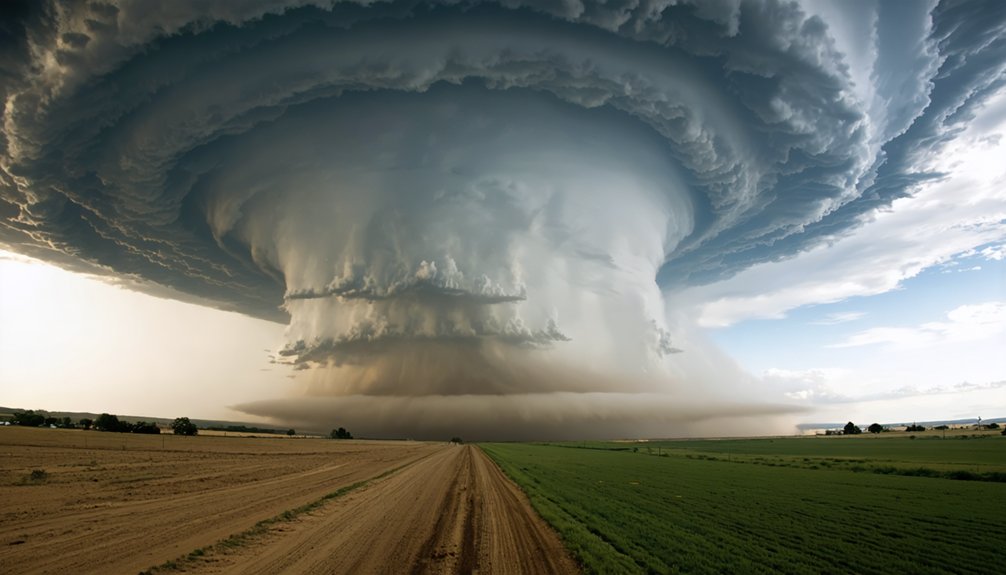
When you examine the data, climate change‘s link to worsening storms becomes clear. Rising sea surface temperatures above 82°F trigger rapid hurricane intensification, and a 1.8°F ocean temperature increase raises extreme storm frequency by 21%. Maximum hurricane wind speeds rose 19 mph between 2019 and 2023. Warmer air also holds 7% more moisture per degree of warming, driving 10-15% more rainfall. The full picture of what’s driving these trends goes much deeper.
Key Takeaways
- Warmer ocean surfaces above 82°F trigger rapid hurricane intensification, directly linking rising global temperatures to stronger, more destructive storm systems.
- Maximum hurricane wind speeds increased by an average of 19 mph between 2019 and 2023, reflecting climate change’s measurable impact on storm intensity.
- For every degree of warming, atmospheric moisture increases by 7%, causing tropical cyclones to deliver 10-15% more rainfall than historical averages.
- Although total storm numbers may stay steady, a greater proportion are reaching Category 4 and 5 intensity due to climate-driven ocean warming.
- Climate models project a 60% increase in extreme storms by 2100, with higher peak wind speeds and rainfall rates under continued warming.
How Rising Temperatures Give Storms More Energy
As global temperatures climb, storm systems absorb more energy, driving higher wind speeds and greater destructive potential.
You’re witnessing a direct relationship between warming oceans and intensified storm dynamics. When sea surface temperatures exceed 82°F, conditions prime for extreme cyclone formation activate.
Warming oceans and violent storms share an undeniable bond, igniting when sea temperatures breach 82°F.
The energy transfer mechanism is straightforward: warmer ocean water fuels evaporation, feeding moisture and heat into developing storm systems.
A 1.8°F rise in sea surface temperature increases extreme storm frequency by 21 percent. From 2019 to 2023, maximum hurricane wind speeds increased by an average of 19 mph.
This isn’t coincidental. Human-induced ocean warming directly correlates with enhanced wind speeds in tropical systems.
Understanding this data empowers you to recognize climate change as a measurable, quantifiable driver of escalating storm intensity.
Why Warmer Oceans Make Hurricanes More Dangerous
Warmer oceans don’t just intensify hurricanes — they fundamentally restructure their destructive profile. When sea surface temperatures exceed 82°F, you’re looking at ideal fuel conditions for rapid intensification. Ocean warming directly elevates maximum wind speeds, with hurricanes between 2019 and 2023 averaging 19 mph faster than historical baselines.
These shifting storm patterns carry compounding consequences. A 1.8°F increase in sea surface temperature drives a 21% surge in extreme storm frequency.
Simultaneously, warmer atmospheric conditions increase moisture retention, pushing hurricane rainfall rates 10 to 15 percent above historical averages.
You’re not dealing with isolated variables — each degree of ocean warming amplifies wind speed, precipitation load, and storm surge simultaneously. The data confirms that unchecked ocean warming systematically upgrades hurricanes into higher-damage, higher-frequency threats.
Are Storms Getting More Frequent or Just More Intense?
The question of storm frequency versus intensity splits along a nuanced line in the data. Climate variability models actually project the total number of tropical cyclones may decrease or hold steady globally.
However, you’ll find the real shift in storm patterns at the upper end of the scale. A greater proportion of forming storms are reaching Category 4 or 5 intensity, and Category 3-or-above frequency has likely risen over the past forty years.
Maximum hurricane wind speeds increased by an average of 19 mph between 2019 and 2023. So fewer storms doesn’t mean safer conditions — it means the storms that do form hit harder.
You’re facing a concentrated threat, not a dispersed one, and that distinction carries serious implications for infrastructure, preparedness, and policy.
Why Rising Temperatures Trigger Heavier Rainfall and Flooding
When temperatures rise, the atmosphere’s moisture-holding capacity scales with it — and that dynamic directly feeds heavier rainfall and more destructive flooding. For every degree of warming, atmospheric moisture increases roughly 7 percent, fundamentally shifting rainfall patterns toward more extreme, concentrated events.
You’re already seeing this play out in measurable data. Tropical cyclones now deliver 10 to 15 percent more precipitation than historical averages, with global rainfall rates projected to climb another 14 percent. Warmer air holds moisture longer, then releases it faster and harder upon landfall.
The consequences extend beyond coastlines. Inland flooding intensifies as rainfall rates surge, while rising sea levels amplify storm surges simultaneously.
These converging forces don’t just damage property — they compromise infrastructure, disrupt economies, and erode your community’s ability to recover independently.
What Future Climate Models Predict for Storm Severity
What rainfall and flooding data reveal about present conditions only tells part of the story — climate models project the trajectory forward, and the numbers aren’t reassuring. Climate simulations consistently show extreme storms increasing by 60 percent by 2100 under current warming trajectories. Storm prediction models indicate future hurricanes will carry higher rainfall rates and peak wind speeds than today’s counterparts. You’re looking at a larger proportion of storms reaching Category 4 and 5 intensity levels, not fewer. Tropical cyclone intensities are projected to rise by 1 to 10 percent on average, while maximum wind speeds continue climbing. The data doesn’t suggest uncertainty about direction — it confirms warming systematically primes atmospheric conditions for stronger, more destructive storm systems across every measurable severity metric.
Frequently Asked Questions
How Does Climate Change Specifically Affect Storm Surge and Coastal Flooding?
You’ll face greater storm surge intensity as rising sea levels amplify coastal vulnerability. Climate change elevates sea surfaces, pushing more water inland during hurricanes, escalating flooding risks by combining higher surges with increased precipitation rates.
Which Geographic Regions Face the Highest Risk From Intensifying Tropical Cyclones?
You’re most at risk if you’re in regions where sea surface temperatures exceed 82°F. Caribbean Vulnerability intensifies as storm frequency rises 21%, while Pacific Preparedness demands urgent action as Category 4-5 storms increasingly concentrate there.
How Do Scientists Attribute Individual Storm Events Directly to Climate Change?
Scientists use storm attribution studies and climate models to show you how human activity raises storm intensity odds. They’ve confirmed anthropogenic warming directly increases extreme tropical cyclone rainfall rates, linking individual events to measurable climate-driven changes.
What Infrastructure Types Suffer the Most Damage From Increased Hurricane Wind Speeds?
Like a battering ram, rising winds shatter your weakest structures first. You’ll find roofing systems, power grids, and coastal buildings suffer most. Hurricane preparedness demands you prioritize wind resistance upgrades, as intensities project a 1–10% increase.
How Does Storm Intensification Differ Between the Atlantic and Pacific Ocean Basins?
You’ll find storm patterns differ by basin as ocean temperature thresholds vary. The Atlantic’s warmer waters accelerate intensification faster, while Pacific systems sustain longer lifecycles, both driven by rising sea surface temperatures exceeding 82°F.
References
- https://climateinstitute.ca/news/fact-sheet-climate-change-and-storms/
- https://www.edf.org/climate/how-climate-change-makes-hurricanes-more-destructive
- https://www.dw.com/en/climate-storms-cyclones-hurricanes-typhoons-explained/a-55521226
- https://www.bbc.com/news/articles/cz913gxlw3jo
- https://www.gfdl.noaa.gov/global-warming-and-hurricanes/
- https://science.nasa.gov/earth/climate-change/how-climate-change-may-be-impacting-storms-over-earths-tropical-oceans/
- https://www.edf.org/climate/climate-change-and-extreme-weather
- https://www.pbs.org/newshour/show/how-climate-change-is-loading-the-dice-for-more-perilous-hurricanes
- https://www.usgs.gov/faqs/how-can-climate-change-affect-natural-disasters
- https://earthjustice.org/feature/how-climate-change-is-fueling-extreme-weather