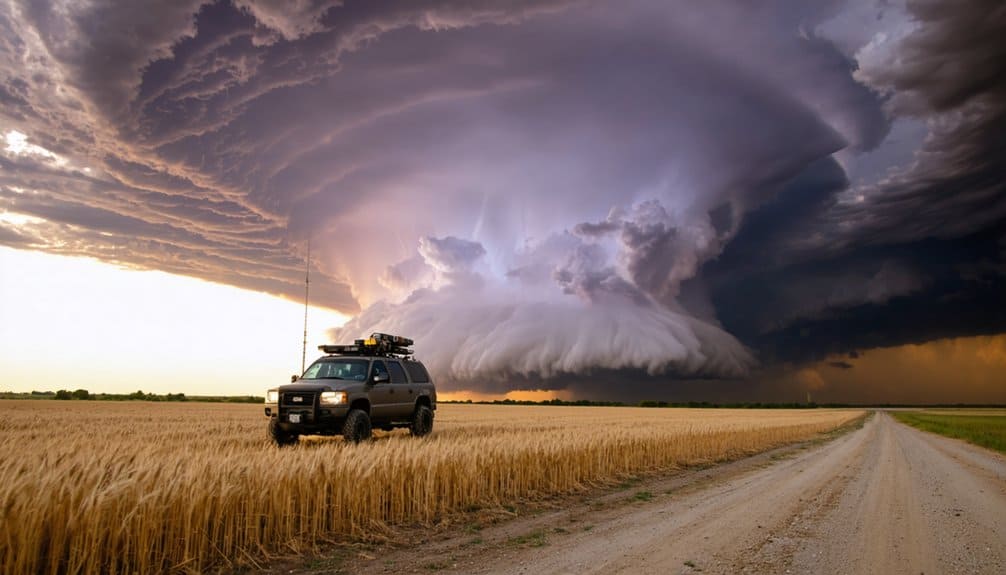
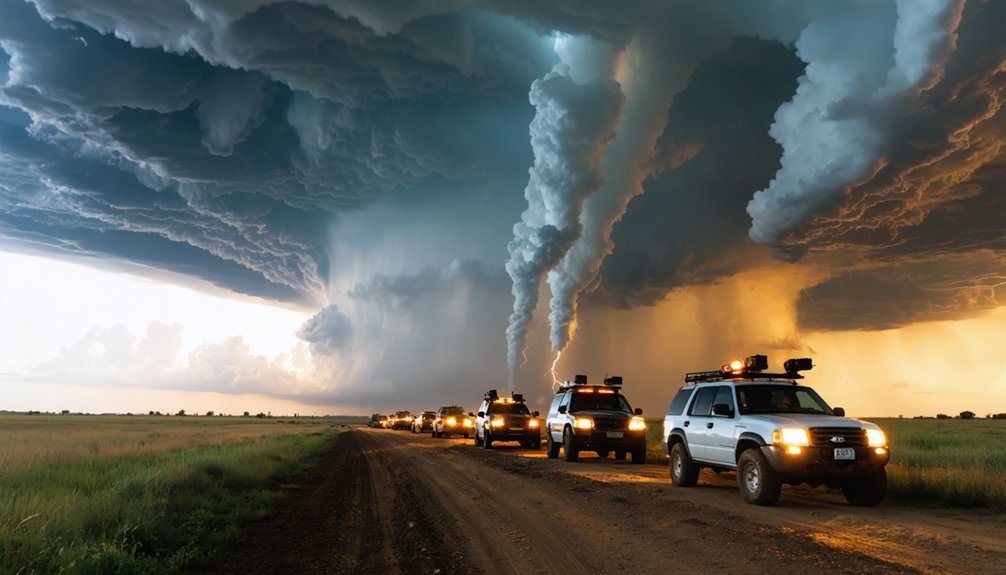
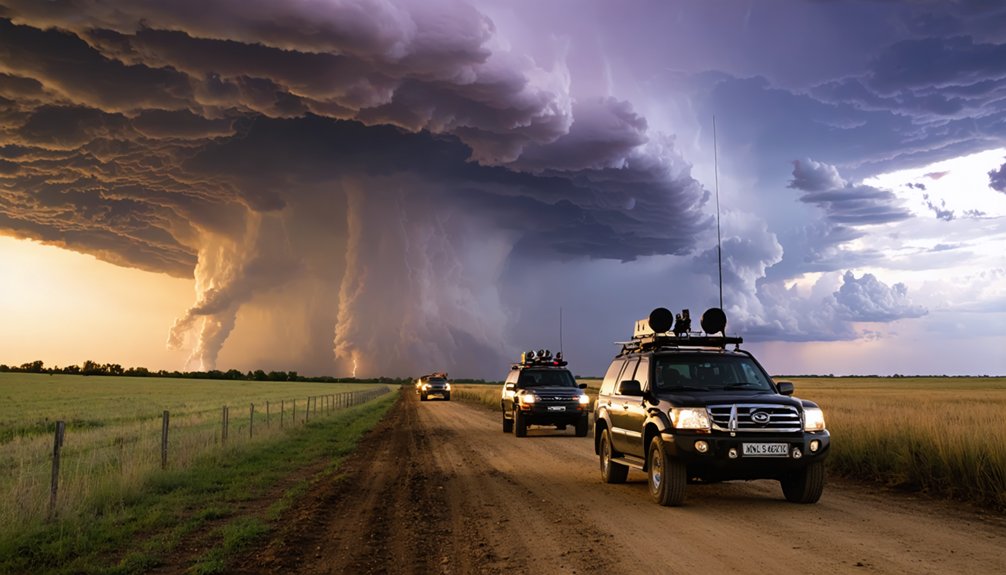
To create an epic storm chasing road trip, you’ll want to target the Great Plains between March and June, focusing on Kansas, Oklahoma, and the Texas Panhandle. Start each day with morning weather forecasting, identify high-probability target zones, and adjust your route by midday as models update. Always pre-plan escape routes and end all chasing at sunset. Whether you’re budgeting $3,000 or $6,000, the details ahead will sharpen every decision you make.
Key Takeaways
- Plan your trip between March and June, targeting Kansas, Oklahoma, and the Texas Panhandle for the highest tornado activity.
- Begin each day reviewing weather models from 8–10 AM to identify high-probability storm target zones before departing.
- Position your base near St. Louis, Wichita, or Salina to enable rapid deployment toward developing storm systems.
- Always pre-plan multiple escape routes, applying the stairstep method and ending all chasing strictly at sunset.
- Budget between $3,000–$6,000 for 10–14 days, covering fuel, lodging, meals, and essential storm chasing equipment.
When and Where to Chase: Peak Season and Prime Regions
When planning a storm chasing itinerary, timing and location are everything. You’ll want to target the Great Plains between March and June, when storm patterns peak across Kansas, Oklahoma, and the Texas Panhandle. This window delivers the highest probability of tornadoes, large hail, and dramatic supercells.
Your chase strategies should center on Tornado Alley’s core zones, including the Oklahoma Panhandle, Dalhart TX, and areas near Arriba, CO. These regions offer open roads and multiple escape routes, which are critical for safe operations.
You’re working with weather-dependent conditions, so flexibility isn’t optional — it’s mandatory.
St. Louis, Wichita, and Salina function as reliable transit hubs, letting you reposition quickly as storm patterns shift. Position yourself correctly, and the Great Plains will deliver unforgettable experiences.
What Does a Typical Storm Chasing Day Actually Look Like?
Every storm chasing day follows a disciplined structure that balances weather analysis with rapid, safety-driven decision-making.
You’ll start with breakfast and weather forecasting between 8 and 10 AM, reviewing real-time model data to identify high-probability targets.
By 11 AM, you’ve checked out of your hotel and you’re driving toward the target zone.
By 11 AM, the hotel is behind you and the target zone is pulling you forward.
A midday storm tracking update around noon lets you adjust your route before reaching the target area between 2 and 5 PM.
Once positioned, you’ll execute final model checks and monitor developing cells.
The “stairstep” method—moving east then north—keeps you ahead of storm movement while maintaining clear escape routes.
All operations end strictly at sunset, no exceptions.
This structure gives you maximum freedom while keeping every decision grounded in calculated precision.
How to Build Your Itinerary Around Chase Windows and Target Areas
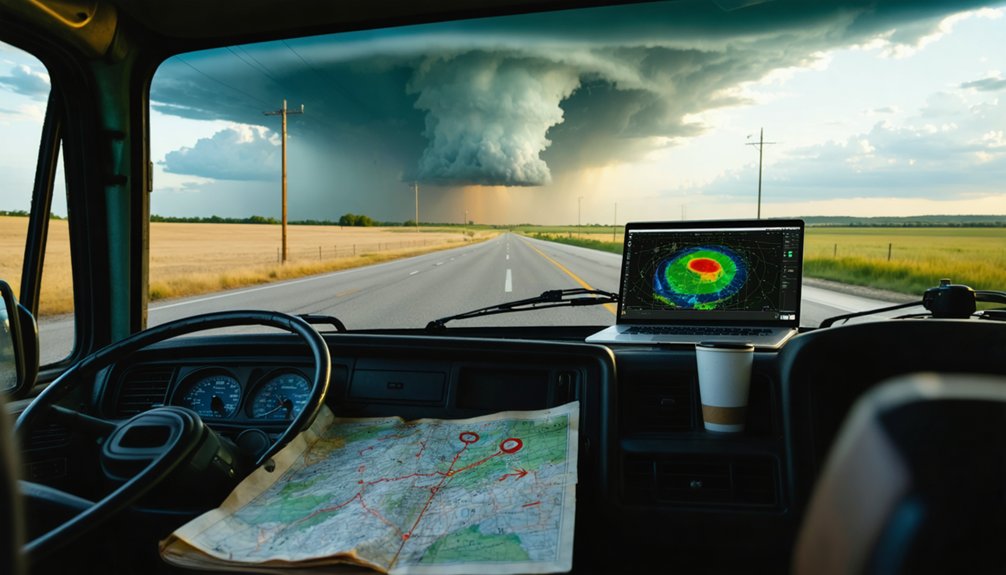
Building your storm chasing itinerary around chase windows requires flexibility rather than fixed dates. You’ll need to anchor your planning around March through June, when Tornado Alley delivers peak tornado and severe weather activity across Kansas, Oklahoma, and the Texas Panhandle.
Your chase strategies must remain fluid. Use weather tools each morning between 8 AM and 10 AM to identify high-probability target zones, then adjust your route by midday as models update. Position yourself near St. Louis, Wichita, or Salina for rapid deployment into target corridors.
Always maintain multiple exit routes and monitor road closures before entering any target area. Flooding creates unpredictable blockages during spring systems.
Regardless of storm activity, you must end all operations at sunset—no exceptions.
Steering around active storms demands discipline and pre-planned escape routes before you ever reach your target zone. Storm safety isn’t optional—it’s your operational foundation.
Chasing storms without discipline isn’t brave—it’s reckless. Safety isn’t a limitation; it’s your launchpad.
Use these navigation tips to stay mobile and protected:
- Maintain multiple escape routes — Always keep at least two unobstructed roads leading away from approaching storms before you commit to a position.
- Check road conditions first — Verify construction delays, closures, and flood-prone zones before entering any target area, especially during springtime.
- Apply the stairstep method — Move east, then north to track storm movement while staying ahead of dangerous inflow regions.
You must end all chasing strictly at sunset. Low visibility eliminates your margin for error.
Discipline here isn’t restrictive—it’s what keeps you free to chase another day.
How Much Does a Storm Chasing Road Trip Cost?
How much you spend on a storm chasing road trip depends entirely on whether you’re joining a guided tour or running your own operation.
Guided tours for 10–14 day trips typically run $4,000–$6,000 per person, covering expert leadership, equipment, and route logistics. Premium multi-state tours exceeding 3,500 miles push past that ceiling.
Self-guided storm chasing expenses for similar durations fall between $3,000–$5,000, giving you full control but demanding serious budget planning for fuel, lodging, meals, and equipment.
Group tours during peak Great Plains season approach the upper $6,000 limit.
Either route requires honest financial preparation before you hit Tornado Alley. Factor in road trip variables like detours, extended hotel stays, and unexpected weather delays that can stretch your timeline and your wallet.
Frequently Asked Questions
What Essential Equipment Do I Need for a Storm Chasing Road Trip?
You’ll need weather analysis tools for storm forecasting, GPS units, communication devices, road closure maps, high-visibility clothing, emergency kits, flood monitoring tools, and weather radios. These guarantee you’re following essential safety protocols while chasing freely and confidently.
How Do I Handle Unexpected Road Closures During Active Storm Chasing?
Road closures can derail your entire chase in seconds! You’ll need to instantly pivot using alternative routes, checking traffic apps and flood monitors constantly. Always maintain multiple escape paths so you’re never trapped by a rapidly advancing storm system.
What Clothing and Emergency Supplies Should Storm Chasers Always Carry?
You’ll always need high-visibility storm gear and fully stocked safety kits. Carry emergency medical supplies, weather radios, GPS units, and flood monitoring tools to keep you mobile, informed, and ready for rapid condition changes in active zones.
Which Communication Devices Are Most Reliable During Rapid Storm Movements?
Prioritize powerful, proven picks: you’ll need satellite phones, weather radios, and mobile apps during rapid storm movements. Follow strict communication protocols to maintain reliable contact, ensuring you’re always free to navigate safely and decisively when storms shift unexpectedly.
How Do Flood Monitoring Tools Improve Safety During Springtime Storm Chasing?
Flood monitoring tools keep you ahead of dangerous road blockages by integrating real-time flood forecasting into your safety protocols. You’ll identify compromised routes fast, reroute freely, and maintain unobstructed escape paths during springtime storm chasing operations.
References
- https://extremetornadotours.com
- https://lesleyanneryan.com/ultimate-road-trip-storm-chasing-tempest-tours/
- https://www.severeweathercountry.com/stormchasingtours2025/
- https://www.tempesttours.com/blog/tornado-a-3500-mile-chase-through-eight-states
- https://backcountryjourneys.com/Trip-Report-Storm-Chasing-Supercells-Tornadoes-June-2025
- https://www.stormchasingusa.com/tours/2023/
- https://adrenalindescents.com/guided-backcountry-ski-touring/powder-highway-7-day-storm-chasing-safari/
- https://roadtrippers.com/magazine/american-storm-chasing/
- https://www.controlgeek.net/blog/2024-6-5-2024-great-plains-storm-chase
- https://www.sandraherber.com/blog/2024/6/7/storm-chasing