For tornado tracking, your best compact shelter choices include the Twister Pod (4ft diameter, fits 4 people) and the Swisher Residential Shelter (84″ wide, accommodates 6 occupants). Both carry EF5 ratings, meaning they’re engineered to withstand winds exceeding 200 mph. You’ll want FEMA P-361 compliance and ICC-500 certification to confirm verified third-party testing. These units fit easily in garages, closets, or tight spaces—and there’s considerably more to contemplate when choosing the right option for your specific needs.
Key Takeaways
- The Twister Pod (4ft diameter, 6ft height) offers a compact, portable design ideal for storm chasers needing EF5-rated protection in tight spaces.
- The Swisher Residential Shelter measures 84″ wide and 80″ tall, fitting in garages while accommodating up to 6 occupants.
- EF5-rated shelters withstand winds exceeding 200 mph, making them reliable for tornado tracking scenarios requiring emergency refuge.
- FEMA P-361 compliance and ICC-500 certification ensure compact shelters meet verified safety standards for extreme tornado conditions.
- Round steel construction in compact shelters maximizes structural integrity while minimizing size, balancing portability with high-performance tornado protection.
What EF5 Rating and FEMA Compliance Mean for Tornado Shelters
When shopping for a compact storm shelter, you’ll encounter two critical safety benchmarks: EF5 wind ratings and FEMA compliance. Understanding both empowers you to make informed decisions about your protection.
EF5 tornado shelter ratings represent the highest classification on the Enhanced Fujita Scale, indicating wind speeds exceeding 200 mph. Shelters engineered to withstand EF5 conditions use round or reinforced steel construction that resists catastrophic structural failure under extreme pressure loads.
FEMA compliance aligns with shelter construction standards outlined in FEMA P-361 guidelines, ensuring your unit meets independently verified engineering requirements. ICC-500 certification adds another layer of accountability, confirming third-party testing validates the manufacturer’s claims.
Together, these benchmarks confirm that your shelter isn’t just marketed as safe—it’s been engineered, tested, and verified to keep you alive when violent tornadoes strike.
Best Compact Storm Shelters for Garages and Tight Spaces
When space is limited, you’ve got three strong compact options worth considering: the Swisher Residential Shelter, the Twister Pod, and the Panelized Modular Shelter.
The Swisher unit measures 84″ wide, 39″ deep, and 80″ tall, fits 6 occupants, and installs easily in garages, basements, or closets with EF5-rated round steel construction.
If you need an even smaller footprint, the Twister Pod’s 4ft diameter and 6ft height handles 4 people, while the Panelized system lets you bolt together a custom-sized safe room directly within pantries, stairwells, or other irregular interior spaces.
Swisher Residential Shelter Features
The Swisher Residential Shelter stands out as the most affordable EF5-rated unit available online, making it a practical first choice for storm chasers needing reliable protection in compact spaces. Its round steel construction delivers exceptional Swisher durability features, withstanding winds exceeding 200 mph without structural compromise.
You get an 84″ wide, 39″ deep, and 80″ tall enclosure that comfortably seats six occupants with adequate headroom for extended shelter stays.
Swisher installation options give you genuine flexibility, fitting cleanly inside garages, basements, or closets for immediate access during rapidly developing storm events. You won’t sacrifice precious response time relocating to distant shelter points.
The compact footprint integrates into existing indoor spaces without requiring major structural modifications, letting you maintain operational readiness wherever your storm tracking base is established.
Twister Pod Space Efficiency
For storm chasers operating out of tight garage setups, the Twister Pod delivers exceptional space efficiency through its 4ft diameter, 6ft tall cylindrical design. Its minimal footprint lets you reclaim usable floor space without compromising EF5-rated protection against winds exceeding 200 mph.
Twister Pod durability stems from its round steel construction, engineered to deflect extreme wind loads while maintaining structural integrity under violent storm conditions.
Twister pod installation suits virtually any property location, including garages, small rooms, or portable outdoor setups, giving you flexible deployment options that match your operational style. The low-profile metal form accommodates four occupants comfortably within its compact frame.
Whether you’re tracking storms professionally or protecting your household, the Twister Pod’s precision engineering guarantees you’re never forced to choose between space conservation and certified tornado safety.
Panelized Modular Shelter Options
While the Twister Pod suits fixed cylindrical installations, the Panelized Series gives you a bolt-together safe room you can build directly on-site to match your exact spatial constraints.
Panelized construction benefits include full modular design flexibility, letting you customize dimensions to fit pantries, stairwells, or any unconventional interior footprint.
Key advantages of the Panelized Series include:
- FEMA and ICC compliance ensuring verified EF5 tornado protection standards
- Customizable sizing accommodating specific room dimensions and occupancy requirements
- Engineered steel panels delivering dependable resistance against violent windstorm forces
You’re not locked into a fixed shell. Instead, you control how the shelter integrates into your existing structure.
This adaptability makes the Panelized Series a technically sound choice when your space demands precise, on-site storm protection solutions.
Underground vs. Above-Ground Shelters: Which Offers More Protection?
When you’re choosing between underground and above-ground shelters, protection levels and accessibility trade-offs define the decision.
Underground models like the Survive-a-Storm Max and Estate units deliver near-absolute EF5 resistance by using the earth itself as a structural buffer against violent winds.
Above-ground options, however, let you access shelter faster during rapid tornado development, making placement in garages or tight interior spaces a critical tactical advantage.
Underground Shelter Protection Advantages
Underground shelters offer a structural advantage that above-ground units simply can’t replicate: earth itself acts as a natural barrier against EF5-level wind forces exceeding 200 mph. The surrounding soil absorbs and deflects debris impact, reinforcing storm shelter materials beyond what steel alone provides above ground.
Key tornado safety features exclusive to underground designs include:
- Debris deflection: Burial depth eliminates direct projectile exposure during violent windstorms
- Structural reinforcement: Surrounding earth distributes lateral wind pressure across the entire shelter frame
- Temperature stability: Underground placement maintains cooler interior conditions during extended severe weather events
Models like the Survive-a-Storm Max accommodate 16 occupants within a 10×6 footprint, delivering near-absolute EF5 protection.
You’re not just choosing a shelter — you’re choosing terrain as your first line of defense.
Above-Ground Shelter Accessibility Benefits
Earth reinforcement gives underground shelters a clear structural edge, but that advantage comes with a tradeoff you can’t ignore: accessibility.
If you’re elderly, physically limited, or managing children during rapid storm onset, descending into a below-grade unit creates dangerous delays.
Above-ground shelters eliminate that constraint entirely. Your shelter location determines response time, and units like the Twister Pod or Swisher Residential Shelter install directly inside garages, closets, or spare rooms — spaces you already occupy.
You reach protection in seconds, not minutes.
Accessibility features on above-ground models include ground-level entry, standard door clearance, and placement flexibility that underground units simply can’t match.
When a tornado gives you 90 seconds, above-ground positioning keeps your options open and your movement unrestricted.
Top Tornado Shelter Picks Organized by Occupancy Size
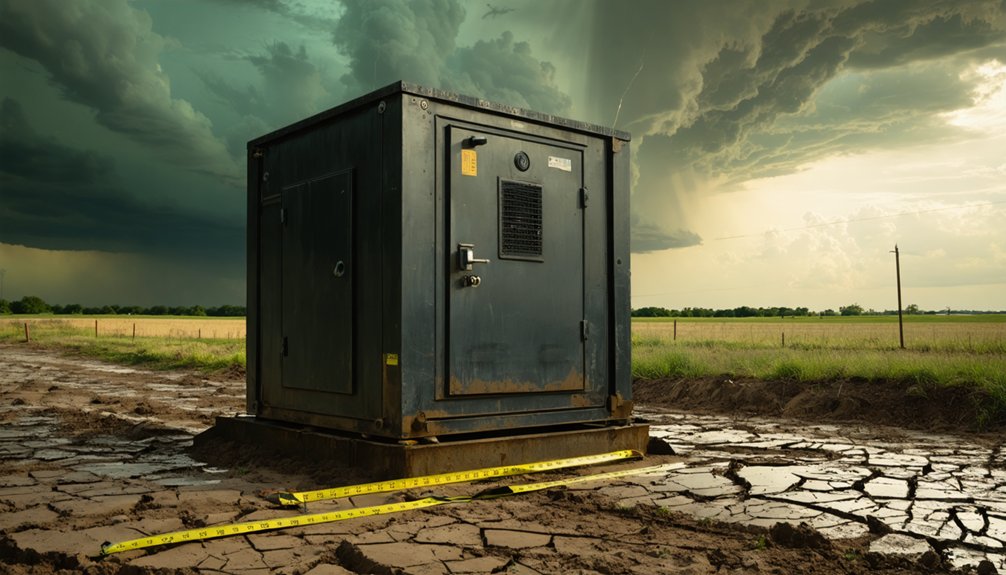
Choosing the right tornado shelter often comes down to how many people need protection at once.
The number of people you need to protect is the single most important factor in choosing the right tornado shelter.
Tornado shelter innovations have expanded your options across every occupancy range, making emergency preparedness strategies more accessible than ever.
Here’s a breakdown of top picks by capacity:
- Small groups (4–6 people): The Twister Pod handles 4 occupants, while the Swisher Residential Shelter fits 6 with 84″ width and full EF5 protection.
- Medium groups (10–16 people): Survive-a-Storm’s Estate Model holds 10 occupants; the Max Model accommodates 16 underground.
- Large groups (47+ people): The Quonset Style above-ground shelter fits 47 occupants, ideal for businesses, schools, and campgrounds.
Match your shelter choice directly to your group size to eliminate guesswork and maximize safety efficiency.
Key Differences Between Residential and Community Storm Shelters
Three core factors separate residential storm shelters from community models: capacity, footprint, and deployment context.
When you’re selecting based on residential specifications, you’re prioritizing compact dimensions and household-scale occupancy. The Swisher unit holds 6 occupants within an 84″ × 39″ footprint, while the Twister Pod accommodates 4 people in a 4ft diameter cylinder. Both fit garages, closets, or tight interior spaces.
Community capacity demands an entirely different engineering approach. The Quonset-style shelter handles 47 occupants, and the Securall unit safely fits 16 within a 10ft × 8ft interior.
These models target offices, schools, and public venues where individual residential units won’t scale.
You’ll need to match your shelter choice to your specific deployment context — household access speed versus large-group throughput aren’t interchangeable priorities.
Most Affordable Tornado Shelters That Don’t Cut Corners
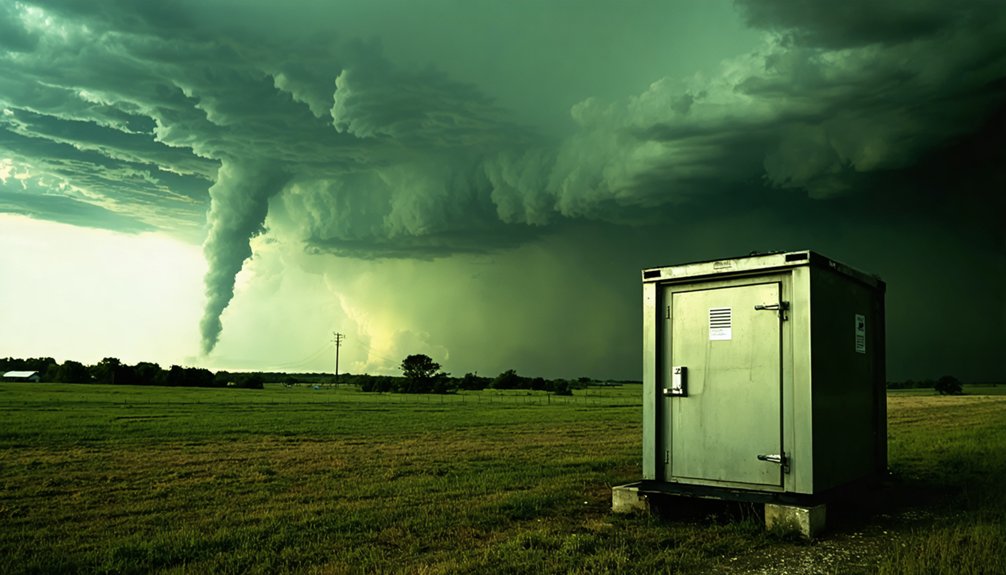
Budget constraints don’t have to mean compromised structural integrity. You can secure reliable EF5-rated protection without overspending if you understand which affordability factors actually matter.
The Swisher Residential Shelter stands as the most cost-effective online option, delivering shelter durability through round steel construction rated for 200+ mph winds.
Key affordability factors that preserve shelter durability:
- Swisher model fits garages, basements, and closets, eliminating costly installation complexity
- Round steel construction reduces material waste while maintaining structural resistance against violent windstorms
- 6-occupant capacity maximizes cost-per-person value without sacrificing EF5 protection standards
You’re not trading safety for savings here.
Prioritizing verified FEMA compliance and engineered steel builds guarantees your shelter performs when tornado conditions demand it most.
Frequently Asked Questions
How Long Does It Typically Take to Install a Storm Shelter?
You’ll typically spend 4–8 hours on installation timeframes, depending on shelter type. Underground models take longer, while modular units speed up shelter accessibility, letting you reclaim your space and freedom faster with minimal professional assistance required.
Can Storm Shelters Be Relocated After They Are Initially Installed?
Over 60% of shelters aren’t designed for easy relocation. You can relocate above-ground units like the Twister Pod, but underground models present significant relocation challenges and installation considerations, requiring professional reassessment of anchoring and site conditions.
What Ventilation Systems Are Included in Compact Tornado Shelters?
The provided knowledge doesn’t specify ventilation types or air circulation systems in compact tornado shelters. You’ll want to contact manufacturers directly to get precise technical details about the ventilation systems included in their specific shelter models.
Do Storm Shelters Require Regular Maintenance or Inspections After Installation?
Imagine your Swisher shelter failing mid-storm—you’ll want to avoid that. Yes, you should inspect annually for rust, seal integrity, and hinge function. Regular maintenance frequency guarantees shelter durability, keeping your EF5-rated protection fully reliable when it matters most.
Are Storm Shelters Covered Under Standard Homeowners Insurance Policies?
Standard homeowners insurance policies don’t automatically cover storm shelters. You’ll need to verify your insurer’s terms, as insurance coverage varies by shelter types—underground, modular, or above-ground—and may require separate riders or endorsements for full protection.
References
- https://www.tornadoproject.com/safety/moreonshelters.htm
- https://thepreppingguide.com/8-top-storm-shelters/
- https://www.lowes.com/top-rated/outdoors/sheds-outdoor-storage/tornado-shelters/1198837506
- https://www.instagram.com/wearesurviveastorm/
- https://www.primalsurvivor.net/above-ground-storm-shelter/
- https://www.lowes.com/pl/sheds-outdoor-storage/tornado-shelters/top-rated/1198837506-5007197
- https://torconstormshelters.com/shop-2/
- https://www.primalsurvivor.net/underground-storm-shelters/
- https://survive-a-storm.com/residential-storm-shelters/
- https://www.reddit.com/r/stormchasing/comments/1qa9hh6/what_radar_app_do_storm_chasers_usually_use/