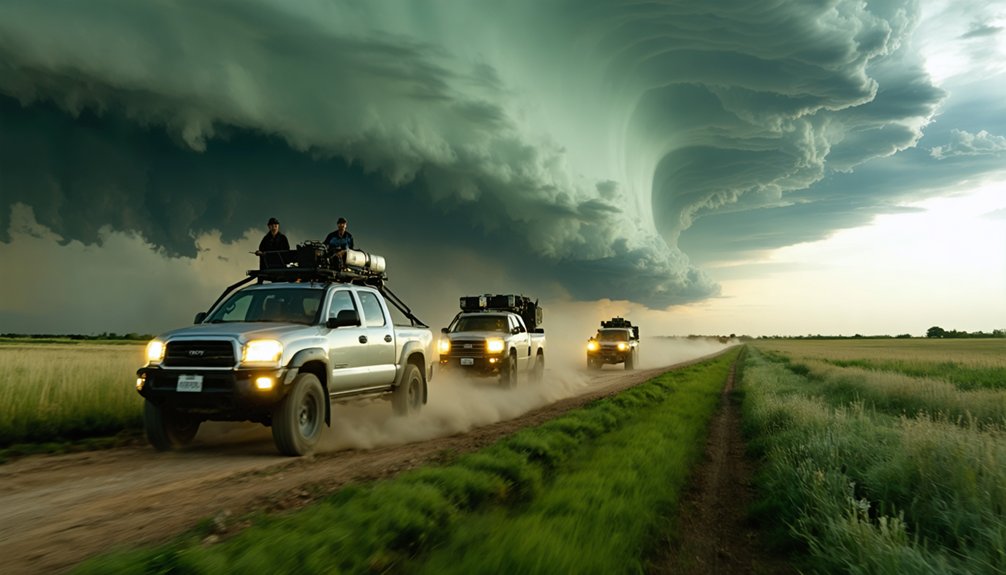
Storm chasing tours take you deep into the Great Plains, tracking severe weather systems where tornado activity peaks from mid-April through early June. You’ll follow dynamic routes across Oklahoma, Texas, Kansas, and beyond, guided by real-time meteorological data. Expect up to 80% driving time, with prime storm activity between 4 PM and 9 PM. May offers your highest odds for tornado encounters. Everything you need to know to chase smarter is just ahead.
Key Takeaways
- Storm chasing tours traverse the Great Plains, targeting severe weather systems across Oklahoma, Texas, Kansas, and northern states depending on the season.
- May offers the highest tornado probability, making it the optimal month for booking an unforgettable storm chasing experience.
- Tours follow unpredictable weather patterns rather than fixed routes, with daily destinations confirmed after morning meteorological data reassessment.
- Peak storm activity occurs between 4–9 PM, offering dramatic photography opportunities after hours of strategic repositioning and driving.
- Success depends on patience, flexibility, and realistic expectations, as tornado sightings are never guaranteed but atmospheric encounters remain extraordinary.
What Is a Storm Chasing Tour, Really?
Storm chasing tours are structured, guided excursions that position participants within striking distance of severe weather systems across the Great Plains—but don’t mistake them for non-stop adrenaline. Up to 80% of your time involves driving toward target zones, not watching funnels drop.
Storm chasing tours are mostly driving. The tornado is the reward—not the guarantee.
Dispelling storm chasing myths is essential before you book: you’re not guaranteed a tornado, and active zones shift unpredictably across Oklahoma, Texas, and Kansas.
What you do get is real access—professional forecasters, strategic positioning, and legitimate photography opportunities that most people never encounter. When storms develop, typically between 4 PM and 9 PM, you’re already in range.
The experience demands patience, situational awareness, and adaptability. If you understand that framework going in, you’ll extract maximum value from every chase day.
When Should You Book a Storm Chasing Tour?
If you want the best shot at seeing a tornado, book your tour between mid-April and early June.
With May offering the highest statistical probability for storm encounters.
Your geographic target shifts with the season—April tours concentrate on Oklahoma and Texas, while July tours push north into Montana, Wyoming, and the Dakotas.
Matching your booking window to both the calendar and the active zone gives you the strongest odds of putting yourself in the right place when storms develop.
Peak Tornado Season Timing
When you book your storm chasing tour matters as much as where you go. Storm prediction accuracy peaks during mid-April through early June, making this window your strongest tactical window for encounters. Weather pattern shifts can relocate active zones unpredictably, but May consistently delivers the highest tornado probability across Southern Kansas, Oklahoma, and northern Texas.
Key timing benchmarks to guide your decision:
- April targets Oklahoma and Texas with moderate activity levels
- May offers peak probability and the widest active zone coverage
- June shifts activity northward toward Kansas and Nebraska
Booking outside this window reduces your statistical odds dramatically. If you’re serious about maximizing your chase experience, align your schedule with May and you’ll position yourself for the best possible outcome.
Best Monthly Booking Windows
Knowing the peak season window is only part of the equation—you also need to account for how booking timelines interact with operational availability.
Tours run mid-April through mid-July, but May delivers the highest tornado probability based on historical storm patterns across Southern Kansas, Oklahoma, and northern Texas.
Book May tours first—slots fill fast because experienced chasers already know the data.
April works if you’re targeting Oklahoma and Texas with flexibility built into your schedule.
July opens Montana, Wyoming, and the Dakotas, though activity is less concentrated.
Modern weather forecasting technology has sharpened operational precision, but it hasn’t eliminated uncertainty.
Longer tours statistically improve your encounter odds regardless of the month you choose.
Commit early, stay flexible, and prioritize May if you want maximum storm exposure.
Geographic Target Considerations
Geography directly shapes your booking decision because the active storm zone shifts northward as the season progresses. Regional climate patterns dictate where tornado activity concentrates, moving from southern plains local landmarks like Oklahoma City and Amarillo toward Montana and Wyoming by July.
April locks you into Oklahoma and Texas. May opens Southern Kansas and all of Oklahoma—the prime window. July repositions everything toward the northern plains.
Prioritize these geographic realities:
- April–May: Oklahoma, northern Texas, southern Kansas deliver the highest tornado probability
- June: Transitional zones bridge central and northern plains
- July: Montana, Wyoming, and the Dakotas become primary targets
Knowing where the storm belt sits each month lets you chase freedom strategically rather than gamble blindly on location.
Where Do Storm Chasing Tours Actually Take You?
Storm chasing tours don’t follow a fixed route—they follow the weather, and that distinction shapes everything about where you’ll end up. Guides use meteorological technology and historical storm patterns to identify high-probability target zones before each departure.
In April, you’re likely positioned across Oklahoma and Texas. By July, your coordinates shift north into Montana, Wyoming, and the Dakotas. May places you squarely in the statistical sweet spot—southern Kansas, all of Oklahoma, and northern Texas represent the core active corridor.
You won’t know your exact destination until forecasters reassess morning data and confirm afternoon targets. That uncertainty isn’t a flaw; it’s the operational reality of chasing dynamic systems. The weather dictates your geography, and that’s precisely what makes the experience genuinely unscripted.
How Do You Pick the Right Storm Chasing Tour Company?
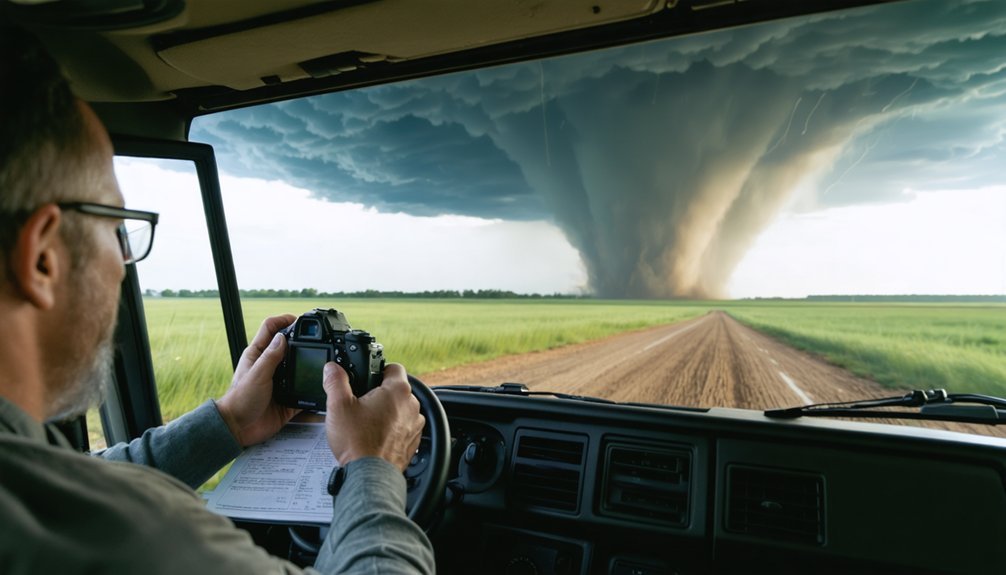
Choosing the right tour company directly determines whether your experience aligns with your expectations, so you’ll want to evaluate a few critical variables before committing. Operational windows matter considerably—May tours statistically offer the highest tornado probability, while April operations concentrate around Oklahoma and Texas.
Confirm whether the company supports tour customization, allowing flexibility in target regions and scheduling protocols.
Prioritize companies that accommodate storm photography by positioning vehicles for ideal sightlines rather than just proximity.
- Verify the guide’s forecasting methodology and meteorological credentials
- Confirm group size limits to maximize positioning freedom during active chases
- Review departure schedules and target reevaluation protocols at lunch breaks
Selecting strategically means you’re not just booking a tour—you’re controlling the quality of your entire plains experience.
What Does a Typical Day on a Storm Chasing Tour Look Like?
A typical storm chasing day starts earlier than most participants expect, with wake times falling between 6 AM and 8 AM to reassess overnight forecast models and confirm target areas.
You’ll depart around 9-10 AM, traversing open plains between small towns while your guide refines the target zone.
Lunch doubles as a strategic briefing, allowing the team to reevaluate developing conditions.
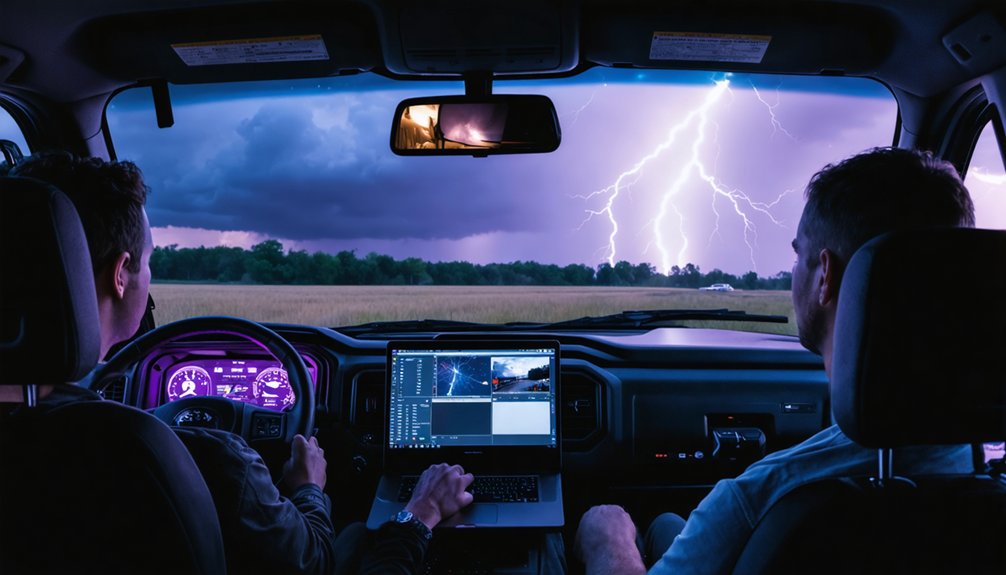
Peak activity runs from 4 PM to 9 PM, when you’ll position for storm photography opportunities and witness the full power of supercell development.
Downtime between positioning involves frisbees, reading, or browsing souvenir memorabilia at roadside stops.
Understand that up to 80% of your experience involves driving, making flexibility and patience essential tools for maximizing what each chase day delivers.
Will You Actually See a Tornado on Your Tour?
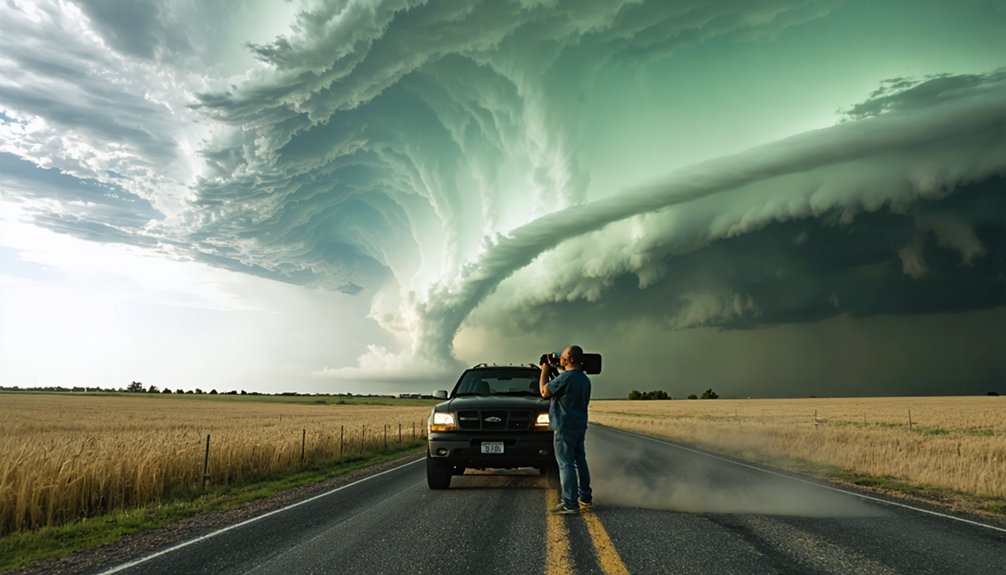
While no reputable storm chasing tour can guarantee a tornado sighting, longer tour durations substantially improve your statistical odds of witnessing one.
No storm chasing tour guarantees a tornado—but longer tours dramatically increase your chances of witnessing one.
Historical storm patterns confirm that mid-April through early June delivers the highest probability windows, particularly across southern Kansas, Oklahoma, and northern Texas.
Weather forecast accuracy has advanced dramatically, giving guides sharper target selection—but nature remains unpredictable.
Key factors shaping your odds:
- Tour length: Multi-day packages expose you to more atmospheric setups than single-day excursions
- Timing: May tours statistically outperform all other months for tornado frequency
- Flexibility: Active zones shift unpredictably, so tours that reposition aggressively intercept more storms
You may experience incredible structure, lightning, and wall clouds without a tornado touching down—still a raw, powerful encounter worth pursuing.
What Should You Pack for a Storm Chasing Tour?
Packing for a storm chasing tour demands a practical mindset—you’ll spend up to 80% of your time in a vehicle traversing open plains, waiting through mid-day lulls, and then scrambling into position during peak chase windows between 4 PM and 9 PM.
Your storm gear should include layered clothing, waterproof boots, sunglasses, and sun protection for exposed waiting periods.
Downtime is real—bring reading materials or a frisbee for mid-afternoon gaps before storms develop.
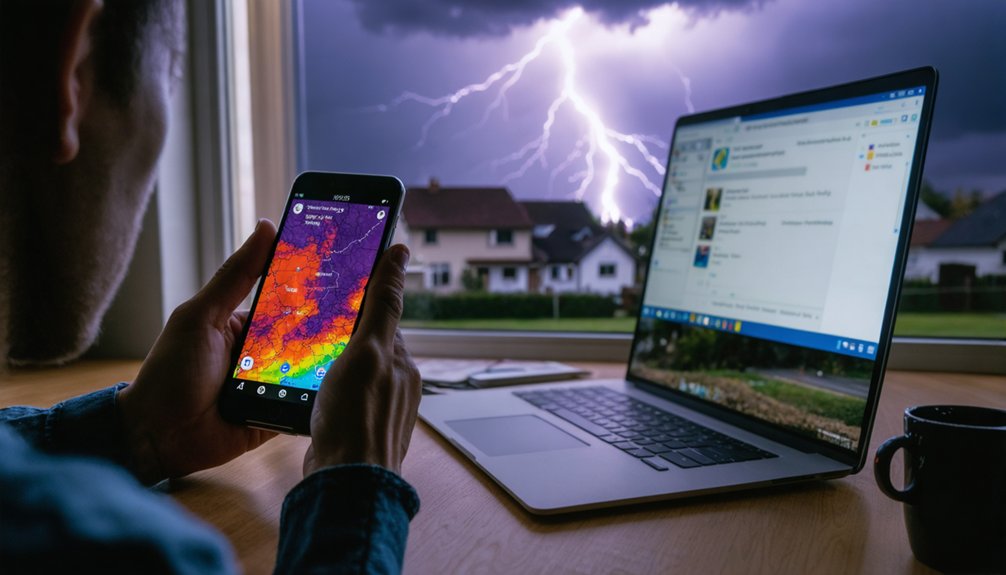
Keep your phone charged and load reliable weather apps like RadarScope to track cell development independently.
A portable charger, snacks, and a refillable water bottle are non-negotiable.
You’re covering serious ground across Kansas, Oklahoma, and Texas—pack light, pack smart, and stay ready to move fast when conditions demand it.
How Do You Stay Safe on a Storm Chasing Tour?
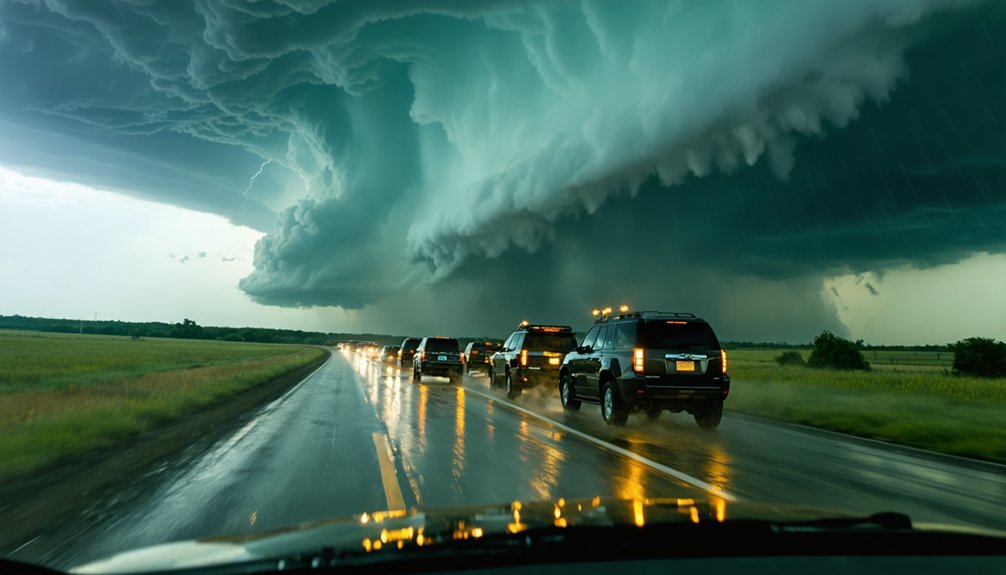
Safety on a storm chasing tour isn’t passive—you’re operating in a dynamic environment where conditions shift fast and decisions carry real consequences. Storm safety depends on your situational awareness and your ability to follow guide directives without hesitation. Weather awareness isn’t optional; it’s your primary survival tool.
Safety on a storm chasing tour isn’t passive—conditions shift fast, and awareness is your primary survival tool.
Your guides monitor radar continuously, but you need to stay engaged:
- Stay inside the vehicle unless your guide explicitly clears the area as safe
- Monitor exit routes relative to storm movement at all times
- Trust the professional’s abort call—ego has no place when a storm accelerates unexpectedly
Tours aren’t designed for reckless proximity. The experience rewards disciplined participants who understand that freedom in extreme environments comes from competence, not carelessness.
Is a Storm Chasing Tour Worth It?
Before booking a storm chasing tour, you need to set realistic expectations—tornado sightings aren’t guaranteed, and up to 80% of your time will consist of driving across the plains to reposition for storms.
You’ll pay a premium for the experience, so weigh that cost against the genuine possibility of spending several days playing frisbee in a field rather than witnessing a supercell.
If you can accept the uncertainty and find value in the full meteorological process—not just the payoff—a tour can absolutely justify its price.
Realistic Expectations Matter
Whether a storm chasing tour is worth your time and money depends entirely on what you expect going in. Up to 80% of the experience involves driving, not chasing. If you’re prepared with storm chasing gear and ready for long repositioning days, you’ll maximize every opportunity.
Key realities to accept before booking:
- Tornadoes aren’t guaranteed — weather patterns shift unpredictably across the plains
- Storm photography requires patience — prime activity windows run between 4 PM and 9 PM after hours of waiting
- May offers the highest probability for actual tornado encounters within the Southern Kansas, Oklahoma, and northern Texas corridors
Treat the experience as a dynamic, data-driven pursuit rather than a spectator event, and you’ll leave with far fewer disappointments.
Weighing Costs Against Experience
Storm chasing tours aren’t cheap, and you’ll want to stack the value proposition carefully before committing. Weather variability means no operator can guarantee a tornado sighting, so you’re purchasing access to expert forecasting, positioning strategy, and real-time decision-making — not a scripted outcome.
Tour customization options let you align duration, geographic range, and seasonality with your risk tolerance and budget. Longer tours statistically improve your storm encounter odds, but they demand more time and capital. Shorter tours cost less yet compress your probability window considerably.
Factor in what you’re actually buying: professional meteorological guidance, vetted chase vehicles, and operational infrastructure you can’t replicate independently.
If that framework delivers freedom to experience raw atmospheric power firsthand, the investment typically justifies itself on its own terms.
Frequently Asked Questions
Can Children or Minors Participate in Storm Chasing Tours With Adults?
You’ll need to check each tour company’s specific age policies, as they vary. Child safety protocols and parental guidance requirements differ by operator, so confirm restrictions before booking minors on any storm chasing experience.
Are Storm Chasing Tours Accessible for Participants With Physical Disabilities?
Storm chasing tours present significant accessibility challenges for participants with physical disabilities. You’ll spend up to 80% driving across rugged terrain, and most operators don’t provide adaptive equipment, so you should contact companies directly beforehand.
Do Storm Chasing Tours Offer Group Discounts for Large Bookings?
Many storm chasing companies do offer group booking discounts, but you’ll need to confirm each operator’s discount policies directly, as rates and minimum group sizes vary substantially between tour providers.
What Happens if a Tour Gets Canceled Due to Inactive Weather Patterns?
Up to 80% of tour time involves driving, so when inactive weather patterns arise, weather forecasting guides your rescheduled targets. Safety protocols guarantee you’re repositioned toward promising storm zones, maximizing your chances of an unforgettable encounter.
Are Meals and Accommodations Included in the Standard Tour Pricing?
Meal options like sit-down brunch or lunch are included when time permits, but you’ll need to confirm accommodation details directly with your specific tour operator, as inclusion varies across companies’ standard pricing structures.
References
- https://www.reddit.com/r/stormchasing/comments/w3grna/what_are_storm_chasing_tours_really_like/
- https://www.stormchasingusa.com/tested-and-approved/