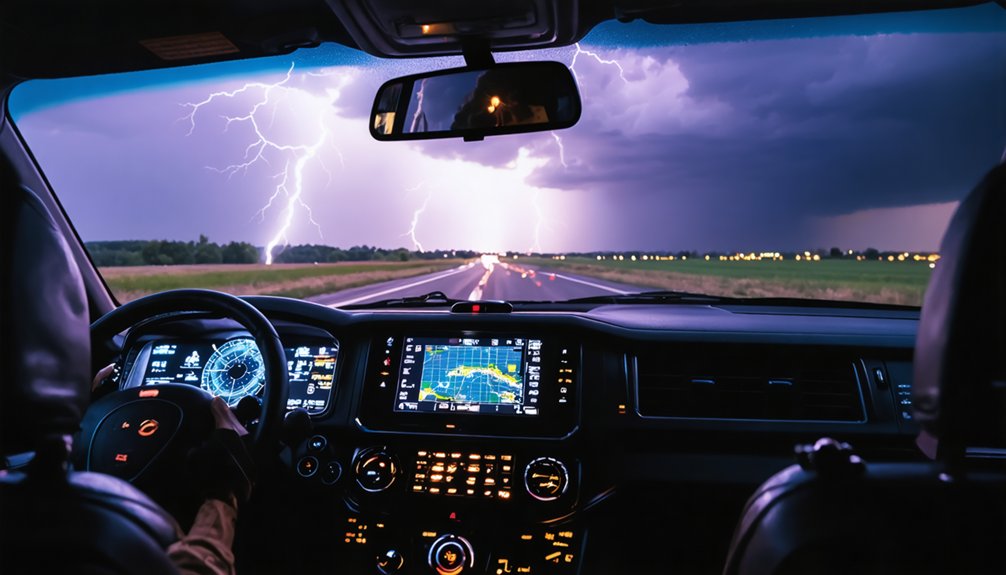
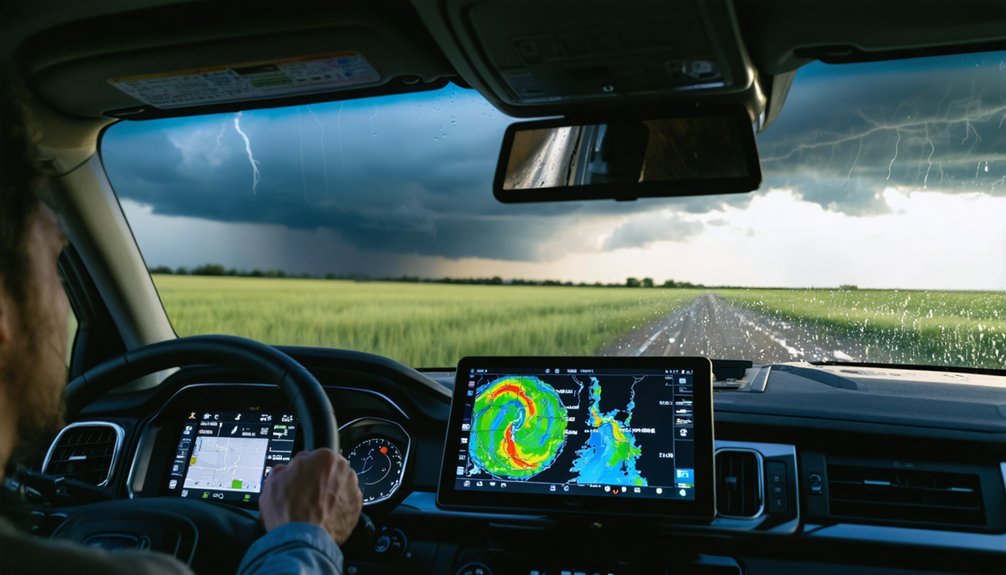
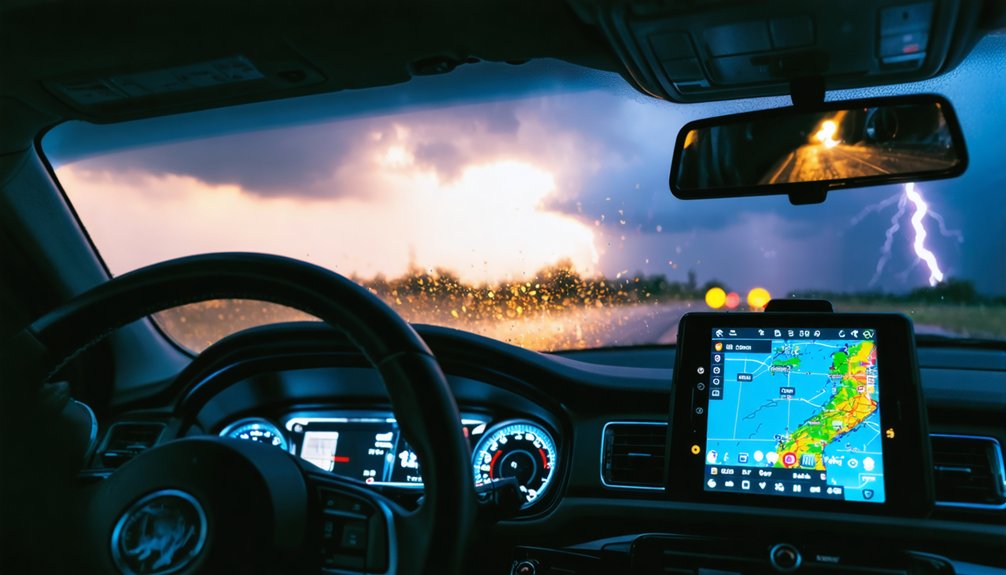
Storm chasing experts say you’ll need to master SPC Convective Outlooks, upper air charts, and surface data before leaving home. In the field, you should run RadarScope for live storm structure and continuously update threat assessments using NWS alerts. Never core-punch, always maintain perpendicular escape routes, and verify roads exist before committing. You’ll also want to relay observations directly to the National Weather Service. The full breakdown of expert-level techniques covers every stage of a successful chase.
Key Takeaways
- Study SPC Convective Outlooks, upper air charts, and surface data before departure to identify high-risk storm corridors and target areas.
- Use real-time radar apps like RadarScope to monitor live storm structure, mesocyclone indicators, and developing cell movements.
- Always maintain multiple escape routes perpendicular to storm motion to avoid becoming trapped by rapidly shifting tornadoes.
- Never core-punch supercells, as this creates zero-visibility conditions and risks severe vehicle damage from large hail.
- Build forecasting skills through MetEd UCAR courses, StormTrack forums, and daily radar tracking to develop professional-level meteorological knowledge.
How Do Storm Chasers Plan Before Hitting the Road?
Before you ever turn the ignition, successful storm chasing starts with days of disciplined pre-departure analysis. Monitor SPC Convective Outlooks to identify developing thunderstorm corridors and flag high-probability target zones early.
Storm preparation demands you study upper air charts, surface data, and model runs to narrow your operational window before departure.
Route optimization is equally critical. Pre-load detailed regional maps, cross-reference road networks, and identify multiple escape corridors before you’re in the field. Roads change, and outdated maps create dangerous blind spots.
Sharpen your foundational skills through MetEd UCAR courses and StormTrack forecasting discussions. Learn to read Skew-T diagrams and hodographs — these tools separate reactive chasers from calculated ones.
Preparation isn’t optional; it’s what keeps you mobile, informed, and alive.
What Real-Time Tools Keep Storm Chasers on Target?
Once you’re mobile, four core data streams drive every positioning decision: on-road model updates, radar, satellite imagery, and surface and upper air charts.
Real time radar through mobile apps like RadarScope delivers live storm structure, letting you refine storm positioning as cells evolve. Tracking software overlays hodographs and mesocyclone indicators directly onto moving maps, cutting your reaction time considerably.
Real-time radar transforms raw storm data into precise positioning decisions, cutting reaction time when every second counts.
Data analytics from surface charts reveal boundary intersections—drylines, warm fronts—where tornado probability spikes. Upper air charts expose wind shear profiles that confirm or kill a target.
Weather alerts from the SPC and NWS update your threat assessment continuously. Cross-referencing all streams simultaneously isn’t optional; it’s the discipline that separates precise intercepts from dangerous miscalculations.
Stay fluid, trust the data, and reposition aggressively when conditions shift.
What Safety Rules Do Experienced Storm Chasers Never Break?
Real-time data mastery keeps you on target, but raw positioning skill means nothing if you’re ignoring the safety rules that experienced chasers treat as non-negotiable.
Tornado safety starts with never core-punching — entering a storm’s most intense region risks large hail, zero visibility, and vehicle destruction. Always maintain multiple escape routes that move perpendicular to storm motion, not parallel.
Vehicle precautions extend beyond the storm itself; congested roads filled with distracted, inexperienced chasers now generate more collisions than tornadoes cause direct casualties.
Never drive into a tornado’s path without sufficient reaction time, and constantly verify that mapped roads actually exist on the ground.
Experienced chasers understand that disciplined positioning, defensive driving, and ruthless situational awareness aren’t optional habits — they’re survival requirements.
What Technology Do Storm Chasers Use to Track and Report Storms?
Safety discipline keeps you alive, but technology keeps you informed — and in storm chasing, those two priorities are inseparable.
You’ll rely on radar applications to monitor cell development, rotation signatures, and storm movement in real time. Storm models help you narrow your target area before you ever leave home, while weather satellites fill critical gaps between radar sweeps.
Once you’re positioned, data transmission tools let you relay observations directly to the National Weather Service, strengthening public alerts. Drop sondes and drones capture in-storm measurements — temperature, pressure, humidity, wind speed — that satellites simply can’t match.
Real-time data transmission transforms storm chasers into critical contributors to public safety and forecasting accuracy.
On-board radar systems guide your positioning through volatile conditions. Mastering these tools doesn’t just improve your chase; it contributes directly to forecasting accuracy and, ultimately, public safety.
Where Can New Storm Chasers Build Serious Forecasting Skills?
Technology gives you the data, but forecasting skill determines what you do with it — and building that skill requires deliberate, structured study. Start with free online resources like MetEd UCAR courses, which break down Skew-T diagrams, hodographs, station plots, and frontal systems into digestible lessons.
StormTrack forums give you access to expert forecasting discussions where you can follow real analyses from experienced meteorologists.
Practical experience accelerates everything. Track storms on radar applications daily, even when you’re not chasing. Study SPC Convective Outlooks and compare your own assessments against professional forecasts.
Watch tornado forecasting breakdowns from credentialed meteorologists to internalize their methodology. Pattern recognition develops through repetition — the more setups you analyze, the faster your decision-making sharpens in the field.
Frequently Asked Questions
How Do Storm Chasers Handle Extreme Fatigue During Multi-Day Chasing Expeditions?
You’ll combat fatigue management challenges by rotating drivers, scheduling strategic sleep strategies between storm cycles, and monitoring your alertness levels as rigorously as radar data—because impaired driving kills more chasers than storms do.
What Legal Responsibilities Do Storm Chasers Have When Operating Near Emergency Zones?
When you block emergency vehicles like in the 2011 Joplin response, you’re creating legal liabilities. You’ve got ethical considerations too — respect zone perimeters, yield always to first responders, and document responsibly without impeding rescue operations.
How Do Storm Chasers Coordinate With Local Law Enforcement During Active Tornado Events?
You’ll relay real-time storm data to the National Weather Service, supporting tornado safety measures through active storm chaser coordination. You’re transmitting positioning, storm behavior, and intensity data, helping authorities issue timely warnings while maintaining your operational independence.
What Physical Fitness Levels Are Recommended for Individuals Pursuing Storm Chasing Careers?
You’ll need strong cardiovascular strength and endurance training to handle long shifts behind the wheel. Storm chasing demands sustained alertness, rapid physical response, and stamina to manage high-stress, data-intensive environments across unpredictable, exhausting pursuit scenarios.
How Do Storm Chasers Manage Communication When Cellular Networks Become Overwhelmed During Disasters?
When cell networks fail, you thrive using satellite communication and radio protocols to relay critical storm data, ensuring you’re never silenced while transmitting real-time information directly to the National Weather Service during overwhelming disaster conditions.
References
- https://stormtrack.org/threads/basic-storm-chasing-process.29691/
- https://www.foxweather.com/learn/storm-chasing-advice-from-the-pros
- https://www.youtube.com/watch?v=sQv7W3wAkts
- https://www.weather.gov/oun/stormspotting
- https://www.stormchasingusa.com/blog/learning-the-basics-about-tornadic-storm-forecasting/