Storm chasing pulls you in through a combination of psychological triggers, financial rewards, and scientific purpose. Your motivation often starts with childhood awe, then evolves into structured pursuit driven by adrenaline, income potential, and measurable data contributions. High-quality storm photographs sell for five figures, while field research directly improves tornado warning systems. It’s not recklessness — it’s a calculated obsession that compounds over time, and there’s far more to unpack beneath the surface.
Key Takeaways
- Childhood encounters with storms often spark a lifelong emotional fascination, transforming early fear into an enduring passion for extreme weather.
- Storm chasers earn substantial income through photo sales, documentary contracts, and guided tours, funding better equipment and greater independence.
- Close proximity to extreme weather triggers intense adrenaline responses, reinforcing thrill-seeking behavior and sharpening situational awareness in seasoned chasers.
- Field data collected by chasers improves forecasting models, extends warning times, and has contributed to declining tornado fatalities since the 1960s.
- Storms inspire powerful artistic expression, with photography transforming dangerous phenomena into compelling visual narratives that resonate far beyond meteorology.
What First Draws Someone to Storm Chasing
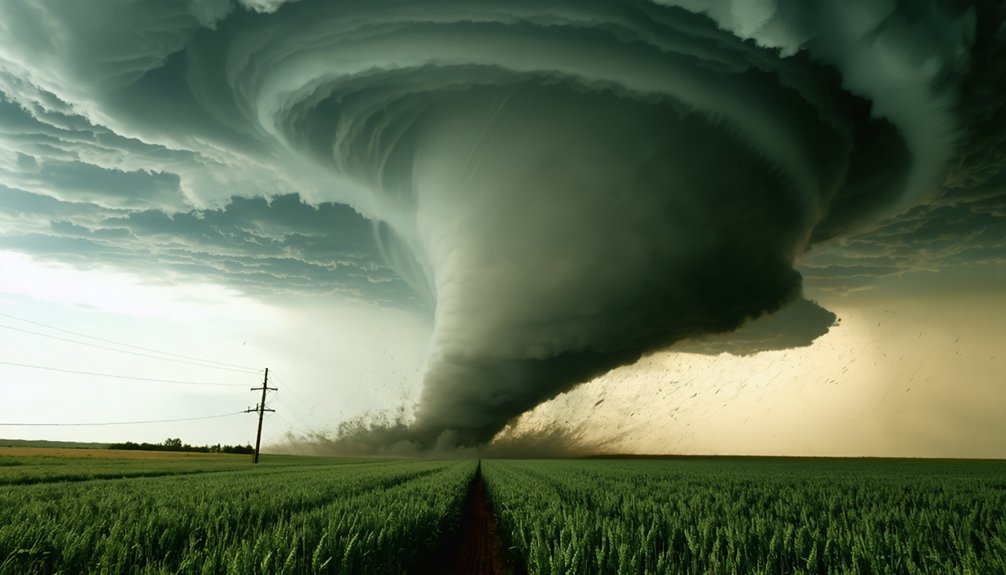
What compels someone to chase one of nature’s most violent and unpredictable phenomena? For many, storm origins trace back to childhood experiences — a close tornado encounter or a dramatic sky observation that triggered an undeniable emotional connection.
These awe moments rewire your perception, transforming fear into fascination.
Personal anecdotes reveal consistent patterns: early influences like repeated viewings of *The Wizard of Oz* or surviving a severe storm ignite curiosity that never extinguishes. You begin studying atmospheric behavior, analyzing cloud formations, and recognizing nature’s beauty as both a scientific and sensory experience.
That initial spark isn’t random — it’s data-driven by lived experience. Your freedom to pursue what captivates you, combined with an instinctive pull toward the sky, ultimately defines why storm chasing becomes less a hobby and more a calling.
The Thrill, Income, and Close Encounters That Keep Chasers Coming Back
If you’re chasing storms for financial gain, you’ll find the market rewards bold, high-quality captures—storm photographs routinely sell for five figures, and documentary contracts with networks like the Discovery Channel can sustain a full-time livelihood.
Beyond income, close encounters generate adrenaline responses that reinforce the behavior, making each near-miss with a tornado a psychological anchor that pulls you back into the field.
You’ll also notice that the combination of financial incentive and physiological reward creates a self-reinforcing cycle, one that keeps experienced chasers accepting the elevated risks inherent in proximity chasing.
Chasing For Financial Gain
While passion and curiosity drive many storm chasers, financial incentives also play a measurable role in sustaining the pursuit.
Storm photography represents one viable revenue stream, with compelling images selling for five-figure sums. If you capture the right shot at the right moment, you’re fundamentally converting risk into income.
Beyond photography, documentary filmmaking offers another pathway. Productions like Discovery Channel’s *Storm Chasers* have provided chasers with legitimate livelihoods.
You can also monetize experience directly through guided storm chasing tours, where paying participants fund your operations while you lead them safely through severe weather corridors.
These financial incentives don’t replace intrinsic motivation, but they create sustainable frameworks that let you chase more frequently, invest in better equipment, and operate with greater independence.
Adrenaline From Close Encounters
Beyond financial return, storm chasing delivers something harder to quantify but equally compelling: the raw adrenaline of close encounters with extreme atmospheric events. That adrenaline rush isn’t accidental — it’s the product of calculated risk taking mindset combined with deep storm obsession.
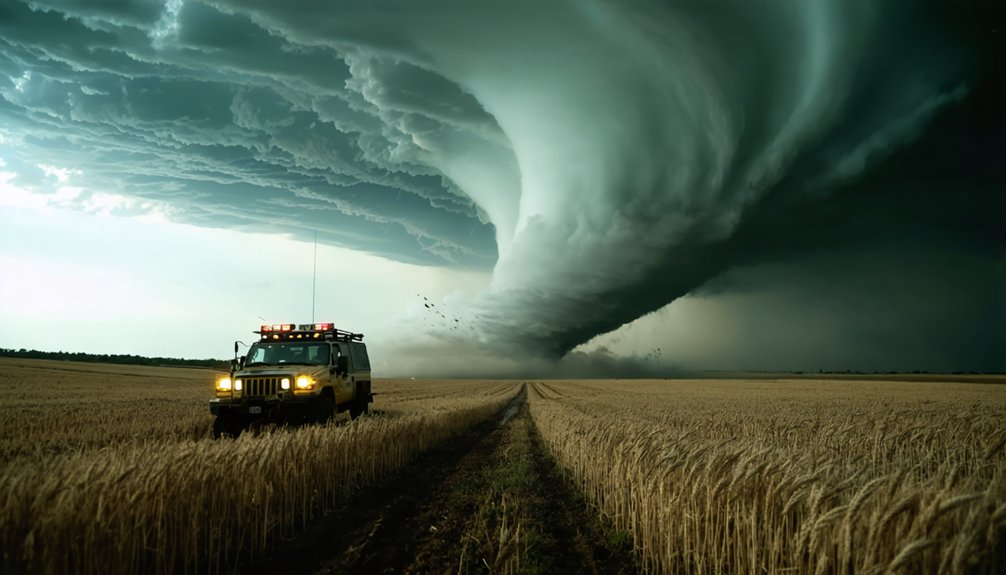
When you’re positioned within miles of a rotating supercell, emotional intensity sharpens every sense. Close encounters with extreme weather trigger physiological responses that reinforce thrill seeking behavior, creating feedback loops that pull chasers back repeatedly. Storm adrenaline becomes its own reward system.
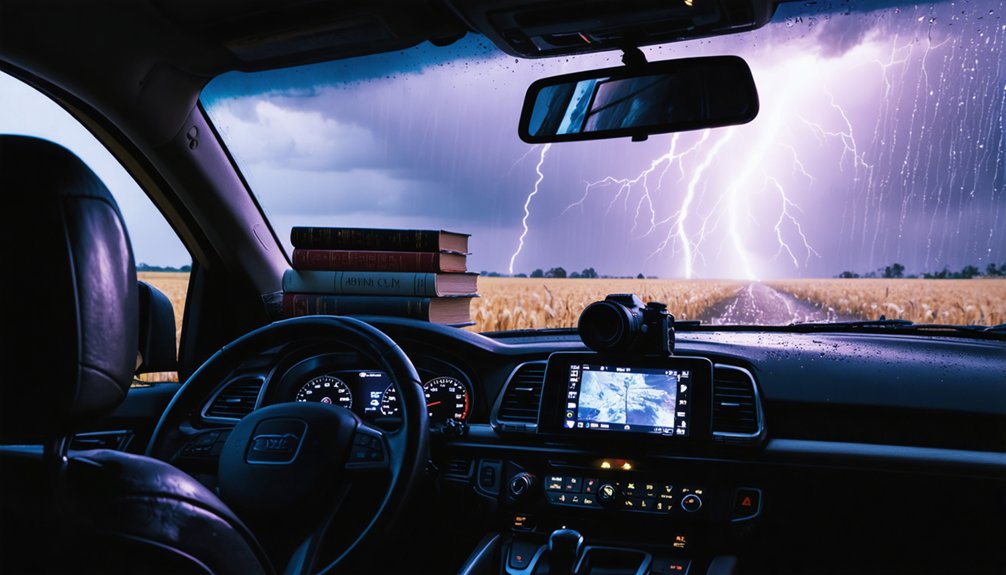
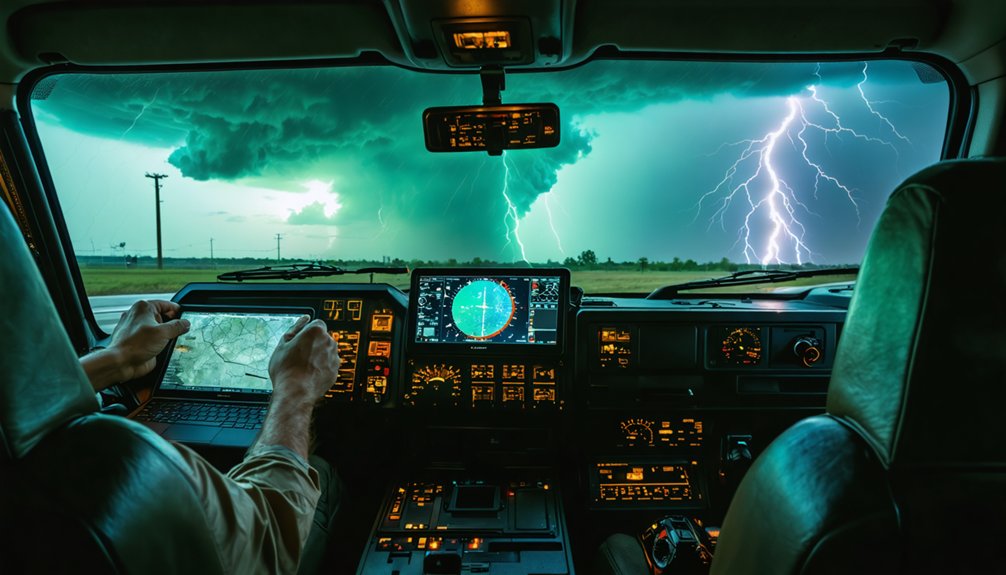
This isn’t reckless abandon — it’s structured pursuit. Experienced chasers leverage real-time radar, satellite data, and cellular networks to optimize proximity while managing exposure.
You’re not surrendering control; you’re exercising it precisely, extracting maximum intensity from nature’s most powerful atmospheric performances on your own terms.
Why Storm Chasers Are Obsessed With Scientific Data
Storm chasers don’t just pursue storms for the thrill—they’re driven by an insatiable need to understand them. Scientific curiosity pushes chasers like Tim Samaras to position instruments near tornadoes, capturing atmospheric data that standard weather stations simply can’t reach. That data collection directly sharpens forecast models, extending warning times and reducing fatalities.
Since the 1960s, tornado deaths have declined remarkably despite increasing tornado frequency—a trend chasers have helped engineer through field research.
You’d recognize the pattern quickly: every close encounter generates measurable insights that feed back into warning systems. Real-time access to cellular networks, satellite imagery, and mobile radar has transformed what chasers can capture and transmit.
For serious chasers, each storm isn’t just a spectacle—it’s a data-rich event demanding precise observation, systematic documentation, and rigorous analysis.
The Storm Chasing Community and the Bonds It Builds
Scientific rigor and shared purpose don’t just produce better data—they forge unusually tight social bonds. Storm chasing’s community dynamics emerge directly from high-stakes collaborative efforts, where trust building happens fast under pressure.
Consider what shapes these intense connections:
- Bonding Experiences: Twelve-hour drives and sleep deprivation create friendship foundations you won’t find in conventional settings.
- Shared Adventures: Traversing dangerous terrain together strengthens emotional ties and group resilience far beyond casual hobbies.
- Support Networks: Collaborative chasing demands real-time communication, making mutual reliance non-negotiable.
These conditions strip away superficiality. You’re either committed or you’re not. That honesty accelerates genuine connection.
Chasers who’ve endured storms together report relationships defined by loyalty, shared pride, and authentic belonging—bonds forged through freedom-seeking rather than obligation.
What Storm Chasers Actually Contribute to Public Safety
While storm chasers pursue personal passion and community, their field presence generates measurable public safety value.
You’ll find chasers actively strengthening warning systems through direct data collection near active tornadoes, feeding real time assistance into emergency networks that communities depend on during critical storm impacts.
Their disaster response contributions extend beyond data. Chasers occasionally serve as first responders, reaching affected areas before official teams arrive.
Storm chasers don’t just document disasters—they respond to them, often arriving before official emergency teams.
Platforms like Storm Assist channel footage directly toward community outreach efforts, helping victims access resources faster.
You can’t ignore the educational initiatives either. Chasers translate complex atmospheric data into accessible public safety insights, helping you understand storm behavior more accurately.
Since the 1960s, tornado fatalities have declined despite increasing storm frequency—a trend partly attributable to improved warning systems that chasers directly support.
Why Storm Chasing Gets Under Your Skin and Never Lets Go
Once storm chasing gets into your system, it rarely leaves—and the data on long-term chasers backs this up.
You’ll find that the passion typically originates from a single formative encounter with a severe storm, after which the intellectual, emotional, and aesthetic pull becomes self-reinforcing.
The more you chase, the deeper your engagement grows, as each event adds layers of experiential data that sharpen both your scientific curiosity and your hunger for the next storm.
Storm Chasing’s Enduring Appeal
Few pursuits embed themselves as deeply into a person’s identity as storm chasing. It rewires how you perceive weather phenomena, landscape, and personal risk. Storm aesthetics become your lens; nature’s power becomes your compass.
Three reasons storm chasing’s grip never loosens:
- Emotional connection deepens over time — each chase reinforces your bond with atmospheric forces, building chasing history unique to you.
- Personal growth accelerates under pressure — maneuvering risk versus reward sharpens decision-making and self-awareness simultaneously.
- Artistic expression finds its rawest canvas — storms demand creative interpretation, transforming data into imagery that resonates beyond meteorology.
You’re not merely observing; you’re participating in something larger. The intellectual, aesthetic, and adventurous dimensions compound, making storm chasing less a hobby and more an irreversible transformation of who you are.
Lifelong Passion For Storms
Storm chasing doesn’t just become a hobby—it becomes a framework for how you interpret the world. Your emotional connection to nature’s power often traces back to childhood inspiration—a tornado glimpsed from a window, a sky turning violent green. Those early encounters wire your perception permanently.
Storm aesthetics operate on multiple levels simultaneously. You’re processing atmospheric beauty intellectually, emotionally, and visually all at once.
Storm photography transforms that processing into visual storytelling, letting you document what most people only fear. You’re not just capturing images—you’re archiving personal journeys through landscapes most avoid.
This passion compounds over time. Each chase deepens your sensitivity to atmospheric patterns, reinforcing why you started.
The sky becomes your primary reference point, and freedom means following wherever the storms lead.
Frequently Asked Questions
How Do Storm Chasers Stay Safe During Extremely Dangerous Tornado Encounters?
Can you imagine facing nature’s fury head-on? You’d prioritize tornado safety through careful risk assessment, using real-time radar, cellular data, and satellite tools to make split-second decisions, keeping you alive while chasing extreme encounters.
What Equipment Do Storm Chasers Typically Use During a Chase?
You’ll rely on equipment essentials like mobile radar, GPS, and weather instruments for storm tracking. Cameras, satellite receivers, and laptops let you collect real-time atmospheric data, giving you the freedom to chase and analyze tornadoes independently.
Are There Legal Restrictions or Permits Required for Storm Chasing Activities?
You’ll find no federal storm chasing regulations or permit requirements restricting your pursuit. However, you must navigate local road laws, emergency zone closures, and trespassing statutes, which can vary greatly by jurisdiction during active weather events.
How Much Does It Cost to Participate in a Storm Chasing Tour?
You’ll find storm chasing packages offer a thrilling dance with nature’s giants. Tour pricing typically runs several thousand dollars, with experienced guides leading you through exhilarating meteorological adventures, while photos from these expeditions can fetch five-figure sums.
Do Storm Chasers Coordinate Directly With National Weather Service Agencies?
Yes, you’ll find that storm chasing partnerships enable direct collaboration with the NWS. Through weather data collaboration, you’re actively transmitting real-time radar and field observations, strengthening warning systems and expanding your freedom to contribute meaningfully to life-saving meteorological research.
References
- https://stormhorn.com/2013/06/05/why-i-chase-storms-a-storm-chasers-manifesto/
- https://science.howstuffworks.com/nature/climate-weather/storms/storm-chaser5.htm
- https://www.chriskridler.com/skydiary/kids/stormchasing/