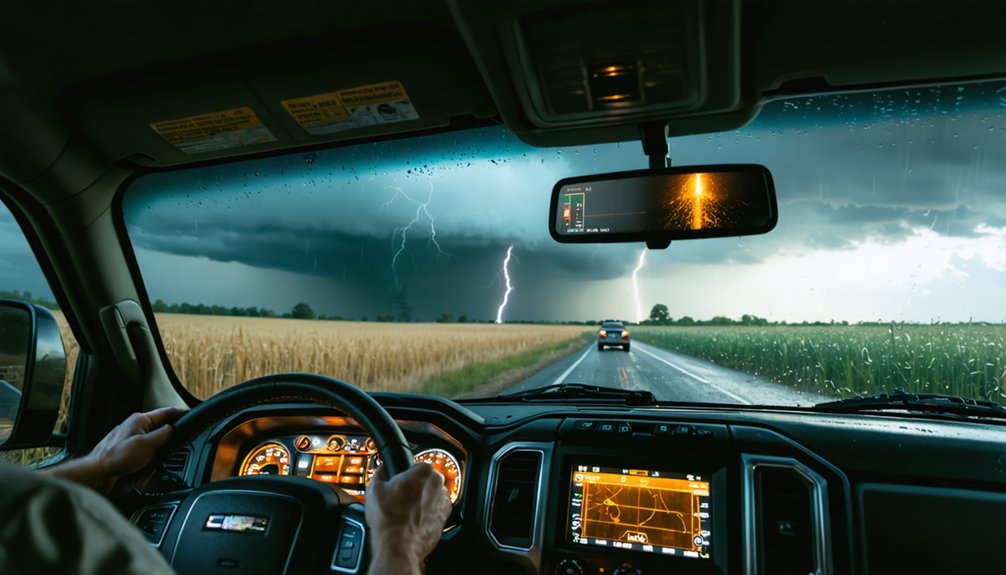
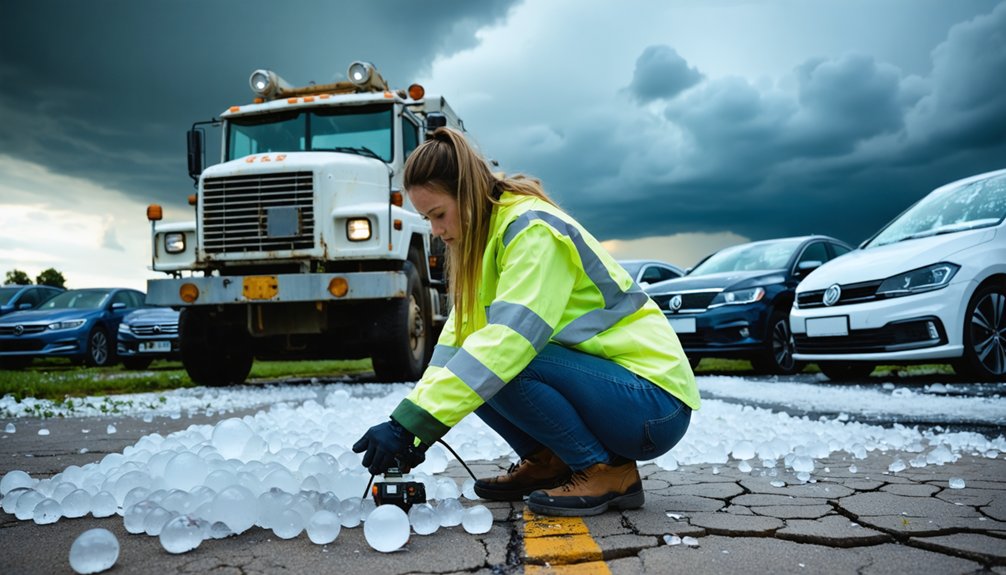
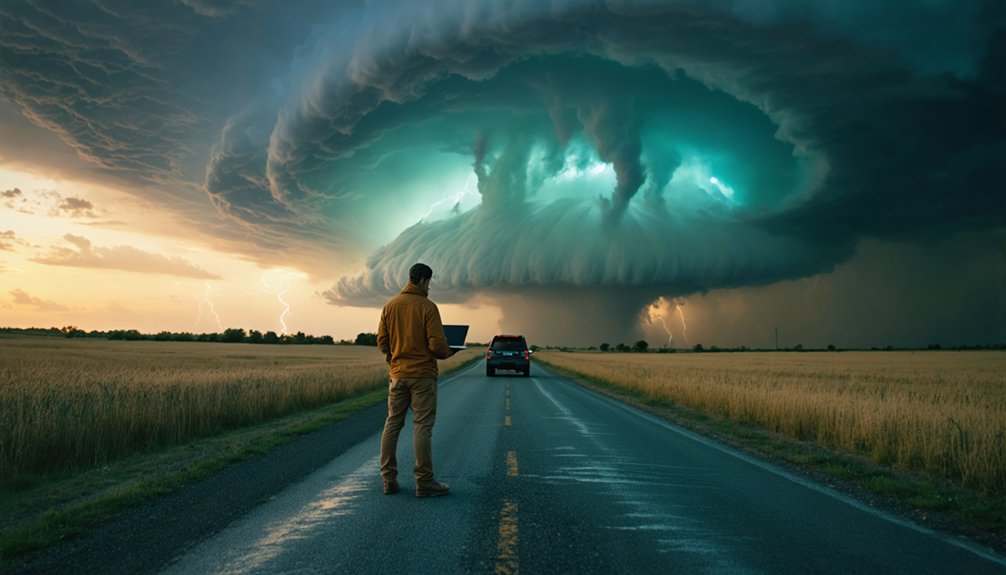
Professional storm chasers intercept thunderstorms to collect measurable field data — wind shear, rotation, and precipitation — that improves tornado warning systems and saves lives. You’ll find their motivations are layered: forecasting mastery, real-time scientific contribution, aesthetic appreciation of rotating wall clouds and striated updrafts, and legitimate revenue streams through footage licensing and guided tours. It’s calculated, career-driven work rooted in atmospheric science. There’s far more to this profession than most people realize.
Key Takeaways
- Professional storm chasers gather critical field data, including wind shear and rotation measurements, to improve tornado warning systems and reduce fatalities.
- Meteorologists chase storms to enhance forecasting accuracy and validate technical knowledge through direct, real-time field experience.
- Ground-truth reports from chasers help correct radar interpretations and refine polygon warnings, improving lead times for public safety.
- Financial incentives drive chasers, including licensing rare footage to networks and operating guided tours earning $3,000–$5,000 weekly.
- Beyond science, storm aesthetics like rotating wall clouds and expansive open skies provide independent visual and spatial motivation.
Why Storm Chasers Actually Do This For a Living
Storm chasers aren’t just thrill-seekers — they’re a cross-section of scientists, photographers, and forecasters each driven by distinct professional incentives. When you break down their motivations, you’ll find layered purposes operating simultaneously.
Researchers collect field data that sharpens tornado warning systems and reduces fatalities. Photographers monetize storm symbolism — selling dramatic supercell footage to broadcasters and digital platforms.
Professional meteorologists chase to sharpen forecasting precision, translating raw field experience into measurable skill improvements.
Weather symbolism runs deeper than aesthetics here. Each intercepted storm represents a measurable event — wind shear, rotation, precipitation data — that feeds real scientific output.
You’re looking at people who’ve structured entire careers around extracting professional value from severe weather events. Their motivations aren’t random; they’re calculated, purposeful, and economically or scientifically justified.
The Forecasting Skills That Make or Break a Storm Chaser
If you want to intercept storms successfully, you need to accurately forecast where and when convective initiation will occur—a skill that separates productive chasers from those who spend hours watching empty skies.
You’ll analyze atmospheric instability indices, wind shear profiles, and mesoscale boundaries to position yourself ahead of storm development.
Equally critical, you must recognize when conditions shift unfavorably and execute a retreat before a chase becomes a fatality statistic.
Predicting Storm Formation Accurately
Accurate forecasting separates productive chases from wasted miles. You’re not just reacting to weather—you’re anticipating it hours in advance using storm prediction tools and weather modeling data.
Skilled chasers analyze atmospheric soundings, wind shear profiles, and convective parameters to pinpoint where storms will initiate and intensify.
Mastering these variables gives you the freedom to position early and intercept cleanly:
- CAPE values indicate available instability, signaling explosive storm development potential
- Hodograph analysis reveals wind shear structure that supports supercell organization
- Surface boundaries mark convergence zones where storm initiation becomes highly probable
You’re fundamentally running probability calculations in real time. Chasers who consistently read these signals correctly log more meaningful intercepts, waste fewer resources, and make smarter decisions when conditions shift unexpectedly.
Knowing When To Retreat
Knowing when to abort a chase is as technically demanding as knowing when to commit. You’re constantly running risk assessment against shifting variables — storm motion, road networks, terrain, and mesocyclone behavior.
When a tornado becomes rain-wrapped or a storm accelerates unexpectedly, hesitation costs you escape routes.
Effective retreat strategies depend on reading storm data in real time. You monitor radar loops, watch for hook echo tightening, and track forward speed against available exit roads.
If the storm outruns your options, you pull out early — no footage justifies a blocked escape path.
Professional chasers treat retreat as a disciplined, pre-planned decision, not a panic response. That discipline is what separates sustainable, long-term field work from reckless exposure.
Freedom in storm chasing means knowing exactly when to walk away.
How Storm Chasers Actually Advance Weather Science
Storm chasers don’t just observe severe weather—they generate field data that laboratory models and radar systems can’t fully replicate. When you’re positioned directly beneath a supercell, you’re capturing storm pattern shifts and cloud formations that remote sensing simply misses.
Field-collected data directly strengthens forecasting models and public warning systems. Here’s what chasers contribute:
- Real-time ground-truth reports that validate or correct radar interpretation during active tornado events
- High-resolution visual documentation of cloud formations and structural changes unavailable through satellite imagery
- Storm pattern behavior data feeding university and government research projects aimed at reducing tornado fatalities
You’re not just chasing adrenaline—you’re closing critical observational gaps. Each intercept produces measurable scientific value, sharpening the meteorological community’s understanding of how severe storms develop, intensify, and collapse.
How Storm Chasers Feed Real-Time Data Into Tornado Warnings
Beyond generating raw field data, chasers feed directly into the warning pipeline that protects lives in real time. When you’re positioned near a rotating supercell, your ground-truth reports confirm or correct radar-derived storm pattern analysis that forecasters are running simultaneously.
National Weather Service meteorologists use those reports to refine polygon warnings, tighten lead times, and reduce false alarms.
Chasers relay structured observations — wall cloud rotation rates, rain-free base height, tornado confirmation — through spotternetwork platforms that integrate directly into data visualization tools forecasters monitor. That integration means your field call can trigger an upgraded warning within minutes.
Organized programs like SKYWARN formalize this loop, giving chasers a defined operational role. You’re not just witnessing the storm; you’re actively sharpening the decision that tells thousands of people when to take shelter.
Is Storm Chasing Just About Adrenaline?
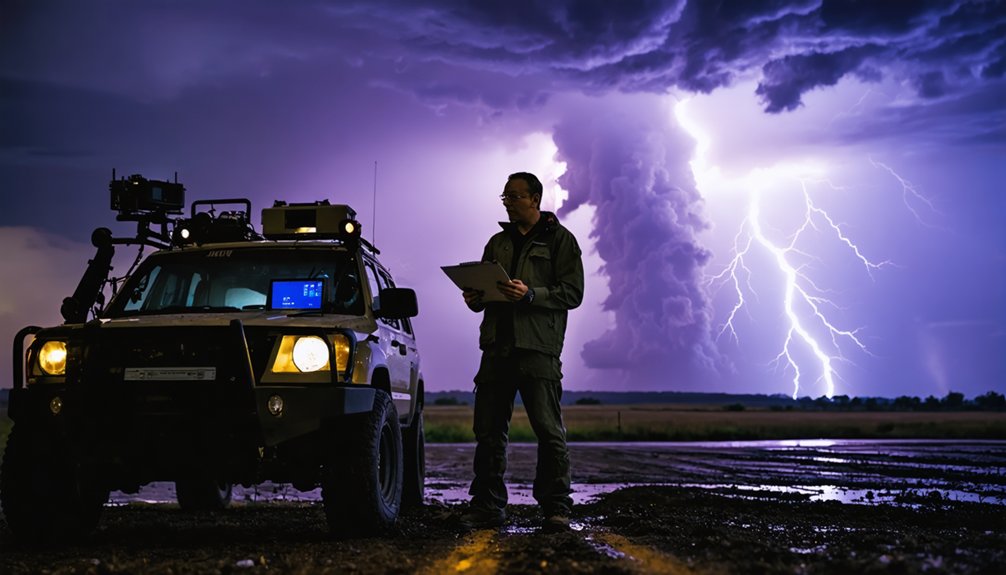
While adrenaline gets the most attention, survey data and field interviews consistently show that storm chasers operate from a layered motivation stack. You’ll find that thrill-seeking ranks alongside scientific curiosity, storm aesthetic appreciation, and community belonging.
Key drivers beyond adrenaline include:
- Forecasting mastery – successfully predicting storm initiation and intercepting it validates months of technical study
- Natural wonder – witnessing supercell structure and open-sky drama delivers aesthetic reward independent of danger
- Data contribution – real-time field reports directly strengthen tornado warning accuracy
Reducing storm chasing to pure sensation-seeking misrepresents the skill set required. Chasers who last long-term typically prioritize meteorological understanding over raw excitement. The adrenaline is real, but it’s one variable in a much more complex equation driving people into the field.
Why Storm Structure and Open Skies Keep Chasers Hooked
For many chasers, the visual architecture of a supercell—rotating wall clouds, striated updraft towers, and sweeping anvil structures—functions as a primary reward signal independent of danger or data collection. Storm aesthetics aren’t superficial; they reflect measurable atmospheric dynamics you can read in real time.
The banded striations signal organized wind shear. The inflow notch marks where boundary-layer air feeds the updraft. You’re decoding natural wonder while standing in open terrain with unobstructed sightlines stretching 50-plus miles.
That spatial freedom matters. The Great Plains landscape amplifies the visual payoff, giving you full context for a storm’s scale and motion. Chasers consistently cite this combination—structured meteorological beauty against expansive skies—as a self-sustaining motivation that operates separately from thrill-seeking or scientific obligation.
How Chasers Turn Storm Footage Into a Career
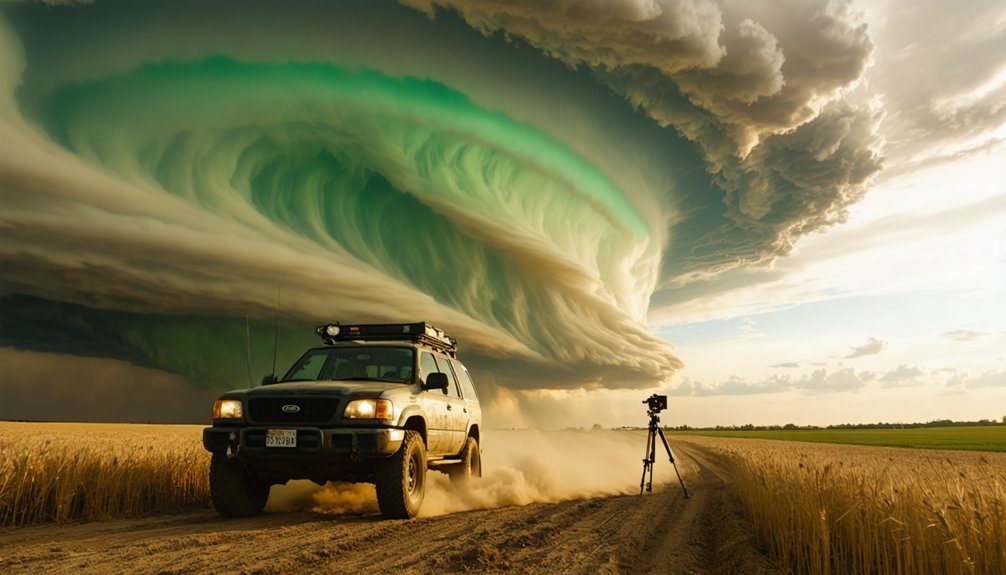
If you capture high-quality storm footage, you can sell it directly to news networks, weather agencies, and digital platforms that pay competitive licensing fees for rare severe-weather video.
Beyond individual clip sales, you can negotiate recurring broadcast deals or partner with documentary producers who need authenticated field footage of supercells, tornadoes, and hail events.
You can also monetize your expertise by operating guided storm-chasing tours, charging clients for structured field experiences that combine safety protocols with direct storm intercept opportunities.
Selling Storm Footage
How do storm chasers convert raw footage into steady income? Through strategic footage monetization, you distribute high-quality storm photography and video across multiple revenue channels simultaneously.
Core monetization channels include:
- News agencies and broadcasters — outlets pay premium rates for real-time severe weather footage during active storm events
- Stock media platforms — licensing storm photography generates passive, recurring income long after the chase ends
- Digital content audiences — YouTube ad revenue and direct sponsorships reward consistent, high-production storm content
Your earning potential scales directly with footage quality, timing, and exclusivity. Rare tornado intercepts command considerably higher licensing fees than standard thunderstorm clips.
You’re fundamentally operating a media business, meaning metadata tagging, licensing agreements, and distribution speed determine profitability as much as the footage itself does.
Media and Broadcasting Deals
Building a sustainable career from storm footage requires steering formal media relationships that go well beyond one-off clip sales. You’ll need licensing agreements with broadcast networks, retainer contracts with digital news platforms, and exclusive deals with documentary producers to generate consistent revenue.
Weather journalism outlets actively source authenticated, geo-tagged footage with accurate meteorological context — so your technical credibility directly affects your market value. Storm photography commands higher rates when paired with verified data: radar captures, wind speed logs, and timestamped GPS coordinates strengthen your negotiating position.
Platforms like Getty Images or AP distribute your content globally, multiplying exposure without requiring you to manage each transaction independently.
Structuring tiered licensing rights — regional versus international, one-time versus syndication — protects your assets while maximizing long-term income potential across multiple broadcasting channels simultaneously.
Monetizing Storm Chasing Tours
Beyond licensing footage to broadcasters, storm chasing tours represent a direct-to-consumer revenue stream that’s grown into a structured industry. You’re fundamentally purchasing guided access to severe weather events, where operators leverage deep forecasting expertise and route flexibility to intercept supercells across open plains.
Tour operators monetize atmospheric aesthetics directly — storm symbolism sells. Clients pay $3,000–$5,000 per week for proximity to dramatic meteorological events.
Key revenue drivers include:
- Multi-day chase packages targeting peak tornado season across Tornado Alley
- Photography-focused tours built around supercell structure and lightning documentation
- Educational components covering forecasting methodology and real-time decision-making
This model works because you control your experience outside conventional tourism frameworks. Operators maintain profitability through repeat clientele, digital marketing, and seasonal scheduling — converting weather expertise into a scalable, independence-driven enterprise.
The Skills, Gear, and Training Professional Chasers Need
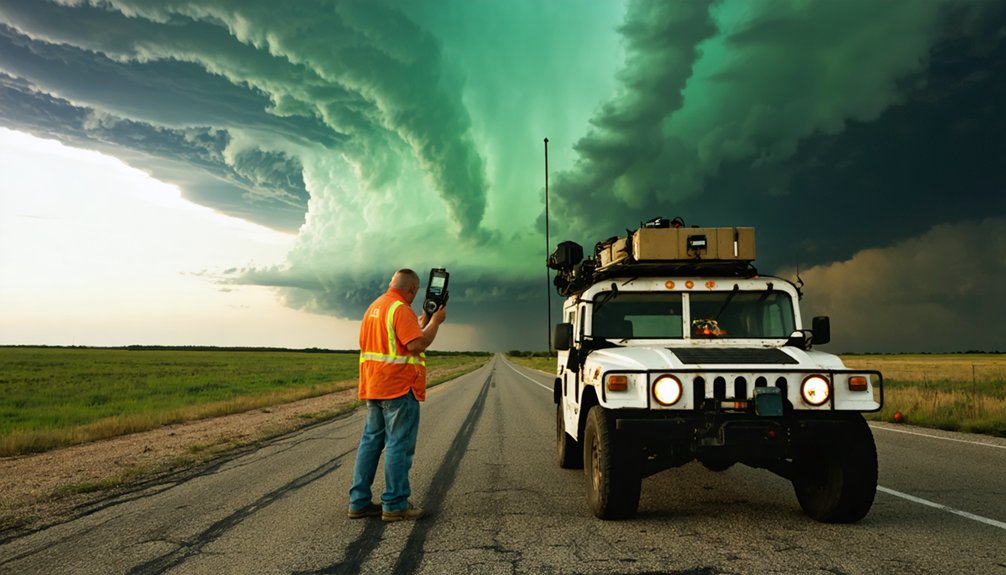
Storm chasing at a professional level demands a precise combination of meteorological knowledge, technical equipment, and field-tested judgment. You need to read storm patterns accurately, interpret cloud dynamics in real time, and translate atmospheric data into decisive movement.
Dual-polarization radar software, GPS navigation systems, dashcam rigs, and mobile weather stations are standard tools you’ll rely on during active intercepts.
Training typically combines formal meteorology coursework with hundreds of logged field hours. You develop situational awareness by analyzing failed chases as rigorously as successful ones.
Professional chasers also prioritize vehicle positioning, escape route planning, and communication protocols to minimize exposure risk.
Without disciplined forecasting ability and reliable equipment, intercepts become reckless rather than calculated. Mastery here means knowing exactly when to commit and when to retreat.
The Brotherhood That Forms When You Chase Storms Together
Few environments accelerate social bonding as efficiently as shared high-stakes fieldwork, and storm chasing is a precise case study in that dynamic. When you’re coordinating intercepts under rapidly evolving mesocyclones, shared camaraderie and mutual trust aren’t abstract concepts—they’re operational necessities.
Field data consistently shows that chasers collaborate even when pursuing independent objectives. That interdependence builds durable professional networks rooted in real experience, not credentials.
The bonds you’ll form emerge from:
- Real-time decision-making under dangerous, rapidly shifting conditions
- Shared situational awareness, where one team’s observation protects another’s positioning
- Collective accountability, since poor individual judgment creates cascading risk for everyone nearby
This community operates on earned trust, direct communication, and demonstrated competence—structures that reward autonomy while demanding responsibility.
You don’t join this brotherhood; you prove your way into it.
Frequently Asked Questions
How Do Storm Chasers Handle Insurance and Liability During Chases?
You’ll need specialized insurance coverage for high-risk field operations. Liability risks require you to carry commercial auto and umbrella policies, document safety protocols, and maintain waivers—data shows standard policies typically exclude storm-chasing activities entirely.
What Physical and Mental Health Risks Do Storm Chasers Face Long-Term?
Over 60% of veteran chasers report chronic stress symptoms. You’ll face mental fatigue from relentless decision-making and physical exhaustion from long drives, irregular sleep, and high-alert environments—compounding health risks that quietly accumulate across seasons.
How Do Storm Chasers Coordinate With Local Emergency Services on the Ground?
You’ll relay real-time storm safety reports directly to emergency dispatch and National Weather Service offices. Your weather forecasting data helps coordinators deploy resources faster, cutting response times and giving communities the actionable intelligence they need to protect themselves.
Do Storm Chasers Require Special Permits or Licenses to Operate Professionally?
Like ancient explorers charting unknown seas, you’ll find no federal storm chase regulations or licensing requirements exist. You operate freely, though you must follow standard traffic laws and respect any state-specific guidelines during active chases.
How Do Storm Chasers Manage Finances During Slow or Inactive Weather Seasons?
You diversify your storm chase funding through seasonal income strategies like selling archived footage, teaching forecasting workshops, writing weather content, and offering tours—keeping your cash flow independent and your operations self-sustaining when active chase seasons slow down.
References
- https://en.wikipedia.org/wiki/Storm_chasing
- https://www.reddit.com/r/stormchasing/comments/167h5ny/why_are_there_so_many_professional_storm_chasers/
- https://www.onlinedegree.com/careers/life-physical-science/storm-chaser/
- https://science.howstuffworks.com/nature/climate-weather/storms/storm-chaser5.htm
- https://crazystormchasers.com/what-drives-storm-chasers-to-risk-it-all/
- https://science.howstuffworks.com/nature/climate-weather/storms/storm-chaser.htm
- https://www.youtube.com/watch?v=Y2Zm9tkhVfI
- http://www.stormeyes.org/tornado/chasing/FAQ/
- https://www.okcollegestart.org/Career_Planning/Career_Profile/Career_Profile.aspx?id=JPdLmXAP2BPAXSRqQAxw8oleqa76wXAP3DPAXXAP3DPAX&screen=1