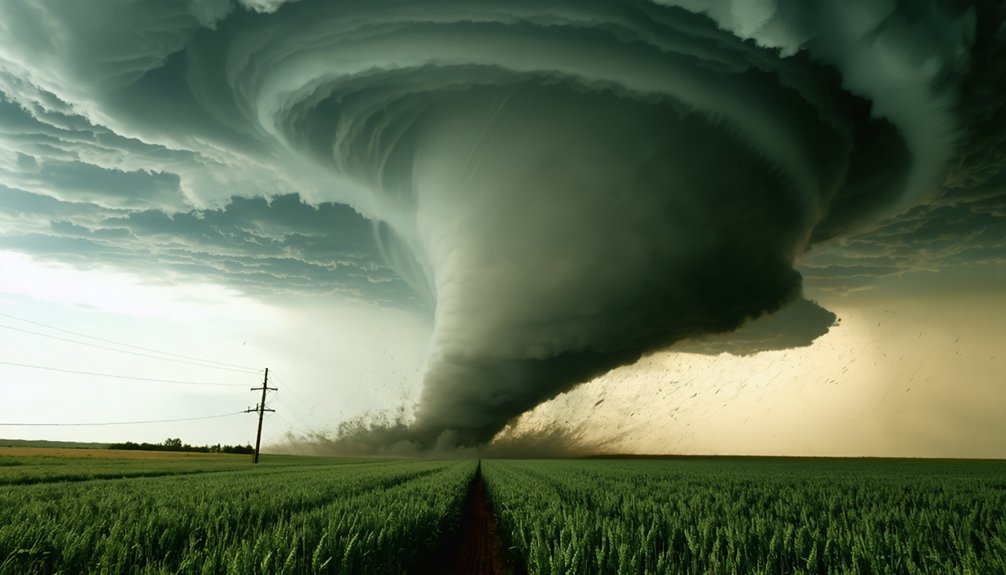
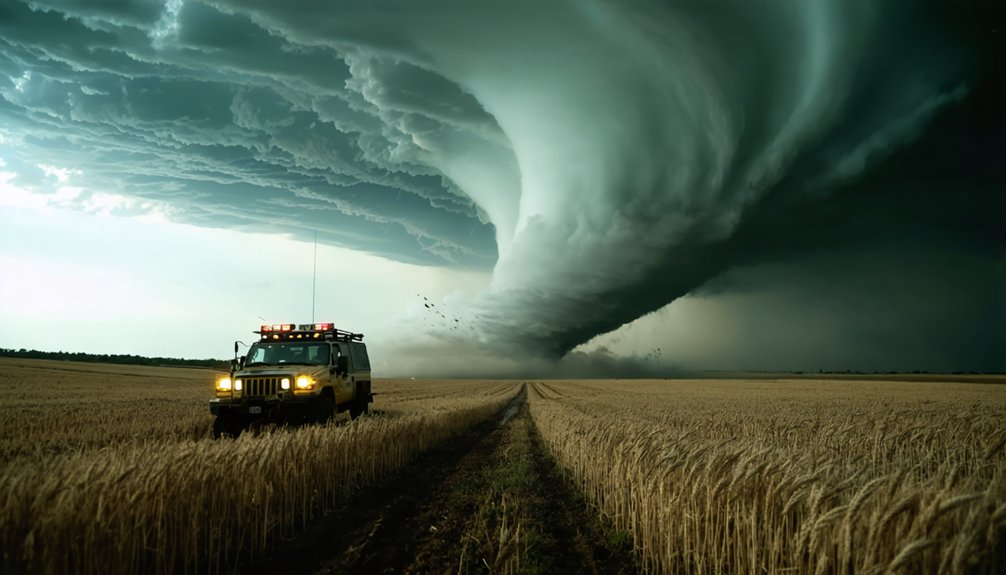
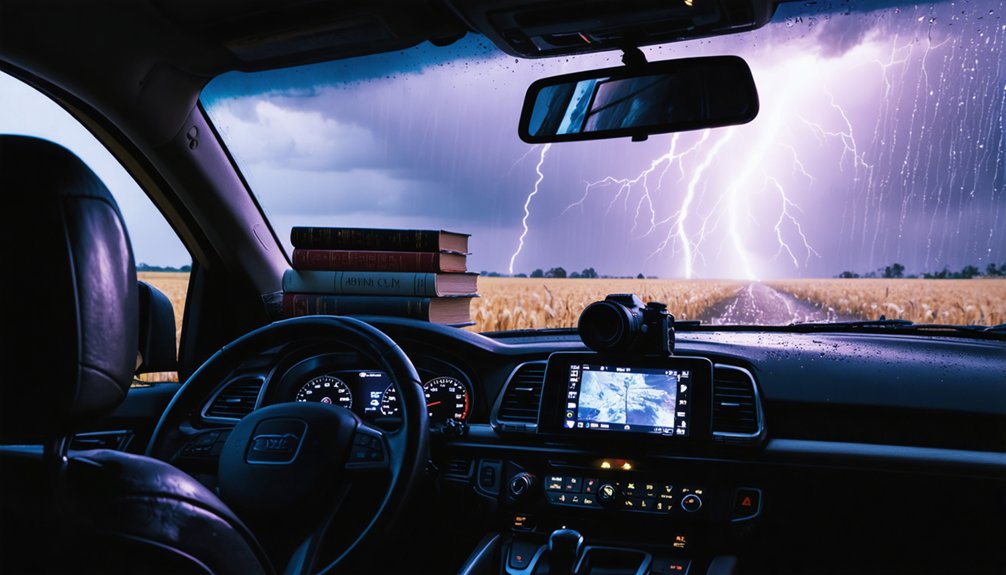
When you look at what drives storm chasers, you’ll find it’s rarely just adrenaline. They’re motivated by a layered mix of sensation-seeking, meteorological mastery, and a genuine drive to improve public safety through real-time data collection. Risk perception shifts as experience builds, and cognitive biases reshape how danger gets weighed. The social bonds, scientific contributions, and aesthetic rewards all reinforce the commitment. There’s far more complexity to this subculture than most people realize, and it only gets deeper from here.
Key Takeaways
- Storm chasers are driven by intense sensation-seeking, where the thrill of danger coexists with deeper motivations like scientific curiosity and mastery.
- Years of meteorological study fuel a passion for understanding tornadoes, making data collection feel purposeful rather than reckless.
- Strong social bonds formed under high-stakes conditions create a compelling subculture that reinforces identity and belonging.
- Economic incentives, including selling broadcast footage and building digital audiences, add financial motivation to the pursuit.
- The raw visual drama of supercells and open prairie landscapes creates an aesthetic pull that repeatedly draws chasers back.
The Psychology Behind Storm Chasing
What compels someone to drive toward a tornado instead of away from it? Storm psychology research points to two core drivers: sensation seeking and knowledge acquisition. You’re not simply chasing danger — you’re pursuing mastery over uncertainty.
Studies show that thrill vs. knowledge motivations often coexist. Chasers score high in adventure motivation and emotional resilience, tolerating extreme stress to gain environmental awareness and ground-level data.
Risk perception doesn’t disappear — it gets recalibrated through experience and cognitive biases that favor reward over consequence.
Risk doesn’t vanish for storm chasers — it shifts, reshaped by experience and a mind wired to chase reward.
Your nature connection deepens each chase. Community dynamics reinforce commitment, creating identity and shared purpose within a specialized subculture.
Many chasers report personal transformation after their first significant storm encounter. Ultimately, you’re not running from fear — you’re running toward understanding, autonomy, and direct engagement with the natural world.
Is Thrill-Seeking Really the Whole Story?
Although thrill-seeking dominates the public narrative around storm chasing, research doesn’t support it as the primary driver. Studies consistently point to knowledge exchange, personal growth, and nature appreciation as stronger motivators than adrenaline addiction alone.
You’ll find that most chasers invest heavily in risk assessment, developing detailed safety strategies before they ever leave home.
Community dynamics also play a measurable role. Experience sharing within chaser networks accelerates learning and sharpens forecasting accuracy. These aren’t reckless thrill-seekers—they’re people driven by adventure motivation grounded in scientific curiosity and emotional resilience.
The data suggests a more complex profile: individuals who tolerate uncertainty not because they ignore danger, but because they’ve calculated the tradeoff and found meaningful purpose on the other side of it.
The Scientific Drive That Pulls Chasers Toward Storms
When you look past the adrenaline, you find that many chasers are driven by a disciplined pursuit of meteorological knowledge—specifically, a need to close the gaps in understanding how tornadoes and supercells develop.
Research confirms that learning and gaining insight rank among the strongest motivations chasers report, pushing them to study textbooks, journals, and radar data long before they ever hit the road.
That fieldwork isn’t just personal—your ground-truth observations can directly improve storm warning accuracy, giving the scientific drive a measurable, public-safety payoff.
Chasing Knowledge Over Thrills
For many storm chasers, the real draw isn’t the adrenaline—it’s the data. Research confirms that knowledge pursuit ranks higher than risk-taking as a core motivator. You’re out there because storm observation delivers atmospheric insights you can’t get from a textbook or satellite feed.
Weather education drives chasers to study meteorology for years before ever intercepting a supercell. That investment reflects genuine scientific curiosity, not recklessness.
Data collection in the field produces ground-truth measurements that sharpen meteorological understanding and improve forecast accuracy.
When you chase with purpose, you’re contributing to educational outreach and storm science that benefits entire communities. The freedom to explore severe weather on your own terms, while advancing real knowledge, is what separates disciplined chasers from thrill-seekers chasing chaos.
Reducing Weather Ignorance
Storm chasers aren’t just drawn to danger—they’re pulled by a specific intellectual imperative: closing the gap between what meteorologists know and what the atmosphere actually does.
Every intercept generates field data that textbooks can’t replicate. You’re watching research collaboration happen in real time, where chasers feed raw observations directly into forecasting models.
That data dissemination matters beyond academia. It drives storm preparedness at the community level, fueling community workshops, safety training, and public outreach programs built on verified field intelligence.
Storm awareness improves when meteorological literacy spreads from chasers to civilians. Knowledge sharing isn’t incidental—it’s structural.
Weather education advances only when someone’s willing to position themselves close enough to measure what instruments miss.
Chasers aren’t reckless; they’re methodical agents filling critical observational gaps that expand everyone’s freedom to make informed decisions during severe weather events.
Improving Storm Warning Accuracy
Closing observational gaps feeds directly into one of storm chasing’s most concrete scientific payoffs: tightening the accuracy of severe weather warnings. When you collect real-time storm data in the field, you’re feeding raw atmospheric measurements directly into predictive modeling frameworks that warning systems depend on. That ground-truth data sharpens forecast precision in ways remote sensors can’t fully replicate.
Meteorological research advances when chasers document storm behavior at close range, validating or challenging existing safety protocols and theoretical models. Better data collection means forecasters issue warnings earlier and with greater spatial accuracy, giving communities real decision-making time.
That outcome connects directly to risk management, community outreach, and storm education efforts. Improved public awareness doesn’t happen in a vacuum — it traces back to the chasers who refused to stay home.
Why Storm Structure and Landscape Keep Chasers Coming Back
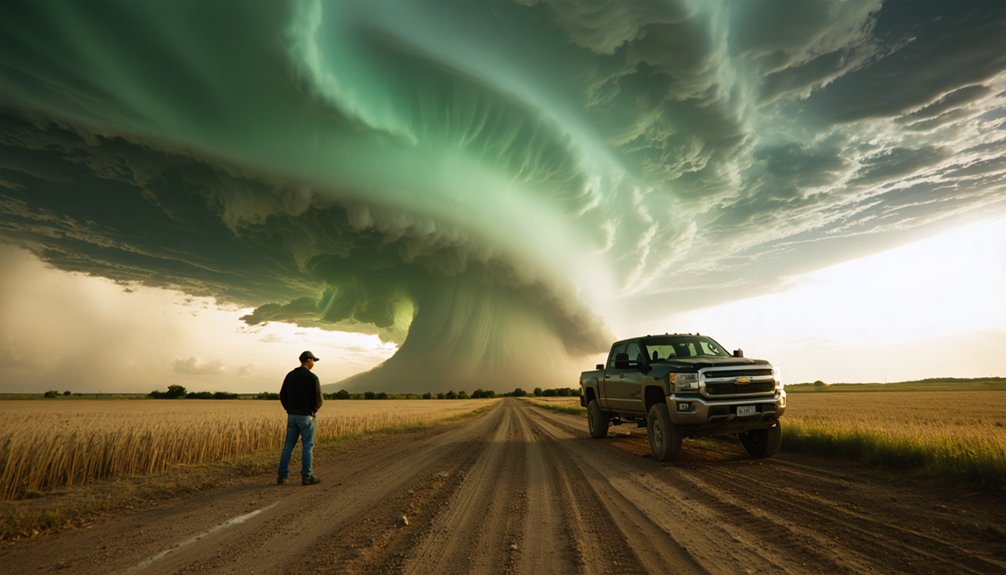
Beyond the adrenaline and the data, the visual and spatial dimensions of storm chasing function as independent motivators that keep chasers returning season after season.
Storm aesthetics operate as a measurable pull—chasers report that cloud formations, rotating wall clouds, and mammatus structures produce responses linked to awe and reward.
Chase routes across open prairie landscapes amplify this effect, placing you directly inside nature’s drama with unobstructed sightlines.
Atmospheric dynamics visible in real time—inflow bands, rear-flank downdrafts, vault structures—combine scientific value with raw visual allure.
Storm photography intensifies this draw, turning weather patterns into permanent documentation of rare events.
Landscape beauty isn’t incidental here; it’s structural.
The freedom of unpredictable chase excitement across wide-open terrain reinforces why these environments keep pulling chasers back year after year.
How Photography and Media Shape the Modern Chase
Three technologies—DSLR cameras, drone platforms, and mobile radar apps—have restructured what storm chasers collect and why they chase. Equipment evolution now lets you capture broadcast-quality footage from a truck cab, turning raw data collection into visual storytelling with direct media impact.
Three technologies have restructured storm chasing—transforming raw data collection into broadcast-quality visual storytelling with direct media impact.
Digital platforms amplify that output instantly, rewarding strong photography techniques and aesthetic appreciation with measurable audience reach.
You’re no longer chasing just for the experience—you’re building a shareable archive. Community sharing across YouTube, Instagram, and dedicated forums creates feedback loops that sharpen your artistic expression and reinforce emotional connection to the craft.
Footage sells to networks, documentaries, and news outlets, generating real income. The camera has become as essential as the radar, fundamentally shifting chase motivation from pure observation toward documented, monetizable scientific and creative production.
The Role Storm Chasers Play in Public Safety
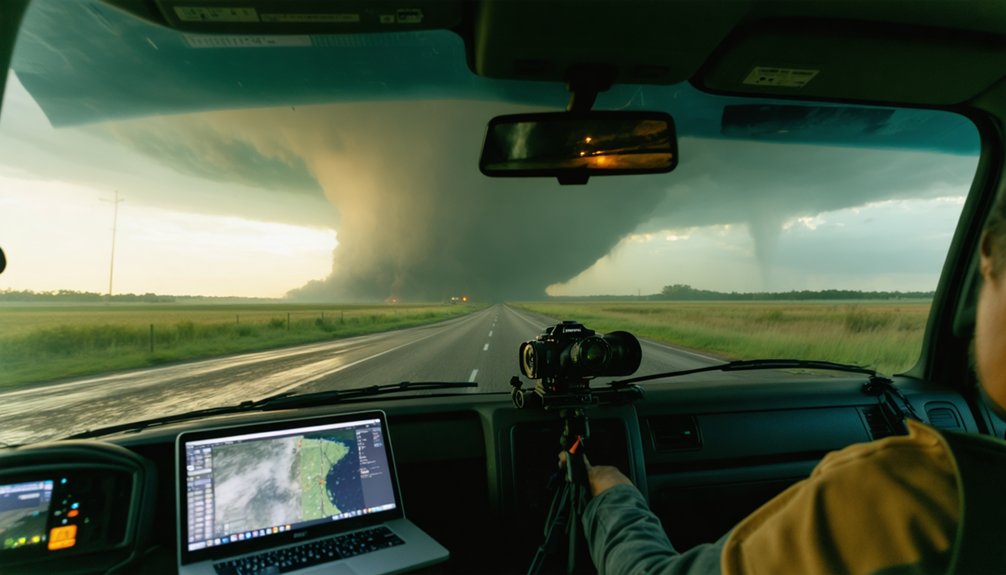
While cameras and radar apps have commercialized the chase, ground-level observation still feeds directly into the warning systems that protect lives. When you’re positioned near a rotating supercell, you’re generating real-time data that improves predictive modeling and sharpens emergency response decisions.
Storm chasers contribute through three measurable channels:
- Data sharing — field observations fill radar gaps, refining risk assessment for forecasters.
- Community outreach — chasers support storm education and public engagement in high-risk regions.
- Safety training — experienced chasers collaborate with emergency teams, strengthening coordinated response frameworks.
These contributions aren’t accidental. They reflect a culture where technical skill meets civic responsibility.
You’re not just chasing storms — you’re helping close the information gap that determines whether a warning reaches someone in time.
Why Storm Chasers Form Such Tight Social Bonds
When you chase storms alongside others, you’re repeatedly exposed to high-stakes, unpredictable conditions that accelerate trust formation far faster than ordinary shared experiences.
Research on extreme-activity communities shows that intense risk environments compress the social bonding timeline, producing strong interpersonal ties grounded in mutual competence and reliability.
That shared intensity also reinforces a distinct subculture identity, where you measure belonging not by casual familiarity but by firsthand experience with severe weather systems.
Shared Intensity Builds Trust
Storm chasing builds unusually strong social bonds because the conditions that produce them are structurally similar to those studied in high-cohesion military and rescue teams: shared risk, interdependence, and sustained high-stakes decision-making.
When you’re deep in collaborative efforts under pressure, trust building happens fast. Intense moments compress time, accelerating emotional connections that typically take months to form.
Three group dynamics that reinforce mutual respect among chasers:
- Shared experiences during risk assessment force honest, real-time communication.
- Coping strategies developed together create durable psychological alignment.
- Bonding rituals—post-chase debriefs, shared meals, reviewing footage—reinforce collective identity.
You’re not just chasing storms. You’re operating inside a self-selected team where everyone understands the stakes. That shared context produces loyalty that outlasts the season.
A Unique Subculture Identity
Those bonds forged under pressure don’t exist in isolation—they accumulate into something larger: a subculture with its own language, hierarchy, and identity markers.
You’ll notice subculture norms operating immediately—specific radar apps, vehicle setups, and communication styles signal insider status. Identity formation happens fast when chase narratives replace ordinary résumés. Shared experiences during violent storms become cultural symbolism, separating serious chasers from casual observers.
Belonging dynamics reward competence over credentials. Status symbols here aren’t material—they’re documented intercepts, forecast accuracy, and field hours logged.
Community rituals reinforce this structure: post-chase debriefs, footage reviews, and season recaps function as collective meaning-making. You’re not just chasing storms—you’re earning your place inside a merit-based system that values raw skill, independent thinking, and the freedom to operate far outside conventional boundaries.
What Storm Chasing Does to a Person Over Time
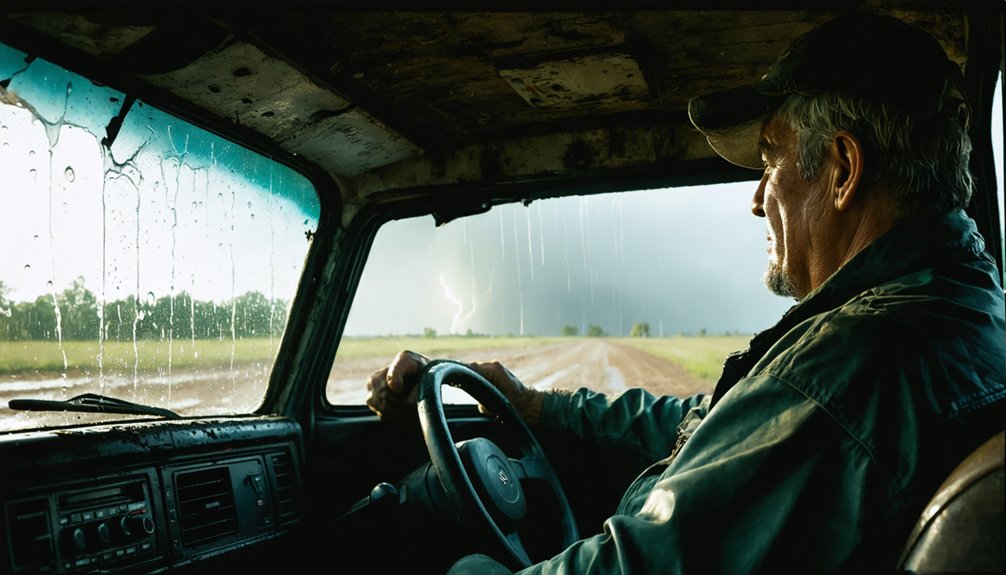
Over time, chasing severe storms reshapes a person’s psychology, risk tolerance, and social identity in measurable ways. You’re not the same chaser at year ten as you were at year one. The data backs this up:
- Thrill adaptation occurs — repeated exposure dulls initial fear responses, sharpening your decision-making processes and risk assessment instincts.
- Environmental awareness deepens — long-term commitment to the field builds pattern recognition that rewires how you read landscapes, atmospheres, and warning signs.
- Coping strategies evolve — emotional resilience strengthens as near-miss experiences force you to develop structured psychological tools.
You’ll also notice measurable personal growth through adventure mindset refinement and community impact contributions.
Storm chasing doesn’t just test you temporarily — it fundamentally restructures how you process uncertainty, freedom, and consequence.
Frequently Asked Questions
How Much Does Professional Storm Chasing Equipment Typically Cost?
Like gearing up for war, you’re looking at $10,000–$50,000+ for professional storm tracking technology. Equipment maintenance costs add thousands annually, so you’ll need deep pockets to chase freedom across those open skies.
Do Storm Chasers Need Special Licenses or Certifications to Operate Legally?
You don’t need special licenses to chase storms legally, but you’ll want to understand storm chasing regulations and legal liabilities—traffic laws, trespassing risks, and liability exposure can all affect your operational freedom substantially.
How Many Storm Chasers Are Actively Pursuing Severe Weather Each Year?
Roughly 500–1,000 active chasers pursue severe weather risks annually. You’ll find storm chasing motivations vary wildly, but that growing number reflects how accessible radar technology’s made intercepting dangerous supercells for science, documentation, and pure adventure.
What Insurance Options Are Available for Professional Storm Chasers?
You’ll need liability coverage, equipment insurance, and solid risk management strategies. Specialty insurers assess your storm forecasting data and field history to tailor policies, letting you chase freely while protecting your gear and financial independence.
Which Regions of the World Have the Most Active Storm Chasing Communities?
Over 1,000 annual tornadoes strike Tornado Alley, making it your prime hub. You’ll find the world’s densest storm-chasing communities there, drawn by intense weather patterns, storm festivals, and community events celebrating this high-stakes pursuit of nature’s extremes.
References
- https://www.pbs.org/newshour/science/inside-the-dangerous-and-unpredictable-science-of-storm-chasing
- https://www.reddit.com/r/stormchasing/comments/1q0jufg/hey_nonchaser_here_what_is_the_reason_people_are/
- https://en.wikipedia.org/wiki/Storm_chasing
- https://digital.library.txst.edu/server/api/core/bitstreams/d7be86e8-0131-4954-b66a-af9865942087/content
- https://hull-repository.worktribe.com/preview/4415817/Hunter_ Nicolle – Storm Chasing in Contemporary American Society and Culture.pdf
- http://www.stormeyes.org/tornado/chasing/FAQ/
- https://www.atms.unca.edu/cgodfrey/courses/swfex/pdf/ChasingSafety.pdf
- https://newsinteractives.cbc.ca/longform/prairie-storm-chasers/
- https://www.healthday.com/health-news/general-health/storm-chasers-born-to-be-wild-676718.html
- https://www.youtube.com/watch?v=AKN78EFp3xE