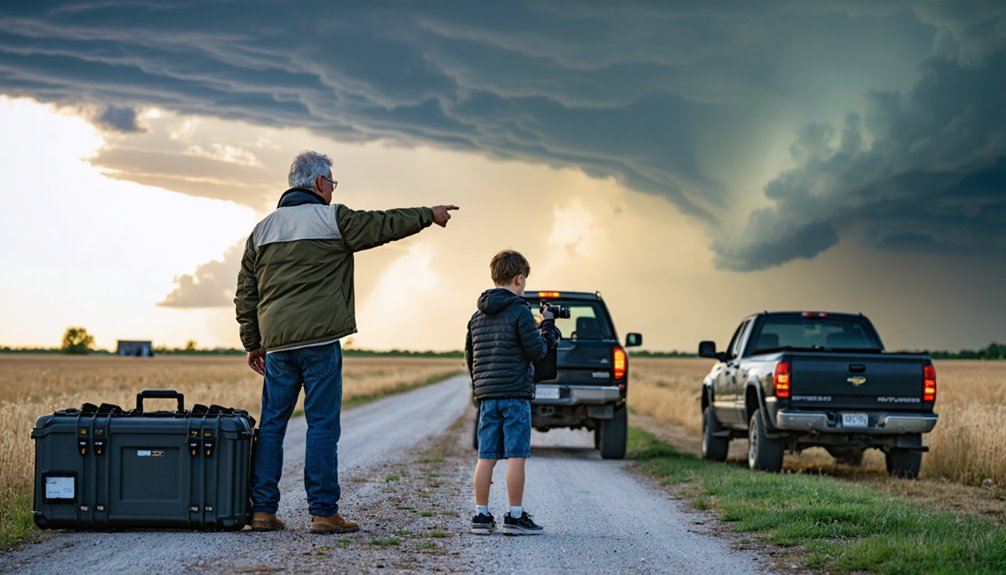
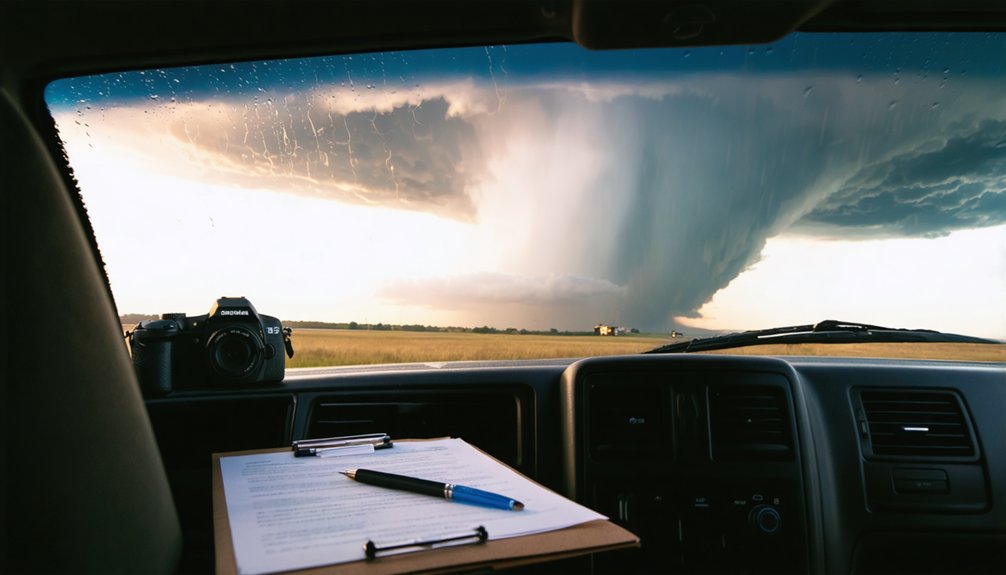
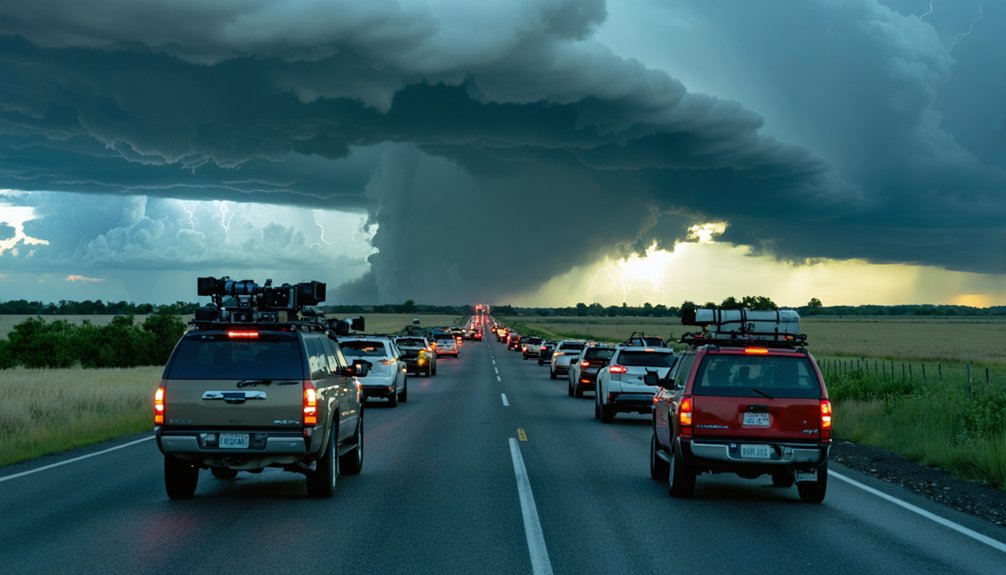
Informed consent plays a critical role in storm chasing by protecting you, your team, and the public before anyone enters the field. It requires you to acknowledge life-threatening risks like tornadoes, lightning, and flash floods while signing documentation that confirms full disclosure. It also governs data collection, landowner access, and liability protections. Skipping it exposes you to serious legal and ethical consequences. Explore each section below to understand exactly what’s at stake.
Key Takeaways
- Informed consent ensures storm chasing participants fully understand and acknowledge life-threatening risks, including tornadoes, lightning, flash floods, and traffic hazards.
- Signed consent waivers legally protect organizers from negligence claims by confirming participants voluntarily accepted inherent chase risks.
- Written landowner permission is required before accessing private property, protecting teams from trespassing charges and reinforcing ethical practices.
- Informed consent governs data collection transparency, protecting research integrity and ensuring participants meaningfully agree to how their information is used.
- When minors participate, parental consent is legally mandated, with safety measures required to exceed standard adult baseline protocols.
What Is Informed Consent in Storm Chasing?
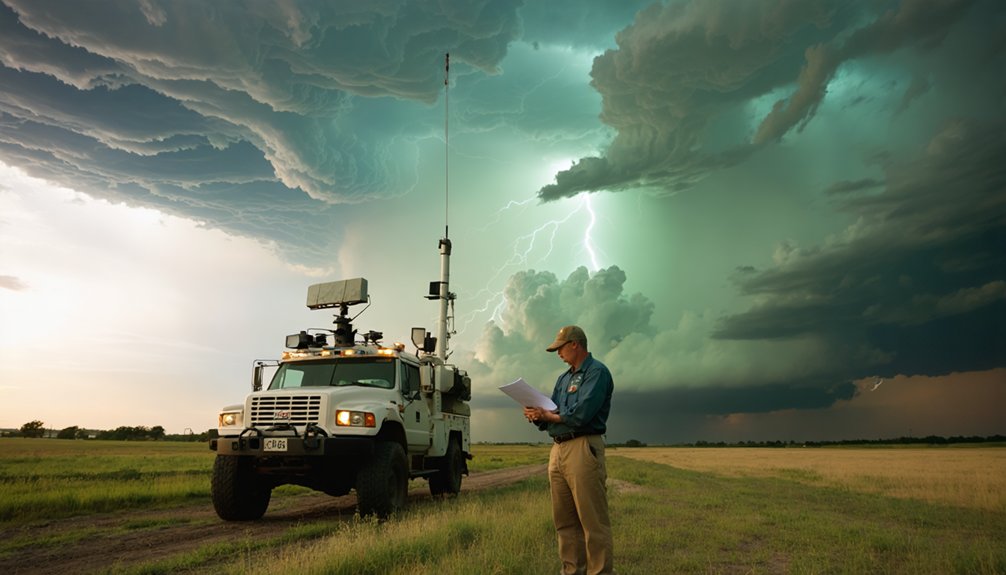
Informed consent in storm chasing is a formal process where participants acknowledge and accept the inherent risks of engaging with severe weather phenomena before any chase activity begins.
You’re entering a high-stakes environment where ethical considerations, legal frameworks, and safety protocols intersect directly with your autonomy. By signing consent documentation, you’re confirming participant awareness of dangers including tornadoes, lightning, and flash floods.
These agreements also address data protection practices, ensuring your personal information and captured footage are handled responsibly. Property rights obligations require you to respect landowner boundaries, while public safety duties demand you avoid interfering with emergency operations.
Risk acknowledgment isn’t merely procedural — it’s your informed, voluntary agreement to engage with extreme weather on clear, transparent terms that protect both your rights and others’.
Why Informed Consent Matters Before Every Chase?
Before every chase, obtaining informed consent protects you, your team, and the public by establishing clear expectations around risk, legal responsibility, and ethical conduct.
Without it, you expose yourself to liability concerns, ethical implications, and potential harm to participant autonomy.
Informed consent matters because it:
Informed consent matters because it protects participants, ensures transparency, and establishes the boundaries that keep every chase ethical and safe.
- Establishes risk management boundaries — you document safety protocols, emergency coordination plans, and property rights agreements before entering any chase environment.
- Ensures research transparency — you clearly disclose data usage practices, consent documentation requirements, and how collected information gets stored or published.
- Protects everyone involved — you respect participant autonomy by giving individuals sufficient time to review risks before committing.
Skipping consent isn’t just unethical — it’s legally dangerous and scientifically compromising.
Every chase demands it.
What Risks Must Participants Acknowledge Before Signing Informed Consent?
Signing an informed consent form means you’re acknowledging a defined set of real, documented dangers — not abstract possibilities. Risk acknowledgment isn’t a formality — it’s your confirmation that you understand what you’re entering.
You must recognize tornadoes, lightning strikes, flash floods, and violent winds as direct physical threats. Injuries range from minor trauma to fatal outcomes, and no preparation eliminates that exposure entirely.
Participant education guarantees you’re not just reading a document — you’re comprehending it. Consent procedures require you to understand that dangerous conditions exist beyond human control, regardless of equipment or experience.
You’re also acknowledging traffic hazards, debris impact, and rapid weather escalation. Your signature confirms you’ve received full disclosure and voluntarily accept responsibility for participating under those documented, unavoidable conditions.
What Informed Consent Waivers Actually Protect Against
When you sign an informed consent waiver before a storm chase, you’re legally shielding the organizing company from liability claims arising from injuries or damages you sustain during the activity.
These waivers create explicit negligence claim barriers by establishing that you acknowledged the inherent, uncontrollable dangers before participating.
Without valid consent documentation, operators face significant legal exposure, as courts can treat uninformed participation as grounds for successful negligence suits.
Legal Liability Shields
Informed consent waivers serve as legal liability shields by explicitly documenting that you’ve acknowledged the inherent risks of storm chasing before participating.
These waivers provide critical legal protections for operators while clarifying your rights before you’re exposed to danger.
Three core liability coverage functions these waivers fulfill:
- Risk acknowledgment — Confirms you understood tornado, lightning, and flash flood dangers before signing.
- Legal redress waiver — Eliminates your right to sue organizers for injuries arising from inherent chase risks.
- Insurance compliance — Valid consent documentation satisfies liability insurance requirements, keeping chase operations legally protected.
Without signed waivers, organizations face negligence lawsuits even when dangers are obvious.
You’re fundamentally confirming that no coercion occurred and that participation was fully voluntary and informed.
Negligence Claim Barriers
Beyond shielding operators from general liability, waivers specifically block negligence claims by establishing that you—not the organizer—accepted responsibility for known, documented risks.
When you sign an informed consent form, you’re confirming that you understood the dangers beforehand, which directly undermines negligence claim prevention efforts brought against operators after an incident.
Courts typically reject negligence claims when informed consent enforcement proves you received full disclosure of specific hazards—tornadoes, lightning, flash floods—and voluntarily proceeded anyway.
This legal mechanism doesn’t protect operators from gross negligence or reckless conduct; it covers ordinary risks inherent to storm chasing itself.
Your signature creates a documented evidentiary record showing voluntary, knowledgeable participation.
Without that record, operators remain legally vulnerable.
With it, your autonomous decision carries the legal weight that courts recognize.
Landowner Permission and Informed Consent for Private Property Access
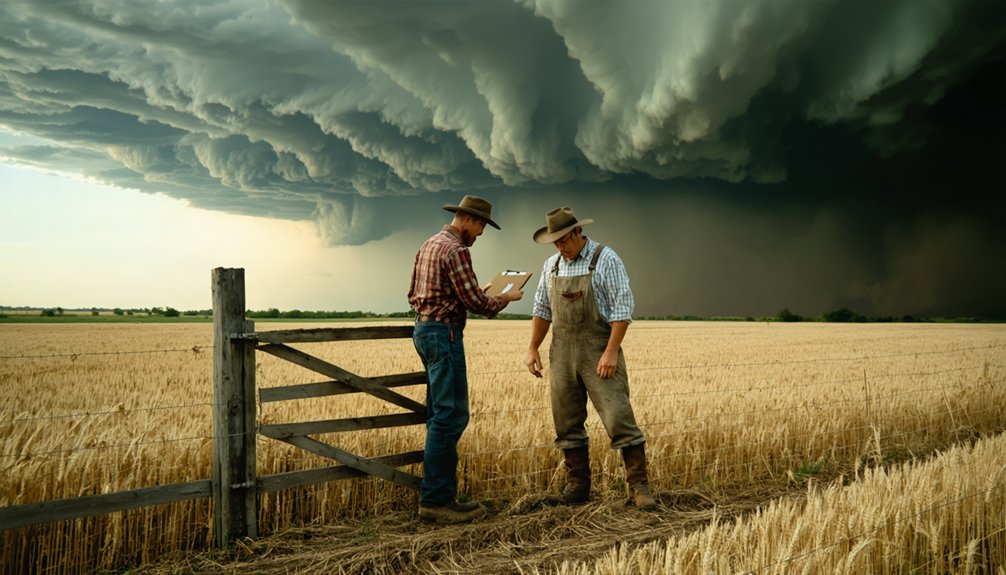
When you access private land during a chase, you must secure written consent from the landowner before crossing any boundary—verbal agreements won’t protect you legally if a dispute arises.
You’ll need to use GPS tools and property maps to accurately identify boundary lines, ensuring you don’t unintentionally trespass into adjacent parcels.
Where local ordinances apply, you’re also required to obtain formal permits beyond standard landowner permission to remain in full compliance.
Securing Landowner Written Consent
Securing written consent from landowners isn’t just a legal formality—it’s a foundational ethical obligation before entering any private property during a chase.
Respecting landowner rights means obtaining documented permission before crossing property boundaries—no exceptions.
Use consent forms that clearly outline:
- Purpose of entry – specify chase objectives, equipment used, and duration of access
- Property boundaries – confirm exact limits using GPS coordinates to prevent unintentional violations
- Liability acknowledgment – guarantee landowners understand associated risks and release chasers from property-related claims
Written consent protects both parties.
It gives you legal standing if disputes arise and demonstrates your commitment to ethical practice.
Without documentation, you’re exposed to trespassing charges regardless of intent.
Always secure signatures before arrival—never after.
Identifying Private Property Boundaries
Identifying private property boundaries before a chase requires three practical tools: topographic maps, GPS devices, and county parcel data. You’ll use property boundary mapping to pinpoint exact ownership lines before you ever approach a site.
Cross-referencing these sources eliminates guesswork and protects you from unintentional trespassing.
Once you’ve confirmed boundaries, prioritize landowner communication early. Contact property owners directly, explain your purpose, and document their permission in writing.
Verbal agreements won’t protect you if disputes arise later. You’re responsible for knowing where private land begins.
GPS coordinates tied to parcel records give you defensible, real-time accuracy in the field. Respecting these boundaries isn’t just legally necessary—it reflects the ethical standard that storm chasing research demands from every participant operating in rural or private terrain.
Permits For Property Access
Beyond mapping boundaries, you must secure formal written permission before entering private property for any storm chasing activity. Respecting property rights isn’t optional—it’s an ethical and legal obligation that protects both you and landowners.
Prioritize these three permit-related steps:
- Request written consent from landowners before entry, documenting approval to prevent disputes and honor ethical considerations around autonomy.
- Engage landowners transparently through direct landowner engagement, explaining your purpose, duration, and data collection intentions, including data privacy protections for any footage captured on their property.
- Secure local permits where ordinances require additional authorization beyond private landowner approval.
Written permits serve as verifiable evidence of compliance. Without them, you risk trespassing violations, damaged community trust, and compromised scientific credibility.
Always act with integrity.
How Informed Consent Governs Ethical Data Collection

When you collect data during storm chasing, informed consent governs every step of that process. You must transparently disclose your research objectives, data scope, and potential risks before gathering any information.
This transparency carries serious ethical implications—participants who aren’t fully informed can’t meaningfully agree to contribute their stories, images, or property damage records.
Informed consent also drives participant empowerment by giving individuals genuine control over how their data gets used and shared. You can’t publish footage, personal narratives, or identifiable information without prior documented approval.
Ethical guidelines further require you to respect survivor narratives and avoid distributing graphic content that retraumatizes affected individuals.
Proper consent documentation protects both your research integrity and the autonomy of every person whose data you collect.
What Happens When Informed Consent Is Skipped?
When you skip informed consent in storm chasing, you’re exposing your organization to serious legal liability, including negligence claims and lawsuits that valid waivers would otherwise prevent.
Without documented consent, you can’t guarantee participant safety, since unprepared individuals lack the risk awareness needed to make sound decisions in life-threatening conditions.
You also undermine data integrity, producing research that fails ethical and regulatory standards and can’t withstand scientific scrutiny.
Legal Liability Risks Emerge
Skipping informed consent in storm chasing doesn’t just create ethical problems—it exposes your organization to serious legal consequences.
Without proper consent enforcement, you’re vulnerable to negligence claims, financial penalties, and reputational damage that can shut down your operations entirely.
The liability implications are significant and concrete:
- Negligence lawsuits — Participants injured during chases can sue your organization if they weren’t formally warned of risks beforehand.
- Invalidated liability waivers — Courts may reject unsigned or improperly executed waivers, leaving you fully financially responsible for damages.
- Regulatory violations — Failing to document consent breaches federal guidelines under 45 CFR 46.116, triggering institutional penalties.
Protecting your organization means treating informed consent as a legal requirement, not optional paperwork.
Participant Safety Gets Compromised
Without informed consent, participant safety breaks down at the most fundamental level. You lose the foundation that supports participant understanding, ethical transparency, and meaningful risk communication.
When guides skip informed agreements, you’re exposed to dangers you never acknowledged, leaving emergency protocols untested and safety measures ignored.
Your participant autonomy disappears when organizers withhold critical hazard information. Without liability awareness, you can’t make informed decisions about your own protection.
Data privacy also suffers—your personal information gets collected without proper ethical obligations being met.
Skipping consent doesn’t just endanger you physically; it dismantles the entire ethical framework protecting you. You deserve full disclosure before entering a tornado’s path.
Consent isn’t bureaucratic red tape—it’s your primary defense against preventable harm in extreme weather environments.
Data Integrity Gets Undermined
Data collected without informed consent doesn’t just raise ethical red flags—it compromises the scientific validity of your findings at every level.
When you skip consent, you undermine data integrity and violate participant autonomy, tainting every conclusion drawn from that research.
Here’s what goes wrong:
- Biased Data Sets — Participants unaware of data collection can’t provide voluntary, knowledgeable responses, skewing your results irreparably.
- Invalidated Findings — IRB standards and 45 CFR 46.116 regulations require documented consent; without it, your research loses institutional credibility and publishability.
- Legal Exposure — Unconsented data usage opens you to privacy violations and litigation, forcing retraction of published findings.
Protecting data integrity means securing consent first—no exceptions.
How Consent Agreements Restrict Access to Active Emergency Zones
Consent agreements directly shape where you can and can’t go during active emergency operations.
When you sign a chase consent agreement, you’re acknowledging that law enforcement and emergency coordinators hold authority over zone access during active incidents. Emergency zone access isn’t negotiable — consent agreement implications make clear that interfering with first responders carries legal consequences.
You must back off when officials block roads, regardless of how promising conditions look. This isn’t bureaucratic overreach; it’s a boundary protecting rescue operations and public safety.
Your agreement binds you to traffic laws, speed limits, and emergency coordination protocols.
Understanding these restrictions before you chase means you’re operating with integrity, not ignorance.
Respecting boundaries keeps emergency channels clear and protects your credibility as a responsible chaser.
How Informed Consent Supports Accurate Storm Chasing Research
Respecting emergency zone boundaries keeps your chase operations clean and your data cleaner.
Informed consent strengthens research transparency by ensuring participant autonomy and consent understanding from the start. When you document voluntary agreement, you’re protecting data privacy and building legally defensible datasets under established legal frameworks.
Documented voluntary agreement protects data privacy and builds legally defensible datasets grounded in established frameworks.
Here’s how informed consent directly supports accurate research:
- Risk communication clarity — Participants who understand storm safety protocols report more reliable observations because fear doesn’t distort their responses.
- Participant education — Informed chasers follow emergency protocols correctly, reducing interference that corrupts field data.
- Ethical considerations — Voluntary, documented consent aligns your methodology with IRB standards, ensuring findings withstand peer scrutiny.
When participants genuinely understand what they’re agreeing to, your research gains credibility, integrity, and scientific weight that holds up.
Informed Consent Requirements When Minors Join a Chase
When minors join a chase, you’re operating under stricter legal and ethical obligations than standard adult consent protocols require.
Minors’ rights demand that parental consent isn’t optional—it’s legally mandated under 45 CFR 46.116 and IRB frameworks governing youth participation in high-risk research environments.
You must provide parents or legal guardians with complete risk education, detailing tornado exposure, lightning hazards, and life-threatening conditions before they authorize participation.
Safety measures must exceed baseline adult standards, and ethical considerations require you to assess whether any youth participation serves a justifiable research purpose.
Informed choices can’t occur without full disclosure.
Your legal obligations include securing written parental permission, ensuring comprehension across literacy levels, and confirming minors aren’t subjected to coercion or undue pressure throughout the entire process.
Frequently Asked Questions
Can Informed Consent Forms Be Signed Digitally During Storm Chasing Activities?
Over 90% of legal waivers now accept digital signatures. You can sign consent forms digitally during storm chasing, but you must understand the legal implications—ensuring validity, compliance, and your freedom to participate safely.
How Often Should Storm Chasing Organizations Update Their Informed Consent Documents?
You should update your informed consent documents annually or whenever regulations, risks, or best practices change. Staying current protects participants’ rights, reflects legal implications accurately, and guarantees your organization’s ethical standards remain transparent and evidence-based.
Are Verbal Consent Agreements Legally Valid During Unexpected Storm Chasing Situations?
Verbal agreements aren’t legally reliable in unexpected storm chasing situations. You must secure written consent to protect your rights and guarantee storm safety, as documented waivers provide enforceable evidence that verbal confirmations simply can’t assure.
Who Is Responsible for Storing Signed Informed Consent Forms After a Chase?
You’re responsible for storing signed informed consent forms after a chase. Maintain responsibility clarity by securing documents for form retention, ensuring they’re accessible, compliant with 45 CFR 46.116, and protected against tampering or unauthorized access.
Does Informed Consent Differ Across States for Licensed Storm Chasing Organizations?
Yes, informed consent varies by state. You’ll need to review local state regulations, as they directly shape liability issues and consent form requirements for your licensed storm chasing organization’s ethical operations.
References
- https://crazystormchasers.com/ethics-of-storm-chasing-for-research-purposes/
- https://stormtrack.org/threads/storm-chasing-ethics-and-safety.26831/
- https://www.atms.unca.edu/cgodfrey/courses/swfex/pdf/ChasingSafety.pdf
- https://alllivingisstormchasing.substack.com/p/013-creating-with-care-a-code-of
- https://www.reddit.com/r/tornado/comments/uivikx/the_ethics_of_storm_chasing/
- https://stormgroupchasers.com/terms-conditions
- https://www.hhs.gov/ohrp/regulations-and-policy/guidance/faq/informed-consent/index.html
- https://www.fda.gov/files/about fda/published/Exception-from-Informed-Consent-Requirements-for-Emergency-Research.pdf
- https://crazystormchasers.com/legal-aspects-of-storm-chasing-regulations/
- https://will.illinois.edu/weatherrealness/episode/storm-chasing-can-be-deadly-heres-how-to-stay-safe