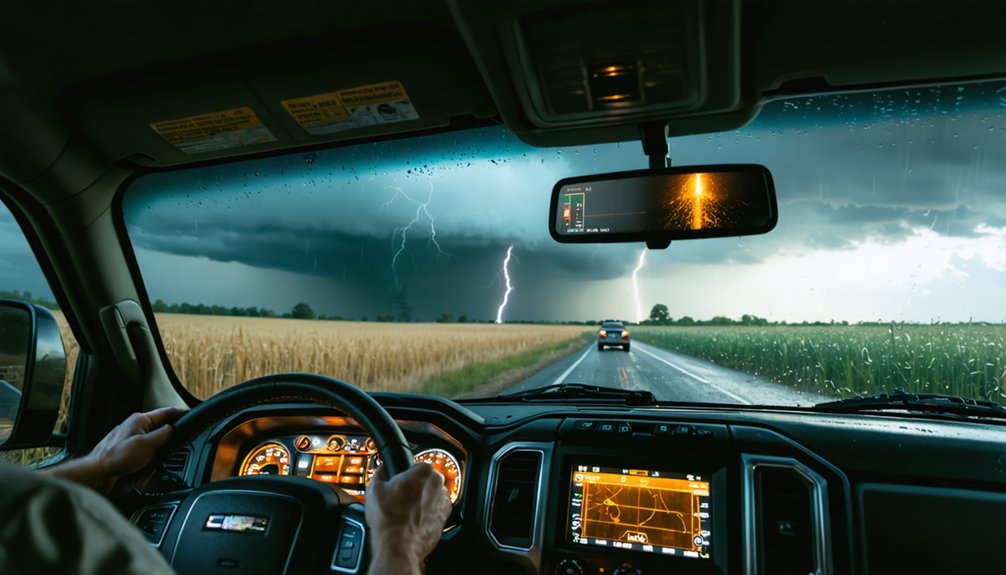
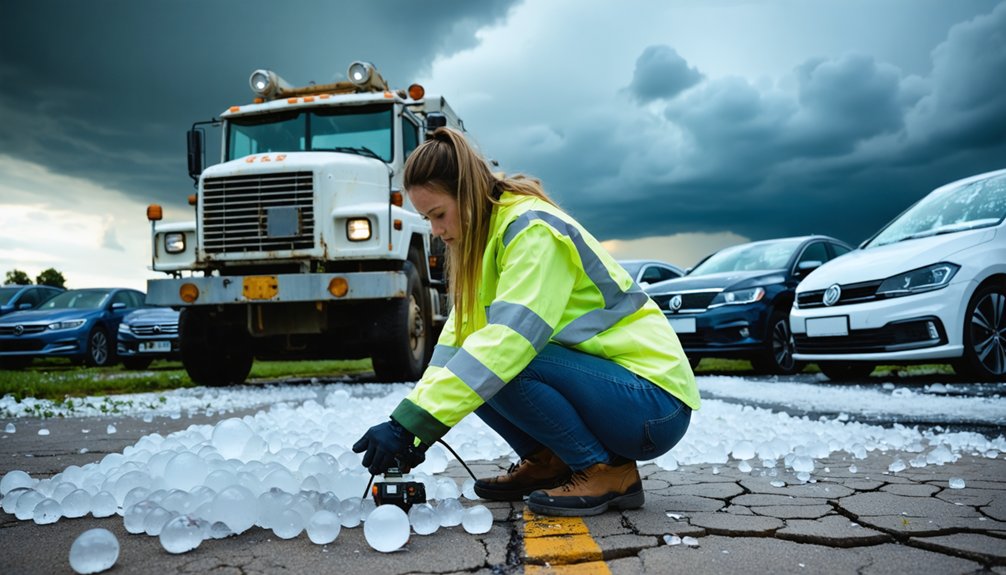
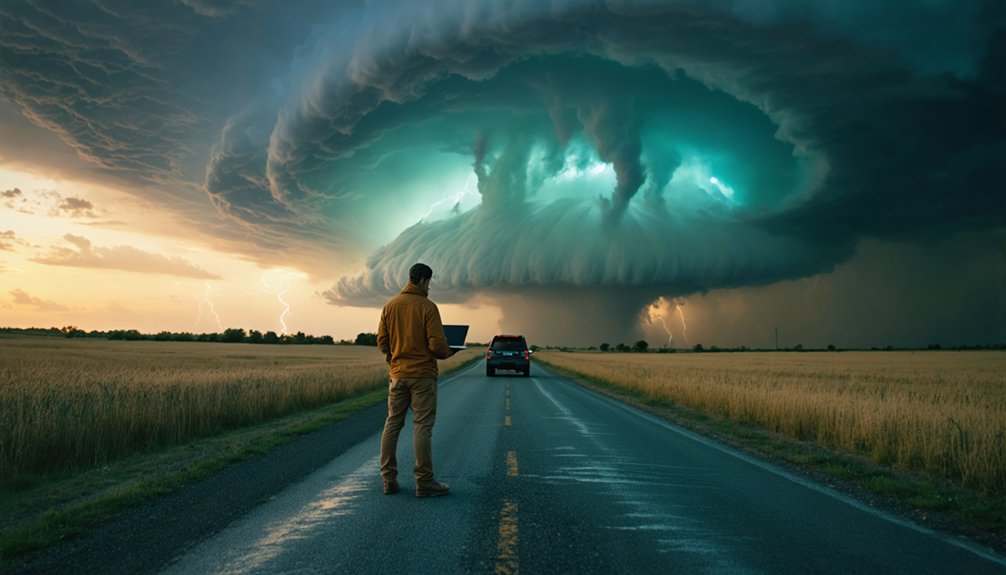
Starting out in storm chasing means your gear can make or break your safety. You’ll need an AWD vehicle with high clearance, a NOAA weather radio, and RadarScope for dual-polarization radar data. Carry an IFAK, waterproof electronics cases rated IP67 or higher, and offline navigation backups. Join communities like Stormtrack forums for verified gear lists. With fatalities up 30% this past decade, every piece of equipment matters — and there’s much more to unpack ahead.
Key Takeaways
- Choose an all-wheel drive vehicle with high ground clearance, reinforced windshields, and adequate fuel capacity for remote storm-chasing routes.
- Carry a NOAA weather radio and dual-band ham radio to maintain communication without relying on cellular networks.
- Use radar apps like RadarScope and RadarOmega for real-time storm tracking, velocity scans, and tornado detection.
- Protect electronics with IP67-rated waterproof cases and store backup power banks in waterproof, sealed containers.
- Join storm-chasing communities like Stormtrack forums and Discord servers for real-time strategies and verified gear recommendations.
Choose a Vehicle Built for Storm Terrain
When choosing a vehicle for storm chasing, prioritize all-wheel drive with high ground clearance to handle muddy terrain, debris fields, and shallow flood water.
All-wheel drive and high ground clearance aren’t preferences — they’re the foundation of every successful storm chase.
You’ll need storm features like reinforced windshields and tow hooks to withstand severe conditions. These aren’t optional — they’re operational necessities.
Terrain challenges demand more than standard consumer vehicles can reliably deliver.
Verify your fuel capacity supports extended routes where gas stations don’t exist. Mount a portable battery jump starter to eliminate dead-battery vulnerabilities in remote areas.
Your vehicle is your primary safety system, escape route, and command center simultaneously.
Every mechanical weakness becomes a liability when conditions deteriorate fast. Choose reliability over comfort, and confirm all systems before you leave the staging area — not after you’re already committed to a chase.
Must-Have Storm Chasing Gear for Communication
Your vehicle handles the terrain, but your communication gear determines whether you’re operating with real-time intelligence or flying blind. The right communication tools keep you informed, coordinated, and alive.
Start with a NOAA weather radio tuned to local frequencies for direct storm alerts without cellular dependency.
Mount an iPad with cellular data running RadarScope for live radar overlays and rotation tracking.
Install a dual-band ham radio to coordinate positioning with other chasers in the field.
A GPS puck separate from your car’s navigation unit delivers precise location data independent of built-in system failures.
Finally, store offline maps on a secondary device. Dead zones exist throughout prime chase territory, and you can’t afford navigation blackouts when conditions deteriorate fast.
Redundancy isn’t optional — it’s your operational standard.
Radar Apps Every Beginner Storm Chaser Needs
Radar apps translate raw atmospheric data into actionable positioning decisions, and choosing the right ones separates informed chasers from reactive ones.
For storm tracking and radar interpretation, you’ll need tools that deliver real-time velocity data and mesocyclone signatures without lag.
- RadarScope delivers dual-polarization data, letting you monitor correlation coefficients and identify debris signatures.
- RadarOmega integrates Spotter Network overlays for situational awareness during active chases.
- MyRadar provides quick-glance storm tracking when you need fast positioning decisions.
- Weather Underground supplements radar interpretation with hyperlocal station data.
- GFS/HRRR model apps help you predict storm initiation zones hours before departure.
Mount your iPad with cellular data and keep offline radar cached.
Poor signal kills decision-making when storms accelerate faster than forecasted.
Clothing and Personal Gear That Could Save Your Life
Positioning tools and radar apps keep you informed, but they won’t protect your body when you’re standing outside a vehicle in 70 mph winds and quarter-size hail.
Your personal safety essentials start with weatherproof footwear — non-slip boots rated for wet, uneven terrain reduce fall risk considerably.
Non-slip boots rated for wet, uneven terrain aren’t optional — they’re your first line of defense.
Layer thermal insulation layers beneath a waterproof outer shell to maintain core temperature during rapid cold-air inflow near storm walls.
Add reflective visibility gear, specifically a high-visibility vest, so drivers can spot you during low-light or rain-obscured conditions.
Beyond clothing, carry an IFAK stocked with tourniquets, wound packing, and gloves for field trauma response.
A handheld flashlight and full-size spare tire round out your mobile safety kit.
These items don’t just add comfort — they’re operationally critical.
Build Your Storm Chasing Emergency Kit
Your emergency kit forms the backbone of field survival, so pack a first aid kit alongside an IFAK or AFAK for life-threatening trauma response.
You’ll also want a flashlight, tow rope, and clear plastic film on hand to manage vehicle damage from hail impacts.
Keep a spare gas can and full-size spare tire ready, since remote chase routes rarely offer quick access to fuel stations or repair services.
Essential Emergency Kit Items
Building a storm chasing emergency kit requires prioritizing life-threatening scenarios over convenience items. You’ll need storm gear essentials that address trauma, communication failures, and vehicle breakdowns before anything else.
Emergency communication tools are non-negotiable when you’re operating in remote, signal-weak environments.
Pack these five critical items:
- IFAK/AFAK – treat penetrating trauma and life-threatening wounds immediately
- Handheld dual-band ham radio – maintain emergency communication when cellular networks fail
- Tow rope – extract your vehicle from mud, debris, or flood zones fast
- Portable jump starter – restore backup power to dead electrical systems independently
- Clear plastic film and tow hooks – provide rapid hail protection and vehicle recovery options
Prioritize function over redundancy, and audit your kit before every chase.
Medical And Safety Supplies
Medical and safety supplies separate survivable incidents from fatal ones when you’re operating miles from emergency services. Your medical equipment loadout must include a standard first aid kit, plus an IFAK or AFAK for life-threatening trauma response.
Don’t skip the gloves—they’re essential for performing first aid without direct skin contact and maintain strict safety protocols during treatment.
Beyond medical gear, pack a flashlight for low-visibility storm conditions, a tow rope for vehicle recovery, and clear plastic film for hail protection.
A full-size spare tire isn’t optional—it’s critical when you’re 50 miles from the nearest service station. Every item serves a specific tactical function, so audit your kit before each chase and replace any depleted or expired supplies immediately.
Video and Camera Gear Every Storm Chaser Should Carry
When it comes to documenting severe weather, carrying the right camera gear can mean the difference between capturing critical storm data and missing it entirely. Your camera settings and video stabilization tools directly affect footage quality under extreme conditions.
The right camera gear separates critical storm documentation from missed opportunities when severe weather strikes.
- Pack a digital video camera capable of high-resolution recording.
- Carry a 35mm still camera for precise landscape documentation.
- Mount two sturdy tripods to counter high-wind interference.
- Store all electronics in waterproof cases to prevent hail damage.
- Use a microfiber cloth to maintain clean lens surfaces quickly.
You’ll want backup batteries powering every device continuously throughout your chase. A mobile laptop with a field stand lets you process footage on-site, while a transfer drive guarantees you’re immediately backing up irreplaceable storm documentation before conditions deteriorate further.
How to Protect Your Electronics From Hail and Rain
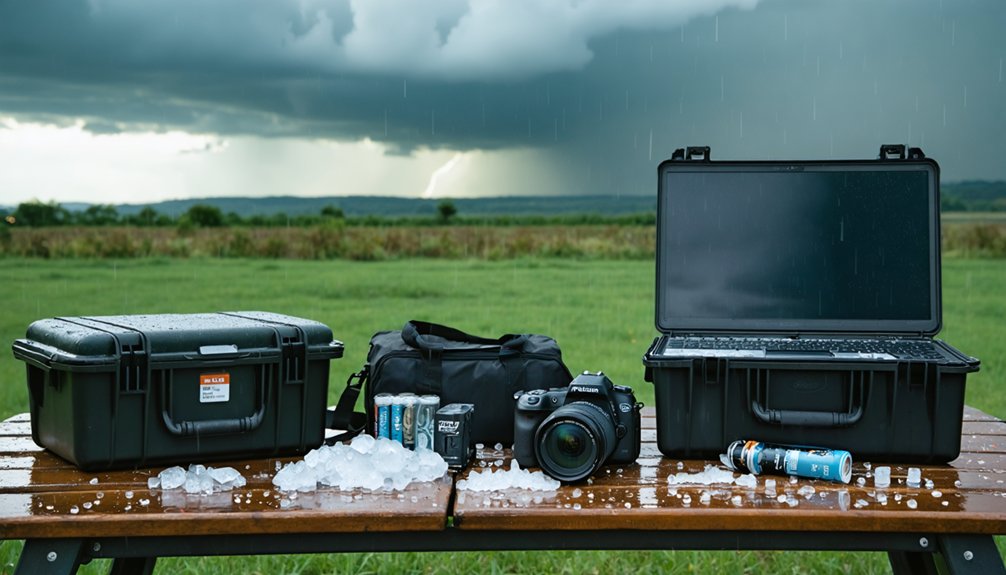
When you’re chasing storms, you’ll need waterproof cases rated to at least IP67 standards to shield cameras, iPads, and radios from hail impact and rain saturation.
Use a microfiber cloth rather than a rain cover to clean lenses quickly between shots, since covers slow your reaction time in fast-moving storm environments.
Protect your backup batteries and power banks inside a sealed dry bag, ensuring you maintain continuous power across all recording devices throughout the chase.
Waterproof Cases For Electronics
Protecting your electronics from hail and rain starts with selecting a waterproof case rated to at least IP67 or IP68 standards, which means the enclosure can withstand submersion in water up to one meter for 30 minutes.
These waterproof features deliver reliable electronic protection during severe storm conditions.
- Choose hard-shell cases with foam inserts for impact resistance against hail strikes
- Verify airtight gasket seals on all latches and hinges before each chase
- Select cases with pressure relief valves to prevent seal failure at altitude
- Use transparent lids to access touchscreens without exposing internal components
- Opt for stackable modular cases to organize multiple devices efficiently
Prioritizing certified enclosures eliminates guesswork and keeps your equipment field-ready regardless of conditions.
Lens Cleaning Best Practices
Keeping lenses clean during a storm chase requires three core tools: a microfiber cloth, a blower brush, and a lens pen. You’ll face rain, dust, and hail residue constantly, so disciplined lens maintenance tips keep your footage sharp and your gear functional.
Start with the blower brush to dislodge loose particles without scratching the glass. Follow with a lens pen to remove smudges using its carbon-compound tip.
Finish by wiping in circular motions with microfiber cloths, which lift moisture and oils without abrading coatings.
Never use paper towels or clothing — both introduce micro-scratches that degrade image quality over time. Store your microfiber cloths in a sealed zip-lock bag to prevent contamination.
Clean lenses between each chase sequence, not just after you’re done.
Backup Power Protection Strategies
Backup power and electronics protection demand equal priority during storm chases, because hail impact and rain infiltration can disable your entire documentation setup mid-event.
Your protection strategies must address both power continuity and physical shielding simultaneously.
- Store backup power banks inside waterproof cases rated IPX7 or higher
- Use a portable battery jump starter to maintain vehicle and device charging cycles
- Seal all cable ports with waterproof covers between active recording sessions
- Position backup batteries away from vehicle windows to minimize hail exposure risk
- Rotate battery maintenance schedules, fully charging reserves before each chase deployment
Your documentation chain stays intact only when every power source remains dry and charged.
Never assume factory casings provide sufficient rain resistance during high-intensity storm conditions.
Read Storm Structure Before You Chase
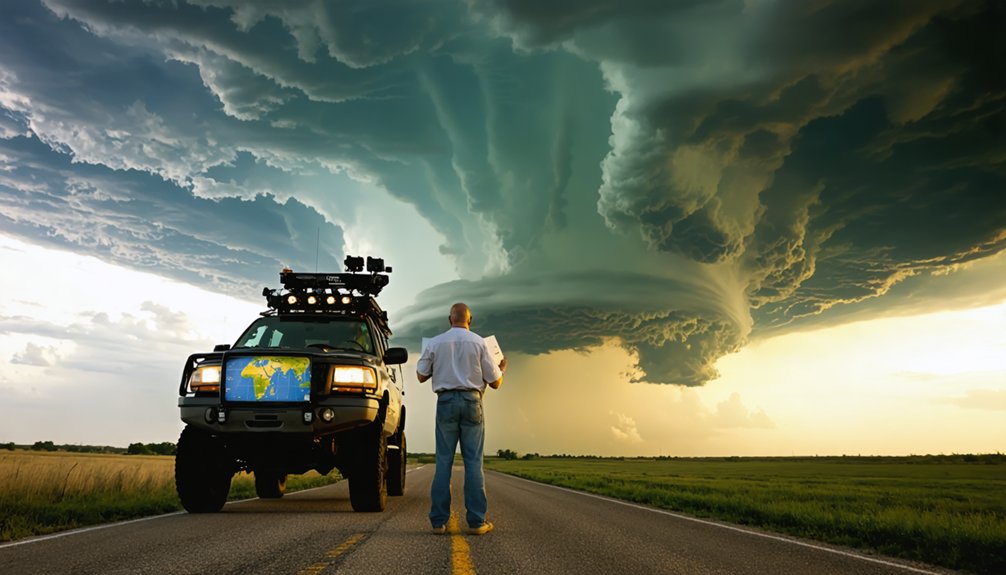
Before you chase your first storm, you’ll need to understand how to read storm structure using radar tools like RadarScope or RadarOmega connected to Spotter Network.
Monitor velocity scans and correlation coefficients to detect ground-level tornadoes before they’re visible. Tracking storm dynamics through GFS and HRRR models helps you predict where supercells will develop and intensify.
You’ll also want to study cloud formations in the field, identifying wall clouds, rear-flank downdrafts, and inflow bands that signal rotation.
Cross-reference your radar data with NOAA convective outlooks daily to pinpoint high-probability chase zones. Use a weather spotter’s field guide to sharpen your storm structure analysis.
Skywarn classes offer free, structured education that’ll accelerate your ability to interpret severe weather patterns accurately and independently.
Position Your Vehicle Safely During a Storm
Once you’ve read the storm’s radar signature and identified rotation, your next priority is positioning your vehicle correctly. Smart storm positioning strategies keep you mobile and in control.
- Keep the storm moving left to right from your vantage point.
- Stay 5–10 miles from the bear’s cage or core punching zones.
- Identify vehicle escape routes before the storm reaches your position.
- Avoid positioning on roads that dead-end or have limited turn options.
- Face your vehicle toward an exit path, never perpendicular to storm movement.
Your vehicle’s angle and road choice determine your survival margin. Pre-mapped escape routes aren’t optional—they’re critical.
Use offline maps on a secondary device so poor signal never traps you in a compromised position when conditions escalate fast.
Storm Chasing Communities Worth Joining First
Joining the right communities accelerates your learning curve greatly—start with Stormtrack forums and the stormchasing Reddit threads, where experienced chasers share verified equipment lists and field-tested recommendations.
You’ll also want to connect with Discord servers run by active streaming chasers, giving you real-time strategy insights during live severe weather outbreaks.
When you’re ready for structured, hands-on experience, reputable tour operators like Tempest Tours and Tornadic Expeditions provide professional guidance that’s difficult to replicate independently.
Online Forums And Networks
Storm chasing communities give you direct access to field-tested gear lists, real-time outbreak updates, and strategic advice that no equipment manual provides.
Tapping into these networks accelerates your learning curve through authentic storm chaser experiences and peer-vetted equipment recommendations.
- Join r/stormchasing on Reddit for crowd-sourced supply suggestions and beginner-friendly gear breakdowns.
- Access Stormtrack forums for curated equipment lists built by veteran chasers.
- Connect with Discord servers run by active streaming chasers for live tactical updates during severe outbreaks.
- Follow Facebook groups dedicated to regional chasers, particularly Texas-based storm tracking communities.
- Subscribe to YouTube channels delivering detailed gear guides, field reviews, and tool comparisons.
These platforms cut through marketing noise, giving you unfiltered, experience-backed intelligence to build a capable, reliable chase setup faster.
Professional Tour Options
Before you invest thousands in equipment, booking a guided tour with an established operation like Tempest Tours or Tornadic Expeditions puts you inside a structured, safety-vetted chase environment where you absorb real intercept strategy firsthand.
These tour experiences deliver direct exposure to radar interpretation, positioning decisions, and escape route identification — skills no gear list replaces. You’ll observe how professional chasers apply storm chasing tips under live severe weather conditions, including reading velocity scans and adjusting vehicle placement as storms evolve.
Attending live streams during active outbreaks supplements tour training between seasons. Starting as a storm chaser rather than a tornado-specific chaser broadens your situational awareness.
You build operational competence before committing to independent chasing, protecting both your investment and your safety.
Frequently Asked Questions
What Licenses or Certifications Are Legally Required Before Storm Chasing Begins?
You don’t need licenses to start storm chasing, but you’ll enhance your storm chasing safety by earning Skywarn certification and a ham radio license, while equipping yourself with essential equipment like RadarScope and NOAA weather radio.
How Much Does a Typical Storm Chasing Trip Cost Beginners?
Imagine spending $1,500 on your first Oklahoma chase week. You’ll typically budget $800–$2,000 for trip essentials, covering fuel, lodging, food, and gear. Smart budget planning keeps your storm chasing freedom financially sustainable and repeatable.
Are There Age Restrictions for Participating in Storm Chasing Activities?
There’s no universal age restriction, but you’ll face legal liability concerns if you’re under 18. Tour operators like Tempest Tours require parental consent. Storm safety protocols demand you’ve got the maturity and training to handle severe weather responsibly.
What Insurance Coverage Do Storm Chasers Need for Their Vehicles?
Over 70% of storm chasers report vehicle damage annually. You’ll need extensive coverage for vehicle protection against hail and floods, plus storm liability insurance to cover third-party damages during chases—standard auto policies won’t suffice.
How Do Beginners Find Experienced Mentors in the Storm Chasing Community?
You’ll find mentorship opportunities through storm chaser networks like Stormtrack forums, Reddit threads, and Discord servers. Join Skywarn classes, connect with streaming chasers live, and sign up for Tempest Tours to access experienced, data-driven guidance directly.
References
- https://crazystormchasers.com/storm-chasing-gear-checklist-for-beginners/
- https://www.stormtours.com/information/must-bring-items/
- https://www.youtube.com/watch?v=Sr2lz72ZYwM
- https://www.reddit.com/r/stormchasing/comments/1hjxvuy/suggestions_for_supplies_for_my_first_chase/
- https://www.youtube.com/watch?v=st1NkSuT1BA
- https://www.youtube.com/watch?v=3GlPEfCqqL0
- https://www.benholcomb.com/storm-chasing/equipment/
- https://store.sirui.com/blogs/guides/essential-equipment-for-storm-chasing-guide-for-2025
- https://www.youtube.com/watch?v=hMFLqkfEEjU
- http://wx4cast.blogspot.com/2011/08/storm-chasing-part-2.html?m=1