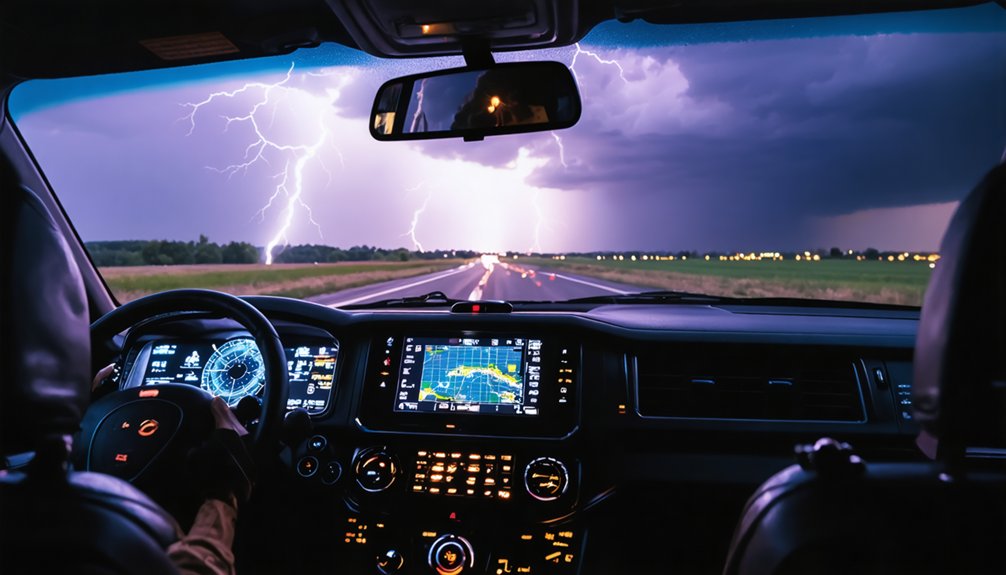
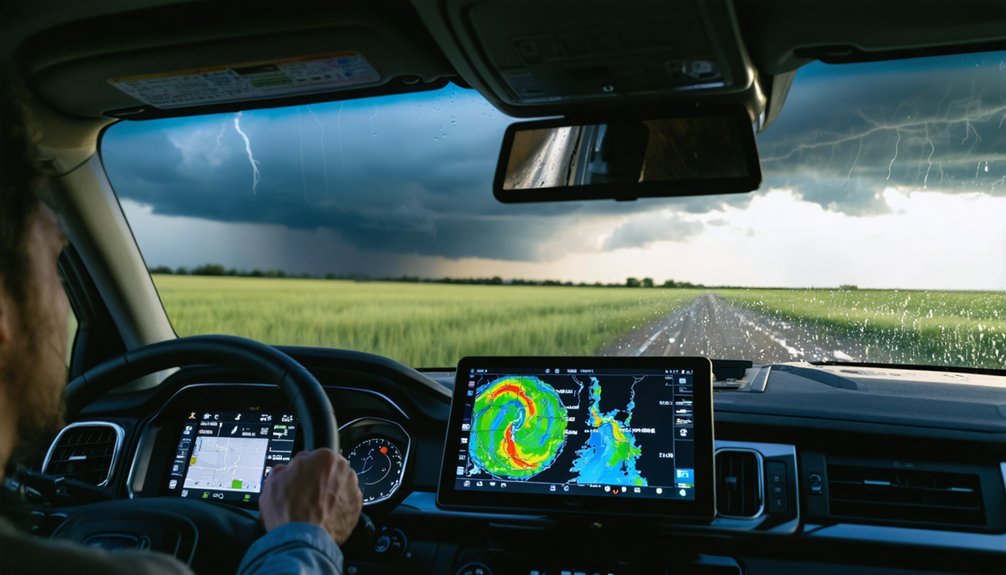
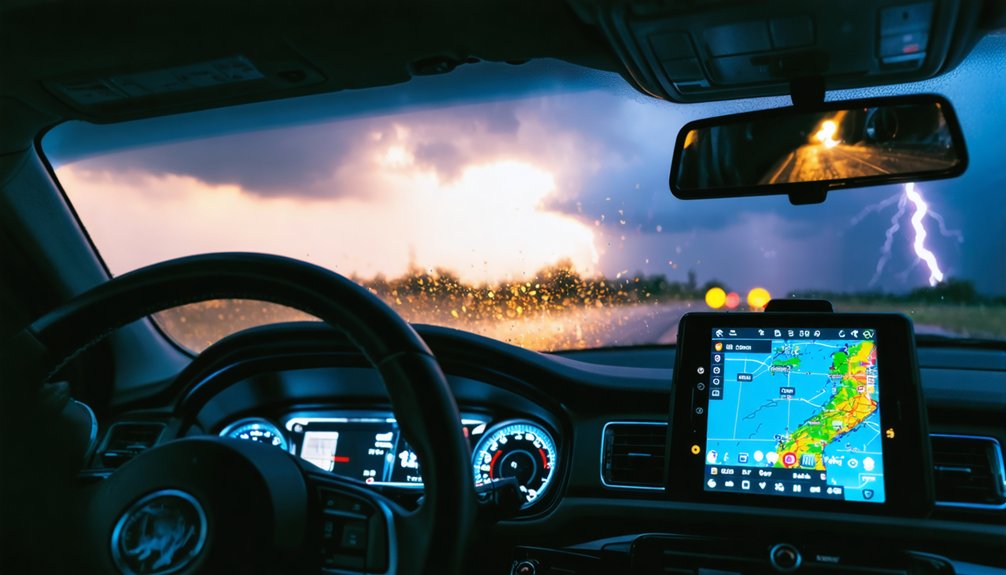
For storm chasing in 2026, your top GPS options are the Garmin GPSMAP 67i, inReach Mini 2, Montana 700i, Magellan eXplorist 310, and Globalsat BU-353S4. Each device serves a specific role, from satellite communication to laptop radar integration. You’ll need sub-5-meter accuracy, multi-GNSS support, IPX-7 waterproofing, and 20-plus hours of battery life to stay operational in severe conditions. There’s much more to unpack about matching each device to your exact chasing setup.
Key Takeaways
- The Garmin GPSMAP 67i excels in advanced tracking and battery longevity, making it a top choice for storm chasers.
- The inReach Mini 2 provides satellite communication and compact portability, ideal for solo spotters in remote areas.
- The Montana 700i suits ATV and vehicle-mounted setups, offering persistent visibility during coordinated storm chasing operations.
- The Magellan eXplorist 310 delivers reliable GPS performance at a budget-friendly price for cost-conscious storm spotters.
- The Globalsat BU-353S4 integrates seamlessly into laptop-based radar workflows, enhancing real-time positioning for data-driven chasers.
Handheld or Vehicle-Mounted: Which GPS Setup Fits Your Chase Style?
Whether you’re intercepting supercells from a remote dirt road or running coordinated intercepts across open plains, your GPS mounting strategy directly shapes your operational effectiveness.
Handheld advantages include portability, rapid deployment outside the vehicle, and independent operation when you’re on foot near a target storm. Devices like the Garmin GPSMAP 66i and inReach Mini 2 excel here, offering satellite communication alongside precise navigation.
Vehicle mounted convenience, however, delivers persistent screen visibility, hands-free operation, and integration with onboard radar feeds. The Garmin Montana 700i and Globalsat BU-353S4 address this role directly, supporting ATV terrain and laptop-based radar software respectively.
Your chase style determines the priority. Solo spotters benefit from handheld flexibility, while coordinated teams running chase vehicles gain operational efficiency through dedicated mounted systems.
The GPS Specs That Actually Matter in Severe Weather
Specs on paper don’t always translate to performance when a wedge tornado is bearing down and you’ve got thirty seconds to reposition. Your accuracy requirements shift fast under severe weather conditions — you need sub-5-meter positioning, multi-GNSS support, and rapid signal acquisition in degraded atmospheric conditions.
Single-constellation units fail when ionospheric disruption hits. Battery endurance isn’t a convenience metric; it’s operational survival. A unit dying mid-intercept forces dangerous decisions. Prioritize devices exceeding 20 hours under active tracking loads.
Water resistance ratings matter — IPX-7 minimum keeps electronics functional through rain-wrapped circulation. Satellite communicator integration, like Iridium-based InReach, adds redundant emergency capability when cell networks collapse near storm cores.
Choose specs that match real field conditions, not controlled lab benchmarks.
Best Storm Chasing GPS Devices in 2026
Knowing which specs matter only gets you halfway — you still need to match those requirements to hardware that actually holds up in the field.
Each device below targets a specific chasing role, so you’re not over-buying or leaving critical capability on the table.
The Garmin GPSMAP 67i leads for advanced tracking performance and battery longevity, delivering multi-GNSS accuracy and lab-verified durability.
For satellite communication without the bulk, the inReach Mini 2 keeps your footprint minimal.
Running an ATV or vehicle-mounted setup? The Montana 700i handles rough terrain and weather updates simultaneously.
Budget-conscious spotters can rely on the Magellan eXplorist 310, while the Globalsat BU-353S4 integrates cleanly into laptop-based radar workflows.
GPS Features That Make or Break a Storm Chasing Setup
Not every GPS feature pulls equal weight when you’re positioning a chase vehicle ahead of a rotating wall cloud.
Real time tracking accuracy separates survivable decisions from catastrophic ones. You need sub-meter positioning refresh rates, multi-GNSS constellation support, and seamless radar software integration.
Battery longevity determines how long you stay operational without scrambling for a power source mid-chase.
Devices running 35+ hours untethered keep you mobile when infrastructure fails.
Prioritize these critical specs:
- Multi-GNSS support — GPS, GLONASS, and Galileo signal acquisition
- Satellite messaging — Independent communication beyond cellular dead zones
- Rugged weatherproofing — IPX-7 minimum for sustained field exposure
- Map customization — Pre-loaded topo with updatable overlays
Every feature you overlook becomes a liability when a tornado shifts direction unexpectedly.
How to Choose the Right Storm Chasing GPS
Matching specs to field conditions separates a functional chase setup from one that fails you at the worst moment. For reliable storm tracking, prioritize devices that deliver consistent navigation accuracy when cell towers go dark and skies turn violent.
- Terrain type — ATV intercepts demand rugged mounts like the Montana 700i; foot pursuits need lightweight options like the inReach Mini 2.
- Communication needs — Satellite texting via Iridium keeps you connected when infrastructure collapses around you.
- Power source — Rechargeable batteries suit vehicle setups; AAA-powered units like the Magellan eXplorist 310 offer field-swappable flexibility.
- Software integration — USB pucks like the Globalsat BU-353S4 feed real-time positioning directly into your radar software.
Match the device to your specific role, and you’ll stay mobile when it matters most.
Frequently Asked Questions
Can Storm Chasing GPS Devices Integrate With Radar Software Like Grelevel3?
Yes, you can achieve seamless GPS Integration with GRLevel3 using the Globalsat BU-353S4, which outputs NMEA data via GPSGate, enabling real-time Storm Tracking overlays directly within your radar software for precise, autonomous chasing operations.
How Do Satellite Communicators Like Inreach Help During Tornado Emergencies?
When tornado safety’s compromised, you’ll activate InReach’s SOS via Iridium’s satellite network, enabling two-way emergency communication without cellular dependency. You’re transmitting your exact coordinates to rescue coordinators, ensuring you maintain operational freedom in the most isolated, dangerous environments.
Are There Subscription Fees Required for Garmin Inreach Satellite Messaging Services?
Yes, you’ll foot the bill for Garmin inReach subscription plans to access satellite messaging options. You choose tiers based on message frequency, giving you flexible, contract-free control over your communication costs during storm chasing operations.
How Waterproof Should a GPS Device Be for Storm Chasing?
You’ll want at least IPX-7 water resistance for storm chasing, ensuring your device withstands heavy rain and submersion. Meeting strict durability standards protects your GPS when you’re traversing extreme weather conditions independently.
Can Multiple Storm Chasers Share Real-Time Locations Using the Same GPS Platform?
Yes, you can share real-time tracking across a team using Garmin’s inReach platform. It enables location sharing among multiple users simultaneously, letting you monitor each chaser’s position live via the MapShare portal.
References
- https://fieldandstream.com/outdoor-gear/hunting-gear/hunting-apparel-accessories/best-hunting-gps
- https://www.onxmaps.com/hunt/blog/best-hunting-gps
- https://www.outdoorgearlab.com/topics/camping-and-hiking/best-handheld-gps
- https://www.outdoorlife.com/gear/best-gps/
- https://www.benholcomb.com/storm-chasing/equipment/
- https://stormtrack.org/threads/equipment-for-the-newbie.32134/
- https://gearjunkie.com/technology/best-handheld-gps
- http://forums.radioreference.com/threads/what-are-some-common-storm-chaser-radio-setups-like.102620/page-2