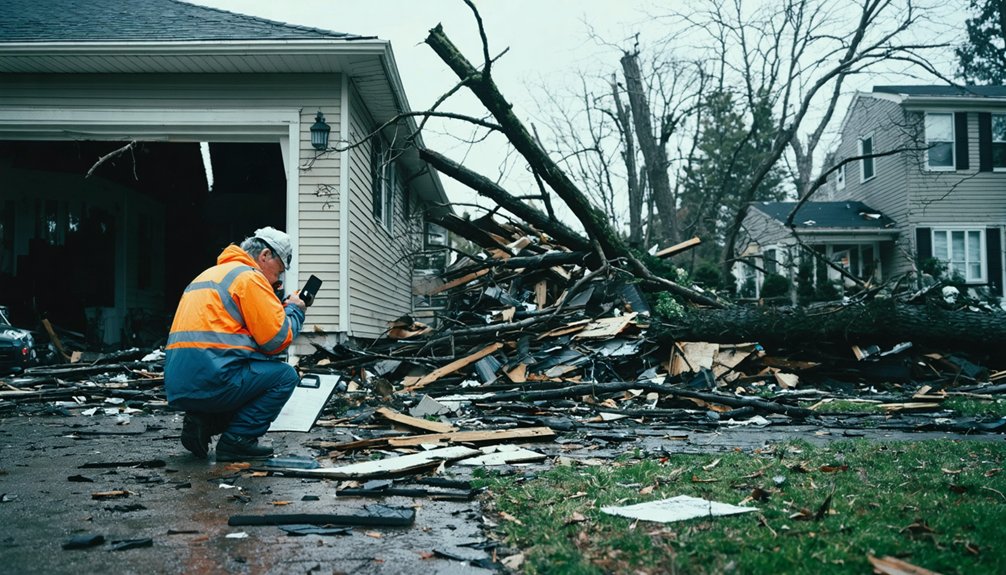
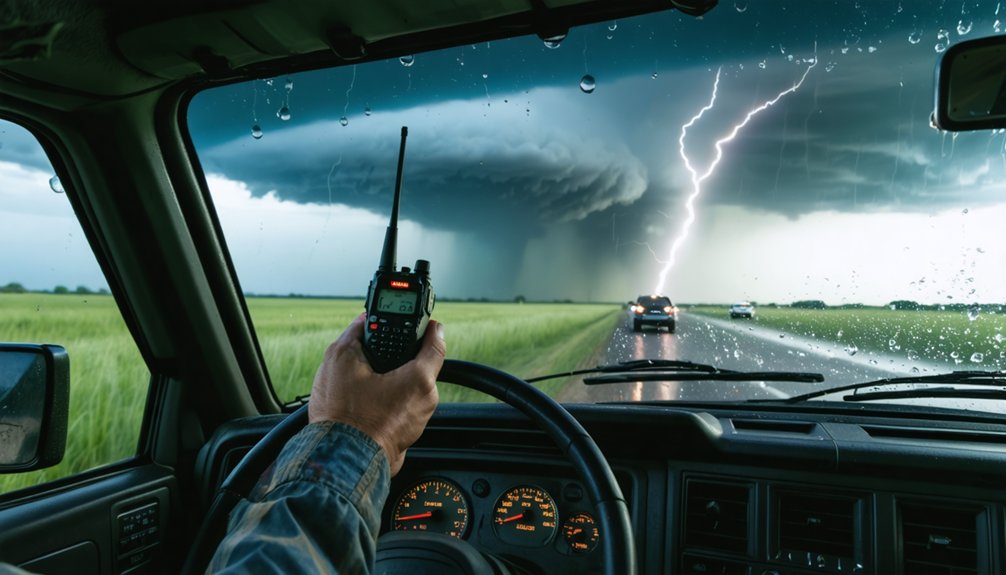
In rural areas, you’re often 20+ miles from the nearest public tornado shelter, and emergency response times can stretch 20–45 minutes — longer than most tornadoes last. Without a hidden storm shelter on your property, you’re left relying on a mobile home that provides virtually no wind resistance. A FEMA-compliant underground shelter gives you immediate, on-site protection when every second counts. Keep exploring to understand exactly how these shelters can protect your family and property.
Key Takeaways
- Rural emergency response times average 20–45 minutes, making on-site hidden storm shelters a critical survival resource during fast-moving tornadoes.
- Limited access to public shelters in remote areas leaves families dangerously dependent on mobile homes, which offer virtually no wind resistance.
- Hidden storm shelters meet FEMA standards, withstanding winds exceeding 250 mph and protecting against lethal wind-borne debris.
- Surrounding soil absorbs and deflects tornado-force winds, maintaining safe, livable conditions inside underground shelters during violent storms.
- FEMA-compliant shelters can increase property value, lower insurance premiums, and reduce emergency supply storage costs in tornado-prone rural markets.
Why Rural Families Face Greater Tornado Risk?
Rural families face a tornado threat that’s fundamentally different from what urban residents experience. You’re dealing with longer emergency response times, limited access to public shelters, and homes that often lack basements or reinforced safe rooms.
NOAA documents an average of 1,200 tornadoes annually across the U.S., and tornado frequency in states like Oklahoma and Texas places rural households at disproportionate risk.
When a warning hits, you don’t have minutes to spare traveling to a community shelter. Mobile and manufactured homes offer virtually no wind resistance, making your exposure life-threatening.
Rural preparedness isn’t optional — it’s a critical survival factor. Every second between a warning and reaching safety determines outcomes. Understanding this risk is the foundation for making informed decisions about protecting your family.
Why Help Won’t Arrive in Time During a Rural Tornado?
When a tornado warning triggers in a rural area, you’re already racing against a clock that emergency services can’t beat. Sparse infrastructure and vast distances make rapid response nearly impossible, leaving your family exposed during the most critical minutes.
Rural preparedness isn’t optional—it’s survival math. Emergency communication systems alert responders, but response times in remote zones average 20–45 minutes, far exceeding a tornado’s lifespan.
Rural preparedness isn’t optional—it’s survival math. Warnings arrive. Rescuers don’t.
Three hard realities you must accept:
- Distance kills response speed — Rural roads and geography delay emergency vehicles considerably.
- Warnings don’t equal rescues — Emergency communication alerts you, but no one’s coming before impact.
- Mobile homes offer zero protection — Manufactured structures collapse under minimal wind forces.
Your only reliable defense is a shelter already on your property.
What Families Risk When There Is No Hidden Storm Shelter on Their Property?
Without a hidden storm shelter on your property, you’re gambling with the seconds that separate survival from catastrophe when a tornado strikes.
You can’t rely on reaching a neighbor’s shelter, a community facility, or any distant safe space when violent winds and debris close off every viable route.
That absence of immediate, on-site protection transforms a manageable warning into a deadly, uncontrolled emergency with no fallback option.
Delayed Safety Access Risks
Families living in rural areas without a hidden storm shelter on their property face a dangerous race against time when severe weather strikes.
Delayed evacuations increase fatality risks considerably, especially when emergency services can’t reach you quickly. Solid emergency preparedness means eliminating dependency on outside help entirely.
Three critical risks compound when no on-property shelter exists:
- Travel exposure — Driving during active tornado warnings places you directly in the storm’s path, multiplying danger.
- Extended response gaps — Rural emergency services average longer arrival times, leaving you vulnerable without immediate refuge.
- Structural inadequacy — Mobile and manufactured homes provide virtually zero wind resistance, collapsing under tornado-force conditions.
Your survival timeline shrinks dramatically without immediate access to a dedicated underground shelter on your own property.
No Shelter, Deadly Consequences
The absence of a hidden storm shelter on your property doesn’t just limit your options — it eliminates them entirely during the most critical seconds of a tornado event.
Without immediate access, you’re forced into impossible choices: flee dangerous roads during zero-visibility conditions or shelter in structurally inadequate rooms.
Rural safety demands more than hope — it requires infrastructure. Mobile homes, common across rural Oklahoma and Texas, offer virtually no wind resistance, turning your living space into a debris field within seconds.
FEMA data confirms that unsheltered rural families face disproportionately higher fatality rates during high-wind events.
Shelter importance isn’t theoretical — it’s measurable in survival outcomes. Every second without a dedicated underground shelter is a second your family’s safety depends entirely on luck rather than preparation.
Why Underground Shelters Outperform Mobile Home Safety Plans?
If you’re living in a mobile or manufactured home, you’re already occupying one of the most structurally vulnerable shelters imaginable during a tornado. High winds and flying debris can tear through the walls, roof, and frame of a mobile home with little resistance, leaving you exposed to life-threatening forces within seconds.
An underground shelter, by contrast, uses surrounding soil and reinforced concrete to absorb and deflect those same forces, giving you protection that no mobile home safety plan can match.
Structural Vulnerability Of Mobile Homes
Mobile and manufactured homes offer almost no structural resistance against tornado-force winds, making them among the most dangerous places to shelter during severe storms. Their mobile home design prioritizes affordability and mobility over structural integrity, leaving you critically exposed when violent weather strikes.
Three critical vulnerabilities define these structures:
- Lightweight framing — Metal and wood components fail rapidly under high-wind conditions, collapsing around occupants within seconds.
- Anchor system limitations — Standard tie-downs can’t withstand tornado-force uplift pressures exceeding FEMA’s documented wind thresholds.
- Zero debris resistance — Thin wall panels provide no meaningful protection against airborne projectiles traveling at dangerous velocities.
You can’t negotiate with tornado physics. Relying on a mobile home during severe weather isn’t a safety plan—it’s a gamble with your life.
Underground Shelters Offer Superior Protection
Unlike mobile homes, underground shelters engineered to FEMA standards deliver measurable, physics-backed protection that no above-ground structure can replicate.
Shelter engineering principles confirm that surrounding soil absorbs and deflects tornado-force winds, shielding you from projectile debris traveling at lethal velocities. These underground advantages eliminate the structural weaknesses exploited by high-wind events—thin walls, lightweight frames, and minimal anchoring systems that define mobile home construction.
Reinforced concrete construction maintains structural integrity even when surface structures are completely destroyed.
You’re not dependent on a building’s resistance; you’re relying on earth itself as your primary defense layer. FEMA-compliant designs also regulate internal temperatures, sustaining livable conditions during extended shelter periods.
When tornado warnings compress your decision window, an engineered underground shelter transforms survival from uncertain to near-guaranteed.
What Makes Hidden Storm Shelters Different From Basements?
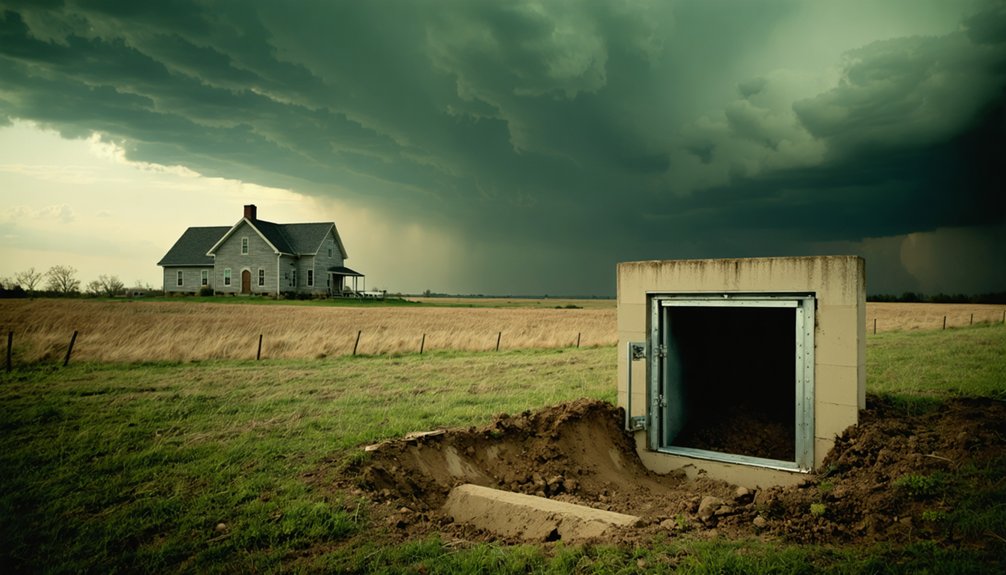
While basements offer some protection, they don’t match the targeted storm-resistance that hidden in-ground shelters provide. Understanding shelter advantages over basement limitations helps you make informed decisions about your family’s safety.
Hidden storm shelters differ from basements in three critical ways:
- Structural integrity – Reinforced concrete shelters meet FEMA standards specifically engineered to withstand extreme wind forces and airborne debris, unlike standard basement walls.
- Soil reinforcement – Surrounding earth acts as a natural pressure barrier, absorbing tornado-generated forces that basements can’t independently resist.
- Dedicated purpose – Hidden shelters function solely for emergency protection, eliminating exposure risks from unsecured basement entry points, windows, or compromised doors during violent storms.
You’re not just choosing a room—you’re choosing a purpose-built defense system designed for survival.
What FEMA Standards Actually Mean for Your Storm Shelter?
When FEMA sets standards for storm shelters, they’re defining the threshold between surviving a tornado and not. These FEMA standards require shelters to withstand winds exceeding 250 mph and resist penetration from wind-borne debris traveling at lethal velocities.
That’s not marketing language—it’s engineering specification.
Your shelter features must include reinforced concrete construction, anchored foundations, and impact-resistant doors tested under extreme load conditions. FEMA’s criteria also mandate proper ventilation and structural integrity during prolonged storm events.
For rural homeowners, meeting these standards isn’t optional—it’s survival math. Without nearby emergency infrastructure, your shelter is your only guaranteed protection.
A FEMA-compliant unit eliminates the variables that kill people during tornadoes: structural failure, debris penetration, and delayed evacuation. Compliance means your shelter performs when everything else fails.
Why Tornado-Prone States Like Oklahoma and Texas Lead Shelter Installations?
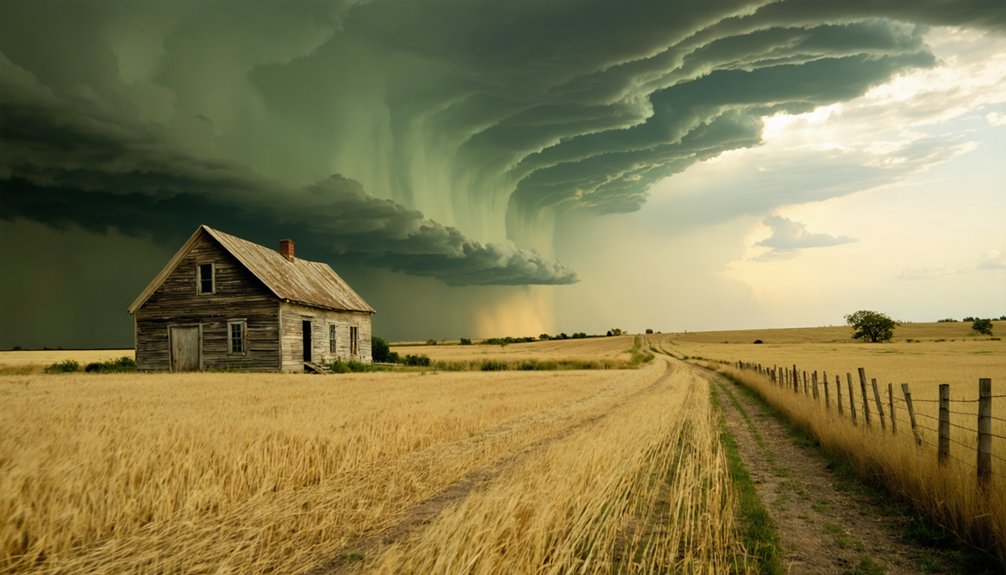
FEMA compliance sets the engineering baseline, but geography determines urgency—and nowhere is that urgency more visible than in Oklahoma and Texas.
Both states sit within Tornado Alley, where tornado statistics consistently show the highest strike frequencies nationwide. That reality drives shelter funding programs and accelerates private installations across rural properties.
Three factors explain why these states lead:
- Frequency exposure — Oklahoma and Texas record disproportionate annual tornado touchdowns, making shelter ownership a practical necessity, not an option.
- State-backed shelter funding — Both states offer grant programs that offset installation costs for qualifying rural homeowners.
- Infrastructure gaps — Remote properties lack public shelters, forcing residents to take personal responsibility for their own protection.
You control your preparedness—your geography already made the decision for you.
How a Hidden Shelter Pays for Itself Over Time
Storm shelters aren’t just a safety investment—they’re a financial one. Installing a hidden shelter boosts your property value in tornado-prone markets where buyers actively seek built-in protection. Homes with FEMA-compliant shelters consistently attract stronger offers and faster sales in states like Oklahoma and Texas.
Your shelter investment also reduces homeowner’s insurance premiums, as insurers recognize certified storm protection as a measurable risk reducer. Over time, those annual savings offset installation costs considerably.
Beyond insurance, your shelter doubles as secure storage for emergency supplies, water, and non-perishables—eliminating separate storage expenses. You’re maximizing every square foot of your property while maintaining full preparedness year-round.
When you calculate reduced premiums, increased resale value, and eliminated supply storage costs, a hidden shelter delivers clear, compounding financial returns long after installation.
How to Choose the Right Storm Shelter for Rural Land?
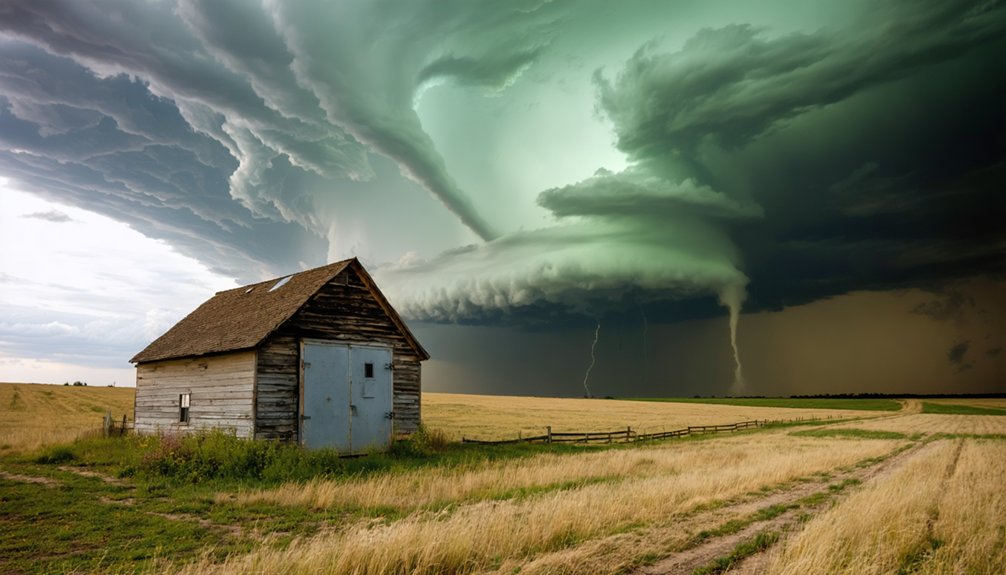
Knowing your shelter delivers long-term financial returns makes the next step clear—you need the right shelter for your specific rural property.
Evaluate these three critical factors before committing:
- Shelter materials: Reinforced concrete outperforms steel in resisting debris impact and soil pressure, meeting FEMA standards for near-absolute protection during extreme tornadoes.
- Installation costs: In-ground shelters typically cost more upfront but eliminate structural vulnerabilities mobile homes can’t overcome, making them the superior long-term investment for rural land.
- Property-specific access: Measure response time from your home to the shelter entrance—seconds determine survival during tornado warnings when emergency services can’t reach you fast enough.
Your rural land demands a shelter built for your terrain, your threat level, and your family’s independence.
Frequently Asked Questions
Can Hidden Storm Shelters Accommodate People With Mobility or Accessibility Challenges?
Yes, you can find hidden storm shelters built with mobility features and accessibility designs, including wider entryways, ramps, and reinforced handrails, ensuring everyone on your property reaches safety quickly during life-threatening tornado emergencies.
How Long Can a Family Safely Remain Inside a Hidden Storm Shelter?
You can safely remain in your shelter for several days with proper family preparedness. Stock it with water, food, and supplies to maximize shelter duration, ensuring your family’s independence when storms strike rural areas.
Are Hidden Storm Shelters Safe for Young Children and Elderly Occupants?
While tornadoes rage above, you’ll find calm below. Hidden storm shelters guarantee child safety and elderly comfort through stable temperatures, smooth entry points, and FEMA-compliant designs built to protect your most vulnerable family members effectively.
Can Hidden Storm Shelters Flood During Heavy Rainfall Accompanying Tornadoes?
Yes, flood risks exist, but quality shelters include built-in rainwater drainage systems to minimize water intrusion. You’ll want to guarantee your shelter features proper waterproofing, sump pumps, and elevated entryways to maintain safe, dry conditions during storms.
Do Hidden Storm Shelters Require Regular Maintenance or Inspections After Installation?
Ironically, your lifesaving shelter needs saving too. Yes, you must follow a regular maintenance frequency and inspection checklist—checking seals, drainage, door hinges, and ventilation—to keep your hidden storm shelter battle-ready when nature releases its fury.
References
- https://www.oklahomashelters.net/the-importance-of-storm-shelters-in-rural-areas-why-every-home-needs-one/
- https://jtserviceco.com/the-importance-of-community-storm-shelters-for-public-safety/
- https://www.steadfaststormshelters.com/blog/underground-storm-shelter-guide
- https://www.lakemartinstormshelters.com/news/unexpected-perks-underground-storm-shelters-alabama
- https://www.newdaytornadoshelters.com/why-storm-shelters-are-becoming-essential-in-2025
- https://midlandusa.com/blogs/blog/why-are-storm-shelters-and-safe-rooms-important
- https://valleystormshelters.com/5-reason-why-you-need-a-storm-shelter/
- https://www.swisherinc.com/blog/the-importance-of-tornado-shelters-for-community-safety.html
- https://www.groundzeroshelters.com/blog/how-have-storm-shelters-evolved-over-time
- https://www.youtube.com/watch?v=doYp9cJOZCM