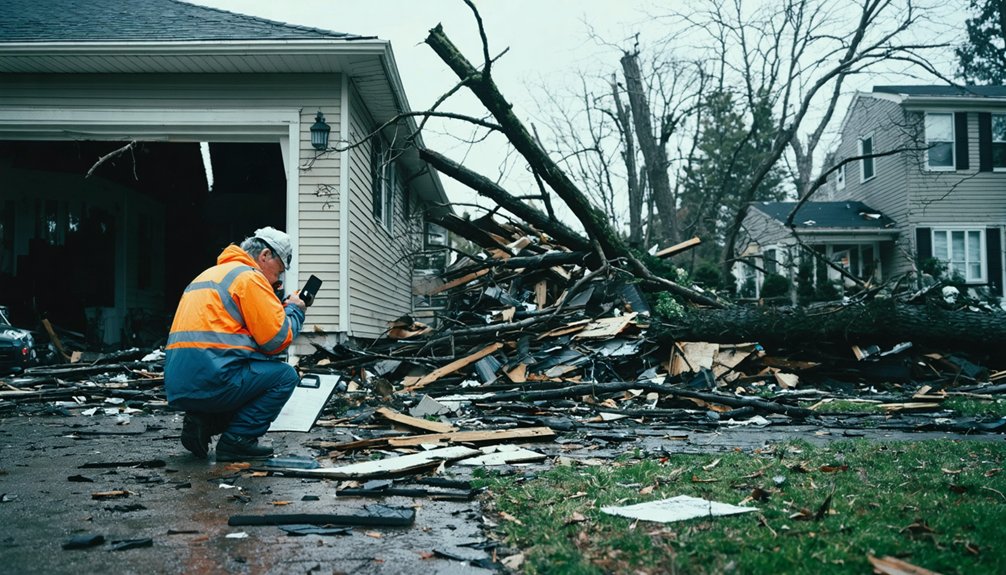
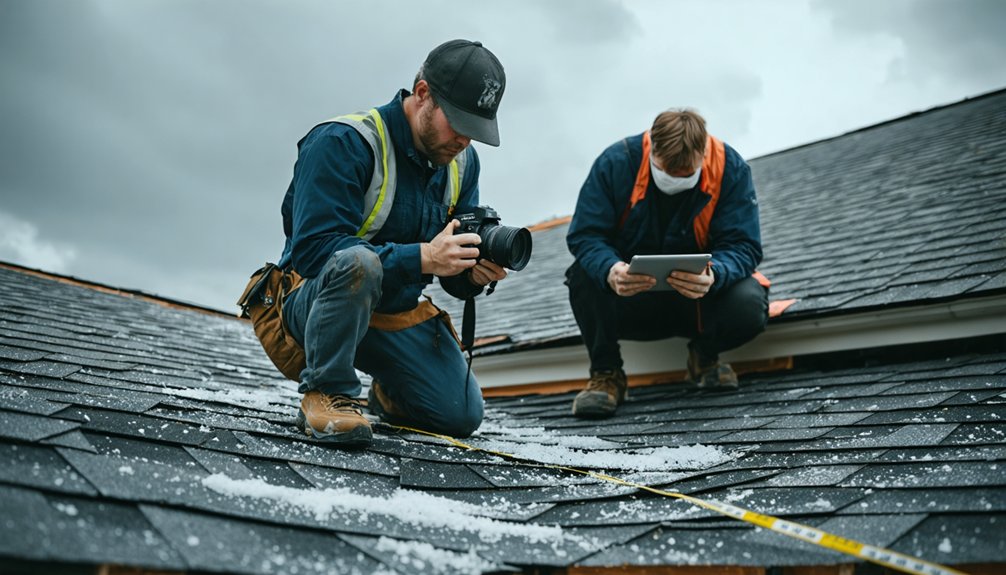
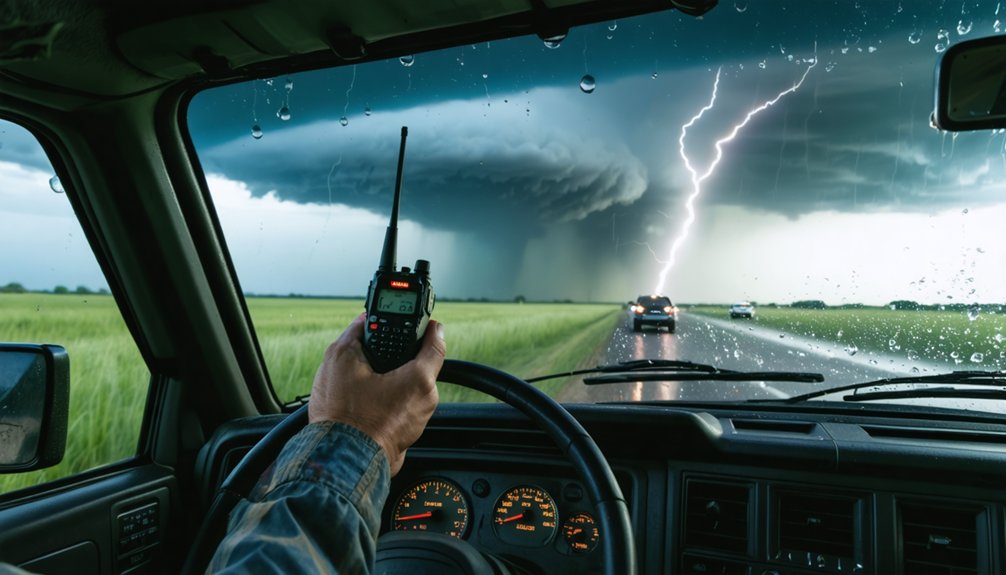
Coordination between storm chasing teams isn’t optional — it’s what keeps you alive and operational. Shared protocols reduce safety incidents by 30%, while real-time GPS tracking and standardized communication eliminate costly confusion during fast-moving situations. You’ll position vehicles more effectively, collect higher-quality data, and make faster decisions when everyone operates from the same framework. The deeper you explore each coordination layer, the clearer its life-saving impact becomes.
Key Takeaways
- Coordination reduces safety incidents by 30% through shared protocols, standardized measures, and unified escape plans during high-pressure storm situations.
- Real-time data sharing and communication speed enhance team reaction times by 30%, ensuring safe repositioning during fast-moving storms.
- Coordinated vehicle placement boosts operational success rates by 30%, optimizing equipment deployment aligned with real-time radar data.
- Distributed observational roles improve data accuracy and analysis speed, transforming raw storm observations into reliable, actionable public safety intelligence.
- Pre-built decision frameworks eliminate hesitation during critical moments, maintaining team alignment and enhancing severe weather prediction accuracy.
How Coordination Keeps Storm Chasers Safe on the Road
When storm chasing teams coordinate effectively, they reduce safety incidents by 30% through rigorous shared protocols.
You’ll rely on standardized safety measures that eliminate guesswork during high-pressure situations. Shared escape plans based on storm motion keep your team moving away from danger rather than into it, especially on wet roads where collision risks escalate quickly.
Unified navigation strategies mean you’re never looking at maps while driving—your team handles positioning collectively, maintaining full road awareness at all times.
Collaborative risk assessment helps you avoid rotating wall clouds by ensuring everyone evaluates threats simultaneously. Standardized communication eliminates dangerous misunderstandings that could place your vehicle directly in harm’s way, keeping every team member precisely positioned and operationally secure throughout each chase.
Why Communication Speed Can Be Life or Death for Chasing Teams
During a fast-moving storm event, communication speed directly determines whether your team repositions safely or gets caught in a dangerous situation.
Communication dynamics shift rapidly as conditions evolve, making every second of relay time critical. Strong communication strategies enhance your team’s reaction times by 30%, giving you the operational edge needed when decision urgency peaks.
You can’t afford transmission delays when a rotating wall cloud shifts direction unexpectedly. Real-time GPS tracking lets your team relay precise position data instantly, while standardized language protocols eliminate terminology confusion during high-pressure exchanges.
Backup satellite phones maintain connectivity when primary networks collapse entirely.
Frequent equipment checks guarantee your power sources stay reliable, keeping data flowing continuously.
Faster, cleaner communication translates directly into smarter repositioning decisions and stronger team survivability during volatile chase operations.
How Teams Position Vehicles and Equipment More Effectively
When you coordinate vehicle placement with your team, you boost success rates by 30% compared to solo positioning efforts, maximizing your coverage of critical storm sectors.
You deploy equipment in zones that align with real-time radar data, ensuring each instrument captures distinct structural components of the storm.
Your team’s joint positioning strategy eliminates redundant setups, freeing resources for dynamic redeployment as weather patterns shift.
Strategic Vehicle Placement Tactics
Strategic vehicle placement separates effective storm chasing teams from those that miss critical data or face unnecessary risks. You’ll want to master vehicle spacing strategies that keep your convoy spread across ideal observation points without creating dangerous gaps or overlaps.
Positioning dynamics shift rapidly as storms evolve, so you need predefined protocols that adapt instantly to changing conditions. Coordinate your vehicles at calculated intervals—typically 1 to 2 miles apart—ensuring thorough radar coverage while maintaining clear escape routes.
Joint positioning strategies enhance success rates by 30% compared to solo efforts, giving your team measurable advantages. Assign specific roles to each vehicle, designating lead units for intercept positions and trailing units for documentation.
This disciplined approach maximizes data collection while keeping every team member operationally secure and strategically mobile.
Optimizing Equipment Deployment Zones
Optimizing equipment deployment zones requires you to treat every field position as a calculated variable tied directly to storm structure and escape route geometry.
Zone mapping eliminates guesswork by anchoring equipment logistics to real-time radar data and predefined positional thresholds.
Use these five deployment principles to maximize operational precision:
- Assign instruments to zones based on inflow/outflow boundaries, not convenience
- Sync GPS coordinates across all units before committing to any deployment location
- Rotate equipment positions dynamically as storm motion vectors shift
- Maintain 360-degree egress clearance from every active deployment zone
- Cross-reference wall cloud position against zone boundaries every 10 minutes
Coordinated zone mapping cuts repositioning delays considerably, keeping your instruments in ideal capture windows.
Every placement decision you make directly affects data resolution and team safety margins.
How Storm Chasers Coordinate With Emergency Agencies in Real Time
When you coordinate with emergency agencies in real time, you establish clear communication channels that allow both parties to exchange critical storm data instantly, reducing response delays by up to 30%.
You activate predefined emergency protocols that guide your team and local responders through each phase of a developing severe weather event, eliminating confusion during high-pressure situations.
Your redundant communication systems, including satellite phones and backup GPS networks, guarantee that a single point of failure never disrupts the flow of life-saving information between your team and emergency services.
Real-Time Agency Communication
Real-time agency communication transforms storm chasing from an isolated pursuit into a synchronized emergency response operation.
When you coordinate with local emergency services, you’re directly enhancing public safety outcomes through agency collaboration.
Your real-time updates provide agencies with actionable intelligence they can’t generate independently:
- Relay precise storm coordinates to emergency managers within seconds of observation
- Confirm tornado touchdowns before official radar verification occurs
- Report road hazards and debris fields blocking evacuation routes
- Transmit wind speed measurements supporting timely public warnings
- Maintain satellite phone backup when primary communication networks fail
Clear predefined protocols eliminate confusion during critical response phases.
Redundant systems prevent single points of failure from disrupting your emergency liaison efforts.
You become an integrated node in a larger emergency response network, multiplying your operational impact exponentially.
Emergency Protocol Coordination
Beyond relaying storm data, you must operate within predefined emergency protocol frameworks that govern how your team integrates with agency response structures. These frameworks aren’t static—you’ll update them through regular protocol updates and safety audits that reflect evolving field conditions and agency requirements.
You should conduct emergency drills before each season, ensuring every team member executes their role without hesitation when critical situations develop. Drills eliminate decision lag, cutting response delays that cost lives.
Your team’s risk assessments must align with agency standards, ensuring your positioning decisions don’t conflict with active rescue operations.
Redundant communication systems keep your protocols functioning when primary networks fail. By maintaining synchronized frameworks with emergency agencies, you’re not just chasing storms—you’re operating as an integrated component of a broader public safety infrastructure.
How Coordinated Teams Collect Better Storm Data
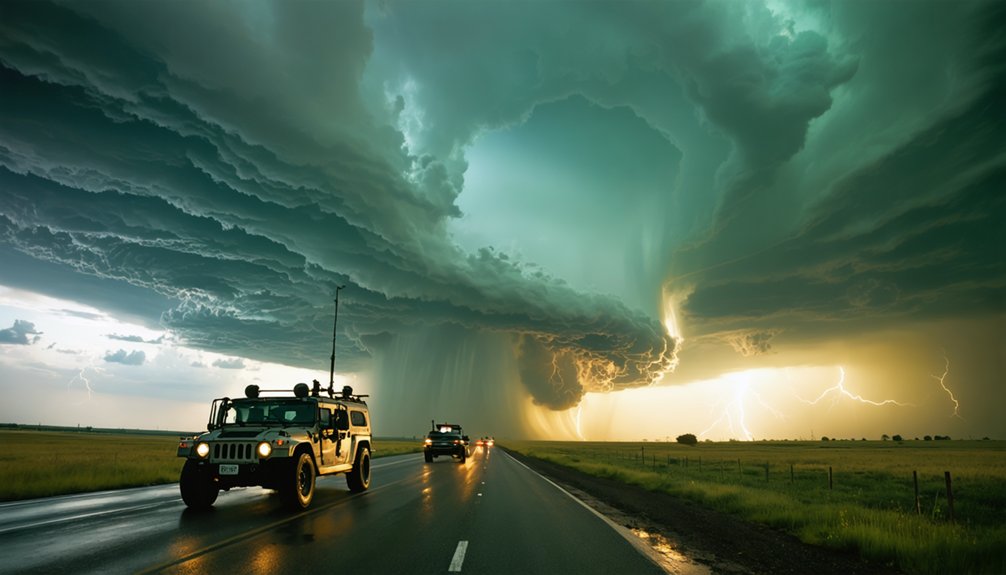
Coordinated storm chasing teams collect markedly better data because they leverage diverse expertise and distribute observational roles across multiple units.
You’ll see immediate gains in data accuracy, analysis speed, and storm insights when teams operate under unified observational standards.
Coordination delivers measurable data advantages through:
- Shared radar viewing enables thorough monitoring of entire storm structures simultaneously
- Diverse expertise improves observational accuracy across wind, precipitation, and rotation metrics
- Coordinated synthesis accelerates actionable insight generation from raw field data
- Unified reporting protocols guarantee high-quality severe weather observations reach meteorologists quickly
- Real-time wind speed analysis supports timely, precise public safety warnings
You’re not just collecting more data—you’re collecting better data.
Teams that coordinate effectively transform raw observations into reliable, actionable intelligence that solo operators simply can’t match.
How Teamwork Sharpens Storm Predictions and Decisions
Better data only matters if your team can act on it fast. Coordinated storm chasing teams leverage predictive analytics to anticipate storm behavior before conditions deteriorate. You’re not reacting blindly—you’re executing pre-built decision frameworks that eliminate hesitation during critical moments.
Shared decision-making structures reduce internal conflict, keeping your team aligned when rotating wall clouds demand immediate repositioning. Historical championship data confirms that robust protocols improve reaction times considerably, giving coordinated teams a measurable edge over solo operators.
When everyone operates from unified goals, roles execute without delay. You’re not arguing about target selection—you’re already moving.
Collaborative planning lets your team predict weather pattern shifts accurately, ensuring decisions stay data-driven rather than instinct-driven. That precision directly translates into safer operations and higher-quality severe weather intelligence.
Frequently Asked Questions
What Training Do Storm Chasers Need Before Joining a Coordinated Team?
Before joining a coordinated team, you’ll need meteorology fundamentals, GPS navigation skills, and storm safety protocols. Master team dynamics, standardized communication, and risk assessment to boost operational efficiency and reduce dangerous positioning errors by 30%.
How Do Storm Chasing Teams Handle Disagreements About Pursuing Dangerous Storms?
You’ll resolve disagreements through structured communication strategies and shared decision-making processes. Predefined protocols guide your team past conflicts, ensuring data-driven choices reduce dangerous positioning errors by keeping everyone aligned on mission-critical safety thresholds.
What Legal Responsibilities Do Storm Chasers Have When Operating Near Emergency Zones?
You’re accountable for understanding legal liabilities tied to emergency protocols near active zones. Coordinate with local agencies, avoid restricted areas, and guarantee your actions don’t impede first responders—protecting both operational freedom and public safety simultaneously.
How Are Storm Chasing Teams Typically Funded and Financially Supported?
You’ll typically secure funding through sponsorship opportunities from weather tech companies and crowdfunding initiatives via platforms like Kickstarter. Grants, university partnerships, and media contracts also provide critical financial support, enabling your team’s data-driven storm chasing operations independently.
Can Independent Storm Chasers Join Established Teams During Active Severe Weather Events?
Coincidentally, you’re asking at the right moment—yes, you can join established teams mid-event, but you’ll need to align with existing team dynamics and adopt their communication strategies instantly, boosting collective reaction times by 30%.
References
- https://crazystormchasers.com/the-role-of-teamwork-in-storm-chasing-championships/
- https://crazystormchasers.com/importance-of-backup-communication-systems-in-risk-assessment/
- https://science.nasa.gov/blogs/earth-expeditions/2022/02/25/planning-coordinating-and-communicating-the-science-behind-winter-storm-chasing-experiments/
- https://tribune.net.ph/amp/story/2026/06/07/why-we-need-storm-chasers
- https://www.preventionweb.net/news/what-do-storm-chasers-really-do-two-tornado-scientists-take-us-inside-chase-and-tools-studying
- https://www.atms.unca.edu/cgodfrey/courses/swfex/pdf/ChasingSafety.pdf
- https://www.popsci.com/science/real-storm-chasers-tornadoes/
- https://www.reddit.com/r/stormchasing/comments/lvub71/how_important_are_storm_chasers_in_giving_data_or/
- https://en.wikipedia.org/wiki/Storm_chasing
- https://stormtrack.org/threads/basic-storm-chasing-process.29691/