To create an emergency communication plan for your storm chaser team, you’ll need to establish a clear command hierarchy, build a redundant communication kit with satellite phones, two-way radios, and GPS trackers, and schedule regular check-ins before deployment. Define roles, map backup channels, and document response protocols for missed check-ins. Coordinating with local authorities and the NWS guarantees your data protects lives. Keep going to master every critical layer of this process.
Key Takeaways
- Establish a clear command hierarchy with defined roles like field commander, weather watcher, and safety officer before deployment.
- Build a communication kit with satellite phones, two-way radios, GPS trackers, and emergency beacons, tested weekly.
- Map redundant communication channels and set check-in intervals that adjust based on storm proximity and conditions.
- Create a tiered missed check-in response plan, escalating from radio contact attempts to initiating search protocols.
- Share live storm data, including radar readings and road closures, with NWS and local authorities in real time.
Why Storm Chasers Need a Formal Communication Plan
When you’re chasing storms, communication isn’t optional — it’s what keeps you alive. Without a formal plan, you’re exposing yourself and your team to serious operational challenges that can spiral fast when conditions deteriorate.
Severe weather disrupts cellular networks, isolates vehicles, and cuts off command centers from field teams. You can’t improvise solutions mid-tornado. A structured communication plan defines who reports to whom, what tools you’re using, and what happens when primary channels fail.
When the tornado hits, your cellular network won’t survive it — and neither will improvised communication plans.
It also establishes accountability. When everyone knows their role, your team moves faster and smarter under pressure.
Evaluating communication effectiveness after each deployment helps you close gaps before the next storm season.
Freedom in the field comes from preparation — not improvisation. A solid plan gives you the confidence to chase safely and decisively.
Build Your Storm Chaser Communication Kit Before You Deploy
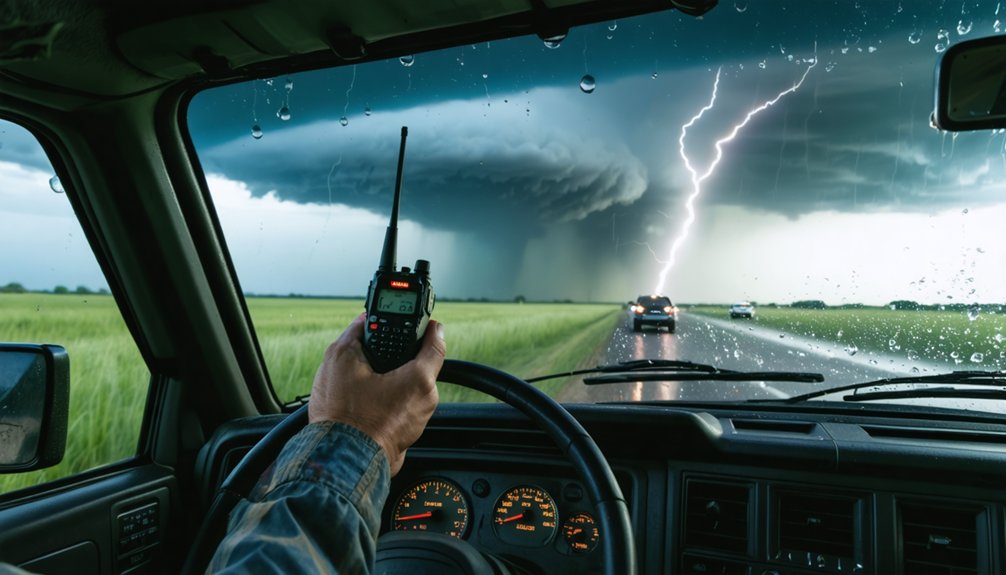
Having a formal plan means nothing if your kit isn’t built and tested before you leave. Your storm gear should include a satellite phone, two-way radios, a portable GPS tracker, and an emergency beacon.
These communication tools aren’t optional — they’re your lifeline when cellular networks collapse mid-chase.
Test every device weekly, not the morning you deploy. Verify battery levels, confirm satellite connections, and verify radios reach your designated contacts. Load your command center’s frequencies, fallback rally points, and check-in schedules into every device before you hit the road.
Pack redundant chargers, solar panels, and spare batteries. Infrastructure fails during severe weather — count on it.
You’re chasing freedom in some of the most dangerous conditions on earth, so build your kit like your life depends on it.
Establish Your Command Hierarchy and Role Assignments
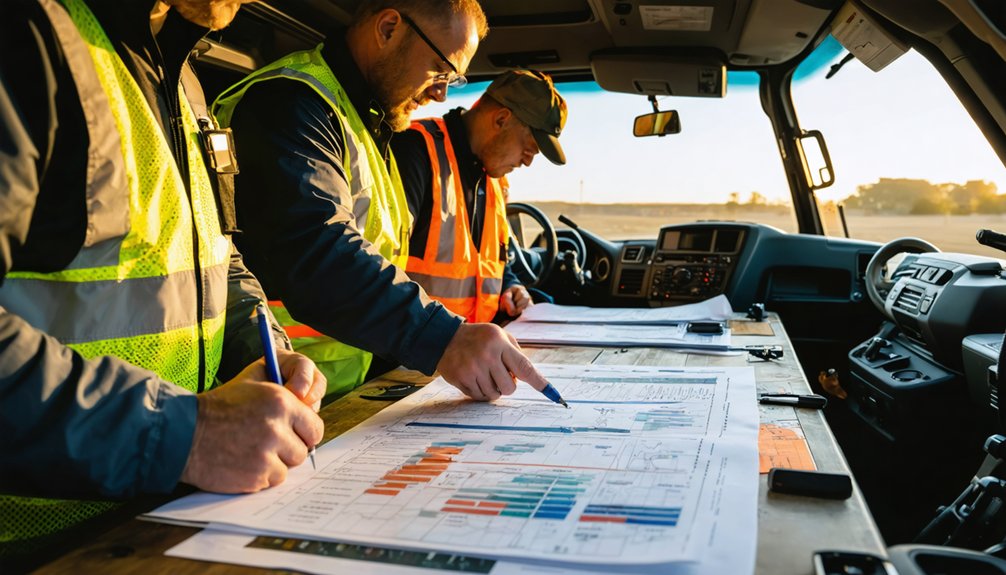
Before you deploy, you’ll need a clear command hierarchy that defines who makes decisions, who communicates them, and who executes them in the field. Assign command roles before leaving — not during a crisis. Designate a single field commander with final authority over operational decisions and broadcasts. That person owns communication clarity across all channels.
Next, assign supporting roles: a weather watcher monitors radar and developing conditions, a data coordinator transmits updates to incident command, and a safety officer tracks personnel locations and hazards.
Every team member must know their role, their direct report, and their backup. Document these assignments and distribute them to all personnel before deployment.
When pressure builds and conditions deteriorate fast, a defined structure keeps your team coordinated, accountable, and safe.
Set Up Backup Channels Before Primary Systems Fail
Before severe weather strikes, you must map out multiple redundant channels—radio, satellite, and cellular—so your team never loses contact when infrastructure collapses under storm conditions.
You’ll want to establish clear fallback reporting times and rally points in case all primary systems fail simultaneously.
Test every backup device weekly, confirming that radios, satellite phones, and mobile data systems function reliably before you ever need them in the field.
Redundant Channel Planning Strategies
When primary systems fail mid-chase, you won’t have time to improvise a backup plan. Redundant systems must already be in place, tested, and understood by every team member before you deploy.
Build your plan around channel diversity—combine satellite phones, two-way radios, and cellular data so no single point of failure silences your team. Communication resilience depends on layering these tools intentionally, not randomly. Assign each channel a specific role: primary, secondary, and emergency-only.
Signal reliability degrades fast in severe weather, so test every device weekly under realistic conditions. Establish fallback reporting times and predetermined rally points if all channels go dark.
Train each team member to operate every tool independently. Don’t wait for failure to discover gaps—find them during preparation, not during the storm.
Testing Backup Systems Regularly
Regular testing isn’t optional—it’s the only way to confirm your backup systems will perform when your primary channels fail. Weak testing protocols put your entire team at risk before you ever reach the field.
Run structured weekly checks using this sequence:
- Power on every backup radio, satellite phone, and emergency beacon to verify operational status and battery levels.
- Transmit test messages across all redundant channels to confirm signal strength and equipment reliability under realistic conditions.
- Simulate a primary channel failure and execute your fallback procedures completely, timing how long switching takes.
Document every test with timestamps and flag any failures immediately.
Don’t wait for storm season to discover a dead battery or corrupted firmware. Your freedom to operate safely depends on systems you’ve already proven work.
Schedule Check-Ins and Define What Happens When You Miss One
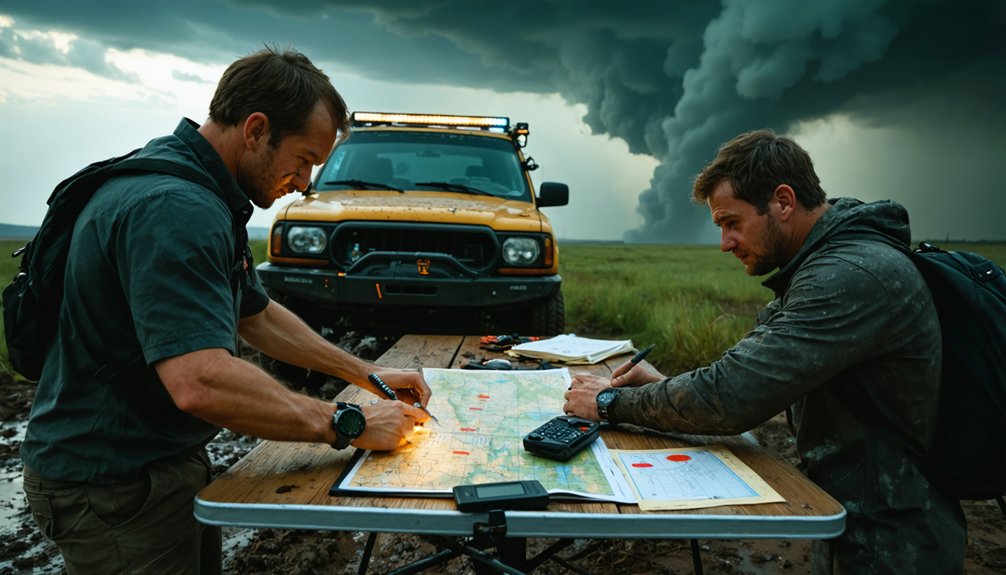
Set your check-in intervals based on storm proximity and field conditions, with more frequent contact required as hazards intensify.
Define in advance exactly what your designated contacts must do if you miss a scheduled check-in, whether that’s attempting radio contact, alerting local authorities, or activating your emergency beacon.
Build a tiered escalation plan so each missed check-in triggers a progressively stronger response rather than leaving contacts to guess how urgently they should act.
Setting Check-In Intervals
Scheduled check-ins are your lifeline when conditions deteriorate and communication windows narrow. Setting your check-in frequency before deployment keeps your team accountable and your contacts informed without guesswork.
Base your intervals on operational tempo and storm intensity:
- Pre-storm positioning – Check in every two hours using primary communication tools like satellite phones or two-way radios.
- Active storm tracking – Shorten intervals to every 30–60 minutes as conditions intensify and positioning shifts rapidly.
- Post-event wrap-up – Resume two-hour intervals until your team reaches a secure location.
Adjust intervals as threats evolve, but never skip a check-in without notifying your contact first.
Consistency builds trust, and trust keeps your safety net intact when you need it most.
Missed Check-In Protocols
Even the most disciplined teams miss a check-in, so you must define the response protocol before it happens. Missed check-in consequences escalate fast when contacts don’t know how to respond, so build a tiered action plan.
If a team misses its scheduled window, your designated contact should immediately attempt contact across all available channels — satellite phone, radio, and cellular. If there’s no response within 15 minutes, they escalate to your secondary contact.
After 30 minutes of silence, they notify local authorities with your last known coordinates and travel route.
Your missed check-in protocols must be written, distributed, and rehearsed before deployment. Every contact needs a physical copy.
Clear procedures protect your team’s autonomy while ensuring rapid response when communication breaks down.
Escalating Emergency Responses
When communication breaks down in the field, your response system must already be running. Emergency escalation isn’t reactive—it’s pre-built. Your response strategies should activate automatically when a check-in fails, removing guesswork under pressure.
Structure your escalation in three clear stages:
- Missed check-in: Your contact attempts radio and satellite contact immediately, then notifies your safety officer.
- No response within 30 minutes: Command activates GPS tracker monitoring and alerts local authorities with your last known coordinates.
- Confirmed isolation: Emergency beacons are flagged, and search protocols deploy without waiting for additional confirmation.
You’ve earned your freedom in the field by building systems that protect it. Lock these response strategies down before deployment—not during the crisis.
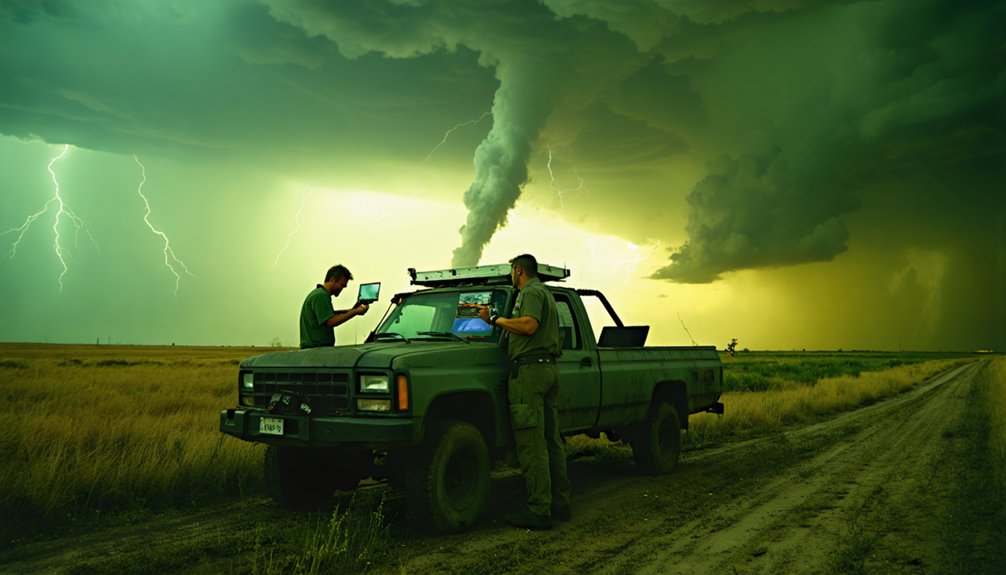
Sharing live storm data with the National Weather Service and response teams is one of your most critical responsibilities as a storm chaser. Your real time updates directly influence evacuation decisions, resource deployment, and public safety warnings.
Don’t delay transmissions — every minute matters when conditions are rapidly evolving.
Prioritize data accuracy above speed, but never sacrifice timeliness unnecessarily. Transmit radar information, flooding levels, road closures, and storm positioning directly to NWS personnel and incident command using your mobile data systems and dedicated radio channels.
Clearly identify yourself, your location, and your timestamp with every report.
Coordinate with FEMA, NGOs, and local authorities by maintaining open, dedicated communication channels throughout the event.
Accurate field intelligence gives response teams the freedom to act decisively and protect lives effectively.
Coordinate With Local Authorities During Active Events
Beyond transmitting storm data to NWS and response teams, you’ll need to build direct working relationships with local authorities who are managing ground-level operations in real time.
Local collaboration keeps your intelligence actionable and prevents dangerous communication gaps during rapidly evolving conditions.
Local collaboration transforms raw storm data into actionable intelligence, closing dangerous communication gaps when conditions change fast.
Before deployment, establish these three coordination essentials:
- Dedicate specific radio channels exclusively for local emergency updates between your team and county emergency managers.
- Identify your primary law enforcement and emergency management contacts before the storm arrives.
- Relay road closures, flooding levels, and hazard locations directly to incident command as conditions change.
You’re an independent asset, not an isolated one.
When you feed accurate, timely intelligence to local authorities, you strengthen the entire response network and help protect both responders and civilians on the ground.
Frequently Asked Questions
How Do You Handle Communication Disputes Between Competing Storm Chaser Teams?
Over 60% of field errors stem from miscommunication. You’ll resolve disputes by establishing clear communication protocols before deployment. Prioritize team collaboration, designate a single authority figure, and you’ll maintain safety while preserving operational freedom.
What Legal Liabilities Exist if Your Team Transmits Inaccurate Storm Data?
You’ll face serious legal repercussions if you transmit inaccurate storm data. Prioritize data accuracy, carry liability insurance, and embrace your ethical responsibility — protecting lives depends on the reliable, honest information you’re broadcasting to responders and the public.
How Should Teams Manage Communication Costs During Extended Multi-Week Deployments?
When financial horizons stretch thin, you’ll need cost effective solutions and sharp budget management. Prioritize satellite and radio over cellular, track usage daily, negotiate prepaid plans, and rotate equipment roles to maximize every dollar during extended deployments.
Can Civilian Storm Chasers Legally Access Restricted Emergency Communication Frequencies?
You can’t legally access restricted emergency frequencies without proper licensing. Understand your frequency access boundaries and legal limitations by obtaining your amateur radio license, which grants you authorized channels while respecting critical emergency infrastructure others depend on.
How Do You Maintain Mental Health When Communication Failures Cause Dangerous Isolation?
Like an anchor in a storm, mental resilience keeps you grounded. Practice isolation strategies: schedule check-ins, maintain routines, use backup channels, and trust your training. You’ve got this—stay connected, stay focused, stay safe.
References
- https://crazystormchasers.com/storm-chaser-expedition-preparation-coverage/
- https://midlandusa.com/blogs/blog/storm-chasers-rely-on-walkie-talkies-to-communicate
- https://www.crisisreadymedia.org/into-the-eye-of-the-storm-2
- https://iris.paho.org/bitstream/handle/10665.2/34886/9789275129937_eng.pdf?sequence=1&isAllowed=y
- https://crazystormchasers.com/instant-communication-methods-for-storm-chasers-in-emergency-scenarios/
- https://www.everbridge.com/blog/prepare-your-organization-for-a-hurricane/
- https://www.mangoapps.com/templates/broadcast/severe-weather-field-crew-mobilization-broadcast
- https://www.ready.gov/sites/default/files/2020-08/cert_emergencycommunications_pm_100615.pdf
- https://www.westonfl.org/residents/emergency-preparedness/hurricane-preparedness/before-the-storm/make-a-plan/emergency-communications-plan-checklist
- https://www.weather.gov/media/dvn/NWSDVN_eventplanning_guide.pdf