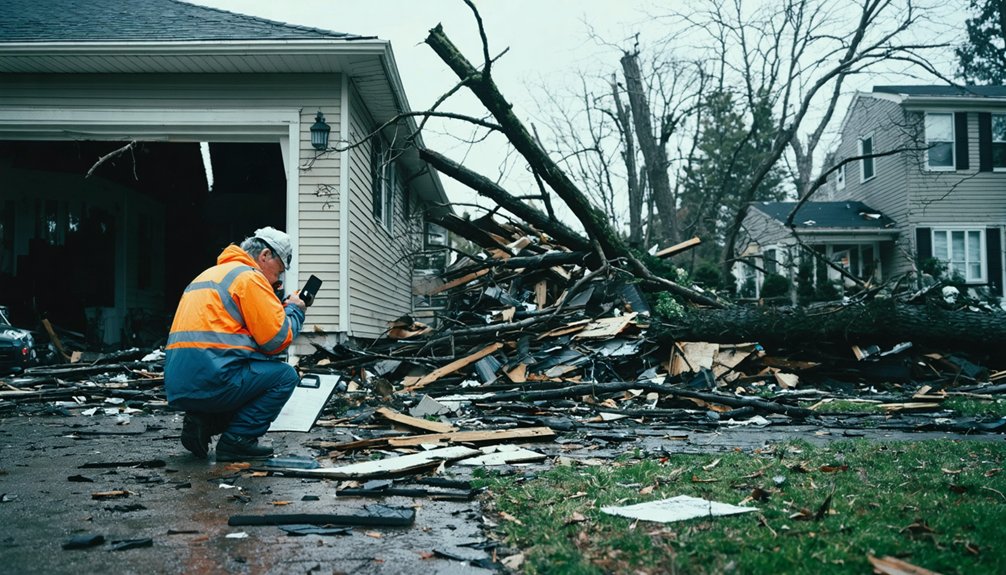
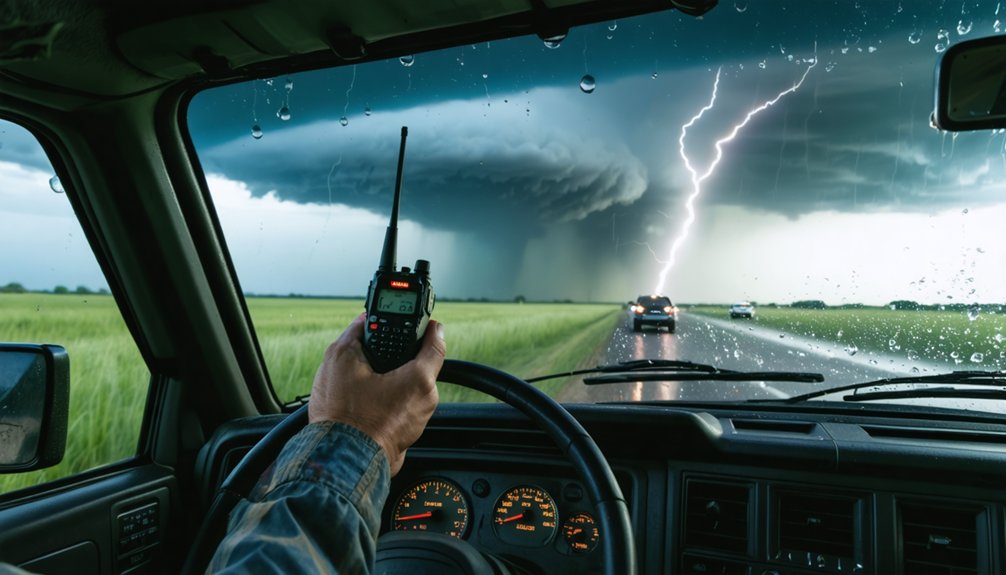
Effective communication during storms directly determines whether people live or die. You can’t afford delays — NOAA data confirms timely alerts reduce storm-related casualties by up to 45%. Every message must be accurate, specific, and consistent across all channels. Misinformation spreads fast, infrastructure fails faster, and vulnerable populations need tailored formats to act safely. Understanding the full communication framework gives you every advantage when the next storm hits.
Key Takeaways
- Rapid, accurate storm updates enable timely evacuations and protective actions, directly reducing casualties and preventing unnecessary deaths.
- Multiple communication layers ensure critical warnings reach people even when infrastructure fails during severe storms.
- Accessible alert formats ensure vulnerable populations, including elderly, hearing-impaired, and non-English speakers, receive and understand life-saving instructions.
- Empathetic, clear messaging reduces panic, builds public trust, and increases compliance with essential safety directives.
- Controlling misinformation through verified, synchronized messaging prevents dangerous confusion that could delay critical emergency responses.
Why Storms Demand Fast and Accurate Communication
When a storm strikes, every second counts. You need fast, accurate communication to protect lives and maintain order. Weather forecasting data must reach you without delay, translating raw atmospheric measurements into actionable directives before conditions deteriorate.
Every second matters when a storm hits. Fast, accurate communication transforms raw data into life-saving action.
Emergency preparedness depends on five core communication principles: speed, accuracy, specificity, consistency, and clarity. Speed prevents life-saving updates from arriving too late. Accuracy ensures you’re receiving verified data, not speculation. Specificity delivers exact impact details — road closures, power outages, shelter coordinates.
Consistency synchronizes messaging across every platform you monitor, eliminating contradictory instructions. Clarity strips out technical jargon so you understand directives immediately.
When these principles fail, misinformation spreads, response times increase, and casualties rise. You deserve communication systems engineered to perform precisely when conditions are most dangerous.
Which Channels Work Best When Networks Fail?
Network failures during storms aren’t hypothetical — they’re guaranteed. Cell towers collapse, fiber lines snap, and internet infrastructure fails precisely when you need it most. You can’t rely on a single point of failure.
Alternative communication methods close that gap immediately. Mobile texting consumes far less bandwidth than voice calls, keeping messages moving when networks congest. Dedicated mesh-network apps route communications peer-to-peer, bypassing compromised towers entirely. Satellite systems maintain uptime independent of ground-level damage.
Legacy media remains your most underestimated asset. Battery-powered radios deliver continuous official updates without requiring any infrastructure you don’t already own. When digital channels fail, broadcast frequencies don’t.
Build redundancy before the storm hits. Stack your channels — satellite, SMS, radio — so losing one never means losing contact with critical safety information.
Which Alert Formats Reach the Most Vulnerable Residents?
Redundant channels solve the infrastructure problem, but channel availability means nothing if your alert formats exclude the people most at risk. Emergency translations and visual alerts aren’t optional features—they’re operational requirements for reaching vulnerable populations before conditions deteriorate.
- Deploy emergency translations across all platforms to serve non-English-speaking residents immediately
- Activate visual alerts for individuals with hearing disabilities through screen-based notifications
- Use plain language to make instructions actionable for low-literacy and elderly populations
- Enable text-to-speech functions so phone-based updates reach those with visual impairments
- Trigger IPAWS integration to bypass opt-in limitations during high-risk events
Your alert system’s effectiveness is measured by who it reaches, not just how fast it transmits. Format exclusions cost lives.
How Does Empathy Shape Storm Messaging That People Trust?
Format compliance determines reach, but trust determines whether people act on what they receive. When you craft storm messaging, emotional connection isn’t optional — it’s a functional necessity. Compassionate language signals that you’re addressing people, not data points, and that distinction drives compliance with safety directives.
Empathetic messaging works through specific mechanisms. Acknowledging fear directly reduces panic faster than statistics alone. Admitting uncertainty about emerging details builds credibility rather than eroding it.
Prioritizing human impact over damage metrics keeps your audience engaged and responsive.
You’ll also strengthen trust by announcing your next update time, giving people a concrete anchor during uncertainty. When your messaging combines verified data with compassionate language, residents don’t just receive your alerts — they act on them. That behavioral response is your actual goal.
How Do You Stop Misinformation From Spreading During a Storm?
While empathy shapes whether people trust your messaging, misinformation determines whether that trust survives the storm. You can’t afford to let rumors circulate unchallenged when lives depend on accurate data. Rumor control and fact verification aren’t optional—they’re operational necessities.
Deploy these coordinated countermeasures immediately:
- Monitor social media continuously to identify false claims before they reach critical mass
- Conduct media briefings on a fixed schedule so journalists report verified facts, not speculation
- Synchronize all channels around identical core instructions to eliminate contradictory messaging
- Verify every detail internally before releasing it publicly—speculation destroys credibility fast
- Activate community networks to amplify official corrections through trusted local voices
You maintain public safety by controlling the information environment, not just broadcasting into it.
Frequently Asked Questions
How Should Backup Communication Teams Be Trained Before a Storm Arrives?
Train your backup teams by practicing crisis negotiation protocols, testing social media strategy deployments, and reviewing pre-written messages. You’ll want centralized, auditable systems ensuring personnel can rapidly replace unavailable members without disrupting critical storm communications.
What Pre-Written Message Templates Should Emergency Managers Prepare in Advance?
You should prepare templates covering evacuation orders, shelter locations, road closures, and power outage updates. These guarantee message clarity and public awareness, letting you deploy verified, precise data instantly when networks and time constraints demand rapid response.
How Do Utility Companies Coordinate Outage Updates With Local Emergency Managers?
Powerfully partnering platforms push precise outage data directly to you. Utility companies sync with emergency managers through social media dashboards and shared systems, driving community engagement by broadcasting verified restoration timelines, affected zones, and crew deployment updates simultaneously across coordinated channels.
When Should Emergency Managers Schedule Software and Evacuation Route Data Updates?
You should schedule software and evacuation route data updates during routine risk assessment cycles—before storm season begins. Prioritize community engagement feedback to validate accuracy, ensuring centralized systems remain auditable, current, and operationally reliable when emergencies demand immediate deployment.
How Are Centralized Communication Systems Tested Before Storm Season Begins?
85% of emergency systems fail when untested. You audit your communication infrastructure through simulated drills, stress-testing networks, verifying public information accuracy, and confirming backup protocols activate correctly—ensuring every system performs reliably before storm season demands it.
References
- https://online.utpb.edu/about-us/articles/communication/how-effective-crisis-communication-saves-lives-during-hurricanes
- https://www.civicplus.com/blog/ps/hurricane-emergency-preparedness-and-resident-communications/
- https://www.youtube.com/watch?v=YxLRXszEmTs
- https://www.prdaily.com/hurricane-season-2023-crisis-communications/
- https://granicus.com/wp-content/uploads/Resource-Guide-Winter-Storms-Communications-Strategy-Toolkit.pdf
- https://www.battlbox.com/blogs/outdoors/how-to-communicate-during-a-hurricane
- https://ramey.com/blog/stormy-weather-calm-and-effective-crisis-communications/
- https://training.fema.gov/emiweb/is/is242b/student manual/sm_03.pdf
- https://perimeterplatform.com/blog/how-to-communicate-during-hurricane
- https://www.speakap.com/insights/winter-storm-communication