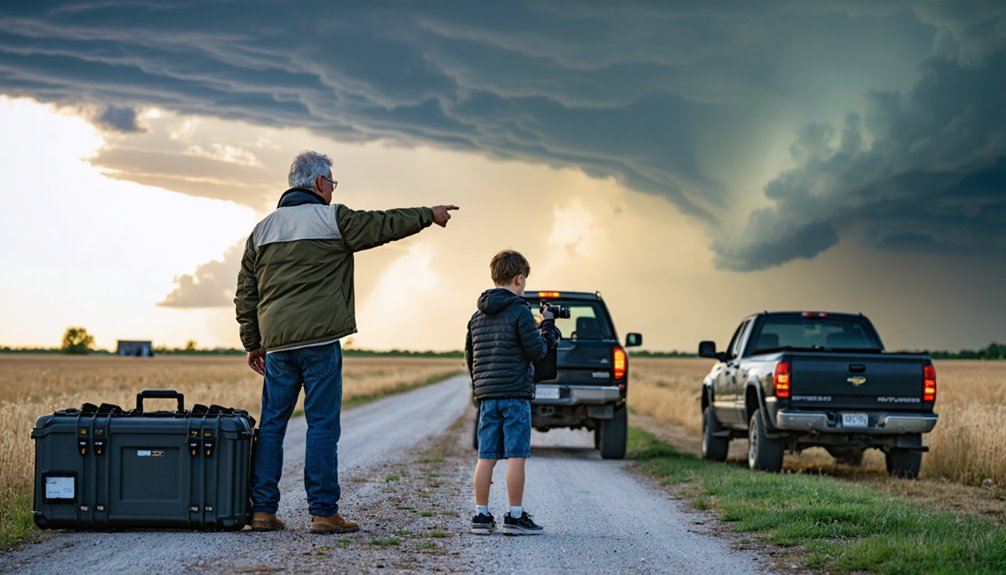
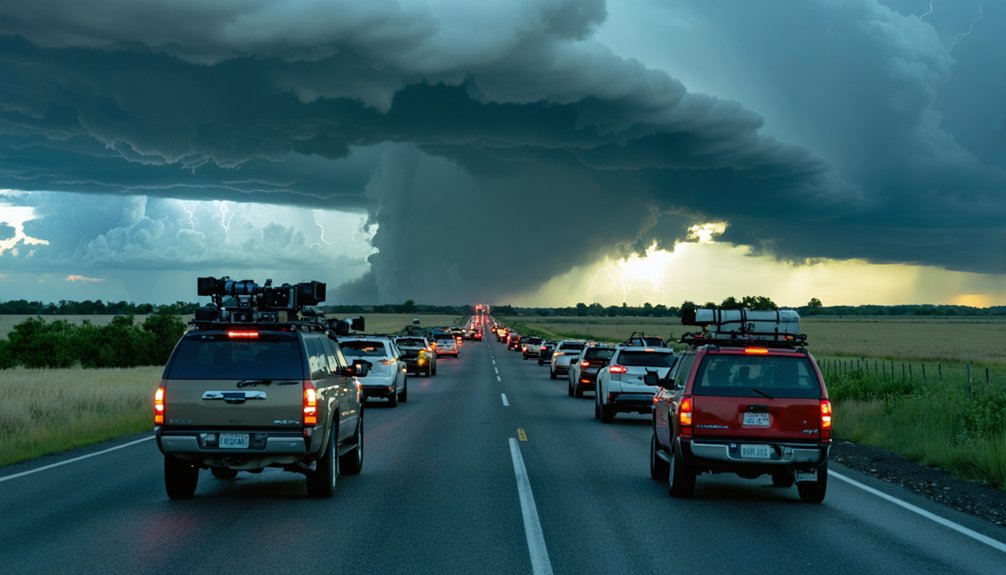
To minimize your environmental impact while storm chasing, you’ll need to act deliberately across every phase of the chase. Choose biodegradable, low-impact gear powered by renewable energy. Plan fuel-efficient routes and carpool when possible. Stay on paved roads to protect soil and vegetation. Keep your distance from wildlife, especially near nesting zones. Pack out every probe and fragment you deploy. Each decision compounds, and there’s considerably more to contemplate before your next chase.
Key Takeaways
- Use biodegradable, eco-friendly gear and power devices with renewable energy sources to reduce persistent environmental contamination and fossil fuel dependence.
- Plan efficient routes using storm motion data and carpool with other chasers to consolidate miles and cut emissions.
- Stay on paved roads and designated pull-offs to prevent soil compaction, vegetation destruction, and drainage disruption.
- Avoid stopping near nesting zones and refrain from cutting through grasslands, wetlands, or other sensitive wildlife habitats.
- Retrieve all deployed probes, packaging, and gear fragments before leaving any site to prevent habitat clutter.
Choose Lower-Impact Storm Chasing Gear Before You Deploy
The gear you select before a chase can quietly determine how much environmental damage your operation leaves behind. Prioritize equipment built from eco friendly materials that break down without leaving persistent field debris. Biodegradable probes, for instance, reduce long-term contamination in areas you’ll likely never revisit.
Gear choices made before the chase quietly shape the environmental footprint you leave behind in the field.
Consolidate your loadout deliberately — duplicate gear means additional transport weight, which increases fuel consumption and emissions across every mile you drive.
Where it’s practical, power your devices using renewable energy sources like compact solar panels. You reduce dependence on fossil-fuel-based charging while maintaining operational independence in the field — a real advantage when you’re far from infrastructure.
Every equipment decision compounds across a full chase season, so treat gear selection as a genuine environmental commitment, not an afterthought.
Reduce Emissions With Smarter Storm Chasing Routes
Gear choices shape your environmental footprint before you leave the driveway, but route decisions determine it across every mile you drive. Energy efficient routes reduce unnecessary repositioning, limit idle time, and cut total fuel consumption without sacrificing intercept quality.
Study storm motion data carefully before committing to a target, so you’re not chasing corrections across three counties.
Carpooling with other chasers targeting the same storm consolidates vehicle miles meaningfully.
Vehicle maintenance matters equally — under-inflated tires, dirty air filters, and neglected tune-ups quietly increase emissions on every chase.
Avoid high-speed runs when storm timing allows a steadier pace.
Each routing decision compounds across a full season, so treat every mile as a measurable variable rather than an acceptable cost of doing business.
Stay on Roads to Prevent Soil Damage During Chases
Routing decisions don’t end at which highway you take — they extend to where your tires actually contact the ground. Off-road driving compacts soil, destroys vegetation, and disrupts drainage patterns that took years to stabilize. Soil preservation depends on you staying on paved surfaces and designated pull-offs, even when a better vantage point sits just 50 yards across an open field.
Habitat protection follows the same logic. Sensitive ecosystems don’t recover quickly from vehicle traffic, and breeding seasons make disturbance especially costly. You’re free to reposition aggressively — just keep that movement on established roads.
Avoid soft shoulders, crop edges, and unmarked terrain entirely. The storm isn’t going anywhere that justifies leaving tire tracks across land that wasn’t yours to cross.
Avoid Disturbing Wildlife During the Chase
Wildlife encounters during a chase aren’t incidental — they’re predictable consequences of moving through rural and semi-wild terrain at high speed. Responsible wildlife observation means adjusting your behavior before disturbance occurs, not after.
Wildlife encounters aren’t accidents — they’re the predictable cost of moving fast through wild terrain.
Habitat preservation depends on deliberate choices:
- Maintain distance from any wildlife you spot — don’t slow-roll toward animals for a closer look.
- Avoid stopping in or near known nesting zones, particularly during spring breeding seasons.
- Don’t cut through grasslands, wetlands, or woodlands to reposition for a better storm angle.
- Minimize stationary time in ecologically sensitive corridors where your presence compounds stress on local species.
You’re moving through someone else’s territory. Treat that access as a privilege worth protecting, not a right worth exploiting.
Pack Out Every Piece of Storm Chasing Gear
What you bring into the field, you carry back out — no exceptions. Abandoned probes, packaging, and gear fragments don’t just create clutter — they contribute to wildlife disturbance and long-term habitat degradation. Every item left behind becomes someone else’s problem or nature’s burden.
Pack reusable containers, minimize single-use materials, and account for every piece of equipment before leaving a site. If you deployed a probe, retrieve it. If you opened packaging, pocket it. Biodegradable materials reduce persistent pollution when disposal isn’t practical, but they’re not a substitute for packing out.
Habitat preservation depends on chasers treating the field with discipline. Your freedom to chase tomorrow relies on maintaining access today — and that access erodes when land managers see consistent evidence of negligence left behind.
Frequently Asked Questions
How Can Storm Chasers Coordinate to Reduce Total Environmental Impact Together?
You’ll reduce impact through community collaboration by carpooling, sharing real-time positioning, and coordinating with local spotters. Storm chasing ethics demand you consolidate routes, avoid redundant repositioning, and actively communicate to minimize collective fuel use and habitat disturbance.
What Escape Route Planning Methods Help Chasers Avoid Sensitive Natural Areas?
Like a chess player thinking moves ahead, you’ll want to pre-map two escape routes that dodge sensitive zones, prioritizing wildlife disturbance prevention and habitat preservation by sticking strictly to established roads.
How Does Unsafe Chasing Indirectly Increase Environmental Harm Beyond Direct Damage?
When you chase unsafely, you’re triggering emergency maneuvering through fragile habitats, causing wildlife disturbance and noise pollution. Erratic repositioning compounds fuel emissions and extends your environmental footprint well beyond any single storm’s direct physical damage.
Can Carpooling With Other Chasers Meaningfully Reduce Storm Chasing Emissions Overall?
Yes, you can slash vehicle emissions dramatically by carpooling. Sharing rides consolidates miles, maximizes fuel efficiency, and meaningfully shrinks your collective footprint—but only if you’re carefully coordinating routes to avoid redundant repositioning during chases.
How Should Chasers Handle Waste Disposal When Recycling Options Aren’t Available Nearby?
When recycling alternatives aren’t accessible, you should pack all waste out with you. Prioritize waste management by carrying reusable containers, using biodegradable materials, and disposing of everything properly once you’ve returned to areas with adequate facilities.
References
- https://crazystormchasers.com/exploring-storm-chasing-and-climate-change-impacts/
- https://crazystormchasers.com/storm-chaser-environmental-impact-analysis/
- https://crazystormchasers.com/ethical-guidelines-for-chasing-supercell-storms/
- https://www.pbs.org/newshour/classroom/lesson-plans/2017/05/lesson-plan-storm-chasing-dont-try-this-at-home
- https://crazystormchasers.com/maximizing-storm-chasing-impact-on-climate-change-awareness/
- https://crazystormchasers.com/storm-chasing-and-climate-change-awareness/
- https://www.omicsonline.org/open-access/tornados-and-their-impact-on-the-environment-unleashing-natures-fury-125697.html
- https://undark.org/2018/06/28/podcast-28-co2-tornadoes-ginamccarthy/
- https://crazystormchasers.com/preparing-for-climate-change-storm-chasers-mission-consequences/
- https://yaleclimateconnections.org/2022/06/why-chase-tornadoes-its-the-wonder-of-nature/