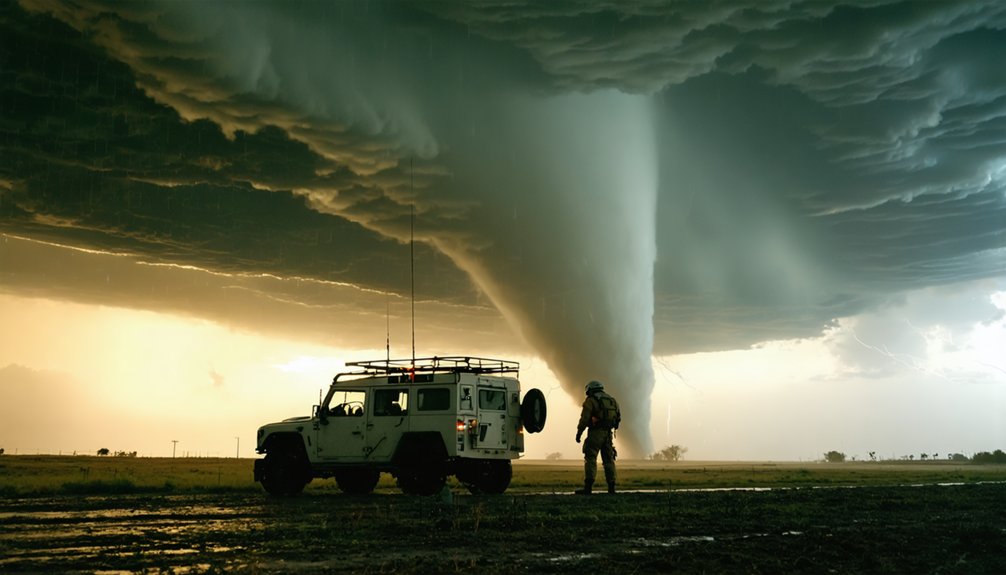
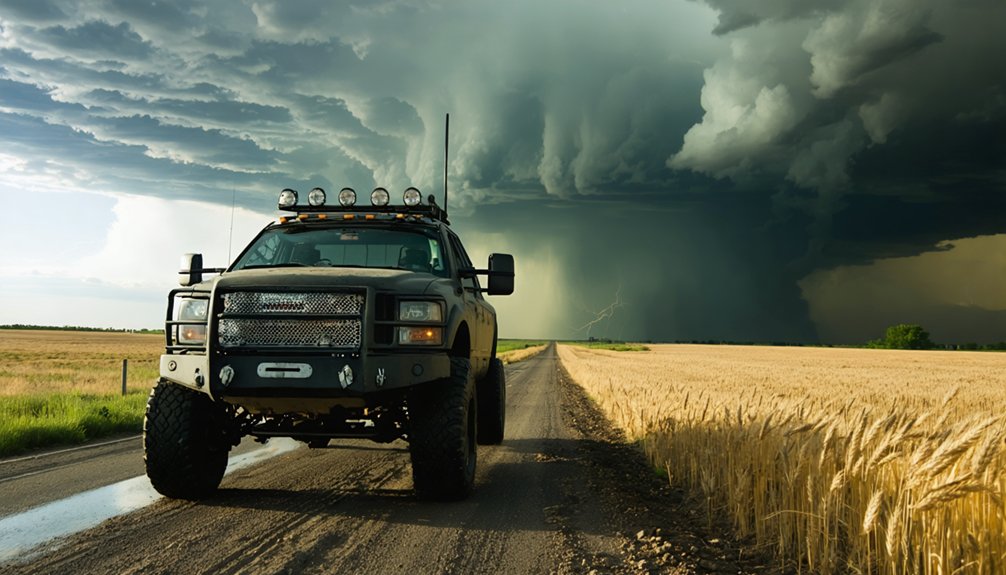
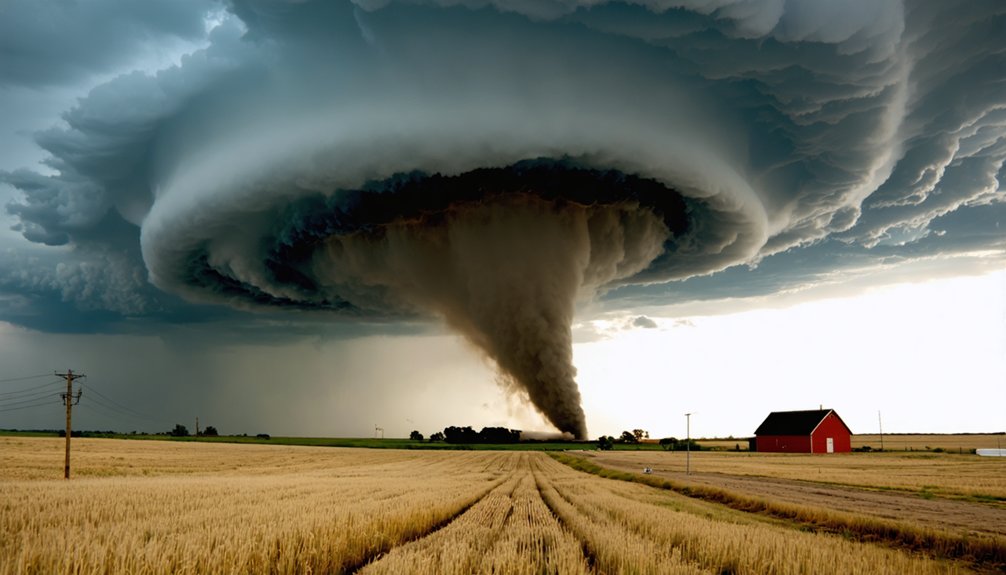
The 5 best safety tips for storm chasers are: always maintain two clear escape routes, keep your team updated on your real-time position, pack essential gear including NOAA radios and redundant power sources, respond correctly to lightning, hail, and tornado threats, and know when to abandon your vehicle. Following these protocols separates a safe return from a fatal statistic. Each tip has critical operational details you’ll want to know before heading into the field.
Key Takeaways
- Always maintain two clear escape routes by analyzing maps before deployment and continuously cross-referencing radar data with your physical position.
- Share real-time GPS position updates with your team and establish fallback communication methods like HAM radios for network failures.
- Pack essential gear including NOAA weather radios, redundant power sources, GPS hardware, food, water, and extra batteries before chasing.
- Stop driving immediately when hail falls, take shelter in your vehicle during nearby lightning, and keep your seatbelt fastened always.
- Abandon your vehicle and lie flat in the nearest ditch if a tornado’s confirmed path intersects your position with no escape.
Keep Two Clear Escape Routes at All Times
When chasing severe weather, you must always maintain two clear escape routes—never rely on a single exit path. Storms shift rapidly, and a blocked road eliminates your margin for error instantly.
Effective escape route planning requires pre-mission map analysis, identifying perpendicular roads that move you away from a storm’s projected track.
Pre-mission map analysis isn’t optional—identify perpendicular escape roads before entering any area under a severe weather threat.
Integrate reliable navigation tools—GPS units, offline mapping apps, and updated county road maps—before entering warned areas. Cross-reference radar data with your physical position continuously, ensuring both exit options remain viable as conditions evolve.
Monitor road quality, traffic, and potential flood zones simultaneously.
If one route becomes compromised by flooding, debris, or traffic, you’ll execute the secondary path without hesitation. Redundancy isn’t optional—it’s your operational standard.
Keep Your Team Updated on Your Position
Real-time position sharing isn’t optional—it’s a core operational requirement that directly affects your team’s ability to respond if something goes wrong. Use GPS-enabled apps or dedicated tracking systems to broadcast your coordinates continuously throughout the chase.
Don’t rely on periodic check-ins alone; conditions deteriorate faster than scheduled updates allow.
Integrate team communication protocols before you deploy. Establish check-in intervals, designated frequencies, and fallback contact methods if primary data fails.
HAM radios and push-to-talk systems provide reliable redundancy when cellular networks collapse under storm interference. Log your intended route and target area with your team before entering warned zones.
If your position shifts, update them immediately. Autonomous decision-making in the field works only when your team always knows exactly where you are.
Pack the Right Storm Chasing Gear Before You Go
Gear failures in the field don’t announce themselves—they compound rapidly when you’re already managing radar, road conditions, and storm motion simultaneously.
Your storm gear essentials should include NOAA weather radios, HAM or push-to-talk communication systems, GPS hardware, and redundant power sources like inverters and portable chargers.
Run a structured packing checklist before every deployment—not from memory. Include food, water, extra batteries, and matches in your travel safety kit. These aren’t optional accessories; they’re operational dependencies.
HAM radios provide critical backup when cellular networks fail inside precipitation cores. Power inverters keep your equipment running during extended operations.
Treat every item on your packing checklist as load-bearing infrastructure, because when one system drops, your remaining systems immediately absorb greater operational stress.
Respond Correctly to Lightning, Hail, and Tornado Threats
Packing the right equipment sets your operational baseline—but that baseline means nothing if you can’t respond correctly once active threats develop around you.
For lightning safety, take shelter inside your vehicle the moment cloud-to-ground strikes occur within one mile. Don’t wait.
For hail protection, stop driving immediately when hail begins falling—continued movement destroys windshields and compromises visibility. Steer clear of heavy precipitation cores and avoid punching through them.
If a tornado targets your direct path, don’t attempt to outrun it. Instead, assess its motion vector, then abandon your vehicle for the nearest roadside ditch if escape isn’t viable. Keep your seatbelt fastened during every maneuver.
These responses aren’t suggestions—they’re operational protocols that protect your freedom to chase another day.
Know When Storm Chasers Should Abandon Their Vehicle
Knowing when to leave your vehicle can be the difference between survival and catastrophe. During a direct tornado approach, staying inside isn’t always the safest option. Assess your situation quickly and act decisively.
Abandon your vehicle when:
- A tornado’s confirmed path intersects your exact position with no viable escape route available.
- Rapid debris or violent rotation makes driving impossible or immediately dangerous.
- Your engine stalls or vehicle becomes disabled during active tornado approach.
- All escape routes are blocked by traffic, flooding, or downed infrastructure.
Once you’ve committed to abandoning your vehicle, move immediately to the nearest ditch, lying flat with hands covering your head.
Never attempt to outrun a confirmed tornado targeting your direct location.
Frequently Asked Questions
Should Storm Chasers Ever Chase Alone in Remote Areas?
Over 30% of chaser fatalities involve solo operators. You shouldn’t chase alone in remote areas — solo chaser risks multiply fast. Always apply remote area precautions: log your location, carry backups, and bring a trusted partner.
How Do Storm Chasers Handle Flooded Roads During a Chase?
Never enter flooded roads during flood navigation—turn around immediately. You’ve got safety equipment and escape routes for a reason. Don’t risk it; moving water’s deceptive force can sweep your vehicle in seconds.
What Driving Habits Keep Storm Chasers Safe on the Road?
You’ll stay safer by using turn signals, avoiding radar fixation, and minimizing task saturation. Prioritize vehicle maintenance before deployments, conduct thorough route planning, wear your seatbelt, and always maintain clear, unobstructed escape routes during active chases.
How Should Storm Chasers Report Damage or Injuries They Witness?
Like a sentinel answering duty’s call, you must dial 911, relay exact GPS coordinates, and conduct swift damage assessment and injury reporting to guarantee responders reach those who need help fast.
Should Storm Chasers Consult Radar Before Entering Tornado-Warned Areas?
Yes, you should always consult radar technology and spotter networks before entering tornado-warned areas. Following these safety protocols guarantees you’ve assessed real-time storm data, maintaining situational awareness while preserving your freedom to chase safely and effectively.
References
- https://midweststormchasers.org/safety-tips/
- https://www.flame.org/~cdoswell/chasesums/Chase_safety.html
- https://www.youtube.com/watch?v=nxPSFg2R8YY
- https://www.stormchasingusa.com/storm-chasing-and-safety/
- https://meetingsmags.com/illinois/il_planning/il_checklist/safety-tips-from-a-storm-chaser/
- https://will.illinois.edu/weatherrealness/episode/storm-chasing-can-be-deadly-heres-how-to-stay-safe
- https://matadornetwork.com/trips/6-tips-for-amateur-storm-chasers/