The 5 best storm chasing safety tips are: inspect your vehicle and fill the tank before every chase, keep a 3–5 mile buffer from the supercell, monitor multiple live radar sources simultaneously, plan at least three escape routes before deployment, and always chase in pairs with designated roles. These protocols aren’t optional — they’re what separates controlled field work from fatal mistakes. Stick around to see exactly how each tip breaks down in practice.
Key Takeaways
- Conduct critical vehicle checks on fluid levels, tire pressure, brakes, wipers, and headlamps before every storm chasing deployment.
- Position your vehicle 3–5 miles southeast of the supercell for safe visual access and adequate reaction time.
- Cross-reference multiple radar feeds like RadarScope and GR2Analyst while keeping NOAA Weather Radio active for accurate monitoring.
- Pre-load at least three escape corridors with identified safe pull-offs before encountering any storm activity.
- Chase in pairs, designate separate driving and monitoring roles, and establish verbal shorthand for quick directional communication.
Inspect Your Vehicle and Fill the Tank Before Every Chase
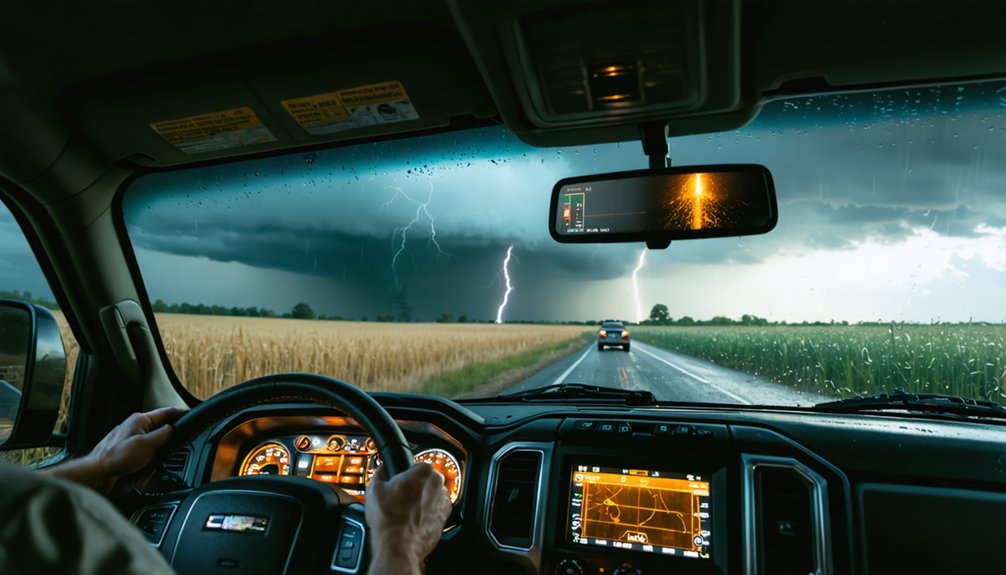
Before every chase, run through five critical vehicle checks: fluid levels (oil, coolant, brake fluid, and windshield washer), tire pressure and tread condition, brake responsiveness, wiper blade effectiveness, and headlamp and driving lamp functionality.
Skipping vehicle maintenance isn’t an option when your life depends on rapid repositioning.
Vehicle maintenance isn’t optional—your survival depends on the ability to move fast when seconds matter.
Keep your fuel tank full before departure. Storm chasing disrupts fuel efficiency through repeated acceleration, idling, and high-speed repositioning across unpredictable terrain.
You can’t afford to hit empty mid-chase with a tornado bearing down on your location.
Designate a dedicated driver to eliminate fatigue-related errors. Drive with headlamps on at all times for maximum visibility.
These aren’t suggestions—they’re non-negotiable protocols that preserve your ability to move fast and stay free from preventable mechanical failures.
Keep a 3–5 Mile Buffer From the Storm
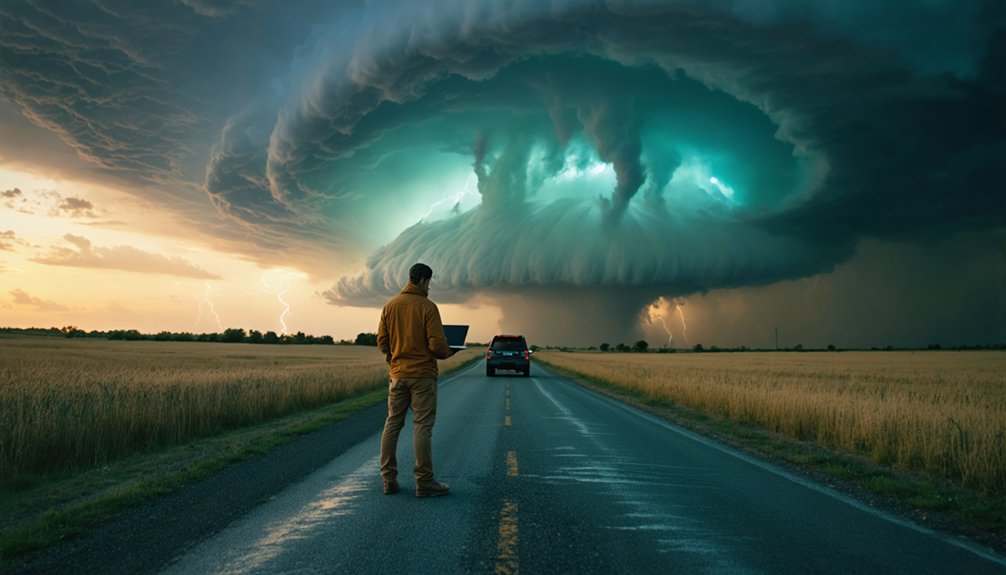
Maintaining a 3–5 mile buffer between your vehicle and a supercell gives you the reaction time you need when storms shift direction without warning. Storm dynamics change fast, and closing that gap eliminates your margin for error.
Position yourself southeast of the supercell in the northern hemisphere—the notch—where you’ll gain clean visual access without entering the core’s rain and hail.
Monitor upper and lower level radar simultaneously so you’re reading actual storm behavior, not assumptions. Your safety equipment, including NOAA Weather Radio and real-time radar apps, only works if you’re using it actively, not passively.
Never let data analysis pull your attention from the storm’s physical movement. That buffer isn’t optional—it’s the single variable keeping you in control of the chase.
Monitor Multiple Live Data Sources While You Chase
Relying on a single radar feed while chasing is how situational awareness collapses. Cross-reference live radar platforms like RadarScope and GR2Analyst simultaneously to validate data accuracy and confirm storm tracking trajectories. A single source introduces blind spots — layered sources eliminate them.
Keep NOAA Weather Radio active for localized weather alerts you might otherwise miss while focused on screens. Monitor both upper and lower atmospheric data to distinguish precipitation intensity from hail cores.
Don’t let data hypnotize you. Set timed check-ins to reassess storm position relative to your vehicle. Use communication tools like ham radio or spotter networks to share real-time field observations.
Your observation techniques sharpen considerably when you’re pulling from multiple verified streams rather than trusting one.
Plan Multiple Escape Routes Before You Chase
Data feeds keep you informed, but your exits keep you alive. Before you deploy, integrate route planning directly into your storm mapping workflow. Identify a minimum of three escape corridors leading away from the storm’s projected path — never parallel to it.
Cross-reference road accessibility with real-time storm data to eliminate routes blocked by flooding, debris, or traffic congestion.
Real-time storm data reveals which roads remain open — and which ones will kill you.
Your Plan B and Plan C must be pre-loaded and actionable, not improvised under pressure. Storms accelerate, pivot, and intensify without warning, stripping your reaction window to seconds.
Locate safe pull-offs and substantial structures along each corridor before you leave. Freedom of movement depends on preparation — when the storm overtakes your position, your pre-planned routes determine whether you escape or don’t.
Track Storm Position Constantly and Always Chase in Pairs
Storm position isn’t static — it shifts, accelerates, and rotates in real time, and your situational awareness must keep pace. Effective storm tracking means continuously cross-referencing your vehicle’s position against the storm’s movement vector, not checking it occasionally. Know exactly where the storm is relative to you at all times.
Always chase in pairs. Pair communication is non-negotiable — one person drives, the other monitors radar, interprets data, and relays directional calls. Splitting these responsibilities keeps both functions sharp and prevents the dangerous overlap of distracted driving and missed storm developments.
Designate clear communication roles before you leave. Establish verbal shorthand for directional changes and threat escalation. When the storm rotates unexpectedly, you won’t have time to improvise.
Preparation and disciplined pair communication are what keep you mobile and in control.
Frequently Asked Questions
What Legal Permits Are Needed for Storm Chasing in Different States?
Storm chasing regulations don’t require state-specific permits—yet. You’re free to chase, but always respect private property laws, stay on public roads, and follow local regulations to keep your freedom intact.
How Do I Handle Encounters With Law Enforcement During a Chase?
When encountering law enforcement protocols, you’ll want to pull over immediately, present your credentials calmly, and practice respectful communication. Explain your data-driven purpose clearly, stay on public roads, and always comply with officer directives to maintain your operational freedom.
What Insurance Coverage Is Recommended for Storm Chasing Vehicles?
You’re chasing thrills, not financial ruin—so you’ll need extensive coverage that includes storm damage and vehicle modifications. Secure specialized high-risk auto insurance, ensuring your policy explicitly covers weather-related incidents and custom chase equipment installations.
Are There Age Restrictions for Participating in Storm Chasing Activities?
No official storm chasing age restrictions exist, but you’ll need sound judgment and situational awareness. Youth participation requires adult supervision, as you must maintain 3-5 mile buffer zones and manage multiple escape routes effectively.
What Ethical Responsibilities Do Storm Chasers Have Toward Local Communities?
When you’re dancing with nature’s fury, community engagement means respecting private property, seeking permission before entering land, and responsible reporting of accurate storm data to authorities—you’ll protect lives while preserving your freedom to chase.
References
- https://www.atms.unca.edu/cgodfrey/courses/swfex/pdf/ChasingSafety.pdf
- https://www.youtube.com/watch?v=h28hru7UhY8
- https://www.youtube.com/watch?v=6otZLjSZvPU&vl=en
- https://stormchaser.com/Storm-Chasing-Safety.pdf
- https://www.youtube.com/watch?v=nxPSFg2R8YY
- https://midweststormchasers.org/safety-tips/
- https://huzztle.com/storm-chasing-a-complete-guide-to-thrill-safety/
- https://www.weather.gov/spotterguide/safetyfirst
- https://www.tempesttours.com/safety-tips
- https://www.livingskytours.com/storm-chasing-101/