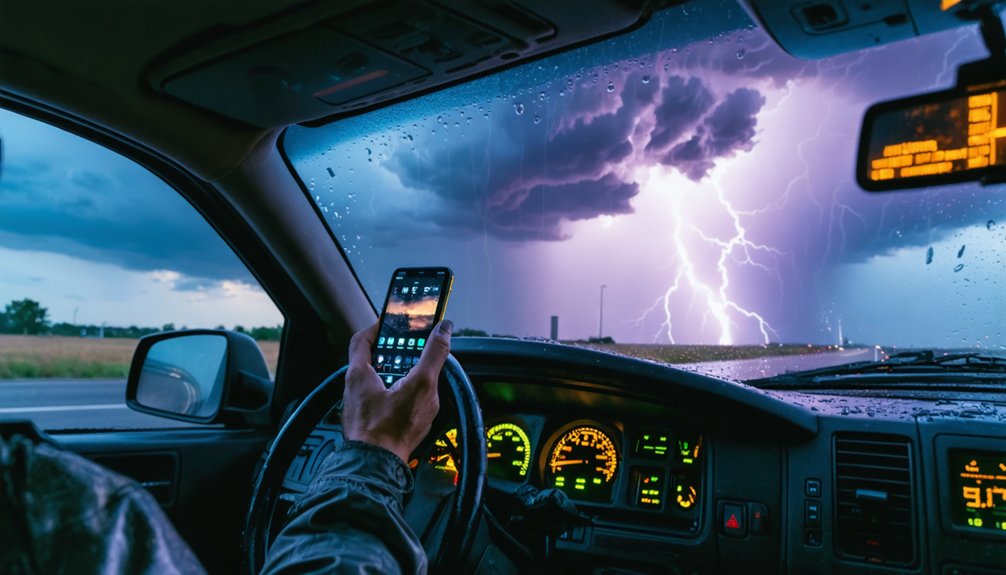
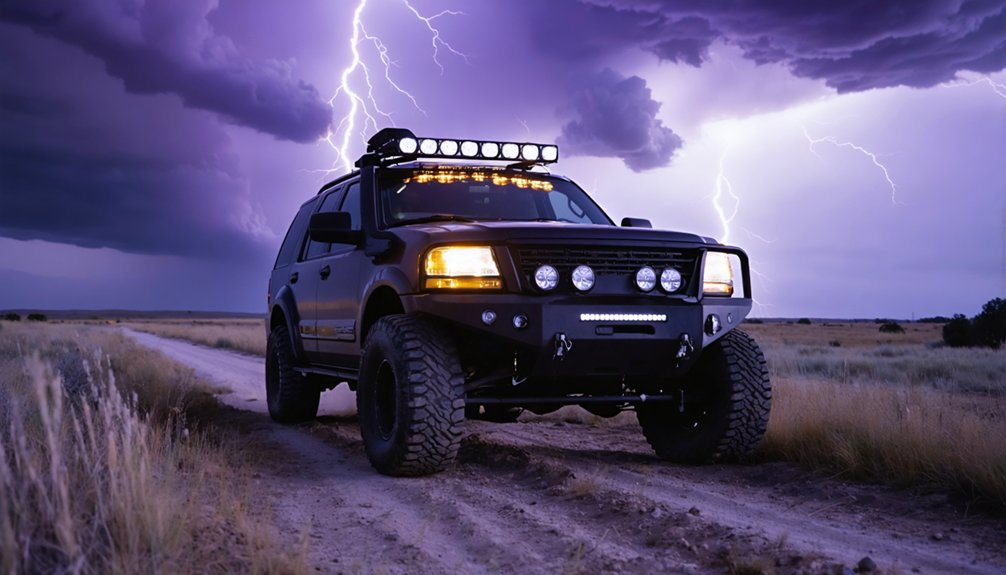
For chase vehicle weather stations, you’ll want units with IP68-rated weatherproofing, multi-sensor arrays covering temperature, dewpoint, pressure, humidity, and wind speed, plus real-time data transmission capabilities. Top-tier options include research-grade stations with factory calibration certificates, aerodynamic housings, and tool-free mounting brackets designed for rapid deployment. Reliable cellular connectivity guarantees live data streaming when conditions deteriorate fast. Whether you’re a casual chaser or a professional, selecting the right station begins with understanding exactly what differentiates capable equipment from compromised data.
Key Takeaways
- IP68-rated weather stations offer superior durability, protecting sensors from dust, water, and extreme conditions common during storm chasing operations.
- Core sensors measuring temperature, dewpoint, pressure, humidity, and wind speed provide comprehensive, reliable atmospheric data for informed chase decisions.
- Lightweight, aerodynamic housings with universal, tool-free mounting brackets enable rapid installation while minimizing vehicle drag across different vehicle types.
- Live data streaming via cellular modems with multi-carrier redundancy ensures continuous, low-latency transmission to platforms like Weather Underground during chases.
- Research-grade, factory-calibrated stations from reputable manufacturers deliver NWS-quality measurements, justifying higher costs through superior accuracy and operational reliability.
What Makes a Chase Vehicle Weather Station Worth It?
Several critical factors separate a worthwhile chase vehicle weather station from a glorified gadget. You need IP68-rated weather resistance, real-time data transmission, and multi-sensor accuracy that cross-references temperature, dewpoint, pressure, and wind speed simultaneously. Anything less compromises your situational awareness when conditions deteriorate rapidly.
Vehicle integration determines operational success more than weather station aesthetics ever will. A poorly mounted unit creates aerodynamic drag, distorts sensor readings, and introduces vibration errors across varying road conditions. You’re selecting equipment that must function continuously in extreme environments without babysitting.
Prioritize lightweight, aerodynamic designs compatible with your specific vehicle type—truck, SUV, or car. Built-in GPS with automatic location-based programming ensures your collected data correlates precisely with geographic coordinates, delivering actionable intelligence rather than unreliable approximations you can’t confidently act upon.
Key Sensors Your Weather Station Must Have
When equipping your chase vehicle’s weather station, you’ll need sensors that measure temperature, dewpoint, pressure, humidity, and wind speed at minimum.
Multiple sensor types aren’t just redundant—they cross-reference readings to improve data reliability and flag anomalous values before they corrupt your dataset.
Precision matters here because inaccurate readings can skew storm analysis, misrepresent surface conditions, and ultimately compromise the safety decisions you make in the field.
Essential Sensor Types
Choosing the right sensors determines the quality and reliability of every data point your weather station captures. You’ll need temperature, dewpoint, pressure, humidity, and wind speed sensors as your core measurement tools. Each sensor type contributes unique data that feeds into storm prediction models, helping you anticipate rapidly evolving conditions before they become dangerous.
Cross-referencing readings from multiple sensors strengthens your data reliability considerably. Pressure sensors detect approaching systems by identifying atmospheric drops tied to historical weather patterns, while precise dewpoint measurements reveal moisture availability critical for convective development.
Wind speed sensors, particularly elliptical anemometers, produce values accurate enough for NWS verification purposes.
Prioritize sensors offering high accuracy ratings over budget alternatives. Compromised sensor quality directly degrades your situational awareness, limiting your ability to make confident, well-informed chase decisions.
Data Accuracy Matters
Accurate sensors don’t just improve your data—they define whether your readings are actionable or worthless in the field. Sensor calibration directly determines how well your measurements align with historical weather patterns and real-time conditions.
Prioritize these four accuracy factors:
- Cross-reference multiple sensor types to validate temperature, humidity, and pressure readings against each other simultaneously.
- Schedule regular sensor calibration to prevent drift that corrupts your data over extended chase seasons.
- Verify GPS-tagged readings against known geographic benchmarks to confirm location-specific accuracy.
- Compare your collected data against historical weather patterns to identify anomalies indicating sensor failure or environmental interference.
Compromised accuracy means compromised decisions. Your freedom to chase safely depends entirely on trusting the numbers your equipment delivers under extreme conditions.
Best Chase Vehicle Weather Stations in 2025
When selecting a chase vehicle weather station in 2025, you’ll need to evaluate top picks based on sensor accuracy, IP68 weather resistance, and real-time data transmission capabilities.
Stations compatible with multiple vehicle types and featuring built-in GPS allow you to correlate precise geographic coordinates with atmospheric readings.
Before committing to any unit, assess installation complexity and compatibility with your specific vehicle platform to minimize pre-deployment downtime during fast-moving storm events.
Top Station Picks
Whether you’re intercepting supercells or documenting mesoscale convective systems, the weather station mounted to your chase vehicle directly determines the quality and reliability of your observational data. Selecting the right unit lets you contribute meaningful historical weather records and support accurate climate predictions.
Top station picks for 2025 prioritize:
- IP68-rated durability — sustained operation through rain, dust, and debris without sensor degradation
- Multi-parameter sensing — simultaneous temperature, dewpoint, humidity, pressure, and wind speed measurement
- Real-time GPS integration — automatic geographic tagging correlates data with precise storm coordinates
- Weather Underground compatibility — direct data transmission enables public verification and collaborative storm documentation
These four criteria separate professional-grade instruments from consumer-level alternatives. Your station choice directly impacts data integrity, operational efficiency, and your contribution to legitimate atmospheric research.
Key Features Overview
Choosing the right weather station for your chase vehicle comes down to a handful of non-negotiable features that directly affect data quality and operational reliability. You’ll want IP68-rated weather resistance, real-time data transmission, and sensors that accurately measure temperature, dewpoint, pressure, humidity, and wind speed.
Built-in GPS automatically correlates readings with precise geographic coordinates, strengthening your contributions to historical weather patterns databases and refining storm prediction models over time.
Lightweight, aerodynamic designs reduce drag without sacrificing functionality, while broad vehicle compatibility ensures seamless integration across trucks, SUVs, and cars.
Prioritize systems that transmit directly to Weather Underground for independent data verification.
Multiple sensor types cross-reference readings, eliminating measurement errors when conditions deteriorate rapidly.
These features collectively determine whether your station performs when it matters most.
Installation And Compatibility
Getting a weather station onto your chase vehicle quickly and correctly is just as important as the specs it carries. Vehicle integration challenges arise fast when you’re racing toward a developing supercell.
Prioritize these four compatibility factors:
- Mount universality — Confirm the system fits trucks, SUVs, and cars without custom fabrication.
- Weather sensor calibration — Verify factory calibration certificates and field-recalibration access before deployment.
- Power integration — Match voltage requirements to your vehicle’s electrical system to avoid data dropout mid-chase.
- Data output compatibility — Ensure the station interfaces with your existing GPS, radar software, and transmission platforms.
IP68-rated units with tool-free mounting brackets cut your setup time *considerably*. You’re not chasing downtime — you’re chasing storms. Choose hardware that deploys as fast as conditions demand.
Budget vs. Pro-Grade Weather Stations for Chasers
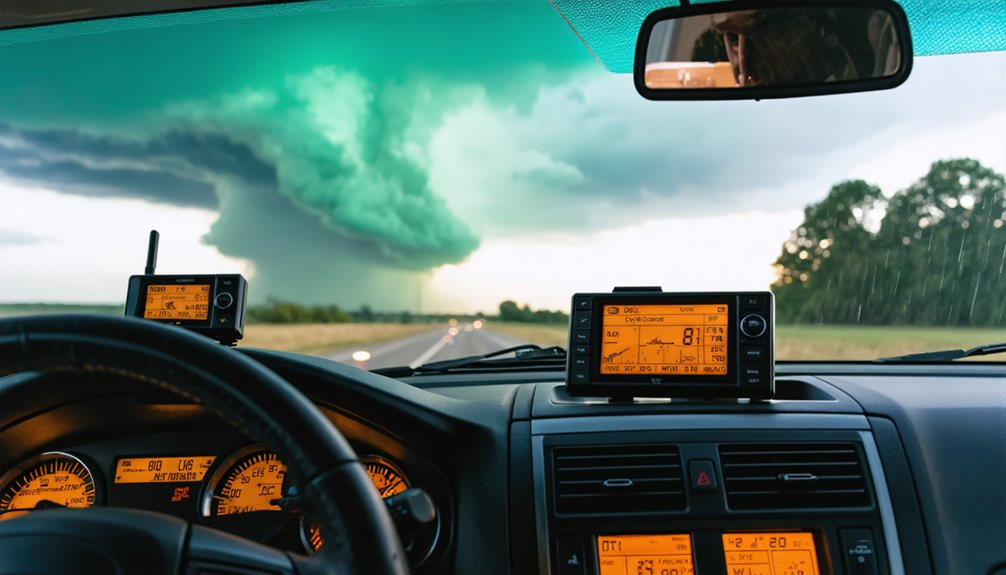
When selecting a weather station for storm chasing, budget directly shapes what sensors, durability, and data transmission capabilities you’ll get. Entry-level units sacrifice sensor accuracy and weather resistance, though they’ll handle basic temperature, humidity, and pressure readings adequately.
Brand reputation matters here—established manufacturers deliver tighter calibration tolerances and longer operational lifespans under extreme field conditions.
Pro-grade stations justify their higher cost through IP68 protection, real-time transmission integration, and multi-sensor redundancy that cross-references readings for verified accuracy.
Weather station aesthetics become secondary to aerodynamic housing design, which directly affects drag and fuel efficiency during extended chases.
Budget models suit occasional chasers needing fundamental data, while professionals requiring NWS-quality measurements and reliable data logging under punishing conditions should invest in certified, research-grade equipment without compromise.
How to Mount a Weather Station on Your Chase Vehicle
Once you’ve selected the right station for your needs and budget, mounting it correctly determines whether you’ll collect reliable data or introduce measurement errors from poor positioning and vibration interference.
Follow these critical installation steps:
- Position sensors away from exhaust vents and engine heat to prevent artificially elevated temperature readings.
- Apply weatherproof paint to any exposed metal mounting brackets to prevent corrosion during prolonged field deployment.
- Secure all cable routing with vibration-resistant fasteners, eliminating signal interference from road-induced movement.
- Orient solar power panels toward maximum sun exposure while keeping anemometers unobstructed above the roofline for accurate wind measurements.
Verify sensor placement by cross-referencing your readings against nearby stationary stations before committing to extended chase operations.
Incorrect mounting corrupts your data and wastes valuable field time.
How to Stream Live Data From Your Chase Vehicle
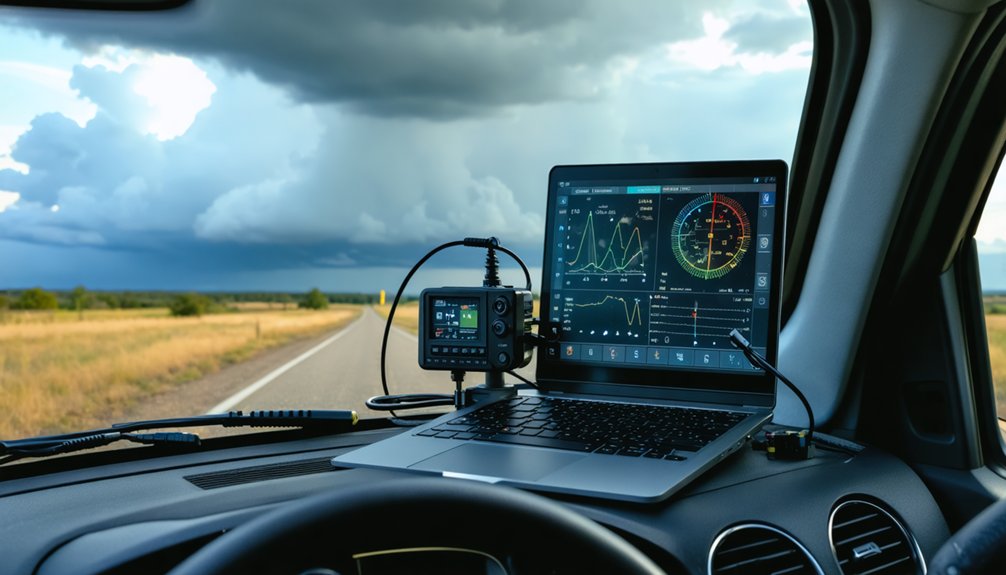
Streaming live data from your chase vehicle requires a reliable mobile internet connection, and your best options include portable cellular modems, dedicated hotspot devices, or tethering through your smartphone.
A reliable mobile internet connection is essential for streaming live chase vehicle data via cellular modems, hotspots, or smartphone tethering.
Once connected, platforms like Weather Underground accept direct uploads from your vehicle-mounted station, making your temperature, pressure, and humidity readings publicly accessible in real time.
You’ll want sufficient bandwidth to simultaneously transmit sensor data while pulling satellite imagery and cloud coverage overlays, which are critical for evaluating storm structure and positioning.
Prioritize carriers with strong rural coverage since storm chases frequently take you into low-signal areas.
A secondary LTE modem from a different carrier provides redundancy when one network drops.
Latency matters here—delays in your data stream can compromise split-second decisions during rapidly evolving severe weather events.
Pairing Your Weather Station With Radar and Radio Gear
Your live data stream becomes far more actionable when you pair it with radar and radio gear that fills the gaps your weather station can’t cover. Combine your vehicle integration setup with these four components:
- Mobile radar software — correlates real-time sensor readings with storm structure visualization for precise positioning decisions.
- Uniden SDS100 scanner — monitors SKYWARN, law enforcement, and NWS frequencies simultaneously without secondary devices cluttering your cab.
- Midland WR400 — delivers targeted SAME alerts tied directly to your GPS-confirmed location.
- Solar power supply — keeps all connected systems running independently of your alternator during extended deployments.
Each component cross-references your station’s temperature, dewpoint, and pressure data against broader situational intelligence, giving you a complete operational picture rather than isolated readings.
Frequently Asked Questions
Can Vehicle-Mounted Weather Stations Transmit Data to Weather Underground Automatically?
Yes, you can automatically transmit data to Weather Underground via wireless connectivity. Your vehicle-mounted station’s data transmission features enable real-time public sharing, letting you verify observed storm conditions with geographic precision using built-in GPS integration.
Which NOAA Frequency Range Should Storm Chasers Monitor for Severe Weather Alerts?
You’ll want to monitor 162.400–162.550 MHz for NOAA severe weather alerts. Combine this with satellite detection systems and lightning sensors to cross-reference incoming storm data, ensuring you’re analyzing precise, real-time atmospheric threats with full operational freedom.
Do Chase Vehicle Weather Stations Work With SKYWARN Spotter Networks?
Like a lifeline in the storm, your chase vehicle weather station integrates seamlessly with SKYWARN spotter networks. You’ll leverage mobile connectivity and sensor calibration to transmit precise, verified data across 2-meter ham bands, empowering coordinated storm reporting.
How Does Built-In GPS Improve Weather Data Accuracy During Storm Chasing?
Built-in GPS boosts your data accuracy through satellite integration, automatically tagging each reading with precise coordinates. You’ll achieve superior data calibration by correlating atmospheric measurements with exact locations, eliminating geographic ambiguity during rapidly evolving storm scenarios.
Are Elliptical Anemometers More Accurate Than Handheld Models for NWS Reporting?
Like a seasoned archer hitting a precise target, elliptical anemometers outperform handheld models for NWS reporting. Their superior calibration techniques and wind measurement accuracy give you vehicle-mounted data that’s genuinely valuable to meteorologists tracking storms.
References
- https://www.reddit.com/r/stormchasing/comments/1ggdj7x/vehicle_weather_station/
- https://weatherstationary.com/vehicle-mounted-weather-stations/
- https://www.acurite.com/blogs/who-uses-acurite/acurite-helps-storm-chaser
- https://www.reddit.com/r/weather/comments/1awe9v7/can_you_recommend_a_good_home_weather_station/
- https://www.reddit.com/r/myweatherstation/comments/1jvoume/i_want_a_budget_weather_station_for_storm_chasing/
- https://www.youtube.com/watch?v=yVkPOUHgYiM
- https://www.reddit.com/r/stormchasing/comments/1qujsc8/mobile_weather_radar_units/
- https://the-weather-station.com/handheld-weather-station/
- https://policeradioencryption.com/learn/storm-chaser-gear-guide
- https://www.wunderground.com/pws/buying-guide