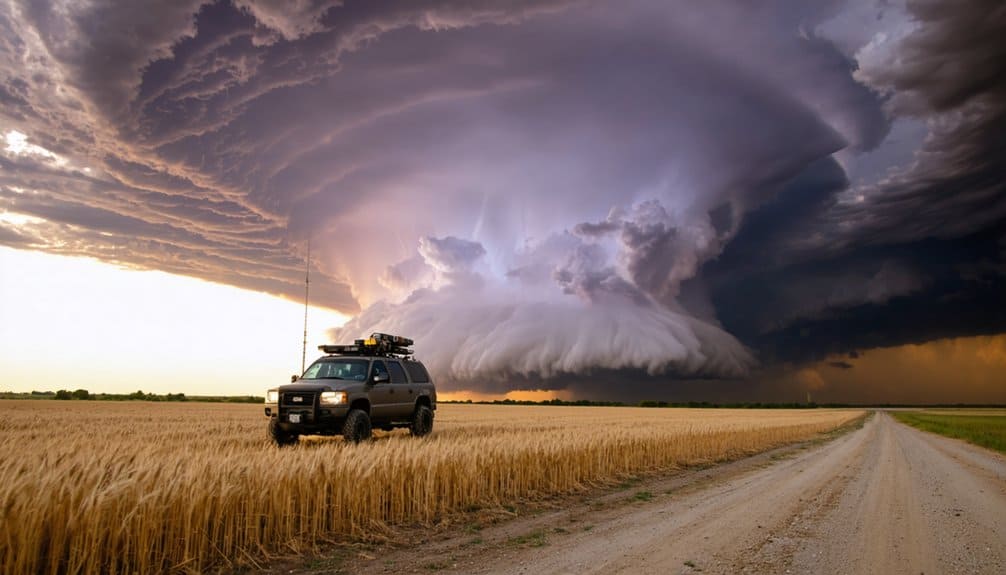
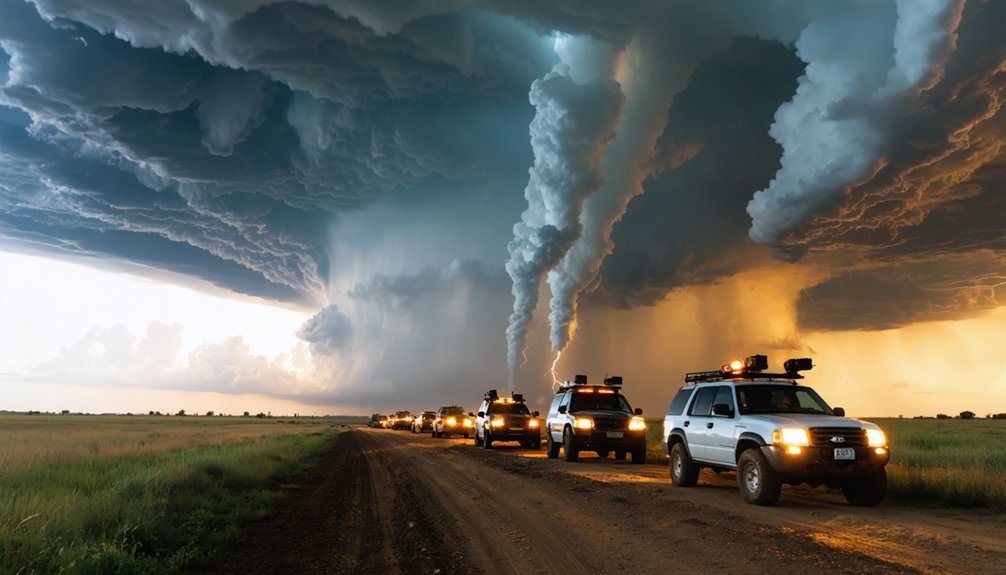
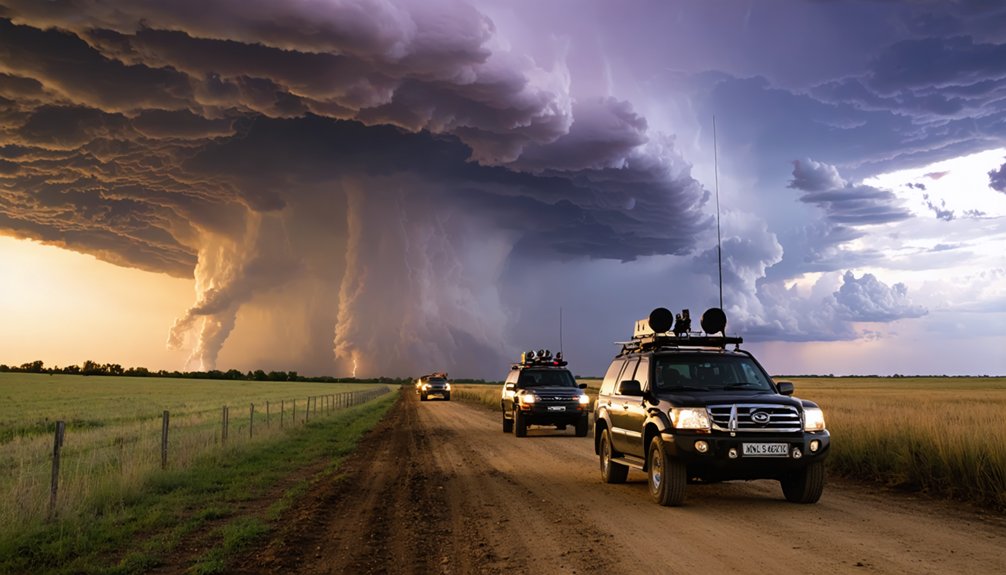
Before your first storm chase, you’ll need more than a camera and curiosity. Study NOAA forecasts, radar data, and convective outlook maps so you can anticipate storm behavior. Pack layered clothing, emergency supplies, and vehicle essentials like extra fuel and a tire repair kit. Always maintain clear escape routes and never position yourself in a storm’s projected path. Keep exploring — there’s far more critical detail ahead that could make the difference.
Key Takeaways
- Study NOAA forecasts, GFS models, and real-time radar data to understand storm patterns and anticipate dangerous weather conditions effectively.
- Pack layered clothing, waterproof gear, a first-aid kit, and maintain at least one gallon of water per person daily.
- Keep your vehicle fueled above half, inspect it regularly, and always maintain multiple clear escape routes during chases.
- Use a high-quality DSLR camera, sturdy tripod, and storm tracking apps like RadarScope to capture and monitor storms safely.
- Choose tour companies with certified meteorologists, documented safety protocols, and verified independent reviews before committing to any storm chasing experience.
What to Research Before Your First Storm Chase
Before your first storm chase, you’ll need to build a solid foundation of meteorological knowledge to stay safe and make smart decisions in the field.
Study storm patterns using NOAA forecasts and GFS models to understand how weather systems develop and move. Familiarize yourself with convective outlook maps to pinpoint potential target areas before you hit the road.
Master key terminology — supercells, mesocyclones, and the Enhanced Fujita Scale — so you can accurately interpret conditions as they evolve.
Knowing the language of storms — supercells, mesocyclones, and EF ratings — sharpens how you read the sky in real time.
Effective chase strategies depend on your ability to read real-time radar data from multiple sources, not just one feed. Also, verify escape routes and identify nearby shelters within your target region.
This groundwork transforms raw curiosity into disciplined, informed decision-making that keeps you safe and positioned for success.
What to Pack for Storm Chasing in Any Condition
When packing for storm chasing, you’ll need layered clothing, waterproof gear, and sturdy footwear to handle rapidly shifting conditions across open plains and rural terrain.
Bring a high-quality camera with a zoom lens, extra batteries, memory cards, and a tripod to capture storm activity without scrambling for supplies mid-chase.
Your emergency kit should include a first-aid kit, sunscreen, a hat, and essential vehicle supplies to keep you safe and operational throughout extended field sessions.
Essential Gear and Clothing
Packing the right gear can mean the difference between a successful chase and a dangerous one. Your storm gear should prioritize weather protection, temperature management, and outdoor comfort without slowing you down.
Focus on these three essentials:
- Clothing layers — Start with moisture-wicking base layers, add insulating mid-layers, and finish with a waterproof outer shell to handle rapidly shifting conditions.
- Footwear choices — Wear sturdy, waterproof boots with ankle support for uneven rural terrain and wet surfaces.
- Essential accessories and visibility gear — Pack UV-protective sunglasses, a wide-brim hat, sunscreen, and high-visibility clothing so drivers spot you easily near roadways.
You’re chasing freedom on the open plains, but smart preparation keeps that freedom intact.
Don’t compromise safety for convenience.
Emergency Supplies Checklist
Gear and clothing get you through the elements, but your emergency supplies keep you alive when conditions spiral beyond control. Your emergency kit essentials must include first aid supplies — bandages, tourniquets, antiseptic wipes, and pain relievers — packed and immediately accessible.
Prioritize weather communication tools like a NOAA weather radio and backup battery-powered scanner. These support real-time storm observation techniques and inform escape route planning before situations deteriorate.
Apply hydration strategies by carrying at least one gallon of water per person daily. Vehicle readiness checks should include jumper cables, a tire repair kit, and extra fuel.
Personal safety measures demand a whistle, emergency blanket, and flashlight.
Don’t compromise — your supplies define your margin between an extraordinary chase and a fatal miscalculation.
Camera Gear and Tech Every Storm Chaser Should Bring
Your camera setup can make or break your documentation of a storm, so you’ll want a high-quality DSLR or mirrorless body paired with a zoom lens capable of capturing distant rotation and wall clouds.
Bring a sturdy tripod, extra batteries, and multiple high-capacity memory cards to handle extended shoots in demanding conditions.
Beyond camera gear, you’ll need reliable tech tools—including a mobile radar app, GPS device, and a weather radio—to track storm movement and stay ahead of rapidly shifting conditions.
Essential Camera Gear
Whether you’re documenting a supercell or capturing a tornado’s full structure, having the right camera gear is non-negotiable. Storms move fast, and your equipment needs to keep pace.
- Camera with zoom lens – A high-quality DSLR or mirrorless camera with a zoom lens lets you maintain safe distances while capturing sharp, detailed storm structures.
- Tripod and extra batteries – Stable shots require a sturdy tripod, especially when adjusting camera settings for low-light or high-contrast environments. Always carry spares.
- Memory cards – Extended chases demand multiple high-capacity cards.
Master composition techniques like the rule of thirds to frame wall clouds and funnels effectively.
Your gear’s only as powerful as your ability to deploy it quickly and confidently in the field.
Must-Have Tech Tools
Beyond a quality camera, several tech tools separate a prepared chaser from a vulnerable one. You’ll need a GPS device with offline maps since cell service disappears fast in rural zones.
Pair that with a portable weather station to monitor pressure drops and wind shifts in real time.
For storm tracking, apps like RadarScope give you high-resolution radar data that basic weather apps simply can’t match. You should also carry a dedicated NOAA weather radio for alerts when your phone signal fails.
A power bank keeps every device charged during long chase days.
Don’t overlook a CB or ham radio for communicating with other chasers. These tech tools don’t just improve your chase — they protect your freedom to operate safely and independently in volatile conditions.
How to Read Storm Radar Well Enough to Stay Safe
Reading storm radar well takes practice, but mastering a few core skills can mean the difference between a successful chase and a dangerous miscalculation.
Sharp radar interpretation keeps you mobile, informed, and in control.
Sharp radar skills keep you one step ahead — mobile, informed, and never caught off guard by a fast-moving storm.
Focus on these three essentials:
- Velocity data — Identify rotation within storm structure by spotting inbound and outbound wind shear on dual-pol radar displays.
- Reflectivity gradients — Steep gradients on the radar’s leading edge signal intense updrafts and potential tornado development.
- Multiple radar feeds — Never rely on a single source; cross-reference NOAA and regional feeds to avoid data gaps.
You’ll move smarter when you understand what the radar’s actually telling you.
Monitor updates continuously and adjust your position before conditions outpace your decisions.
Safety Rules That Could Save Your Life
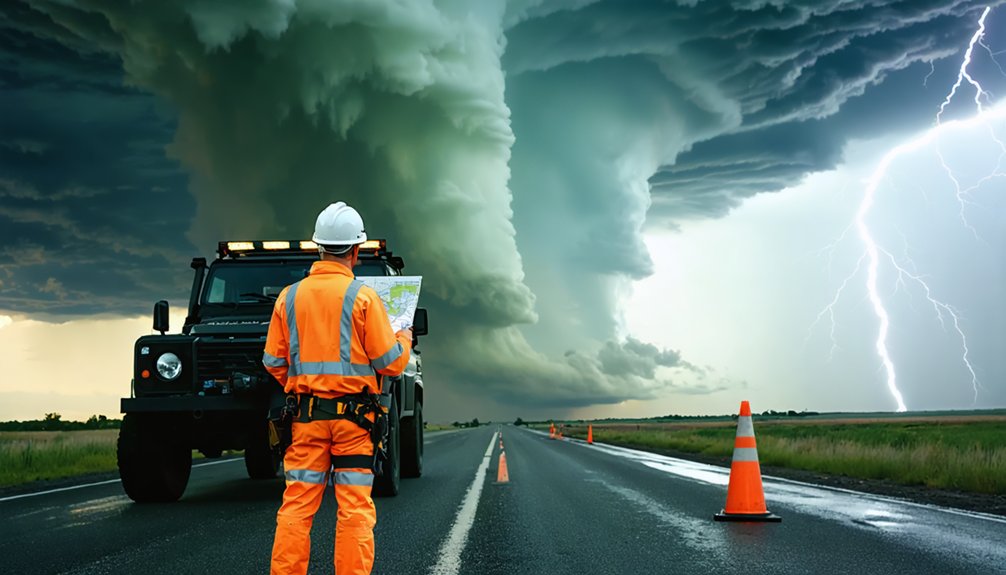
Storm chasing carries real danger, and a single lapse in judgment can turn a successful day into a fatal one. You must maintain multiple unobstructed escape routes at all times, keeping rural roads clear of obstructions that could trap you.
Practice safety drills before heading out so responses become instinctive under pressure.
Watch storm signs closely—rotating wall clouds, sudden wind shifts, and darkening skies signal immediate danger. Never position yourself directly in a storm’s projected path. If you’re stopping roadside, activate emergency blinkers and pull completely off the pavement.
Avoid urban environments where debris multiplies hazard levels dramatically. Yield immediately to emergency vehicles, and never underestimate a storm’s speed or directional shift.
Your freedom to chase depends entirely on your discipline to retreat when conditions demand it.
Keeping Your Vehicle Chase-Ready on the Road
Your vehicle is your lifeline on a chase, so you can’t afford mechanical failures when conditions deteriorate fast. Prioritize vehicle inspections before every chase day, checking fluids, brakes, and tire maintenance thoroughly.
- Fuel Management – Keep your tank above half at all times. Remote roads offer no guarantees, and escape routes disappear fast when you’re running low.
- Road Conditions & Weather Alerts – Monitor real-time updates constantly. Wet dirt roads become impassable quickly, stranding you directly in a storm’s path.
- Emergency Kits & Driving Techniques – Store a well-stocked emergency kit within reach. Practice controlled, deliberate driving techniques, maintaining safe distances from other chasers while repositioning.
Your freedom on the road depends entirely on preparation. Don’t compromise it with preventable oversights.
How to Photograph Storms Without Putting Yourself at Risk
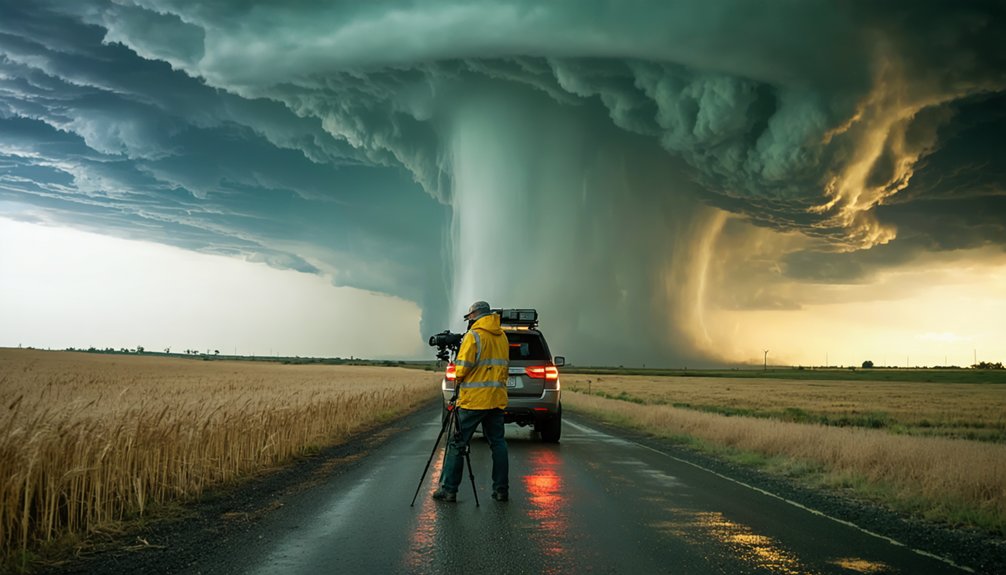
Capturing dramatic storm imagery demands technical precision and strict situational awareness, but neither goal should compromise your safety.
Position yourself perpendicular to a storm’s forward path, maintaining clear escape routes before adjusting your storm composition. Use a tripod to stabilize long exposures, particularly when lightning techniques demand slower shutter speeds during low-light conditions.
Prioritize lighting techniques by shooting during golden hour when contrast between storm structure and ambient sky intensifies naturally.
Keep your camera settings pre-configured so you’re not fumbling during rapidly evolving conditions. Never chase the perfect shot into dangerous territory—debris, hail, and sudden wind shifts can escalate without warning.
Stay informed through real-time radar, know your surroundings, and retreat decisively when conditions deteriorate. Your equipment is replaceable; you aren’t.
Choosing the Right Storm Chasing Tour Company
Choosing the right tour company can determine whether your first storm chasing experience is educational and safe or chaotic and dangerous. Research thoroughly before committing your money and time.
- Verify credentials – Choose reputable operators like Tempest Tours or Tornadic Expeditions with certified meteorologists and documented safety protocols.
- Analyze tour company reviews – Read independent feedback from past participants, focusing on safety incidents, guide expertise, and overall structure.
- Conduct pricing comparisons – Higher costs often reflect better equipment, smaller group sizes, and experienced leadership, so don’t default to the cheapest option.
Reputable companies prioritize your freedom to learn while keeping risks controlled.
Vet every option aggressively, ask direct questions about emergency procedures, and confirm your chosen company holds proper liability coverage before signing anything.
Rules of the Road: Ethics and Laws Storm Chasers Must Follow
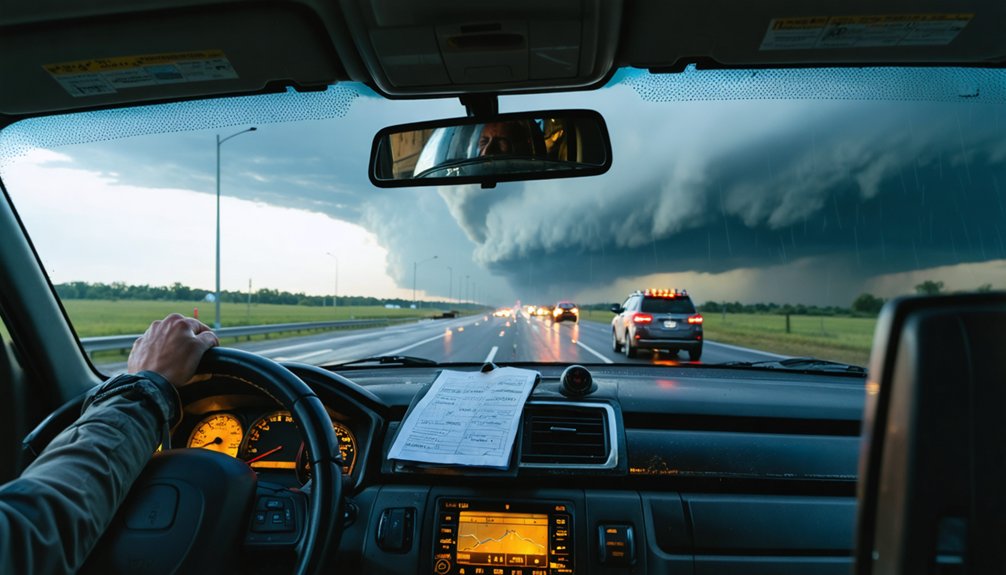
Storm chasing isn’t a free-for-all, and ignoring the legal and ethical boundaries that govern the activity can get you fined, injured, or worse.
Storm chasing ethics demand that you respect private property — always seek permission before crossing onto someone’s land to observe a storm. Legal considerations include adhering to local traffic laws, yielding to emergency vehicles, and never blocking roadways during active chase situations.
You’re sharing the road with first responders and frightened locals, so reckless driving undermines both safety and your credibility as a chaser. Avoid trespassing, don’t interfere with emergency operations, and follow posted road closures without exception.
Joining a reputable tour company like Tempest Tours or Tornadic Expeditions guarantees you’re operating within established legal and ethical frameworks, protecting both your freedom and your safety.
Frequently Asked Questions
What Is the Best Time of Year for Storm Chasing Tours?
You’ll find spring offers the best storm season, typically April through June, when dynamic weather patterns peak across the Great Plains, fueling supercells and tornadoes perfect for chasing adventures.
How Physically Fit Do I Need to Be for Storm Chasing?
You don’t need to be an Olympic athlete, but storm safety demands solid fitness preparation. You’ll walk miles, stand for hours, and react fast — so build your endurance, wear comfortable shoes, and stay ready.
Can Children or Minors Participate in Storm Chasing Tour Experiences?
Some tours allow minors with proper parental consent, but you’ll want to verify each company’s age policies. Reputable operators prioritize safety measures, ensuring young participants aren’t exposed to unnecessary risks during active severe weather events.
How Much Does Joining a Professional Storm Chasing Tour Typically Cost?
You’ll typically spend $3,000–$5,000 for a week-long professional storm chasing tour. Cost factors vary by duration and tour inclusions like expert guides, vehicles, and equipment, so research reputable companies like Tempest Tours before booking.
Do Storm Chasing Tours Provide Travel Insurance for Unexpected Weather Incidents?
Coincidentally, most tours don’t include storm insurance, so you’ll need to secure your own coverage. Always verify weather safety policies with your chosen operator, as protection varies—ensuring you’re free to chase without financial risk.
References
- https://www.atms.unca.edu/cgodfrey/courses/swfex/pdf/ChasingSafety.pdf
- https://www.youtube.com/watch?v=nxPSFg2R8YY
- https://en.wikivoyage.org/wiki/Storm_chasing
- https://www.reddit.com/r/stormchasing/comments/1boanfg/how_do_i_get_started_storm_chasing/
- https://www.youtube.com/watch?v=6otZLjSZvPU
- http://deskrib.com/2017/07/11/storm-chasing-what-to-expect/
- https://www.opticweather.com/blog/weather-aware-travel-and-adventure/storm-chasing-tours-safely-pursue-extreme-weather
- https://www.livingskytours.com/storm-chasing-101/
- https://www.stormtours.com/information/must-bring-items/
- https://stormchasing.com/the-ultimate-guide-to-planning-your-first-storm-chasing-adventure/