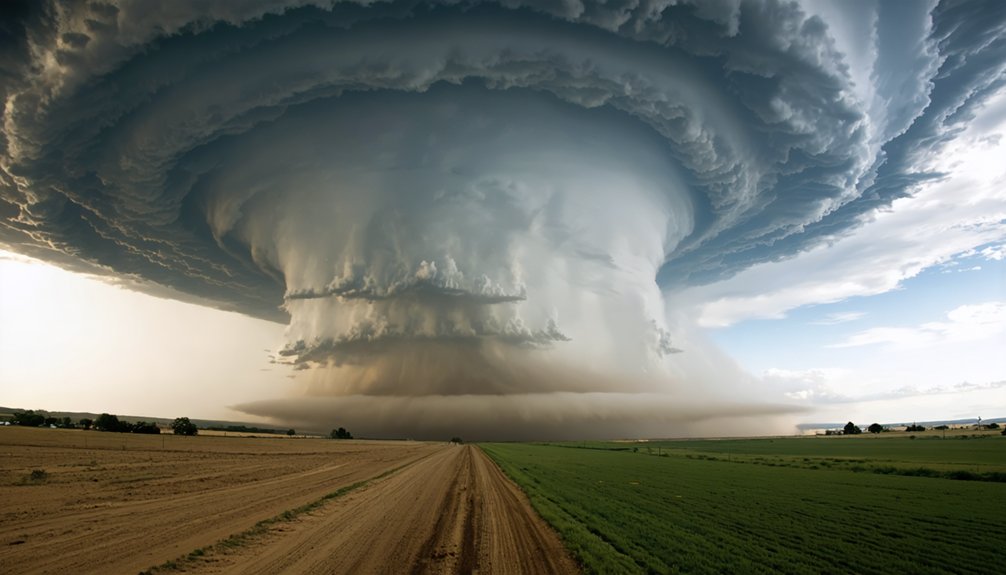
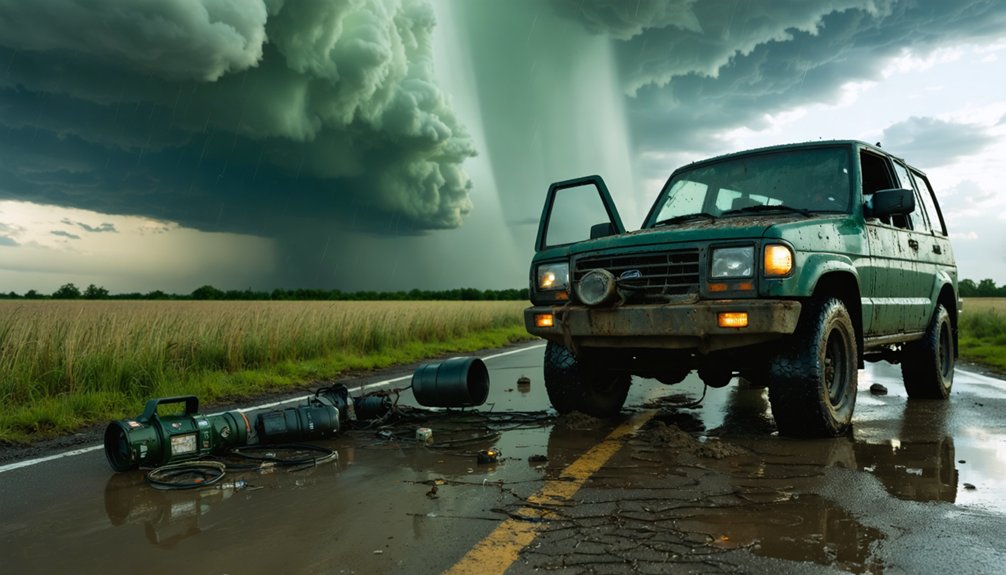
Climate change is making tornadoes harder to predict by disrupting the atmospheric balance you’d normally rely on. Warmer, more humid air increases atmospheric instability, energizing thunderstorms. But rising temperatures also weaken wind shear—the rotational force tornadoes need. These two factors are working against each other, creating outcomes that conventional forecasting models can’t reliably anticipate. The result is fewer but potentially more violent tornadoes forming in unexpected places and times—and there’s much more to this shifting picture.
Key Takeaways
- Climate change increases atmospheric instability while reducing wind shear, creating an unpredictable balance that complicates tornado formation and intensity forecasting.
- Warmer, more humid air energizes thunderstorms, but fewer tornadoes form; those that do can release energy far more violently.
- Tornado activity is shifting eastward into Dixie Alley, exposing less-prepared communities to unfamiliar and increasingly dangerous storm risks.
- Tornado seasons are starting earlier, catching communities and warning systems off-guard during historically low-risk months.
- Historical forecasting models are becoming less reliable as climate change fundamentally alters the atmospheric conditions that drive tornado behavior.
How Does Climate Change Actually Disrupt Tornado Formation?
Climate change doesn’t simply make tornadoes worse — it reshapes the atmospheric ingredients that create them in the first place. You need to understand two competing forces: instability and wind shear.
A warmer, more humid atmosphere increases instability, energizing severe thunderstorm formation. However, rising temperatures simultaneously reduce wind shear — the directional force that spins storms into tornadoes.
Warmer air fuels more storms — yet the wind shear needed to spin tornadoes into existence quietly weakens.
These opposing climate feedback mechanisms create a paradox within atmospheric dynamics: more thunderstorms form, but fewer develop into tornadoes.
What does shift is intensity. Storms that do complete tornado formation may release energy far more violently due to surplus instability.
You’re looking at a system where outcomes become harder to predict, not simply more extreme. The balance between these ingredients is actively destabilizing, making storm behavior increasingly erratic.
Why Are Instability and Wind Shear Working Against Each Other?
When you examine how climate change affects tornado formation, you’ll find two atmospheric forces pulling in opposite directions. A warmer, more humid atmosphere increases instability, giving thunderstorms more raw energy to work with, but rising global temperatures simultaneously reduce wind shear—the directional change in wind speed and altitude that tornadoes critically depend on.
This opposing dynamic shifts the storm energy balance, producing conditions where more intense thunderstorms form but fewer successfully organize into tornadoes.
Instability Versus Wind Shear
Two atmospheric ingredients must work in tandem for tornadoes to form: instability and wind shear. You can think of instability dynamics as the fuel — warm, humid air rises rapidly, energizing thunderstorm development.
Wind shear, the change in wind speed and direction with altitude, provides the rotational mechanics that can spin storms into tornadoes.
Here’s where climate change disrupts the equation: rising temperatures amplify instability dynamics while simultaneously weakening wind shear. You get more powerful thunderstorms generating tremendous energy, yet fewer possessing the rotational structure necessary for tornado formation.
The atmospheric balance shifts, producing outcomes that defy historical forecasting models.
This tension between instability and wind shear means meteorologists can’t simply correlate warmer temperatures with more tornadoes — the relationship is fundamentally more complex and analytically challenging than that.
Shifting Storm Energy Balance
The atmosphere doesn’t operate on simple cause-and-effect logic, and climate change exposes that complexity by pulling instability and wind shear in opposite directions simultaneously. This energy redistribution reshapes tornado dynamics in ways that defy straightforward prediction:
- Warmer air increases atmospheric instability, fueling stronger thunderstorm development.
- Rising temperatures reduce wind shear, limiting tornado rotation potential.
- More thunderstorms form overall, but fewer convert into actual tornadoes.
- When tornadoes do develop, concentrated instability releases energy more violently.
- The instability-shear imbalance makes individual storm outcomes harder to forecast.
You’re facing a system where raw energy accumulates faster than the atmospheric mechanics required to organize it. That tension doesn’t neutralize risk—it redistributes it unpredictably, forcing meteorologists to recalibrate models and demanding that you stay alert beyond traditional tornado season boundaries.
Why Are Tornadoes Getting Harder to Predict?
As the atmospheric balance between instability and wind shear continues shifting, you’re facing a storm prediction environment that’s fundamentally less stable than it was decades ago.
You can expect more thunderstorms to form under warmer, more humid conditions, yet fewer of those storms will produce tornadoes—making it harder to distinguish which severe events will escalate.
Compounding this uncertainty, tornado intensity is becoming increasingly variable, with “power” metrics rising even as overall counts remain relatively stable, leaving forecasters with fewer reliable patterns to act on.
Shifting Atmospheric Ingredient Balance
Predicting tornadoes is getting harder because climate change is pulling two critical atmospheric ingredients in opposite directions.
Atmospheric instability rises as temperatures and humidity increase, yet wind shear—essential for tornado formation—decreases in a warmer world. That split creates a less predictable storm environment.
Here’s what that shifting balance means:
- Higher instability fuels more severe thunderstorm development overall
- Reduced wind shear limits how many storms actually produce tornadoes
- Fewer tornadoes form, but those that do release energy more violently
- Storm outcomes become harder to forecast with conventional models
- The instability-shear imbalance makes each severe weather event unique
You can’t rely on historical patterns anymore.
The atmosphere you’re preparing for today operates under a fundamentally different set of rules than forecasters once depended on.
Increasing Variability In Intensity
Tornado intensity is becoming increasingly erratic, and that variability is outpacing forecasters’ ability to keep up. Climate feedbacks are disrupting the atmospheric conditions that once produced relatively consistent storm behavior, creating intensity fluctuations that strain traditional risk assessment models.
Evidence shows tornado “power” has risen in recent years despite stable overall counts—a disconnect that signals deeper structural changes in storm dynamics. You’re now facing a forecast environment where EF-4 and EF-5 events are harder to anticipate with precision.
Data challenges compound the problem, as historical records contain observational inconsistencies that obscure long-term trend detection.
Tornado unpredictability directly affects your emergency planning calculus. Outbreaks are clustering more intensely within single events, meaning single-day exposure windows carry disproportionately higher risk than they did in previous decades.
Why Can’t Scientists Confirm a Direct Climate Link?
Despite decades of observation, scientists still can’t confirm a direct link between climate change and tornado activity—and the reasons why reveal just how complex tornado science really is.
Tornado attribution challenges stem from gaps in historical records and rapidly evolving detection technology. Climate data limitations make isolating climate signals nearly impossible.
Key obstacles blocking confirmation include:
- Doppler radar improvements since 1950 artificially inflate recorded tornado counts
- Historical records lack consistency across regions and time periods
- Attribution science can’t link individual tornado events to climate change
- Wind shear and instability variables respond to warming in opposing ways
- Scientists classify the climate-tornado relationship as an open scientific question
You can’t prepare for what you don’t understand—and right now, the data simply doesn’t deliver definitive answers.
Where Is Tornado Alley Moving: and Why Does It Matter?
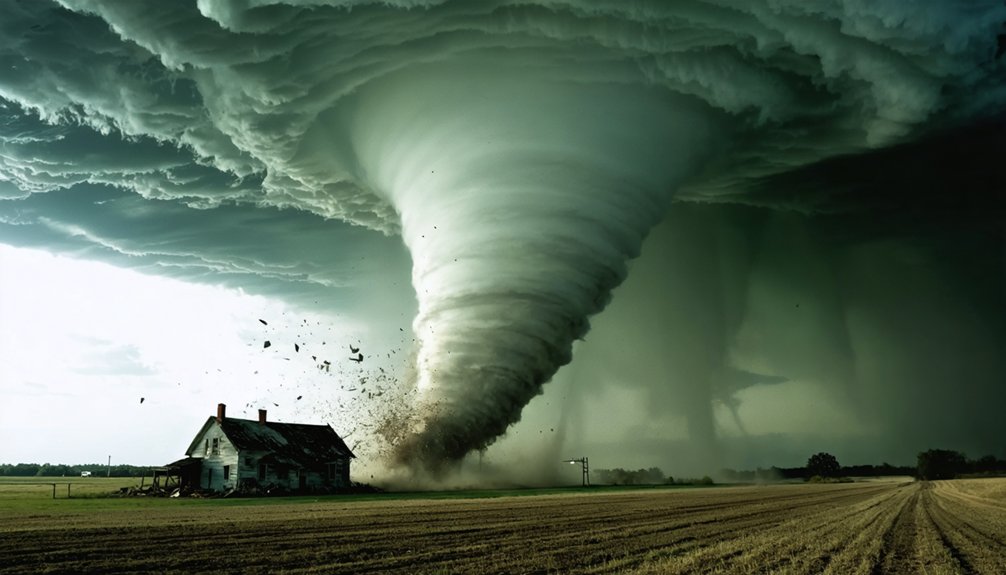
As tornado activity shifts eastward toward the Mississippi River, the risk is landing in places far less equipped to handle it. This tornado migration isn’t random — Dixie Alley has absorbed a measurable surge in tornado strikes since 2000, pulling dangerous activity away from the traditional Plains corridor.
The urban impact here is significant. Denser populations, older infrastructure, and communities with fewer emergency resources now sit in the crosshairs.
Unlike Plains residents who’ve built tornado culture into daily life, southeastern populations often lack hardened shelters and deep-rooted warning response habits.
You’re also seeing a seasonal shift — favorable tornado conditions are arriving earlier in the year, catching unprepared communities off guard.
When geography and timing both change simultaneously, the margin for error collapses fast.
Why Is Dixie Alley Seeing More Tornado Activity?
Dixie Alley’s surge in tornado activity since 2000 isn’t coincidental — it reflects a measurable convergence of atmospheric and geographic factors. Rising instability, shifting moisture corridors, and evolving wind shear patterns are reshaping tornado trends across this region.
You’re now facing climate implications that demand updated preparedness strategies and stronger warning systems.
Key regional impacts driving population risks include:
- Increased atmospheric instability fueling more intense storm formation
- Moisture from the Gulf of Mexico intensifying seasonal tornado conditions
- Higher population densities amplifying disaster consequences
- Off-season tornado events catching communities unprepared
- Warning systems struggling to keep pace with shifting storm behavior
Understanding these dynamics isn’t optional — it’s essential.
Dixie Alley’s transformation into a primary tornado corridor means you must treat preparedness as a year-round operational priority, not a seasonal afterthought.
Off-Season Tornadoes Are Becoming More Common
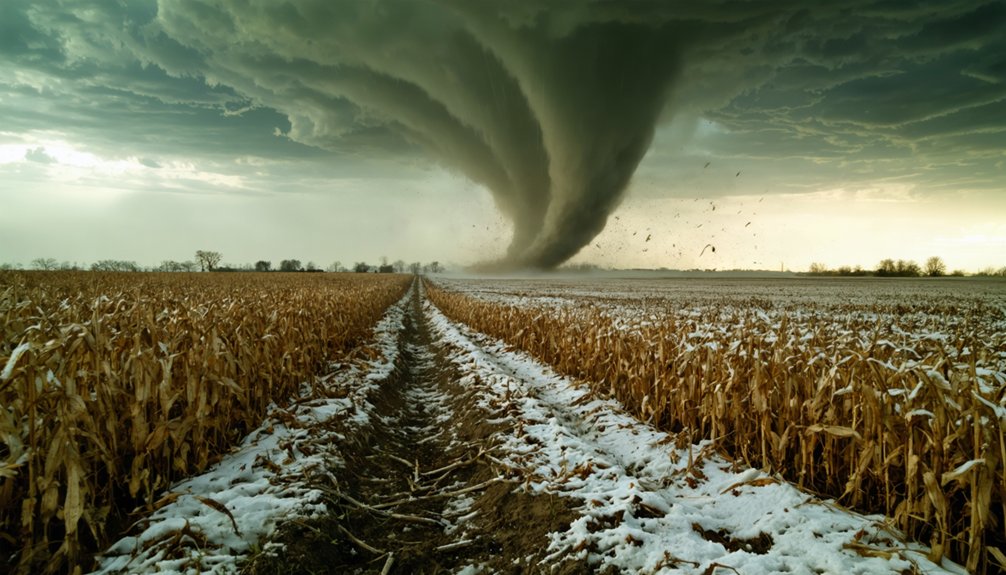
As climate change shifts tornado season windows earlier in the year, you’re now facing severe weather threats during months historically considered low-risk.
Communities that haven’t activated emergency protocols or stocked disaster supplies are dangerously exposed when off-season storms strike without warning.
You’ll also find that warning infrastructure—tuned to peak-season readiness—struggles to respond effectively when tornadoes occur outside traditional timeframes.
Shifting Seasonal Tornado Windows
Tornado season isn’t staying within its traditional boundaries. Climate patterns are compressing and expanding seasonal shifts simultaneously, forcing you to rethink tornado preparedness year-round rather than during conventional spring windows.
Key temporal changes you need to track:
- Earlier-season days with favorable tornado conditions are increasing
- Off-season events strike when public vigilance is lowest
- Seasonal duration is extending, complicating preparation timelines
- Warming temperatures are restructuring atmospheric trigger points
- Traditional calendar-based warnings no longer reflect actual risk windows
These shifts mean your preparedness can’t follow an outdated seasonal calendar.
Monitoring NOAA outlooks continuously, maintaining emergency supplies, and staying connected through battery-powered devices aren’t spring-only priorities—they’re year-round necessities.
The tornado risk window you once knew no longer exists.
Unprepared Communities Face Risks
Off-season tornadoes aren’t a rare anomaly anymore—they’re a measurable pattern. Strikes outside traditional seasonal windows are increasing, hitting communities before emergency preparedness protocols activate and while disaster response infrastructure sits idle.
You can’t rely on outdated seasonal assumptions to protect your family or property.
Urban planning in historically lower-risk zones must incorporate updated risk assessment frameworks that reflect eastward tornado migration and extended seasonal ranges. Public education campaigns tied to old geographic and temporal models are leaving populations statistically vulnerable.
Community resilience depends on your willingness to treat tornado preparedness as a year-round discipline, not a spring ritual. Monitor NOAA outlooks consistently, maintain emergency kits regardless of month, and pressure local officials to integrate current climate projections into municipal disaster response planning.
Off-Season Warning System Gaps
Warning systems designed around peak-season assumptions are failing to account for the measurable increase in off-season tornado events.
You’re now facing tornado risks during months when alert infrastructure operates at reduced capacity, and warning effectiveness drops considerably outside traditional seasonal windows.
Key off-season readiness gaps include:
- Reduced meteorological staffing during historically low-risk months
- Lower public engagement with weather monitoring outside peak season
- Emergency broadcast systems tested less frequently in winter cycles
- Community drills rarely scheduled during off-season threat windows
- Shelter infrastructure access limited during colder, non-peak periods
You can’t rely on systems built for April when tornadoes strike December.
Monitoring NOAA outlooks year-round and maintaining charged communication devices aren’t optional habits—they’re measurable risk-reduction strategies that directly counter the unpredictability climate change introduces into tornado occurrence patterns.
Are Tornadoes Getting Stronger or Just More Clustered?
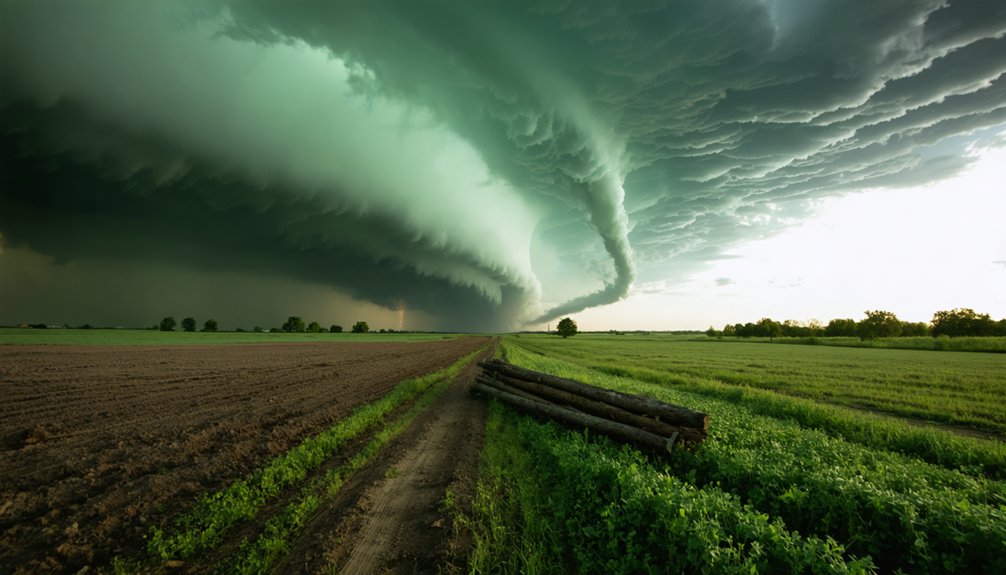
While overall tornado counts in the U.S. have remained relatively stable over decades, evidence suggests their “power” is increasing.
You’re not just dealing with isolated storms anymore — tornado clustering means multiple tornadoes now strike within single outbreak events, concentrating destruction across wider areas.
Intensity changes are equally concerning. EF-4 and EF-5 events are becoming harder to predict, introducing greater tornado unpredictability into emergency response planning.
Seasonal shifts compound this challenge, as outbreaks occurring outside traditional windows catch communities underprepared.
The data forces a critical question: are stronger tornadoes emerging, or is clustering creating the perception of increased power?
Either way, the implications demand action. Urban planning strategies must factor in these evolving patterns, particularly as higher-density populations now occupy historically lower-risk corridors.
What Do Climate Models Say About Future Tornado Risk?
Climate models consistently project a greater risk of severe thunderstorms in a warmer future, but the tornado-specific signal remains complex. You should understand what tornado projections currently indicate so you can make informed decisions about preparation:
- Climate models signal increased severe thunderstorm frequency in a warming atmosphere.
- Tornadic activity may shift earlier in the year, catching unprepared populations off guard.
- More violent, widespread tornado events are expected as global warming continues.
- Rising population densities in new risk zones will amplify future disaster impacts.
- The number of days favorable for tornado formation is projected to grow.
These tornado projections don’t guarantee certainty, but climate models consistently point toward intensifying risk. Your awareness of these trends directly strengthens your ability to respond effectively.
Which Regions Face the Greatest Tornado Danger Going Forward?
Those projections of intensifying risk don’t hit every region equally — geography plays a decisive role in determining where tornado danger is accelerating most sharply.
Dixie Alley — spanning Mississippi, Alabama, Tennessee, and Arkansas — has absorbed a measurable surge in tornado activity since 2000, compounding risk assessment challenges for already vulnerable communities.
What makes this eastward shift particularly dangerous is population density. Unlike traditional Tornado Alley’s open plains, Dixie Alley‘s terrain features dense forests and urban corridors that obstruct tornado prediction and shorten warning windows.
You need climate adaptation strategies built into urban planning now, not later.
Disaster response frameworks must account for these shifting zones. Emergency preparedness that worked decades ago won’t protect communities facing tornadoes arriving earlier, striking unfamiliar regions, and targeting populations who’ve never prioritized shelter planning.
Frequently Asked Questions
How Should Emergency Kits Be Updated for Unpredictable Tornado Seasons?
Your emergency supplies must be a lifesaver. Update your kit by tracking weather forecasting tools like battery-powered radios, portable chargers, and water reserves, since tornadoes now strike unpredictably earlier in the season.
Can Urban Planning Reduce Tornado Disaster Impacts in Newly Affected Regions?
Yes, you can reduce tornado disaster impacts by integrating urban infrastructure designs that account for shifting risk zones. Prioritizing community resilience through data-driven zoning, reinforced construction standards, and strategic evacuation planning strengthens your region’s adaptive capacity against increasing tornado threats.
What Communication Devices Are Most Reliable During Unexpected Tornado Events?
You’ll want battery-powered weather radios as your most reliable option, since smartphones reliability falters when cell towers fail. Weather radios receive direct NOAA alerts independently, ensuring you’ve got critical warnings even during infrastructure-disrupting, unexpected tornado events.
How Do Tornado Outbreaks Differ From Individual Tornado Occurrences?
Tornado outbreaks cluster multiple tornadoes into single events, intensifying outbreak characteristics beyond isolated occurrences. You’re facing compounded destruction as tornado patterns shift, with clustered events releasing far greater collective energy than individual tornadoes striking separately.
Why Do Off-Season Tornadoes Cause More Casualties Than Seasonal Ones?
Off-season tornadoes drive higher casualty statistics because you’re caught unprepared. Off-season frequency spikes when warning systems aren’t actively monitored, emergency kits aren’t stocked, and communities haven’t activated seasonal protocols—leaving you dangerously vulnerable to rapid, unexpected strikes.
References
- https://sciencecouncil.noaa.gov/wp-content/uploads/2025/03/SoS_Tornado_and_Climate_Change_Sept_2023.pdf
- https://www.pbs.org/newshour/science/is-climate-change-making-u-s-tornadoes-worse
- https://www.c2es.org/content/tornadoes-and-climate-change/
- https://www.cbsnews.com/news/tornadoes-climate-change-impact/
- https://www.noaa.gov/sites/default/files/2023-10/Tornadoes_Climate_OnePager_July2023.pdf
- https://www.nationalgeographic.com/environment/article/tornado-extreme-weather-climate-change
- https://www.bbc.com/future/article/20240522-climate-change-experts-advise-how-to-prepare-for-a-tornado
- https://www.climatesignals.org/climate-signals/tornado-risk-increase
- https://www.pbs.org/newshour/science/how-climate-change-exacerbates-conditions-that-can-spawn-lethal-tornadoes
- https://sites.psu.edu/pmarkowski/tornadoes-and-climate-change/