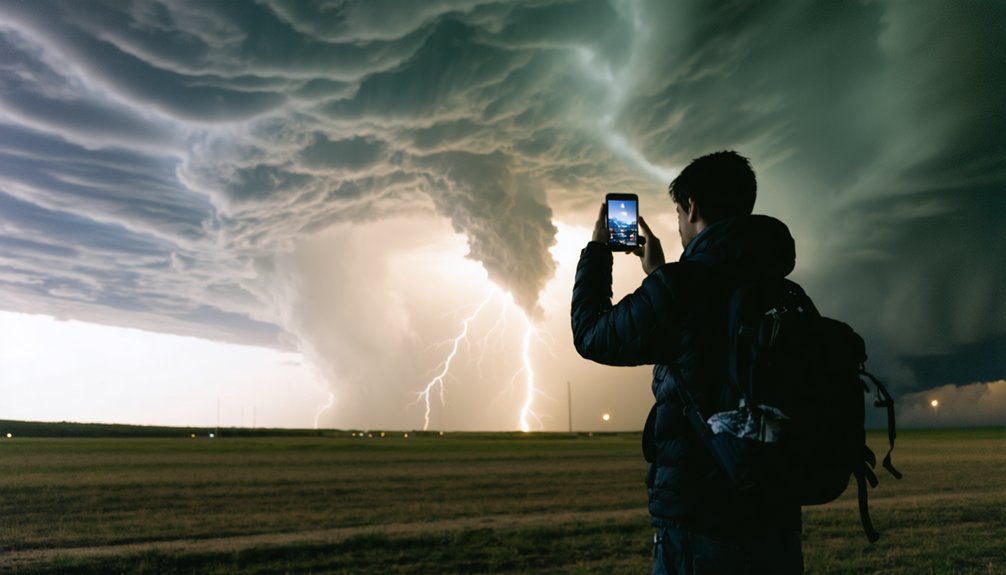
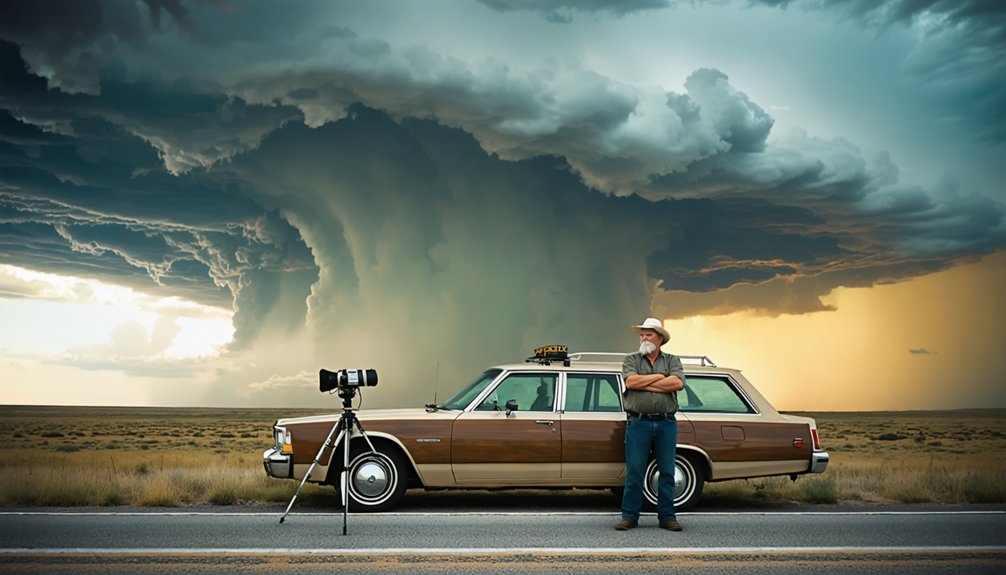
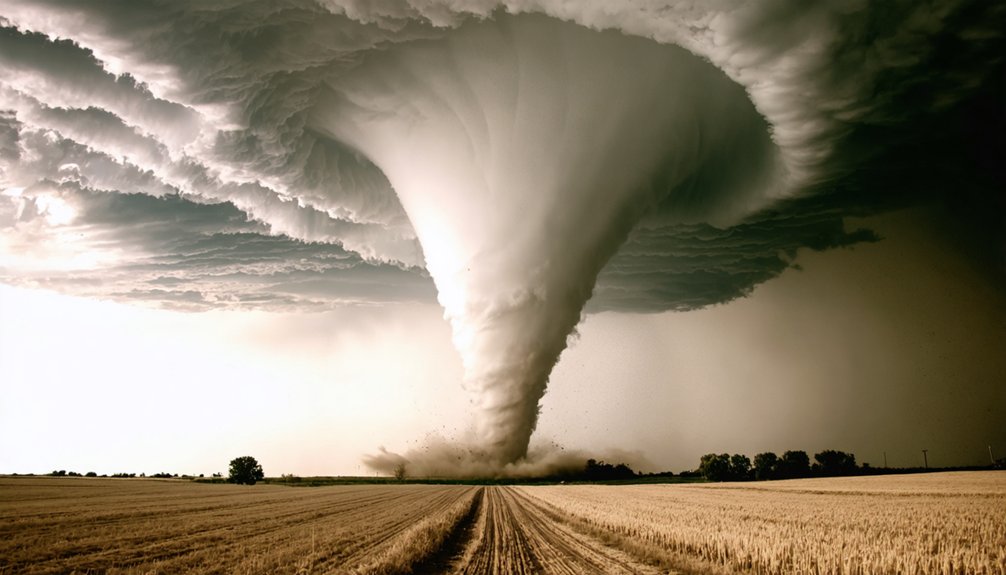
Storm chasing transformed from a fringe pursuit into a mainstream adventure through a combination of media influence, technological democratization, and industry growth. Before the 1990s, only a handful of pioneers like David Hoadley chased storms using instinct alone. Then *Twister* (1996) and Discovery’s *Storm Chasers* turned it into a cultural phenomenon. Today, smartphones, public weather models, and guided tour companies make it accessible to anyone. If you’re curious how it all unfolded, there’s much more to uncover.
Key Takeaways
- Early pioneers like Roger Jensen and David Hoadley began deliberate storm chasing in the 1950s, relying on instinct without modern technology.
- The 1996 film *Twister* and Discovery Channel’s *Storm Chasers* dramatically increased public interest, shifting storm chasing from niche pursuit to cultural phenomenon.
- Technological innovations like GPS, smartphones, and public weather models made storm chasing accessible to amateurs and professionals alike.
- Guided chase tours, safety training, and organizations like the NWS introduced professional standards, transforming storm chasing into a structured industry.
- Online communities, viral videos, and real-time data sharing turned storm chasing into a mainstream, social, adventure-driven activity.
The Pioneers Who Invented Storm Chasing
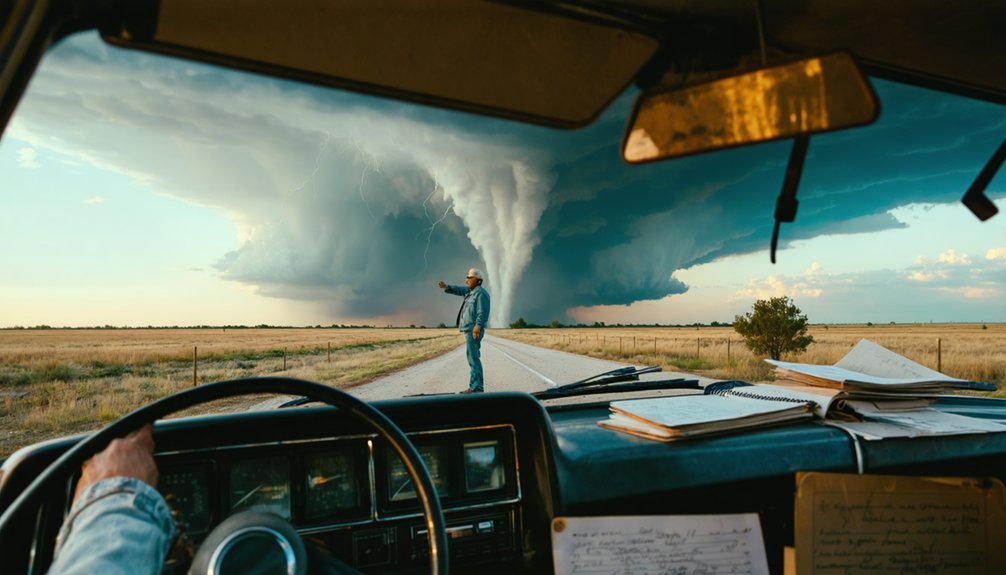
Before storm chasing had a name, a handful of obsessives were already doing it. Roger Jensen photographed severe weather starting in 1953, making him one of the first historical pioneers to deliberately intercept storms.
David Hoadley followed in 1956, systematically chasing North Dakota storms using data pulled directly from weather offices and airports. These early techniques were raw — no GPS, no mobile radar, just forecasts and instinct.
How TV and Hollywood Turned Storm Chasers Into Icons
If you watched the 1996 blockbuster *Twister*, you consumed a heavily fictionalized portrayal of storm chasing that nonetheless triggered a measurable surge in public interest across tornado-prone regions.
Hollywood’s distortion didn’t kill the hobby’s credibility—it amplified its cultural reach far beyond what scientific journals or niche newsletters ever achieved.
Then Discovery Channel’s *Storm Chasers* series pushed the transformation further, converting field researchers like Reed Timmer and Tim Samaras into recognizable celebrities and establishing reality TV as the medium that finally gave storm chasing its mainstream identity.
Hollywood’s Storm Chasing Distortion
- Tornadoes don’t grant you seconds to escape—they demand miles of strategic repositioning.
- Storm chasers don’t race *into* tornado paths—they intercept from calculated safe angles.
- No research equipment gets deployed mid-vortex—data collection happens from controlled distances.
- Chasers aren’t adrenaline-driven daredevils—most are trained meteorologists or disciplined enthusiasts.
You deserve accurate framing. The real pursuit demands precision forecasting, disciplined routing, and constant risk assessment. *Twister* made chasing look reckless—real chasers make it methodical.
Reality TV Creates Celebrities
You watched these chasers deploy instrumented vehicles into tornado paths, making advanced science feel accessible rather than institutional. That visibility carried consequences. Viewership spiked public interest, flooding Tornado Alley with inexperienced chasers mimicking what they’d seen on screen.
What the show didn’t broadcast was the disciplined training behind each intercept. Instead, it packaged danger as entertainment. Television gave storm chasers celebrity status—and simultaneously stripped the craft of the precision that originally defined it.
The Tech That Made Storm Chasing Accessible
Technology didn’t just improve storm chasing—it democratized it entirely. Four innovations gave you direct access to tools once reserved for research institutions:
- Internet forums enabled real-time photo, video, and data sharing across a global chasing community.
- Weather prediction models became publicly accessible, letting you analyze atmospheric conditions before leaving your driveway.
- Smartphones delivered mobile data streaming, GPS navigation, and instant footage uploads simultaneously.
- Data visualization platforms transformed raw meteorological data into readable, actionable storm maps you can interpret on the move.
Storm Track’s shift from print to digital forums in 2002 signaled the turning point. You no longer needed institutional access or expensive equipment.
Today, a smartphone and reliable data plan put professional-grade storm intelligence directly in your hands.
A Day-by-Day Breakdown of a Modern Storm Chase
Before you ever leave home, a modern storm chase begins 24–48 hours out with model analysis—you’re scanning GFS and NAM outputs for instability indices, wind shear profiles, and moisture pooling along a dryline. Weather patterns dictate your target zone, often narrowing to a 200-mile corridor by morning.
Day one, you’re repositioning toward favorable storm prediction parameters—CAPE values above 3,000 J/kg, backed surface winds, and a sharp mid-level jet.
By afternoon, you’re watching convective initiation on radar, adjusting position every 15 minutes.
Day two means re-evaluating overnight model runs. Targets shift. You adapt without hesitation.
You’re cross-referencing SPC outlooks, mesoanalysis charts, and spotter networks simultaneously. Every decision—fuel stops, road selection, escape routes—is calculated.
Freedom here isn’t reckless; it’s disciplined mobility executed with precision.
How Storm Chasing Became a Tour Industry
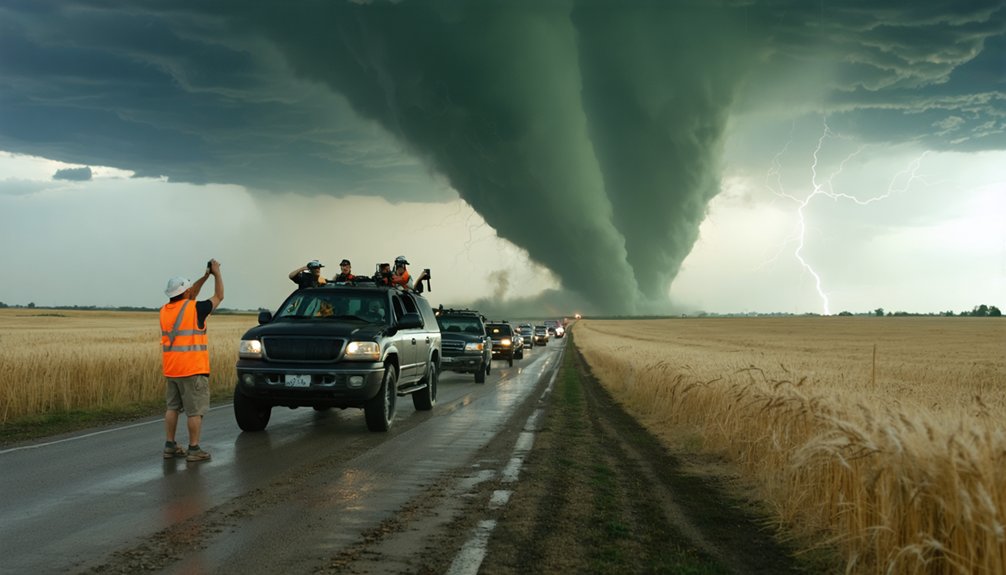
If you’ve ever wanted to experience storm chasing without years of training, tour operators have made that possible since the early 2000s, when companies began offering guided chase packages across Tornado Alley.
You won’t find guarantees of tornado sightings, but operators actively position you near significant severe weather while managing the logistical and safety variables that would otherwise overwhelm inexperienced chasers.
Beyond commercial tours, you can also plug into the broader community through events like ChaserCon, where recreational chasers, researchers, and media professionals converge annually to exchange data, techniques, and field experience.
Rise Of Chase Tourism
How does a dangerous subculture transform into a structured commercial industry? By the early 2000s, storm prediction advances and fading weather folklore gave way to packaged chase experiences. Tour operators monetized access to severe weather, converting raw risk into guided adventure.
Here’s what defines modern chase tourism:
- Tour companies emerged at the millennium’s start, converting hobby chasing into revenue-generating expeditions.
- No tornado sightings are guaranteed, but operators strategically position clients near verified severe weather.
- Most chasers operate at a financial loss, spending more than they earn annually.
- ChaserCon became the industry’s central hub, connecting tour operators, recreational chasers, and media professionals.
You’re no longer required to chase alone. Structured tours give you real access, real storms, and calculated risk on your terms.
Tour Operators And Safety
Tour operators didn’t just commercialize storm chasing—they restructured its risk profile entirely. When you book a guided chase tour, you’re not just paying for proximity to a tornado; you’re purchasing layered safety infrastructure.
Operators carry specialized insurance policies that standard travel providers won’t touch, covering liability across unpredictable Great Plains terrain.
They also deploy professional meteorologists who run real-time weather prediction models, positioning vehicles ahead of storm movement rather than reacting to it. You won’t get a tornado guarantee—operators are transparent about that—but you’ll get calculated positioning near significant atmospheric events.
This systematic approach separates guided tours from reckless solo chasing. Operators enforce strict vehicle protocols, designate escape routes, and monitor radar continuously, transforming a historically chaotic pursuit into a structured, risk-managed experience you can actually navigate responsibly.
Community Events And Gatherings
Where does a subculture formalize itself? At events like ChaserCon, where storm chasing communities converge annually to share data, refine techniques, and build networks. Event organization here isn’t casual — it’s structured around real meteorological exchange.
You’ll find four defining elements at these gatherings:
- Research presentations from active field scientists
- Equipment showcases featuring cutting-edge intercept technology
- Networking sessions connecting tour operators, media professionals, and recreational chasers
- Safety briefings addressing chaser convergence risks on active storm days
These aren’t fan conventions — they’re functional institutions shaping how chasing evolves. Storm Track‘s shift from a paper newsletter to a digital forum in 2002 mirrored this change, building the largest online chasing community.
You’re witnessing a subculture that’s fully institutionalized within American weather culture.
Is Storm Chasing Dangerous, and How Do People Stay Safe?
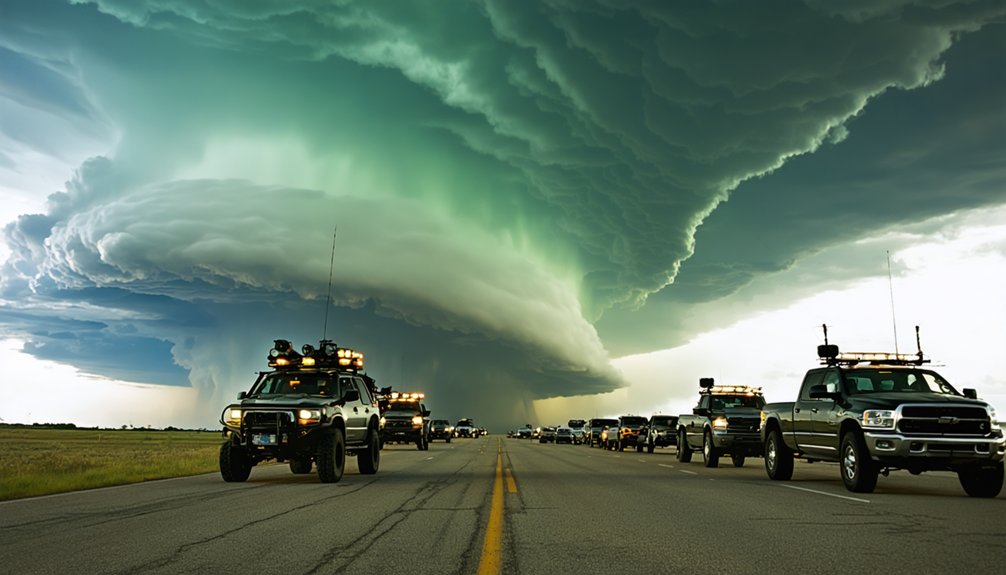
Storm chasing carries real, measurable risks—thunderstorms and tornadoes kill hundreds of people annually, and the sport’s explosive post-1996 growth has compounded those dangers considerably.
Storm chasing is dangerous—tornadoes and thunderstorms claim hundreds of lives each year, and the risks keep growing.
“Chaser convergence,” where thousands pursue the same storm during peak April–June months, clogs roadways, blocks emergency responders, and turns inexperienced chasers into active hazards.
Poor risk management kills—misidentifying storm features or misjudging escape routes can be fatal.
You can improve your weather safety posture markedly through structured preparation. The National Weather Service offers free annual spotter training classes that teach storm identification, movement prediction, and situational awareness.
You shouldn’t chase without completing that baseline education first.
Pair that training with real-time data tools, reliable communication equipment, and a predetermined escape route before each chase.
Disciplined preparation separates calculated risk from recklessness.
Why Storm Chasing Exploded Into Mainstream Culture
Few hobbies transform from fringe subculture to mainstream phenomenon as rapidly as storm chasing did after 1996. Several converging forces drove that explosion:
- *Twister* (1996) introduced millions to tornado pursuit, igniting widespread cultural impact despite Hollywood distortions.
- The Discovery Channel’s *Storm Chasers* created celebrities like Reed Timmer, making meteorological innovation visible and exciting.
- Internet forums, particularly Storm Track’s digital launch in 2002, connected chasers globally, accelerating community growth.
- Smartphones enabled real-time data streaming and viral footage, putting severe weather documentation in everyone’s hands.
You’re witnessing the result: tour operators, ChaserCon gatherings, and reality TV replacing what was once solitary, unstructured pursuit.
Freedom-seekers now chase professionally or recreationally, supported by technology that early pioneers like David Hoadley never imagined possible.
Frequently Asked Questions
What Is the Best Time of Year to Begin Storm Chasing?
April through June is your prime window — it’s the open road of storm chasing history. You’ll leverage weather prediction tools most effectively as peak tornado season releases maximum severe weather across the Great Plains.
How Much Does a Typical Storm Chase Tour Package Cost?
You’ll typically spend $2,000–$3,500 per week on a storm chase tour. Operators prioritize storm safety and leverage advanced weather forecasting to position you near action, giving you freedom to experience nature’s fury responsibly.
What Insurance Options Exist Specifically for Storm Chasers?
Like Odysseus steering perilous seas, you’ll find standard insurance policies rarely cover storm chasing. You’ll need specialized risk management solutions—seek adventure sports riders, high-risk vehicle coverage, and liability add-ons tailored to your chasing pursuits.
Are There Age Restrictions for Joining Commercial Storm Chase Tours?
Most tour operators require you to be 18+ for storm chase safety compliance. If you’re younger, youth storm chasing options exist, but you’ll typically need parental consent or a guardian accompanying you throughout.
What Certifications or Licenses Do Professional Storm Chasers Typically Hold?
You don’t need formal licenses for storm chasing, but you’ll boost your storm chasing safety by earning NWS Spotter certification and meteorology credentials. Professional certifications in emergency management also strengthen your credibility and decision-making in the field.
References
- https://en.wikipedia.org/wiki/Storm_chasing
- https://www.rmets.org/metmatters/history-storm-chasing
- https://www.youtube.com/watch?v=NQDfS3DMCHc
- https://www.youtube.com/watch?v=uRQ-nTTCazo
- https://hull-repository.worktribe.com/preview/4415817/Hunter_ Nicolle – Storm Chasing in Contemporary American Society and Culture.pdf
- https://abc7amarillo.com/news/local/the-evolution-of-storm-chasing
- https://www.weathergraphics.com/chasing/0970684088_ebook_sample_body.pdf
- https://www.nationalgeographic.com/environment/article/chasing-tornadoes
- https://www.cnn.com/2017/05/18/us/storm-chaser-convergence