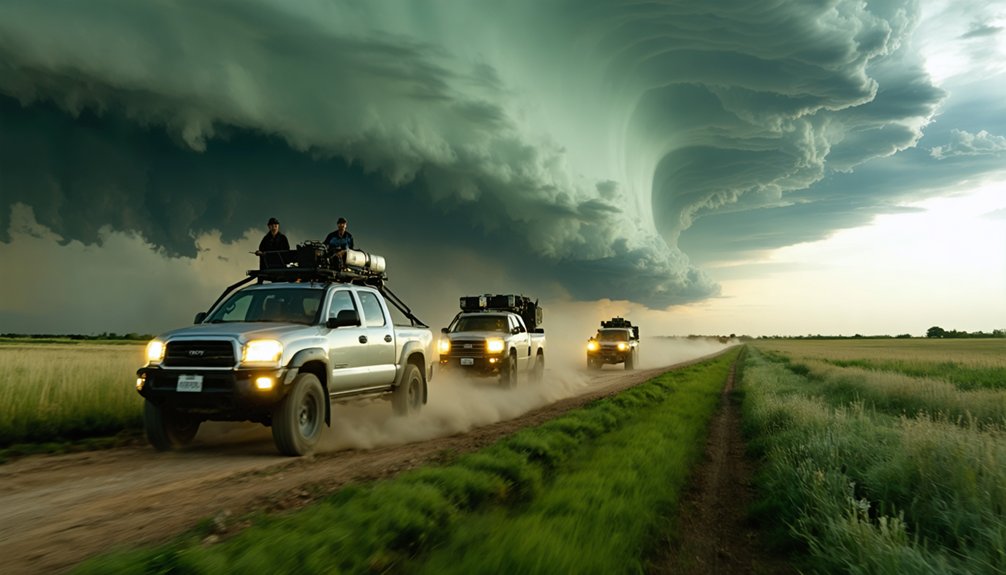
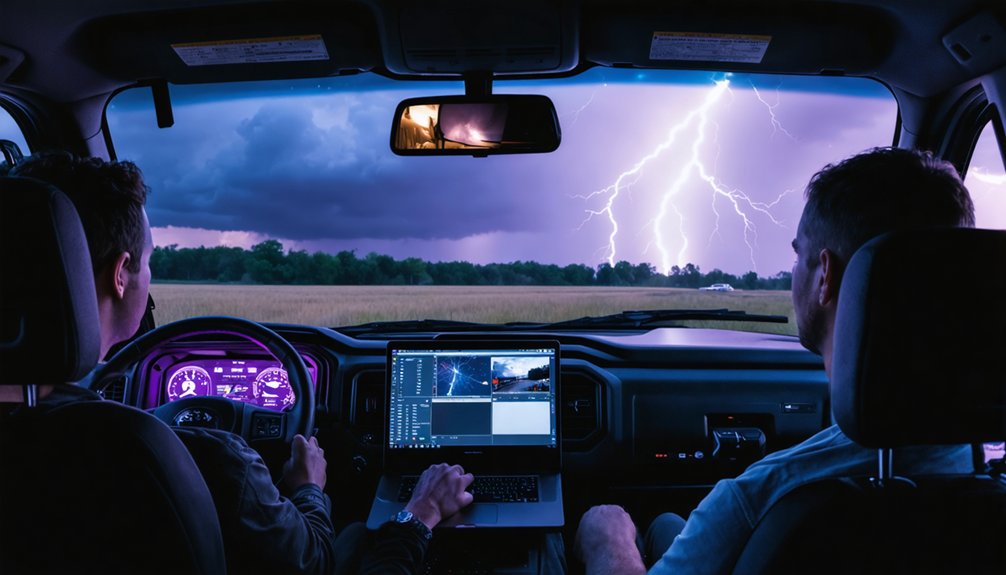
Storm chaser online community forums connect you with 8,500 monthly active users sharing real-time updates, 212 annotated storm paths, and 890 hours of raw severe weather footage. You’ll access 47 verified safety protocols, equipment reviews across 65 radar and drone models, and radar tutorials drawing 10,000+ monthly views. Mentorship programs pair you with 150 experienced chasers annually. The deeper you go into what these communities offer, the sharper your situational awareness becomes.
Key Takeaways
- The community has 8,500 monthly active users sharing real-time storm updates, equipment reviews, and 212 annotated storm paths for collaborative learning.
- Biweekly webinars and mentorship programs connect 200 newcomers with 150 experienced chasers and professional meteorologists annually.
- Radar tutorial videos covering storm pattern recognition and rotation signatures attract over 10,000 monthly views for skill development.
- Safety protocols include 47 procedures, emergency checklists covering 23 tornado actions, and real-time alerts for 18 high-risk zones.
- Regional meetups, 28 active research teams, and 6 university collaborations expand networking and contribute verified data to weather databases.
Top Storm Chaser Forums Worth Joining Right Now
Whether you’re a seasoned chaser or just starting out, joining the right storm chaser forum connects you to a community of 8,500 monthly active users who share real-time updates, equipment reviews across 65 radar and drone models, and safety protocols covering 23 critical tornado response actions.
The best forums give you unrestricted access to 212 annotated storm paths, 32 documented historical weather case studies, and 890 hours of raw severe weather footage. You’ll refine your chase strategies through threads averaging 15 to 25 replies per discussion, biweekly meteorologist-led webinars, and mentorship programs pairing 150 experienced chasers with 200 newcomers annually.
These platforms don’t gatekeep knowledge — they distribute it efficiently, letting you operate independently with verified data, proven techniques, and a network spanning 12 storm-prone states.
What Storm Chaser Forums Actually Offer New Members?
When you join a storm chaser forum as a new member, you’re getting immediate access to a structured knowledge base built around 19 essential first-time observation steps, 47 documented safety protocols, and tutorial videos on radar interpretation that pull over 10,000 monthly views. These platforms deliver real tools for weather forecasting and storm tracking, not guesswork.
Storm chaser forums give new members instant access to structured safety protocols, radar tutorials, and proven forecasting tools.
Here’s what you’ll access immediately:
- Biweekly live webinars with certified meteorologists during active seasons
- Case studies analyzing 32 historical severe weather events
- Emergency response checklists covering 23 critical tornado encounter actions
- Reviews of 65 radar and drone models for equipment decisions
- Mentorship connections pairing you with experienced chasers
You’re entering a data-driven ecosystem designed to build your independent storm tracking capabilities fast.
Safety Protocols Every New Chaser Learns From the Community
When you join a storm chaser forum, you gain immediate access to emergency response checklists covering 23 critical actions specifically structured for tornado encounters.
You also receive real-time alerts tied to 18 identified high-risk zones, keeping you informed of dangerous conditions as they develop.
These two resources form the operational backbone of community-taught safety protocol for new chasers entering the field.
Emergency Tornado Response Checklists
How prepared are you when a tornado closes in fast? The community’s emergency response checklists cover 23 critical actions, giving you a structured framework for tornado safety before chaos hits.
Run through these core checklist elements:
- Identify your escape route before storm intercept begins
- Confirm communication devices are charged and frequencies are set
- Establish a check-in protocol with your chase partner or base contact
- Know the 14 storm intensity categories and their corresponding danger thresholds
- Execute emergency drills regularly so responses become automatic under pressure
You don’t have time to think through procedures mid-event. That’s why experienced chasers stress repetition and preparation.
These checklists aren’t suggestions — they’re operational standards refined through 41 documented chase-related incidents. Use them, internalize them, and stay in control when conditions deteriorate rapidly.
Real-Time High-Risk Alerts
Real-time alert systems flag 18 high-risk zones the moment conditions escalate, pushing location-based warnings directly to your device so you’re not reacting blind. These systems draw on historical weather datasets and validated meteorological theories to calculate risk thresholds before a situation turns critical. You’re getting precision-filtered data, not generalized forecasts.
Each alert correlates current atmospheric readings against documented storm behavior patterns, giving you actionable intelligence tied to your exact coordinates. You control how you respond, but the system guarantees you’re never operating without context.
Members cross-reference these warnings with radar overlays and sensor feeds to verify threat levels independently.
This layered approach keeps your decision-making grounded in real data, letting you move freely while staying firmly ahead of dangerous conditions.
Gear Reviews and Equipment Threads on Storm Chaser Forums
When you browse the gear review threads, you’ll find side-by-side comparisons of 65 radar and drone models that cut through manufacturer claims with real field data.
If you’re working on a tight budget, the vehicle modification guides outline 28 upgrades under $500, giving you a clear cost-to-performance breakdown before you spend a dollar.
You’ll also find sensor calibration threads covering 15 atmospheric measurement devices, walking you through standardized testing procedures that keep your data accurate and chase-ready.
Popular Radar Models Compared
Choosing the right radar unit can define the difference between a successful chase and a dangerous miscalculation. Forum members compare 65 radar and drone models, giving you direct access to field-tested insights on radar technology and storm tracking performance.
Top comparisons cover:
- Resolution and refresh rates across budget and professional-grade units
- Range accuracy under severe storm conditions
- Software integration with 12 commonly used chase applications
- Portability and mount compatibility for mobile chase vehicles
- Power consumption benchmarked against 9 evaluated power supply options
You’ll find threads breaking down real numbers, not marketing specs. Members document actual field performance, helping you cut through noise and invest confidently.
Use these comparisons to match your equipment precisely to your chasing environment and risk tolerance.
Budget-Friendly Vehicle Upgrades
Radar performance only goes so far if your vehicle can’t keep up with the demands of a chase. Forum members have compiled cost-effective modification guides detailing 28 budget upgrades under $500, giving you actionable options without draining your resources.
These threads cover reinforced mounts for weather forecasting equipment, auxiliary power installations, and suspension improvements that handle rough terrain during active storm tracking operations. You’ll find specific part numbers, installation steps, and member-tested performance results documented across discussion threads.
Contributors evaluate upgrades based on durability, compatibility, and field reliability rather than brand appeal. Whether you’re reinforcing window seals or installing redundant communication systems, these guides prioritize functional precision over unnecessary expenditure.
Your vehicle becomes a calibrated tool, not just transportation, when you apply community-vetted modifications strategically.
Sensor Calibration And Testing
How accurately your sensors measure atmospheric conditions determines whether your chase data holds any real value. Forum threads break down calibration procedures for 15 atmospheric measurement devices, giving you precise control over your readings.
You’ll find members validating sensor accuracy through rigorous field-testing protocols before every chase.
Community-shared calibration guides cover:
- Barometric pressure sensor zeroing against certified reference standards
- Anemometer spin-up threshold adjustments for low-wind accuracy
- Hygrometer response-time corrections in rapidly changing humidity
- Temperature probe shielding techniques to eliminate solar radiation bias
- GPS synchronization checks ensuring timestamped data integrity
Don’t let uncalibrated equipment compromise your contributions to public weather databases. Verified sensor accuracy separates actionable chase data from noise, and these forums give you every technical resource you need to stay precise.
How to Read Live Storm Updates From Active Chasers
When active chasers post live storm updates, you’ll find the most critical data embedded in their field reports: GPS coordinates, wind speed readings, and storm movement vectors. Cross-reference these coordinates against your own radar software to verify storm tracking accuracy independently. Don’t rely on a single source; active members across major platforms contribute to a collective weather prediction network that’s updated in real time.
Pay attention to timestamp sequences within forum threads, which average 15 to 25 replies per discussion. Rapid reply bursts signal escalating conditions. Look for posts flagging rotation signatures, pressure drops, and directional shifts.
Experienced contributors earn featured post status precisely because their data holds up under scrutiny. Filter updates by verified badge holders first, then layer in supplementary field reports for a complete operational picture.
Learn Radar Interpretation Through Storm Chaser Forum Tutorials
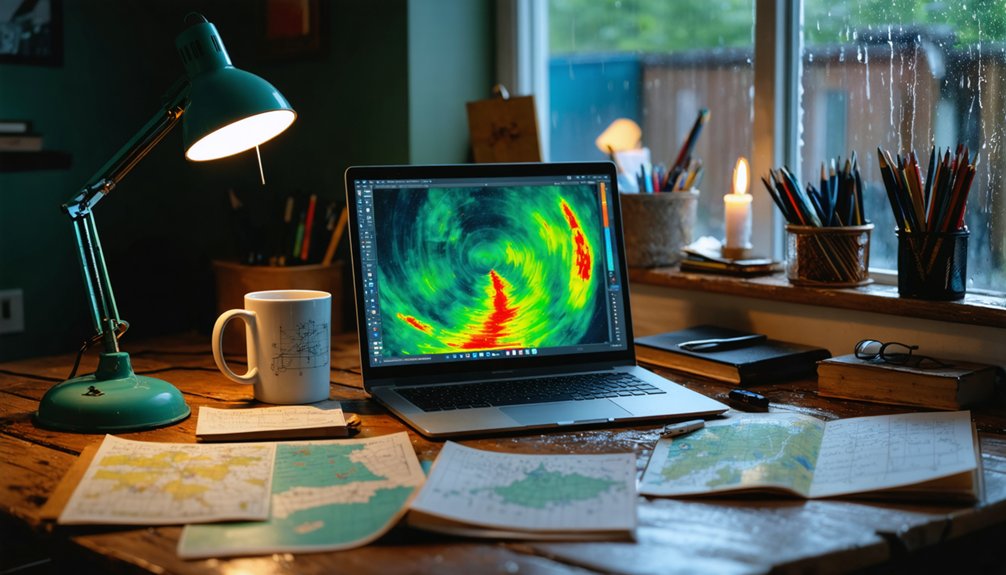
Tutorial videos on radar interpretation pull over 10,000 monthly views on storm chaser forums, making them one of the most actively consumed resources in the community. You’ll find structured tutorials covering radar signal analysis and storm pattern recognition that sharpen your field readiness fast. These resources give you the independence to interpret data on your own terms.
Key skills you’ll develop include:
- Identifying rotation signatures within velocity scans
- Applying radar signal analysis to distinguish supercells from ordinary cells
- Reading reflectivity gradients for hail core detection
- Using storm pattern recognition to anticipate track shifts
- Correlating dual-polarization data with ground truth reports
Each tutorial builds technical precision, letting you move from raw radar returns to confident, informed chase decisions without depending on secondhand interpretations.
Connect With Experienced Chasers Through Mentorship Programs
Mentorship programs on storm chaser forums pair 150 experienced chasers with 200 newcomers annually, giving you direct access to field-tested knowledge that tutorials alone can’t replicate.
Community mentorship accelerates your skill development by connecting you with chasers who’ve documented real encounters across 12 storm-prone states.
You’ll gain structured guidance on radar interpretation, equipment calibration, and risk assessment—skills built through years of active chasing.
Your mentor can walk you through the 23-point emergency response checklist in practical terms, not just theory.
Regional meetups involving 350+ chasers further expand your network, letting you cross-reference insights from multiple experienced sources.
This isn’t passive learning. You’re engaging directly with professionals who operate in the field, giving you the autonomy to chase smarter and safer on your own terms.
How Storm Chaser Forums Support Joint Research Collaboration
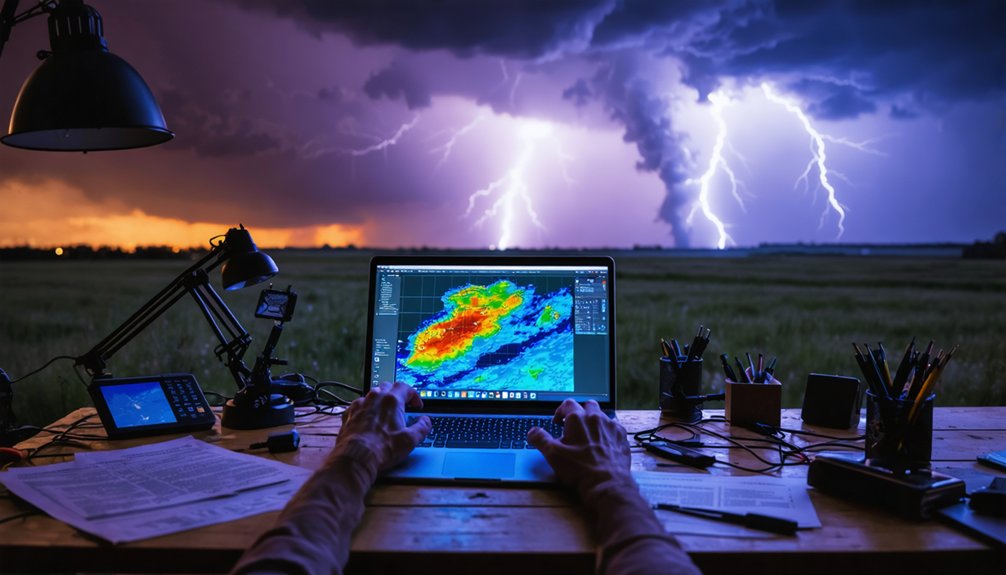
Storm chaser forums don’t just connect individual enthusiasts—they’re functioning research hubs where 28 active teams collaborate on lightning and wind pattern studies. Through structured data sharing and research partnerships, you gain access to collective intelligence that no solo operation can match.
Storm chaser forums aren’t just meetups—they’re thriving research hubs where dozens of teams unite to decode the skies.
These forums enable:
- 45 groups contributing verified data to public weather databases
- 6 major university collaborations linking field chasers with academic researchers
- 212 annotated storm paths with timestamped precision for pattern analysis
- Cross-platform integration connecting forum insights with institutional research frameworks
- Joint documentation protocols ensuring your submitted data meets scientific standards
You’re not just chasing storms—you’re advancing meteorological science. These research partnerships give you real leverage, turning raw field observations into structured, publishable data that drives genuine atmospheric understanding forward.
Photo Archives and Video Footage That Sharpen Your Field Skills
Beyond classroom theory, the forum’s media archives give you direct access to 12,000+ verified storm images spanning 2015 to 2026 and 890 hours of raw severe weather footage. You’ll analyze real-time atmospheric conditions, refine your weather prediction accuracy, and benchmark your field decisions against documented chase outcomes.
The annotated map collection tracks 212 storm paths with timestamped data points, letting you cross-reference visual footage against precise geographic progression. Unlike static textbooks, these archives capture unexpected variables—including wildlife sightings that signal pressure shifts and incoming system changes experienced chasers recognize instantly.
You’re not passively consuming content; you’re actively building pattern recognition that transfers directly into the field. Each archived clip and image sharpens your situational awareness, compresses your learning curve, and strengthens your operational independence during high-stakes chases.
Frequently Asked Questions
How Do Storm Chaser Forums Handle Disputes Between Members or Moderators?
You’ll find that moderator authority enforces community guidelines through structured dispute resolution processes. You can escalate conflicts via formal appeals, where data-driven incident reports and documented evidence guarantee fair, transparent outcomes that protect your freedom and participation rights.
Are There Multilingual Support Options Available on Storm Chaser Forums?
Like a Doppler radar cutting through language barriers, multilingual translation tools aren’t universally standardized across forums. You’ll find language preferences vary by platform, so explore each forum’s settings independently to unleash your communication freedom.
Can Minors Under 18 Legally Join and Participate in Storm Chaser Forums?
You can join if you’re under 18, but age restrictions typically require parental consent for registration. Check the forum’s terms of service to confirm compliance with legal participation guidelines specific to your region.
Do Storm Chaser Forums Offer Paid Membership Tiers With Exclusive Benefits?
Like radar tiers filtering signal strength, paid membership perks reveal exclusive content—you’ll access priority webinar slots, featured badge status, and advanced storm archives, amplifying your chase network’s reach across 8,500 active monthly users.
How Are Fake or Misleading Storm Reports Identified and Removed by Moderators?
Moderators use storm report verification tools and misinformation detection protocols to flag suspicious posts. You’ll find they cross-reference submitted data against radar archives, incident reports, and 12,000+ verified images, swiftly removing unverified claims to protect community integrity.