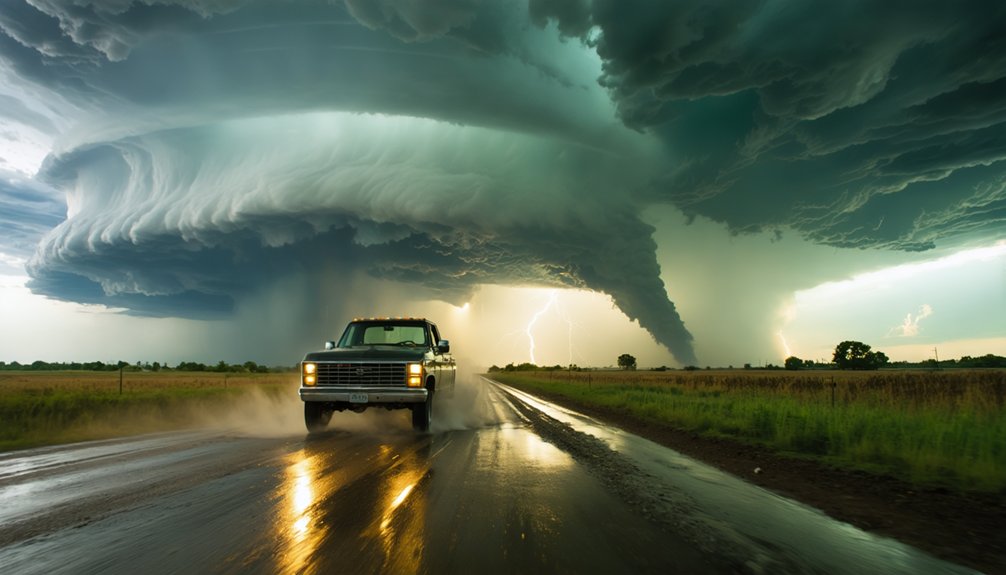
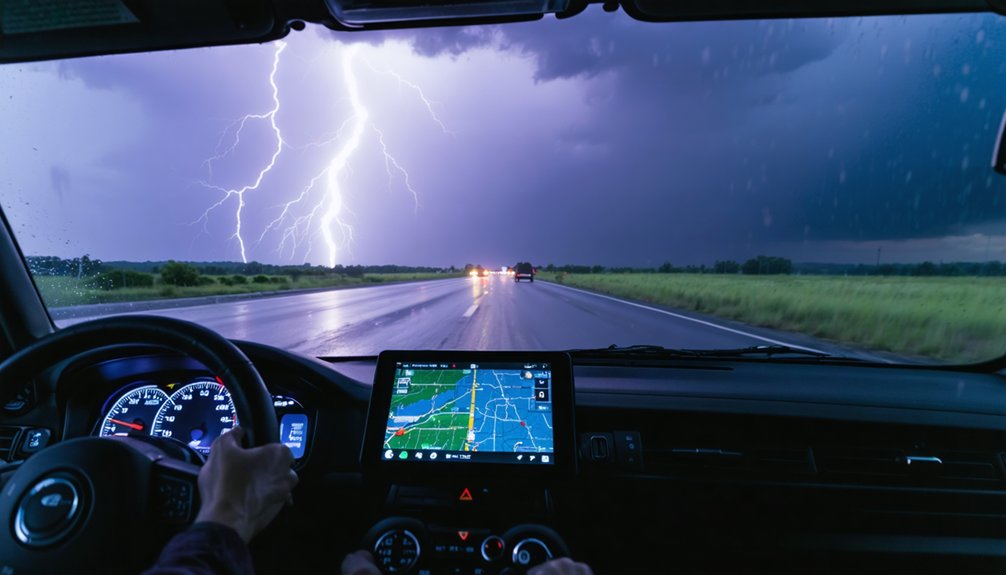
Video games are teaching you severe weather concepts through consequence-driven simulations that textbooks can’t replicate. You can learn radar reflectivity through NSF-funded *Storm Evader*, practice evacuation decisions in FEMA’s *Disaster Mind*, and master storm preparedness protocols in NOAA-backed *Young Meteorologist*. Instant feedback loops reinforce correct decisions faster than passive study, and studies show improved spatial reasoning and hazard awareness. There’s far more to uncover about how these tools are reshaping weather education.
Key Takeaways
- Severe weather games like *Storm Evader* and *Disaster Mind* simulate real decision-making scenarios, teaching radar interpretation, evacuation sequencing, and emergency supply management.
- Simulations create consequence-driven environments where immediate feedback from failures encourages safe retries, accelerating cognitive retention better than static textbooks.
- Games developed with credible institutions like FEMA, NOAA, and NSF ensure content accuracy and alignment with established curriculum standards.
- Weather science concepts such as cloud classification, tornado scales, and hurricane analysis are taught through interactive mechanics tied to real atmospheric consequences.
- Cross-demographic engagement and promising retention data suggest severe weather games effectively scale preparedness education across diverse audiences.
Which Severe Weather Games Are Actually Worth Playing
Not all severe-weather games deliver equal educational value, so knowing which titles are backed by credible institutions and measurable outcomes matters. *Storm Chasers* integrates severe-storm navigation with water cycle and meteorology questions, while *Storm Evader*—funded by the National Science Foundation—teaches radar reflectivity and flight-routing decisions to both children and adults. FEMA’s *Disaster Mind*, developed with iThrive Games, targets high school students and measures educational effectiveness through timed decision-making during blizzards, wildfires, and floods. *Young Meteorologist*, built through a NOAA and National Education Association partnership, structures player engagement around lightning, hurricane, tornado, and winter storm preparedness protocols. Each title provides instant feedback, enabling safe failure and immediate retry cycles. You’ll maximize learning outcomes by selecting games tied to verified agency partnerships and documented curriculum alignment.
Why Storm Simulations Work When Textbooks Don’t
While textbooks describe storm systems in static terms, simulations place you inside dynamic, consequence-driven environments where decisions produce measurable, immediate outcomes. That shift from passive reading to interactive engagement directly accelerates cognitive retention by forcing your brain to process meteorological data under simulated pressure.
When you misread radar reflectivity in *Storm Evader* or miscalculate an evacuation route in *Disaster Mind*, the system immediately registers failure and lets you retry. That feedback loop doesn’t exist in printed material. Textbooks can’t replicate a blizzard decision sequence or a flood evacuation scenario with real-time consequences.
Studies confirm that game-based formats strengthen spatial reasoning, problem-solving, and applied hazard awareness. You’re not just memorizing definitions — you’re executing decisions, analyzing outcomes, and recalibrating strategy, which is how durable operational knowledge actually forms.
The Weather Science Concepts Severe Weather Games Cover
PBS Cloud Lab pushes further, teaching you cloud classification, megastorm development, and hurricane analysis — all atmospheric processes that textbooks describe but rarely let you manipulate.
Smithsonian’s Weather Lab connects regional climate patterns to practical decisions, showing how geography shapes clothing choices and resource allocation.
NWS-based activities cover tornado intensity scales, rainbow formation, and cloud identification.
Each mechanic ties a concept to a consequence. You’re not memorizing definitions — you’re testing variables, reading data, and watching atmospheric systems respond to your decisions in real time.
How Severe Weather Games Teach Real Preparedness Skills
Understanding weather science only matters if it changes how you act when a storm threatens your area. *Young Meteorologist*, developed with NOAA and the National Education Association, moves beyond atmospheric concepts and into behavioral protocols — covering lightning, hurricanes, tornadoes, floods, and winter storms with specific pre-storm actions like monitoring weather reports and reinforcing homes against wind and flooding.
FEMA’s *Disaster Mind* extends this further, placing you inside active blizzard, wildfire, and flood scenarios where decisions carry consequences. That pressure sharpens risk perception by forcing rapid, realistic choices rather than passive reading.
Classroom use has demonstrated measurable outcomes: students learn evacuation sequencing, sandbag deployment, and emergency supply management. Behavioral modeling embedded in gameplay translates directly into autonomous preparedness decisions — skills no textbook exercise replicates with equivalent retention.
Do Severe Weather Games Improve Learning Outcomes?
Evidence that severe-weather games improve learning outcomes is mounting, though the research base remains narrow.
A 2020 study across four New Zealand schools found that disaster games measurably increased student participation and aligned with national geography curriculum standards.
Engagement metrics pointed to higher voluntary interaction rates compared to traditional instruction.
You’ll also find that instant feedback loops within these games strengthen cognitive retention—failed evacuation decisions or misread radar data prompt immediate retries, reinforcing correct behavior faster than passive study methods can.
*Storm Evader* demonstrated cross-demographic engagement among both children and adults, suggesting scalable applicability.
Still, educators should recognize that most supporting data comes from small sample sets.
Independent, large-scale studies measuring long-term retention and behavioral outcomes remain limited, meaning you’d benefit from treating current findings as promising but preliminary.
Who Makes These Severe Weather Games: and Can You Trust Them?
Your credibility assessment shouldn’t stop at name recognition, though. During game development, institutional partners define content boundaries, accuracy requirements, and educational alignment.
That oversight reduces the risk of misinformation reaching you. When you can trace a game’s funding and partnerships directly to accountable public agencies, you’re working with a verified resource—not a commercially motivated product chasing engagement metrics.
Where to Find Severe Weather Games for the Classroom
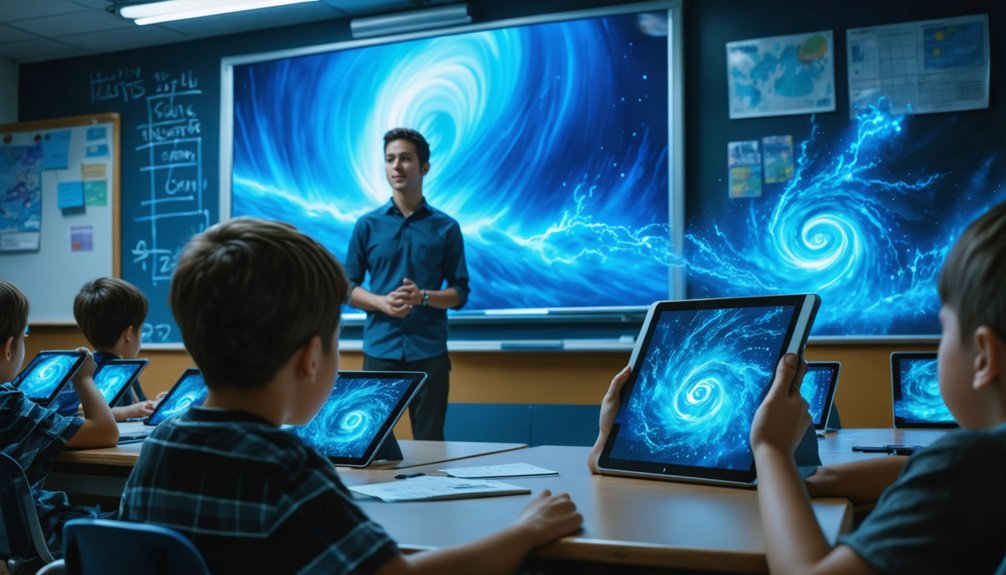
You can also access Smithsonian’s Weather Lab through their online education hub, where prediction-based tasks align with regional climate standards.
The NSF-funded *Storm Evader* is searchable through education grant databases.
Each platform organizes resources by grade level and subject, so you can filter quickly.
No third-party aggregators are necessary—go directly to the agency source for the most current, classroom-ready versions.
Frequently Asked Questions
Are Severe Weather Games Appropriate for Players With Storm-Related Anxiety?
If you have storm anxiety, you should approach these games cautiously. They’re designed for emotional preparedness, but immersive simulations may trigger distress. You’d benefit from starting with low-intensity modules before advancing to hurricane or tornado scenarios.
Can Severe Weather Games Be Played Offline Without an Internet Connection?
Many severe weather games support offline accessibility, letting you play without an internet connection. Check each title’s device compatibility specs, as downloadable apps like *Young Meteorologist* typically run locally, while browser-based NWS activities require connectivity.
What Age Range Are Most Severe Weather Video Games Designed For?
Most severe weather video games target you between ages 8–18, though adults engage too. You’ll find weather simulation tools and storm preparedness content scaling across grade levels, from elementary Owlie activities to FEMA’s high school *Disaster Mind*.
Do Severe Weather Games Work on Mobile Devices and Tablets?
If you’ve tried *Young Meteorologist* on a tablet, you’ll find mobile accessibility varies by title. You can check game customization settings to optimize performance, but platform compatibility depends entirely on each developer’s technical specifications.
How Much Do Educational Severe Weather Video Games Typically Cost?
Many educational severe weather games won’t cost you anything—they’re free. Cost comparison across pricing models shows NOAA, FEMA, and NWS-backed titles like *Young Meteorologist* and *Disaster Mind* offer zero-cost access, freeing your budget entirely.
References
- https://www.reddit.com/r/videogames/comments/14pbh8l/are_there_any_video_games_that_have_severe_weather/
- https://www.nytimes.com/2024/10/04/arts/extreme-weather-storms-video-games.html
- https://www.weather.gov/vef/Games
- https://www.youtube.com/watch?v=51EjYx4wy8k
- https://www.fema.gov/about/regions/region-8/disaster-mind-game
- https://www.youtube.com/watch?v=Z3b0q490VQA
- https://www.tandfonline.com/doi/full/10.1080/00221341.2020.1795225
- https://journals.ametsoc.org/view/journals/bams/96/3/bams-d-13-00202.1.xml