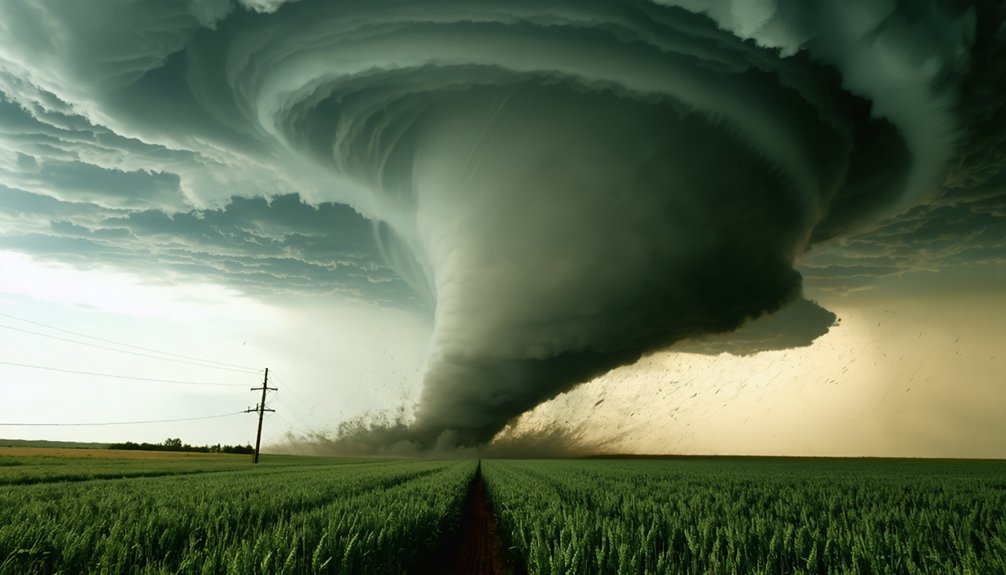
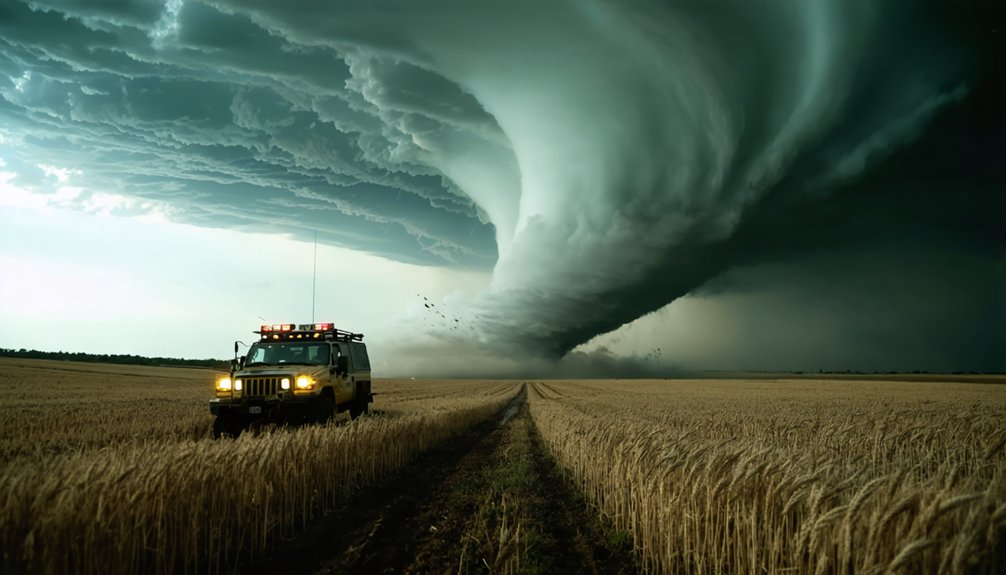
When you’re ranking storm chasing content, real chasers separate credible films from hollow spectacle fast. *Twister* earns respect for visceral, instinct-driven tension, while *Twisters* (2024) updates the formula with data-driven technology. Documentaries like *Storm Chasers* deliver authentic pursuit dynamics that Hollywood rarely matches. The best content treats meteorological science as seriously as it treats danger. Stick around, and you’ll discover exactly which films and shows make the cut.
Key Takeaways
- *Twister* is praised for visceral chase sequences, while *The Day After Tomorrow* is recognized for portraying large-scale climate consequences.
- Storm chasing films are ranked based on meteorological realism, authentic chase techniques, and credible decision-making under pressure.
- *Into the Storm* ranks lower due to implausible survival sequences that undermine its storm-chasing credibility.
- *Twisters* (2024) revived the storm-chasing franchise, earning recognition for blending technical credibility with kinetic storytelling.
- Documentaries like *Storm Chasers* complement fictional films by providing real-world pursuit dynamics and authentic field experience.
The Top-Ranked Storm Movies According to Real Storm Chasers
What separates these top-ranked films isn’t pure spectacle — it’s their credible depiction of storm patterns and chase techniques.
You’ll notice chasers reward films that get the tension right, where positioning decisions and atmospheric reading mirror actual field decisions.
Why Storm Chasing Movies Became a Pop Culture Obsession
When you watch a storm chasing film, you’re tapping into a primal fascination with extreme weather that blends visceral danger with legitimate meteorological science, making the genre both thrilling and intellectually grounded.
Hollywood recognized early that real storm chasers—deploying actual sensor arrays, tracking rotation signatures, and racing ahead of supercells—provided ready-made dramatic structure that needed little embellishment.
That combination of authentic scientific stakes and cinematic spectacle is precisely why films like *Twister* and *The Day After Tomorrow* didn’t just entertain you; they embedded storm chasing into the broader cultural imagination as a symbol of human defiance against nature‘s most volatile forces.
Thrill Of Extreme Weather
Few forces in nature command human attention quite like a tornado tearing across an open plain or a hurricane swallowing a coastline whole. That raw, uncontrollable power triggers something primal in you — a mix of fear and fascination that filmmakers have weaponized brilliantly.
Storm chasing movies tap into that extreme thrill by positioning ordinary people against extraordinary atmospheric violence, making you feel the weather adrenaline vicariously from your seat.
What makes these films culturally sticky isn’t just spectacle — it’s agency. Characters choose to run toward the storm rather than away, embodying a rebellious freedom most audiences quietly crave.
That deliberate defiance of self-preservation instinct explains why *Twister* still resonates decades later and why *Twisters* generated immediate cultural momentum upon its 2024 release.
Real Science, Reel Drama
Weather accuracy matters here more than audiences typically realize. Films grounded in actual storm behavior — pressure drops, rotation signatures, debris fields — create stakes that feel unmanufactured.
Directors who respect storm safety protocols and real chaser methodology give you something pure spectacle can’t: credibility.
That credibility transforms genre entertainment into cultural conversation. You’re not just watching destruction — you’re watching human intelligence negotiate nature’s most volatile systems.
Cultural Impact Of Storms
There’s a reason storm chasing movies keep pulling audiences back — they tap into something primal that pure action films can’t replicate. Storms aren’t just spectacle; they’re storm symbolism made cinematic. They externalize internal chaos, making invisible fears visible and overwhelming.
Weather metaphors have always shaped human storytelling — turbulence signals transformation, calm precedes catastrophe. Films like *Twister* and *The Day After Tomorrow* weaponize this instinct, framing meteorological events as moral reckonings rather than random disasters.
You respond to these narratives because they reflect your relationship with forces beyond your control.
Storm chasing culture amplifies this further — it converts passive fear into active pursuit. That psychological inversion, choosing to chase what others flee, makes these films genuinely compelling cultural artifacts rather than disposable disaster entertainment.
Twister vs. Twisters: Which Film Gets Storm Chasing Right?
If you’re comparing *Twister* (1996) and *Twisters* (2024), you’ll notice that both films trade heavily on spectacle, but they reflect entirely different eras of chasing technology and methodology.
*Twister* romanticizes analog, instinct-driven pursuit — Jo and Bill’s DOROTHY sensors feel crude by modern standards — while *Twisters* updates the toolkit, centering Kate Cooper’s data-driven tracking system on social-media-era storm science.
The real question you should ask isn’t which film is more dramatic, but which one more honestly captures how chasers actually work.
Realism Versus Hollywood Drama
When measuring cinematic accuracy against actual storm dynamics, both films reveal their trade-offs:
- *Twister* sacrifices survival plausibility for visceral tension.
- *Twisters* reflects modern chaser culture but amplifies convergence scenarios beyond credibility.
- Neither fully captures methodical, data-driven fieldwork real chasers execute daily.
You’re watching compelling drama — not a meteorology lecture.
Chasing Technology Compared
Both films arm their chasers with gear that reflects their respective eras, and the contrast tells you a lot about how storm chasing technology evolved across nearly three decades.
*Twister*’s centerpiece invention — Dorothy, a sensor-deployment device designed to collect interior tornado data — was loosely inspired by real TOTO (TOtable Tornado Observatory) experiments from the 1980s, grounding the film in legitimate scientific ambition even if the execution gets theatrical.
*Twisters*, by contrast, equips Kate Cooper with a chemical-dispersal system meant to drain a tornado’s energy, a concept with no credible real-world analog but one that mirrors the speculative edge of modern atmospheric research funding.
Where *Twister* romanticizes analog storm tracking through physical sensor drops, *Twisters* leans into technology advancements like mobile radar and digital forecasting — tools today’s chasers actually use, making its operational backdrop feel surprisingly grounded despite its wilder plot mechanics.
The Best Hurricane and Nor’easter Movies Ranked by Weather Impact
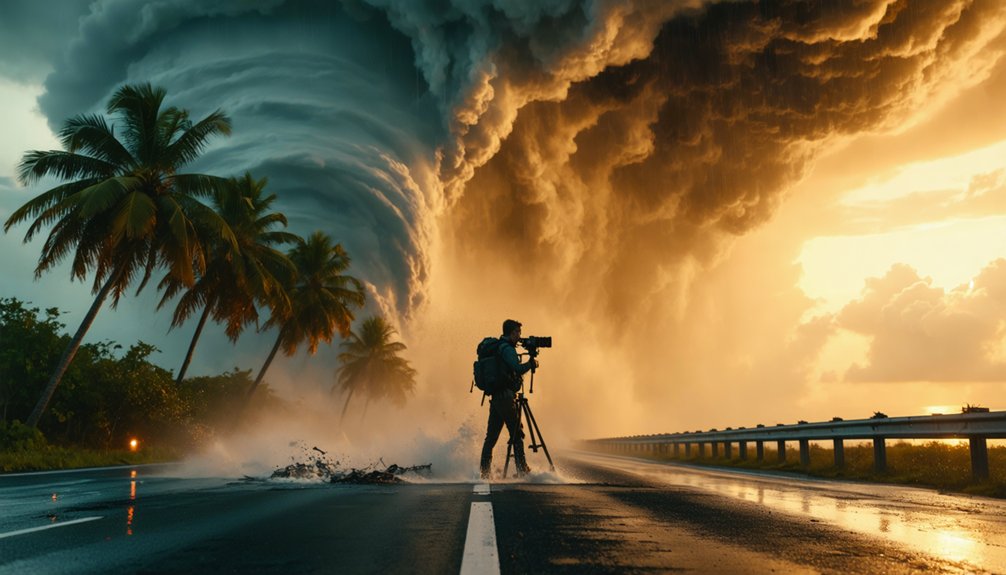
Each film captures distinct nor’easter impact and hurricane survival stakes:
- Fishermen swallowed by converging Atlantic systems
- Coast Guard cutters battling 60-foot nor’easter swells
- Floodwaters rising inside a collapsing suburban structure
The Storm Films Too Ridiculous to Ignore
You recognize storm absurdity as its own cinematic genre.
These cinematic storms don’t pretend to educate—they weaponize atmospheric chaos for pure entertainment, demanding you abandon realism entirely and engage on their own chaotic, unapologetic terms.
How Real Storm Chasers Grade Hollywood’s Tornado Science

When Hollywood puts tornadoes on screen, real storm chasers aren’t passive viewers—they’re grading every frame against hard-won field experience. Storm chaser perspectives reveal sharp divisions between cinematic accuracy and scientific reality.
Ranker’s storm chaser community consistently rewards films that respect atmospheric mechanics:
- Twister (1996) earns loyalty for its visceral chase sequences and debris-filled vortex imagery, despite dramatized moments.
- The Day After Tomorrow (2004) dominates rankings for portraying climate-scale consequences with genuine weight.
- Into the Storm (2014) loses credibility through implausible survival sequences that defy actual tornado behavior.
Chuck Doswell and fellow chasers particularly criticize TV documentaries for compounding inaccuracies.
You’ll notice that authenticity separates beloved storm films from forgettable ones—real chasers reward directors who treat tornado science as non-negotiable, not decorative.
Storm Chasing Documentaries and TV Shows Worth Your Time
Chuck Doswell, a respected meteorologist, has publicly criticized TV tornado documentaries for factual distortions, and he’s not wrong.
The decline in documentary quality mirrors broader television trends prioritizing spectacle over substance.
Your best strategy: treat *Tornado* as a foundational watch, supplement it with *Storm Chasers* for real-world pursuit dynamics, and approach newer productions skeptically.
The most valuable storm content challenges your understanding rather than simply feeding your appetite for destruction.
What the Success of Twisters (2024) Means for Future Storm Films
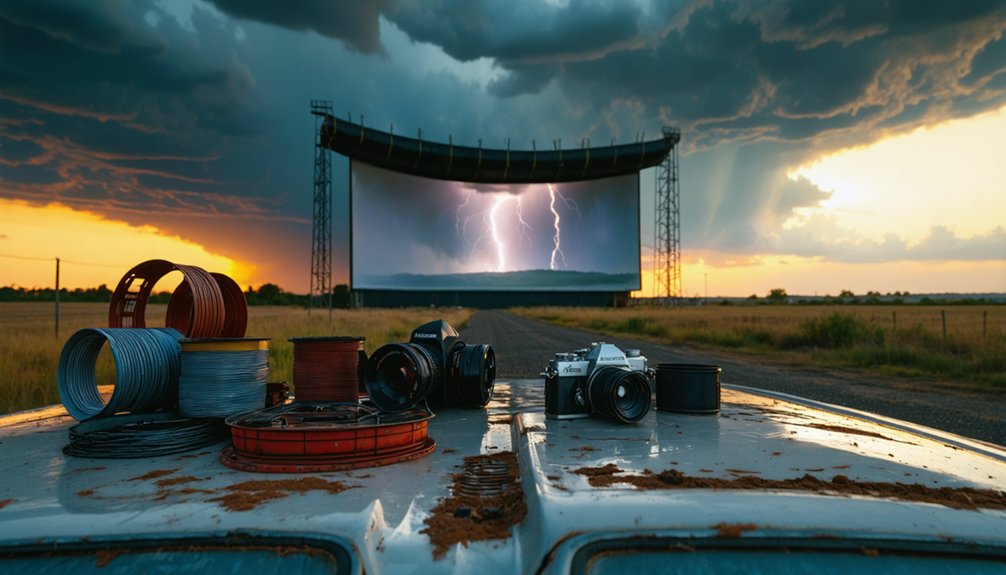
Twisters (2024) didn’t just revive a dormant franchise—it signaled that storm-chasing cinema still commands serious commercial attention.
Directed by Lee Isaac Chung and earning 27 votes from storm enthusiasts, it demonstrates that audience engagement remains strong when films blend technical credibility with kinetic storytelling.
This storm film evolution points toward a future where you’ll likely see more:
- Scientifically grounded tracking systems replacing implausible Hollywood shortcuts
- Social-media-savvy characters reflecting how modern chasers actually operate
- Converging multi-storm scenarios that raise dramatic and meteorological stakes simultaneously
Studios are now watching closely.
When a film earns genuine respect from actual storm chasers, it transcends spectacle and becomes culturally relevant.
Twisters proves you don’t have to choose between accuracy and entertainment—and future productions will build directly on that foundation.
Frequently Asked Questions
What Safety Gear Do Real Storm Chasers Use During Tornado Pursuits?
When you’re chasing tornadoes, you’ll rely on helmets, harnesses, and reinforced vehicles alongside storm tracking technology. You must follow strict safety protocols, including communication devices, weather radar, and emergency kits, ensuring you’re always prepared for rapid, unpredictable conditions.
How Much Do Professional Storm Chasers Typically Earn Annually?
Only 150 full-time professional chasers exist worldwide—so storm chasing salaries are rare. You’ll find professional chaser earnings typically range from $20,000–$60,000 annually, often supplemented through photography, research grants, or media contracts you’d actively pursue yourself.
Are Storm Chasing Tours Available for Everyday People to Experience?
Yes, you can absolutely join storm tour experiences across Tornado Alley! Several companies offer guided chasing opportunities where you’ll pursue real supercells alongside meteorologists, combining scientific insight with the raw, unfiltered thrill of nature’s most powerful atmospheric events.
What Meteorology Degree Is Required to Become a Storm Chaser?
You don’t need a meteorology degree to chase storms. However, understanding storm prediction sharpens your effectiveness, and mastering chasing techniques keeps you safer. Many successful chasers self-educate, blending passion with practical atmospheric science knowledge you can freely pursue independently.
Have Any Storm Chasers Died While Filming Hollywood Movies On-Set?
No documented storm chasers have died in on-set accidents during Hollywood productions. However, filming dangers remain real — you’d find that stunt coordinators and crews constantly battle unpredictable weather conditions while capturing those breathtaking, pulse-pounding storm sequences you love.
References
- https://www.listchallenges.com/the-best-movies-with-storms-ranked-by-storm
- https://www.ranker.com/list/the-best-movies-with-storms-ranked/leah-collins
- https://www.cosmopolitan.com/entertainment/movies/g46872223/tornado-movies/
- https://stormtrack.org/threads/thoughts-about-tv-tornado-documentaries.7134/