When a tornado strikes, you can play a critical role in community disaster response if you’re properly trained and coordinated. Doppler radar detects rotation but can’t confirm ground contact — that’s where your verified reports become essential. With CERT certification, ham radio proficiency, and pre-established emergency channels, you transform raw observations into actionable intelligence that triggers faster sirens and guides dispatchers. The full scope of what trained storm chasers contribute goes much deeper than most people realize.
Key Takeaways
- Storm chasers provide real-time ground-level confirmation of tornadoes, enhancing warning system accuracy and enabling faster emergency siren activation.
- CERT-certified chasers contribute trained skills like light search and rescue, bleeding control, and GPS coordinate relay after disasters.
- Chasers support dispatchers by reporting road closures, downed power lines, and structural hazards immediately following tornado impacts.
- Pre-established coordination with emergency management agencies ensures chaser reports are credible, actionable, and integrated into disaster response.
- Prioritizing victim assistance over footage and operating within safety boundaries establishes chasers as trusted community assets.
How Storm Chasers Support Real-Time Warning Systems
When Doppler radar detects a suspicious rotation, it still can’t confirm what’s actually touching down at street level—that’s where trained storm chasers fill a critical gap. Your ground-level reports deliver real-time confirmation that radar signatures alone can’t provide, directly improving meteorological accuracy and strengthening warning decisions.
When you relay verified tornado position, movement, and intensity to emergency management, you help trigger sirens faster and reduce the margin for error in public alerts. You can also report road closures, downed power lines, and structural damage before formal assessments begin, giving dispatchers actionable intelligence immediately.
Ethical considerations matter here—accurate, timely reporting builds credibility with agencies and communities alike. When your data is reliable and coordinated, local authorities make quicker, better-informed choices that protect lives.
The Training That Makes Storm Chasers Useful in a Crisis
What separates a useful responder from a dangerous bystander in a post-tornado scene is training. CERT certification equips you with hazard perception skills and risk management protocols that directly apply to disaster scenes. Without structured preparation, you become a liability rather than an asset.
Core competencies that make storm chasers operationally effective include:
- Bleeding control and airway management for immediate victim stabilization
- Light search and rescue techniques for debris navigation
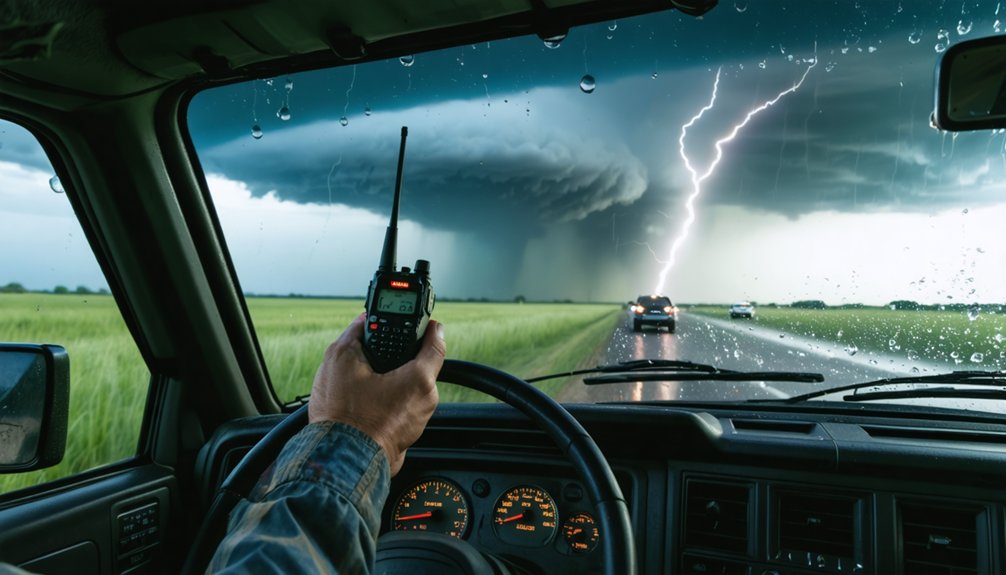
- Ham radio operation when cell infrastructure fails
- GPS coordinate relay to guide incoming emergency responders
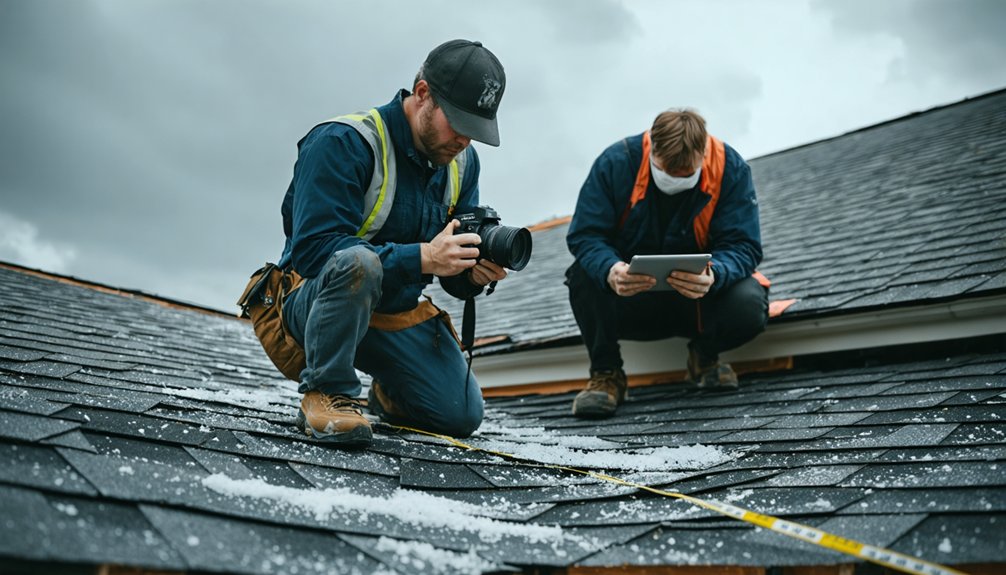
- Damage documentation methods that support meteorological and recovery efforts
Training transforms your field presence from passive observation into coordinated action. It also protects your autonomy—prepared chasers operate with credibility, earn agency trust, and maintain access to disaster zones where untrained individuals are excluded.
What Storm Chasers Actually Do After a Tornado Hits
Training determines what you’re capable of doing—but the situation on the ground determines what actually gets done. Once a tornado hits a populated area, ethical guidelines shift your role from observer to limited responder. You stop filming and start evaluating.
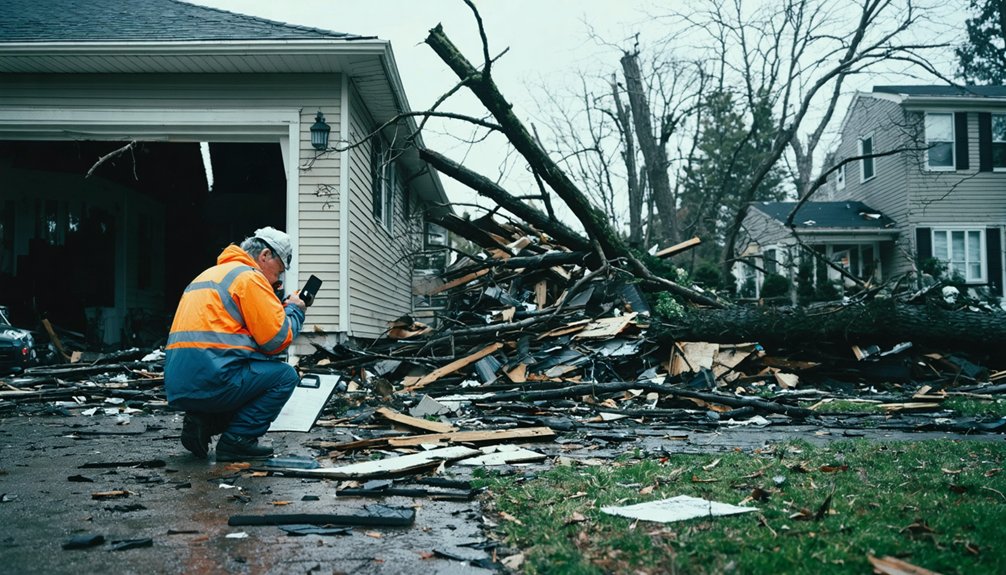
If you’re equipped and trained, you relay GPS coordinates, report road closures, identify downed power lines, and guide responders toward injured victims. Equipment safety becomes critical here—your helmet, communication backup, and protective gear aren’t optional extras; they’re what keep you functional on a compromised scene.
You may document structural damage, debris patterns, and access routes, feeding that data directly to emergency managers. Untrained chasers should call 911 with location details and stay clear.
Your most effective contribution depends entirely on your preparation before the storm, not your instincts during it.
How Chasers Coordinate With Emergency Management Teams
Coordination between chasers and emergency management doesn’t happen automatically—it requires pre-established channels, shared protocols, and verifiable credibility. When you’re operating in the field, mutual awareness between you and dispatch teams determines whether your reports get acted on or ignored.
Resource sharing flows more efficiently when you’re already registered with local emergency management offices.
Key coordination methods include:
- Ham radio networks that function when cell infrastructure fails
- CERT certification that establishes your credibility with responders
- Pre-event contact with county emergency managers before storm season
- Standardized report formats that dispatchers can immediately act on
- GPS coordinate sharing that guides responders directly to victims
Your independence matters, but your effectiveness multiplies when you operate within established communication frameworks rather than outside them.
How Storm Chasers Build Trust With Local Communities
Establishing credibility with emergency management gets you into the operational framework—but community trust determines whether residents treat your reports as reliable or dismiss them as spectator activity. Community engagement builds that trust through consistent, accurate reporting and transparent communication with the people most affected by severe weather events.
Community trust transforms accurate reporting from spectator activity into a reliable resource residents depend on during severe weather.
Your ethical responsibilities extend beyond radar screens and dashcams. When a tornado strikes a populated area, stopping pursuit and shifting toward victim assistance signals that you prioritize human welfare over footage. Residents notice that choice.
Trained, coordinated chasers who share timely ground-truth reports strengthen the relationship between weather observers and local agencies. Credible data reduces uncertainty during fast-moving events.
Acting within established safety boundaries—rather than freelancing through damage zones—reinforces your value as a trusted community asset, not a liability.
Frequently Asked Questions
Can Storm Chasers Legally Enter Restricted Disaster Zones After a Tornado?
You can’t freely enter restricted disaster zones—legal restrictions and entry protocols vary by jurisdiction. Authorities control access post-tornado, and violating these rules risks fines, arrest, or hampering rescue operations you’d otherwise support.
Do Storm Chasers Carry Liability Insurance When Assisting During Emergencies?
Like steering through a minefield, you’ll find insurance coverage varies widely—most storm chasers don’t carry formal liability risks protection. You’re typically operating independently, so securing your own policy remains your personal responsibility during emergency assistance.
How Do Storm Chasers Fund Their Equipment and Disaster Response Activities?
You’ll typically fund your storm chasing technology through personal savings, sponsorships, crowdfunding, YouTube monetization, and grants. Community safety collaboration can also open emergency management partnerships, reducing costs while maximizing your operational impact during active disaster response efforts.
Are There Age Requirements for Participating in Organized Storm Chasing Groups?
Age restrictions vary by group, but you’ll typically need to be 18+ to join independently. Youth participation often requires parental consent and supervised roles, ensuring you’re trained safely before engaging in active storm chasing operations.
Can Storm Chaser Footage Be Used as Evidence in Insurance Damage Claims?
Yes, you can use storm footage to support insurance claims. It provides timestamped, geolocated visual evidence of damage extent, helping adjusters verify loss accurately and expediting your claim’s resolution with precise, documented proof.
References
- https://www.preventionweb.net/news/what-do-storm-chasers-really-do-two-tornado-scientists-take-us-inside-chase-and-tools-studying
- https://en.wikipedia.org/wiki/Storm_chasing
- https://www.reddit.com/r/stormchasing/comments/lvub71/how_important_are_storm_chasers_in_giving_data_or/
- https://stormtrack.org/threads/storm-chasing-ethics-and-safety.26831/
- https://crazystormchasers.com/how-community-emergency-response-teams-work-with-storm-chasers/
- https://crazystormchasers.com/should-storm-chasers-help-tornado-victims-or-keep-chasing/
- https://www.cjonline.com/story/news/politics/state/2013/03/09/storm-chasers-helping-save-lives/16402581007/
- https://forums.firehouse.com/forum/meet-and-greet/meet-and-greet-aa/2101905-storm-chasers-as-first-responders
- https://caps.ou.edu/kbrews/spothelp.html