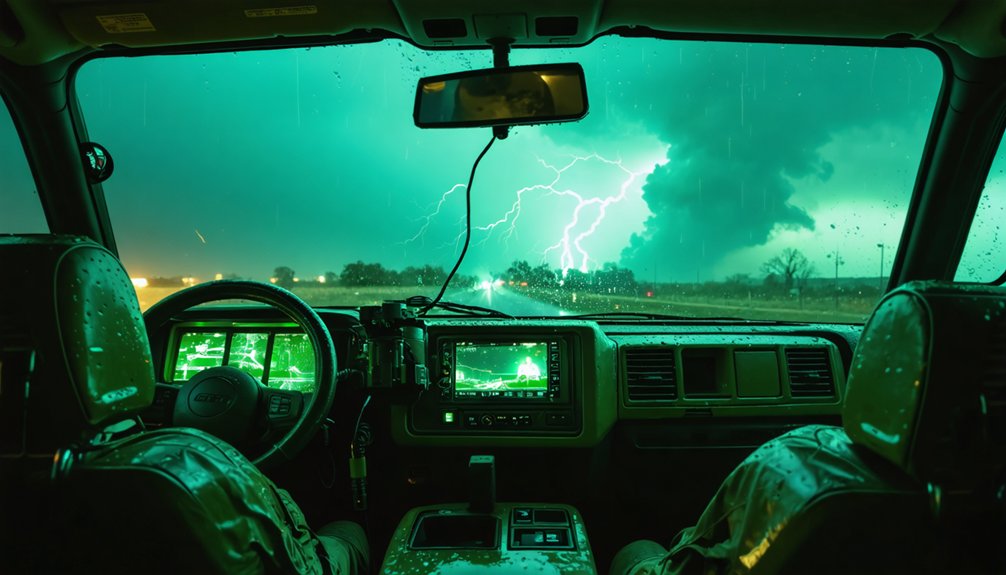
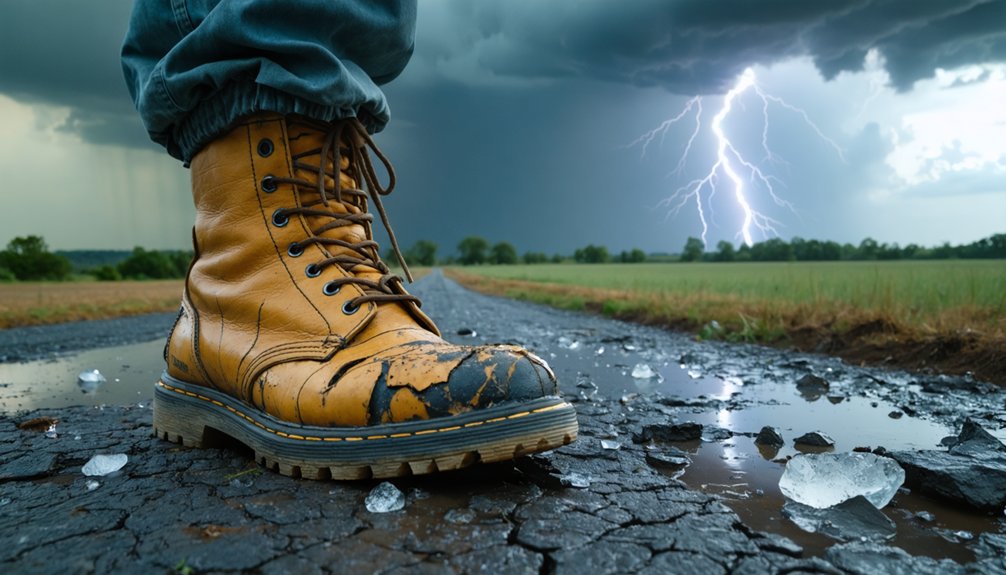
Your storm chasing backpack must function as a mobile command center, where every item earns its place. You’ll need a 10,000 mAh+ power bank, SAME-enabled weather radio, weather-sealed camera, GPS device, and a thorough first aid kit. Pack compressible layers, waterproof pouches, and a personal locator beacon for remote emergencies. Prioritize weight management and compartmentalization to maintain operational speed when conditions change fast — and there’s much more to cover.
Key Takeaways
- A SAME-enabled weather radio and portable anemometer provide real-time storm alerts and accurate wind data for informed decision-making.
- A minimum 10,000 mAh power bank with multi-port output ensures all devices stay charged during extended chases.
- Weather-sealed cameras and waterproof notebooks safeguard critical storm documentation gear against moisture and harsh conditions.
- A Gore-Tex jacket, insulated boots, and merino wool socks protect against extreme weather while maintaining mobility.
- A personal locator beacon, first aid kit, and thermal blankets ensure safety during emergencies in remote locations.
Storm Chasing Backpack Essentials Every Chaser Needs
Whether you’re a seasoned chaser or gearing up for your first pursuit, your backpack needs to function as a mobile command center—organized, resilient, and stocked with gear that performs under pressure.
Storm chasing essentials fall into clear categories: monitoring equipment, power management, protective gear, emergency supplies, and navigation tools. Each item earns its place only if it serves a direct operational purpose.
Gear weight management is non-negotiable—unnecessary weight slows your response time and drains your energy during critical deployment windows.
Every pound you carry is a second you lose—trim the load or pay the price when it matters most.
Prioritize high-density, multi-function items. A waterproof power bank that charges multiple devices beats carrying three single-purpose chargers.
Compressible packing cubes maximize storage efficiency while keeping categories accessible. Your pack should let you move fast, stay protected, and capture data without hesitation.
Power Banks and Chargers That Survive Long Chase Days
Power management separates chasers who stay in the field from those forced to cut runs short. You need a minimum 10,000 mAh power bank with waterproof protection — less capacity simply won’t sustain multi-device demands across a full chase day.
Prioritize power bank features like simultaneous multi-port output, fast-charging protocols, and ruggedized housings that handle drops and moisture exposure without failing.
Charger compatibility matters equally. You’re running laptops, phones, and camera batteries simultaneously, so mismatched chargers create critical gaps in your equipment readiness.
Carry reinforced charging cables with braided connectors — standard cables fail under constant field stress. Waterproof cases protect your charging ecosystem from humidity and rain.
Build redundancy into your system; one backup power solution keeps operations running when primary sources deplete faster than anticipated.
Weather Monitoring Gear Worth the Backpack Space
Your weather monitoring kit starts with a SAME-enabled weather radio delivering real-time severe weather alerts and a portable anemometer built from corrosion-resistant materials for accurate wind readings in turbulent conditions.
Pair these with a high-resolution, weather-sealed camera mounted on a compact tripod to capture detailed storm imagery without sacrificing image quality in rain or high winds.
Each of these tools earns its backpack space by providing critical situational awareness and precise data you can’t afford to miss in the field.
Essential Weather Alert Tools
When you’re chasing storms, having the right weather alert tools in your backpack isn’t optional—it’s the difference between staying ahead of a system and getting caught off guard.
Weather alert systems like SAME-equipped weather radios deliver real-time severe weather notifications directly tied to your geographic location, cutting through irrelevant broadcasts and delivering only what matters to your operational zone.
Pair your radio with a GPS device featuring integrated weather updates, and you’ve built a layered alert infrastructure that keeps you informed across multiple data streams simultaneously.
These tools don’t just warn you—they give you the situational intelligence needed to make fast, independent decisions in the field.
Compact, rugged, and reliable, they earn every cubic inch of backpack space they occupy.
Portable Wind Measurement Devices
Nothing measures wind quite like a portable anemometer when you’re standing at the edge of a supercell’s inflow band. You need real-time wind speed data to make informed positioning decisions, and anemometer accuracy directly impacts your safety margins.
Choose units constructed from corrosion-resistant materials that withstand debris impact and moisture exposure. Rugged housings protect sensitive internal components when conditions deteriorate rapidly around you.
Modern portable anemometers pair with smartphones via Bluetooth, transmitting continuous wind speed readings to your data-logging apps. You’ll capture time-stamped measurements without fumbling with separate recording equipment.
Prioritize devices offering ±2% accuracy ratings across their full operational range. When you’re documenting extreme weather events, that precision separates reliable scientific data from questionable field estimates.
Pack one—it earns its backpack space every chase.
Storm Documentation Equipment
Measuring wind speed gives you real-time situational data, but capturing what you’re witnessing requires dedicated documentation gear that pulls equal weight in your pack.
For storm photography tips that actually translate in the field, prioritize a high-resolution camera with robust weather sealing — moisture infiltration destroys equipment fast.
Mount it on a compact tripod with a remote shutter release for hands-free capturing storm details without compromising stability during high-wind events.
Pair your camera setup with a Garmin watch for time-stamped data collection, anchoring visual documentation to precise geolocation reference points.
Keep a waterproof notebook for manual observations when electronics fail. Store everything in weather-sealed cases to prevent moisture damage.
Your documentation kit isn’t optional — it’s the record that validates everything you’ve tracked.
Protective Clothing for Storm Chasing in Changing Conditions
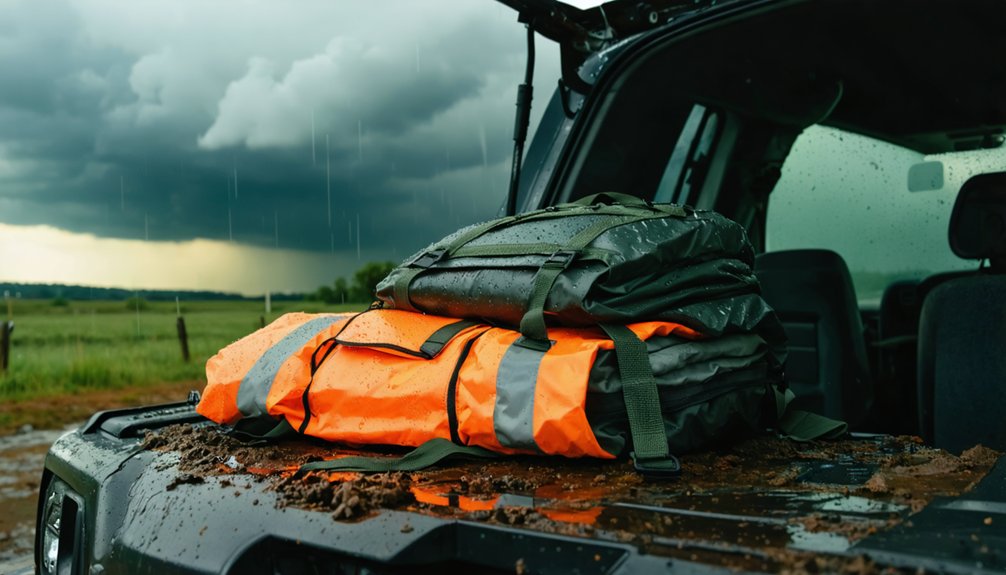
When storm chasing, you’ll encounter rapid temperature swings, torrential rain, and unpredictable wind exposure that demand layered, purpose-built outerwear.
Pack a Gore-Tex waterproof jacket and convertible zip-off pants to handle both downpours and heat without carrying redundant gear.
For footwear, you’ll need close-toed, traction-ready boots with moisture-resistant insulation to maintain stability and warmth across wet, muddy terrain.
Waterproof Jackets And Pants
Staying dry and comfortable during a storm chase requires more than just a basic rain jacket—you’ll need outerwear engineered specifically for harsh, rapidly changing conditions.
Gore-Tex waterproof technology delivers both impermeability and breathability features that prevent moisture accumulation inside your gear during high-exertion pursuits.
Pair your jacket with convertible zip-off pants, giving you the flexibility to adapt across dramatic temperature gradients as you cross weather boundaries.
For insulation materials, Thinsulate-lined boots complement layered outerwear without adding excessive bulk to your pack.
Lightweight options matter considerably—choose compressible jackets that collapse into their own pockets, preserving critical backpack space for monitoring equipment.
Prioritize reinforced seams, taped zippers, and articulated joints that maintain full mobility when you’re moving fast and conditions are deteriorating rapidly.
Footwear For Wet Terrain
Your outerwear selection handles precipitation from above, but the ground beneath your feet presents an equally demanding challenge across wet, muddy terrain.
Prioritize insulated boots featuring Thinsulate footwear materials, which deliver thermal protection and damp resistance without restricting mobility during rapid repositioning.
Traction features matter considerably when you’re maneuvering saturated road shoulders and unstable muddy surfaces. Aggressive lug patterns on boot outsoles prevent slipping during critical observation moments.
Close-toed construction protects against debris impact while maintaining structural integrity throughout extended chase sequences.
Complement your primary boots with secure-strap sandals for vehicle shifts and warm boundary crossings where conditions change rapidly.
Pair all footwear with merino wool socks, which regulate temperature and wick moisture effectively, extending your operational comfort during multi-day pursuits without adding unnecessary pack weight.
Layering For Temperature Changes
Shifting temperatures across storm boundaries demand adaptable clothing systems rather than single-layer solutions. Effective layering techniques give you weather adaptability without sacrificing mobility.
Start with moisture management base layers using quick dry clothing that pulls sweat away from your skin during high-activity chase phases. Add breathable materials as your mid-layer, prioritizing versatile fabrics that compress easily into your pack. Your outer shell handles thermal insulation against sudden temperature drops when you cross cold fronts.
Convertible zip-off pants optimize temperature regulation across varying conditions without requiring wardrobe changes. Merino wool base layers excel at insulation options because they regulate body temperature across a wide range.
Pack lightweight, compressible layers rather than bulky alternatives, ensuring you’re always prepared for rapid environmental shifts without overloading your storm chasing pack.
Storm Chasing Safety and Emergency Supplies You Can’t Skip
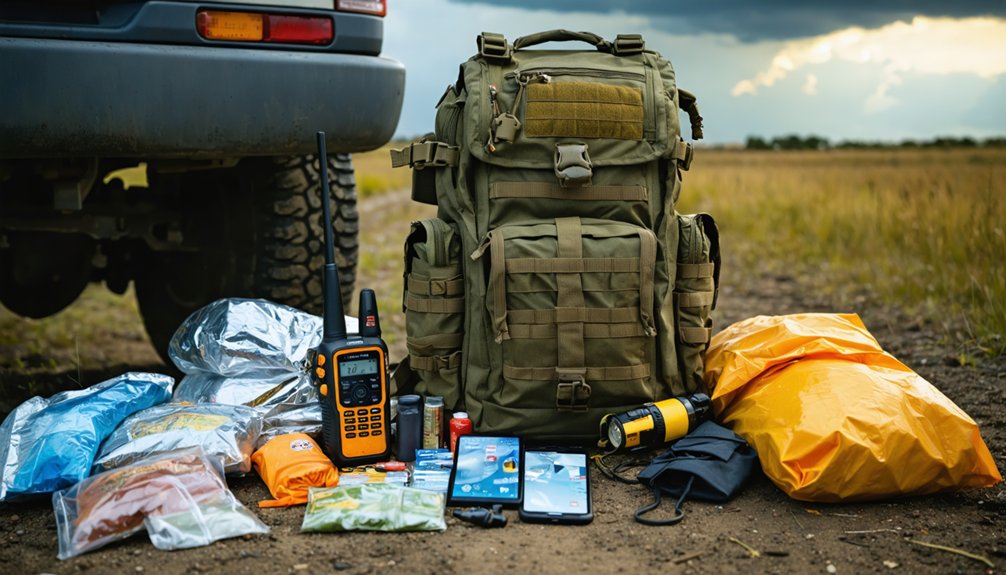
When you’re chasing storms, safety and emergency supplies aren’t optional—they’re mission-critical. Pack a thorough first aid kit covering lacerations, sprains, and trauma scenarios you’ll realistically encounter in the field.
Include a personal locator beacon for emergency communication when cell networks fail in remote locations—because they’ll fail.
Thermal blankets, a multi-tool, and non-perishable food keep you operational if severe weather traps you unexpectedly. Water purification tablets extend your self-sufficiency beyond what you can carry.
High-visibility vests and hard hats protect you during roadside observations when traffic and debris become simultaneous threats.
Don’t underestimate these supplies as afterthoughts. Your freedom to chase depends entirely on your capacity to handle what goes wrong without outside intervention.
GPS and Data Tools Serious Storm Chasers Rely On
Once you’ve locked down your safety gear, your ability to operate effectively in the field shifts to how well you can track, navigate, and document what you’re chasing. GPS accuracy determines whether you’re positioned efficiently or caught off-guard by a rapidly shifting storm.
Pair a dedicated GPS device with GIS mapping software for real-time route adjustments and precise storm tracking across dynamic terrain.
Data reliability matters equally. Use notebooks alongside digital tools—electronics fail, and handwritten observations preserve critical details when they do.
Mount your camera on a tripod with a remote shutter release for hands-free documentation without sacrificing stability. Store smaller devices in bright-colored pouches for immediate access.
Garmin watches add time-stamped reference points, keeping your data organized and your decision-making sharp when conditions escalate fast.
Personal Comfort Gear for Multi-Day Storm Chasing
Multi-day chase sequences demand more than functional gear—they require deliberate comfort planning that keeps you operational across extended periods in the field.
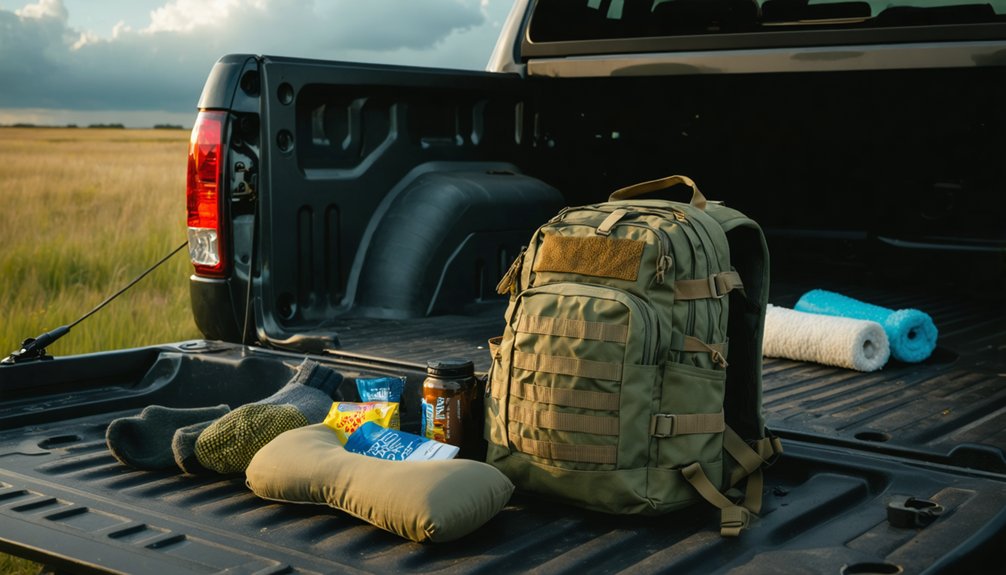
Pack merino wool socks for moisture-wicking performance and temperature regulation during long operational windows. Eye masks support critical rest during downtime between active chase periods.
Maintain personal hygiene efficiently by organizing toiletries in quart-sized ziplock bags—compact, accessible, and TSA-compatible for any travel changes. Lightweight ponchos handle standing observation during non-working periods without compromising your primary outerwear.
Stock high-calorie travel snacks that sustain your energy without requiring refrigeration or preparation time. Sandals with secure straps ease vehicle shifts on warmer chase days.
These deliberate additions transform your backpack from purely functional to genuinely sustainable across consecutive demanding chase days.
Storm Chasing Backpack Organization Strategies That Work
Strategic organization separates functional storm chasers from those scrambling for critical equipment during rapidly developing weather events.
Master backpack compartmentalization techniques by dedicating specific zones to distinct equipment categories: electronics top-access, emergency supplies outer pockets, documentation tools middle compartment.
Efficient packing strategies demand you prioritize accessibility over convenience.
Place frequently accessed items — weather radio, anemometer, GPS device — in exterior pockets for immediate retrieval without unpacking.
Use bright-colored portable electronics pouches for instant visual identification.
Secure compressible packing cubes for clothing layers, maximizing remaining storage capacity.
Waterproof your organization system using protective pouches for electronics and waterproof cases for critical documentation.
Label every compartment.
Practice retrieval sequences until muscle memory replaces conscious searching, ensuring you’re capturing critical storm data when seconds genuinely matter.
Frequently Asked Questions
What Backpack Brands Do Professional Storm Chasers Most Commonly Recommend?
The knowledge doesn’t specify particular backpack brands, but you’ll want storm gear that fits essential equipment like compressible packing cubes, waterproof cases, and organized pouches—prioritizing durability, capacity, and weather resistance above brand loyalty.
How Do Storm Chasers Legally Access Private Property During Active Chases?
Coincidentally, when storms align with private land, you must respect property access boundaries. Always secure landowner permission, stay on public roads, and understand legal considerations — trespassing laws apply even during active, urgent chase operations.
Are There Storm Chasing Certifications or Training Programs Beginners Should Complete?
Yes, you’ll want to complete programs like Storm Spotter Training (SKYWARN) and coursework covering storm chasing fundamentals and essential safety practices. These certifications sharpen your meteorological knowledge, situational awareness, and decision-making skills before you’re ever in the field.
What Insurance Coverage Do Storm Chasers Typically Carry for Equipment?
Like armor in battle, you’ll need equipment protection policies covering cameras and electronics, plus liability insurance for third-party damages. Carry inland marine coverage for gear and consider umbrella policies for extensive field operation protection.
How Do Storm Chasers Coordinate With Local Emergency Management During Operations?
You’ll coordinate with local emergency management by sharing real-time storm data through established communication strategies, following emergency protocols, and using GPS devices and weather radios to relay precise location updates, ensuring collaborative situational awareness during active operations.
References
- https://crazystormchasers.com/storm-chasing-backpack-essentials/
- https://www.reddit.com/r/onebag/comments/np6am7/storm_chasing_with_one_bag_gear_list_and_packing/
- https://crazystormchasers.com/storm-chaser-gear-essentials/
- https://www.stormtours.com/information/must-bring-items/
- https://www.facebook.com/groups/2454081528094611/posts/3092696097566481/
- https://tallmanequipment.com/50-must-haves-for-linemen-going-on-storm/
- https://darksky-adventures.com/blog/what-to-pack-for-a-tornado-tour-essential-gear-and-tips
- https://www.stormchasingusa.com/pack-list/
- https://stormtrack.org/threads/recommended-chaser-equipment-list.23013/
- https://valleystormshelters.com/essential-supplies-to-keep-in-your-tornado-shelter-or-safe-place/