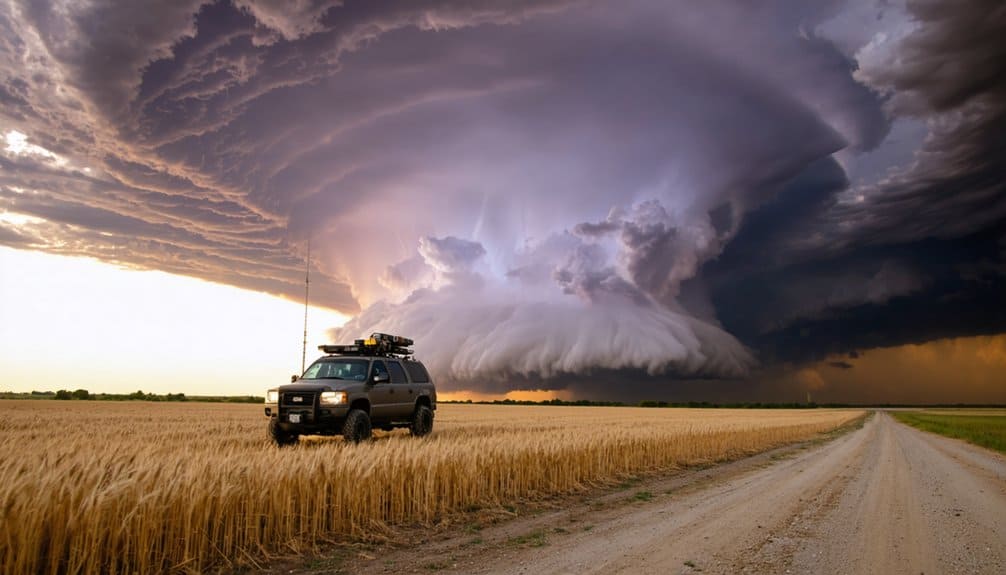
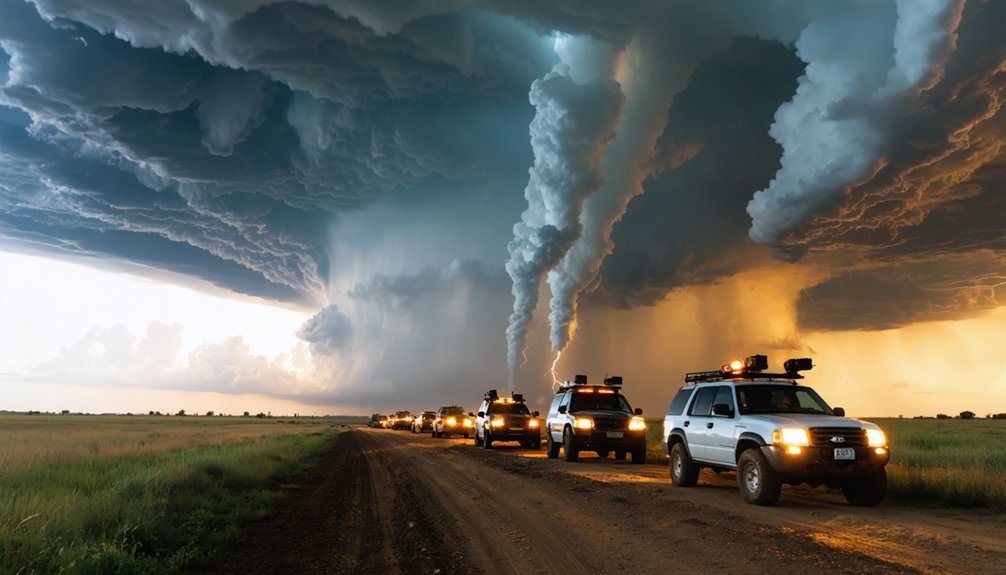
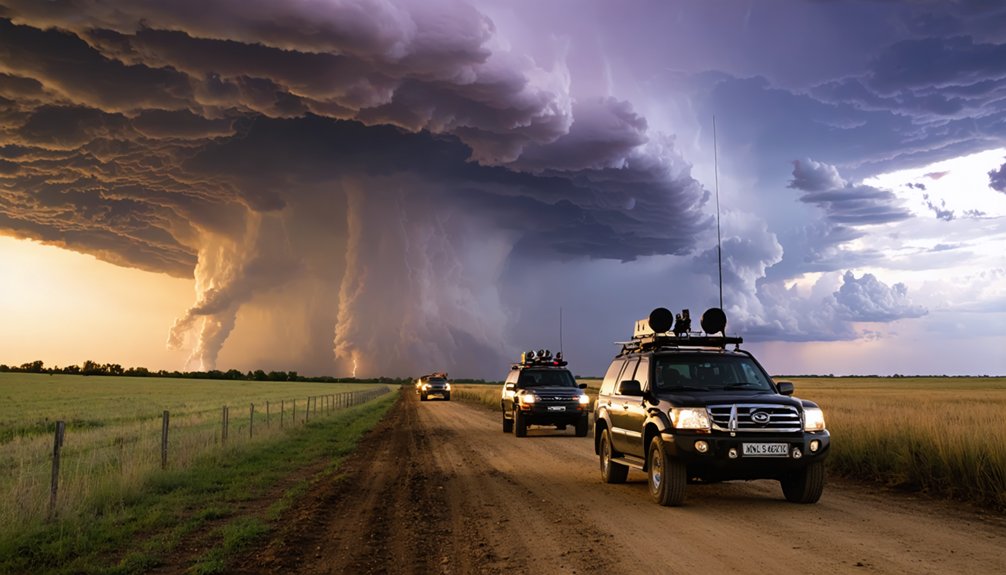
If you’re planning a Tornado Alley storm chasing tour, you’ll want to book between April and June when Gulf moisture, dry lines, and wind shear peak. Top operators include Tempest Tours, Silver Lining Tours, and Reed Timmer’s Extreme Tornado Tours, with prices starting around $1,799 for multi-day expeditions. Each company offers professional meteorologist guidance and proven safety records. The right tour depends on your experience level, budget, and how close you want to get.
Key Takeaways
- Tornado Alley’s peak storm season runs April through June, making spring the ideal time to book a chasing tour.
- Top operators include Tempest Tours, Silver Lining Tours, and Reed Timmer’s Extreme Tornado Tours, each offering unique chase experiences.
- Tour prices start around $1,799 USD, with multi-day packages ranging up to approximately $3,800, excluding flights.
- Longer tours of 7–10 days significantly increase your chances of encountering supercells and witnessing tornadoes firsthand.
- Reputable operators provide professional meteorologist oversight, real-time data, and structured safety protocols to manage chase risks effectively.
Why Tornado Alley Produces More Tornadoes Than Anywhere Else
Tornado Alley generates more tornadoes than anywhere else on Earth because of a collision of air masses that’s nearly impossible to replicate elsewhere. Warm, humid air pushes north from the Gulf of Mexico and slams into cold, dry air descending from Canada, while dry air races east off the Rockies.
That three-way clash creates intense wind shear and atmospheric instability across the central Plains. You won’t find that combination at this scale anywhere else. The flat terrain amplifies tornado frequency by removing geographic barriers that would otherwise weaken rotating supercells.
Storm prediction has advanced considerably because researchers have studied this corridor for decades, giving chase operators reliable forecast windows. That predictability is exactly what makes guided tours viable and why chasers return every spring.
When to Book a Storm Chasing Tour in Tornado Alley?
Timing your booking around peak atmospheric conditions separates a productive chase from a week of clear skies. Spring into early summer—April through June—delivers the strongest collision of Gulf moisture, dry lines, and wind shear that weather forecasting models consistently flag as prime supercell territory. July extends the window but shifts storm tracks northward.
Peak storm season runs April through June—when Gulf moisture, dry lines, and wind shear converge for prime supercell conditions.
Book early. Most operators fill dates months in advance, and deposit windows close fast once seasonal forecasts signal an active pattern.
You’ll also want to evaluate group dynamics before committing. Smaller groups move faster, adapt to shifting targets more efficiently, and give you better sightlines. A 15-person van can’t reposition the way a 4-person vehicle can.
Match your chase style to the operator’s group size and you’ll maximize every active weather day.
Top Storm Chasing Tour Operators Compared
When comparing storm chasing tour operators, you’ll find meaningful differences in reputation, pricing, and how many days you’ll spend in the field.
Tempest Tours and Silver Lining Tours both carry strong track records, with Silver Lining running the highest volume of annual tours.
Tempest offers 5-to-11-day expeditions out of Oklahoma City and Denver.
Pricing typically starts around $1,799 USD for a May departure.
However, multi-day packages can reach $3,800 or more depending on the operator and tour length.
Operator Reputations Compared
Several tour operators have built strong reputations across Tornado Alley, and comparing them directly helps you match your expectations to the right company. Tempest Tours emphasizes veteran-led routing with nearly 200 years of combined staff experience, which directly shapes how they read a weather forecast and position storm chasing gear in the field.
Silver Lining Tours runs the highest volume of annual tours, giving you more departure flexibility.
Extreme Tornado Tours, led by Reed Timmer and professional meteorologists, prioritizes close intercept opportunities.
Storm Chasing Adventure Tours targets first-timers without sacrificing serious chase exposure.
Apex Storm Tours publishes transparent pricing starting at $1,799.
Each operator differentiates through group size, base city, and safety record, so you’ll want to weigh those factors against your specific goals before booking.
Pricing And Tour Lengths
Pricing and tour length vary enough across operators that a direct comparison saves you from booking surprises. Cost comparisons show starting prices around $1,799 for a May departure with Apex Storm Tours, while multi-day packages from other operators run between £2,600 and £3,800 excluding flights. Deposits typically reach $1,000 per person to lock your spot.
Tour duration shapes the entire experience. Five-day, seven-day, and ten-day formats dominate the market, giving you flexibility based on schedule and budget. Shorter tours suit travelers testing the experience, while seven-to-ten-day expeditions maximize your exposure to shifting storm targets across the Great Plains.
Some operators offer single-day chases under favorable forecast conditions. Matching your preferred tour duration to your available time and budget keeps the booking process straightforward.
Are Storm Chasing Tours Actually Safe?
Safety is a legitimate concern when you’re positioning yourself near rotating supercells, but reputable operators address this through professional meteorologist oversight and structured chase protocols.
Companies like Tempest Tours market a 100% safety record dating back to 1997, and veteran-led teams with combined centuries of field experience make real-time routing decisions to keep you at the most favorable viewing distances.
You’re not chasing blind—you’re traveling with specialists who read atmospheric data continuously and adjust positioning before conditions become unmanageable.
Professional Meteorologist Oversight
When you’re riding in a chase vehicle heading toward a rotating supercell, the difference between a controlled intercept and a dangerous situation often comes down to who’s reading the radar. Meteorologist credentials matter here.
Operators like Extreme Tornado Tours deploy professionally trained meteorologists who interpret real-time data, adjust positioning, and anticipate storm motion before conditions deteriorate. That expertise directly shapes tour customization, letting teams reroute daily based on convective forecasts rather than fixed itineraries.
You’re not following a script — you’re following the atmosphere, guided by someone qualified to read it accurately. Some operators collectively carry nearly 200 years of combined chase experience across their staff.
That depth of knowledge is what keeps small-group tours mobile, responsive, and operating with verified safety records stretching back decades.
Operator Safety Records
Operator credentials and experience feed directly into the question most first-timers actually ask: how safe is this? Storm safety in this industry isn’t accidental — it’s built into the operational model.
At least one major operator publicly claims a 100% safety record since 1997, which reflects disciplined risk management rather than luck.
These companies keep groups small, use real-time meteorological data, and reposition vehicles continuously based on storm behavior. You’re never stationary when conditions shift.
Professional forecasters make intercept decisions, not passengers.
That said, no tornado encounter is zero-risk. You’re operating near violent atmospheric systems.
What reputable operators control is exposure — keeping you close enough to observe while maintaining calculated exit routes.
Vetting a company’s safety record before you book isn’t optional; it’s essential.
What Do Tornado Alley Tours Actually Cost?
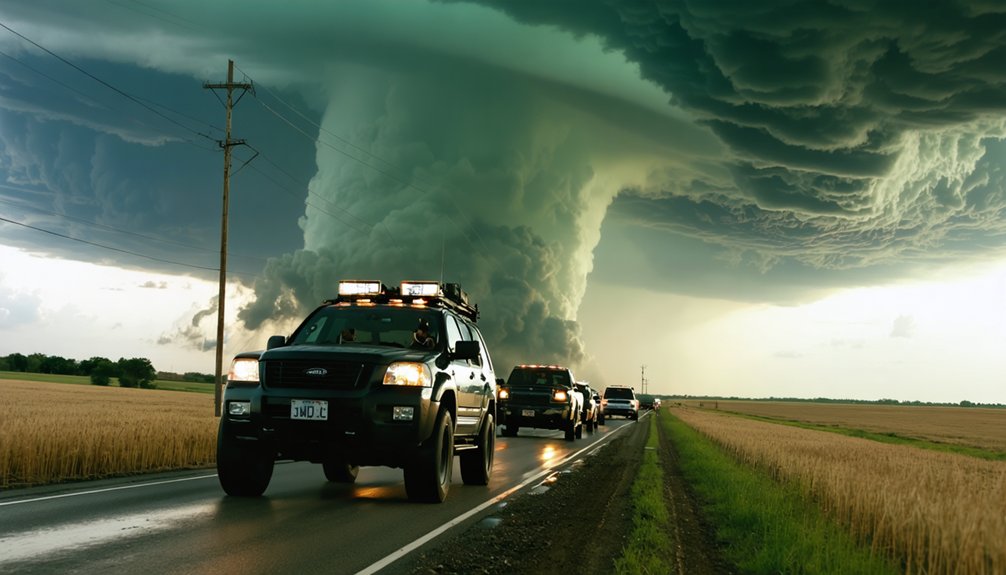
Prices for Tornado Alley storm chasing tours vary meaningfully depending on duration, operator, and departure window. You’ll find options across a wide range, so knowing what’s included helps you budget accurately before committing. Storm chasing gear and storm forecast tools are typically built into the operator’s overhead, not billed separately.
- Entry-level tours start around $1,799 USD for May departures with operators like Apex Storm Tours.
- Multi-day packages typically run £2,600–£3,800 for 6-to-10-day expeditions, excluding flights.
- Deposits of approximately $1,000 per person are standard reservation requirements.
- Day tours may require full payment upfront before the chase launches.
Longer expeditions cost more but deliver greater exposure to supercell activity across shifting Great Plains targets.
5-Day vs. 10-Day Tours: Which Length Pays Off?
Tour length shapes your storm exposure more than any other variable. A 5-day tour compresses your chase window, which means you’re betting heavily on active weather during a narrow stretch. You’ll spend less, but your storm duration drops considerably, and so does your probability of intercepting a significant tornado.
A 10-day tour spreads your chase across multiple weather systems, giving forecasters more flexibility to reposition across the Great Plains. That translates directly into tour value — more intercept opportunities, more supercell encounters, and stronger photographic returns if you’re shooting.
If you’re time-constrained, a 5-day option still delivers real chase experience. But if you want maximum exposure to severe weather events, the 10-day format consistently justifies the higher investment through sheer statistical probability of contact.
Which Storm Chasing Tour Fits Your Experience Level?
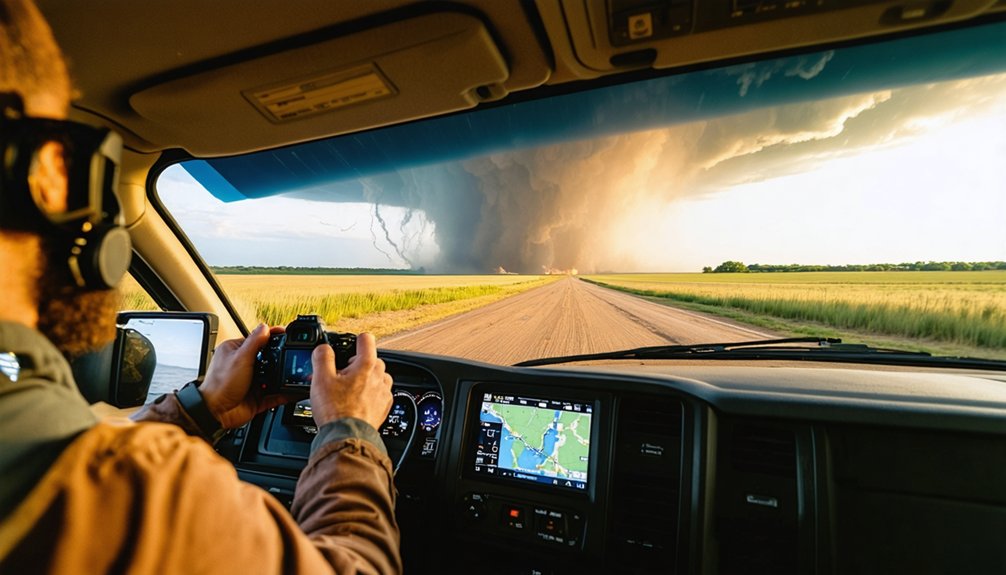
Length determines your odds of seeing a tornado, but it’s not the only variable worth matching to your situation — your experience level shapes which operator and format will actually work for you.
- First-timers benefit from structured 6-to-7-day tours with small group size, guided meteorologist briefings, and provided weather gear checklists.
- Photography enthusiasts should target later-season tours where storm intensity drops and shooting conditions improve without sacrificing supercell access.
- Intermediate chasers can move into 10-day expeditions that prioritize maximum chase time across shifting Great Plains targets.
- Seasoned storm chasers should seek veteran-led teams — operators like Extreme Tornado Tours put professional meteorologists in command, keeping group size tight for faster repositioning.
Match your comfort level to the operator’s format before committing your deposit.
How to Book a Tornado Alley Storm Chasing Tour
Once you’ve matched your experience level to an operator, booking a Tornado Alley storm chasing tour follows a fairly standardized process across most companies. Select your preferred storm season window, typically April through July, then reserve your spot directly through the operator’s site.
Most require a deposit around $1,000 to lock in your date, with the balance due before departure. Pricing generally starts near $1,799 for a May tour, though multi-day packages can reach considerably higher depending on duration and group size.
Since weather forecasting drives daily routing decisions, operators don’t publish fixed itineraries, so flexibility is essential. Confirm cancellation terms, travel insurance requirements, and what gear you’ll need before finalizing payment.
Booking early secures better placement within limited small-group rosters.
Frequently Asked Questions
What Should I Pack for a Multi-Day Storm Chasing Tour?
Like a soldier prepping for battle, you’ll need the right storm gear and safety essentials: waterproof layers, sturdy boots, a weather radio, first aid kit, and extra batteries to stay mobile and protected.
Can Children Participate in Tornado Alley Storm Chasing Tours?
Most operators don’t recommend children due to child safety concerns in severe weather environments. Check each company’s age restrictions before booking, as policies vary—some tours require participants to be at least 18 years old.
Do Storm Chasing Tours Operate During Nighttime Severe Weather Events?
Like hunting in a blackout, nighttime chasing demands extra caution. Tours can operate during nocturnal severe weather events, but you’ll find operators prioritizing nighttime visibility tools and strict safety precautions to keep your experience both thrilling and controlled.
Is Travel Insurance Recommended or Required for Storm Chasing Tours?
You’ll want travel insurance covering weather safety incidents before joining any chase tour. While operators don’t universally require it, securing solid insurance coverage protects you against trip cancellations, medical emergencies, and storm-related equipment losses.
What Happens if No Tornadoes Occur During My Scheduled Tour?
Stormy skies sometimes stay silent—but you’ll still chase supercells, witness wild weather phenomena, and build weather preparedness skills. Operators prioritize tornado safety while maximizing your severe weather encounters, so you’re never guaranteed tornadoes, but you’re never disappointed either.
References
- https://midlandusa.com/blogs/blog/storm-chasing-tours
- https://restless.co.uk/travel/tornado-alley-storm-chasing-tours-for-the-adventure-of-a-lifetime/
- https://stormchasing.com/book-a-tour/
- https://www.tempesttours.com/storm-chasing-tours
- https://www.tornadicexpeditions.com/day-tours
- https://livestormchasers.com/tours/
- https://www.apexstormtours.com/
- https://www.themanual.com/travel/extreme-tornado-tours/