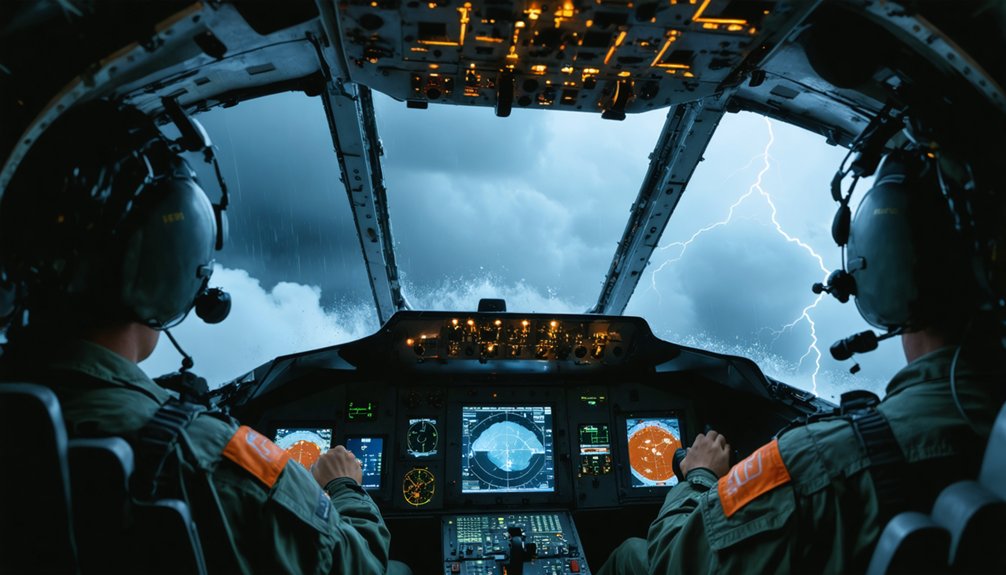
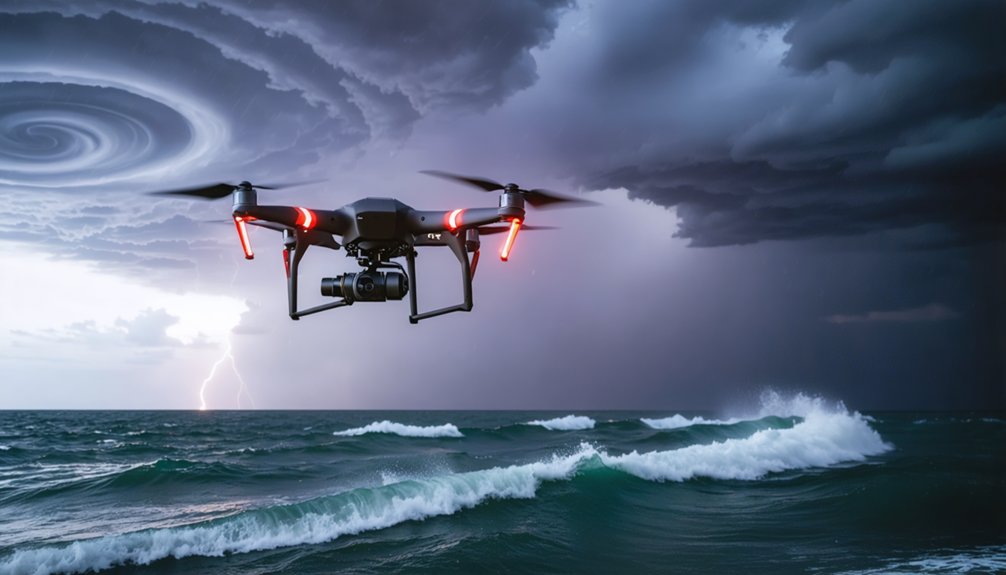
Understanding hurricanes fully requires you to look beyond meteorology alone. You’ll need to integrate sociobehavioral science, transportation engineering, power systems analysis, and oceanographic data into one coordinated framework. Each discipline reveals what others miss—from evacuation decision-making to grid vulnerabilities to subsurface ocean temperatures driving storm intensity. Fragmented knowledge creates dangerous gaps in community preparedness. When these sciences collaborate, they produce actionable, human-centered outcomes that protect lives and infrastructure. There’s considerably more to uncover about how this integration works in practice.
Key Takeaways
- Hurricanes require collaboration across meteorology, sociology, engineering, and psychology to bridge interdisciplinary gaps and build comprehensive understanding.
- Ocean temperature data collected by ALAMO floats improves storm intensity forecasts and informs timely evacuation recommendations.
- Sociobehavioral research analyzes evacuation decisions and risk perception, strengthening community preparedness and emergency response strategies.
- Transportation engineers and power systems engineers model traffic flow and grid vulnerabilities to protect infrastructure during hurricanes.
- Integrating real-time oceanographic and sociobehavioral data into unified frameworks enhances coastal resilience and reduces hurricane casualties.
Why Can’t One Discipline Explain Hurricanes?
When a hurricane makes landfall, no single discipline can fully capture what unfolds. You’re dealing with hurricane complexity that spans meteorology, sociology, engineering, and psychology simultaneously. Each field sees only its slice of the problem, creating interdisciplinary gaps that leave critical questions unanswered.
These systemic interactions—between built infrastructure, natural forces, and human behavior—don’t respect disciplinary boundaries. A meteorologist can model wind shear, but can’t predict evacuation compliance. A sociologist understands community behavior, but can’t quantify storm surge dynamics. You need all of these perspectives working together.
Collaborative solutions emerge only when researchers cross these boundaries intentionally. Without that coordination, you’re left with fragmented knowledge that fails communities when they need thorough, actionable understanding most.
Integration isn’t optional—it’s essential.
The Four Sciences Behind Every Hurricane
Every hurricane you study demands fluency in four distinct sciences: sociobehavioral research tracks evacuation decisions and risk perception, transportation engineering models how populations move under threat, power systems engineering assesses grid vulnerability and failure cascades, and decision support systems translate all of this into actionable guidance for emergency managers.
You can’t master hurricane dynamics by staying within one lane. Each discipline captures what others miss. Sociobehavioral scientists reveal why people refuse evacuation orders. Transportation engineers calculate bottlenecks those decisions create. Power systems engineers predict cascading infrastructure failures before landfall.
Decision support specialists synthesize everything into tools emergency managers can actually use.
Interdisciplinary collaboration isn’t optional here—it’s structurally necessary. When these four sciences work in concert, you move from fragmented knowledge to coordinated, community-protecting action that no single discipline could independently produce.
How Does Ocean Data Make Hurricane Forecasts More Accurate?
Beneath the surface of the ocean lies one of the most critical inputs for accurate hurricane forecasting. Ocean temperature directly fuels cyclone dynamics, and without precise ocean observations, predictive modeling remains incomplete.
Here’s how data integration strengthens forecasting techniques:
- Real-time analysis uses ALAMO floats deployed by Hurricane Hunter aircraft to capture subsurface thermal data before, during, and after storms.
- Data assimilation feeds live ocean temperature readings into atmospheric interactions models, sharpening storm intensity projections.
- Advanced data integration connects upper-ocean response measurements to coastal hazard forecasts, improving community-level decision-making.
You benefit when scientists collaborate across disciplines to close knowledge gaps. Better ocean observations mean sharper predictive modeling, more accurate storm intensity forecasts, and ultimately stronger evacuation recommendations that protect your community.
What Does Hurricane Evacuation Research Reveal About Human Behavior?
Hurricane evacuation research reveals that human behavior during storm events involves distinct but complementary contributions from sociobehavioral science, transportation engineering, power systems engineering, and decision support systems.
When you examine evacuation behavior, you’ll find that effective research requires identifying clear decision-making agents before interdisciplinary efforts begin. You can’t develop actionable solutions without first agreeing on who’s making critical choices and at what geographic and temporal scale those decisions occur.
Researchers integrate data-driven frameworks that unify multiple disciplines around human-centered disaster scenarios. Survey studies tracking behavior before, during, and after hurricanes illuminate how people perceive risk and consume information.
Data-driven frameworks unite disciplines around human-centered disaster scenarios, revealing how people perceive risk and respond to emergencies.
These insights directly strengthen evacuation recommendations, helping communities reduce loss of life by translating complex meteorological, sociological, and engineering data into practical, freedom-preserving guidance for residents facing real storm threats.
Why Do People Underestimate Hurricane Risk?
Understanding why people make poor evacuation decisions connects directly to a deeper problem: a significant gap exists between what experts know about storms and what the public actually believes.
Your risk awareness isn’t simply shaped by facts—it’s filtered through cognitive biases, emotional responses, and misinformation effects that distort decision making dynamics.
Three behavioral insights explain this pattern:
- Historical context creates false confidence—surviving past storms without harm skews your public perception of future risk.
- Cognitive biases like optimism bias make you believe disasters happen to others, not you.
- Misinformation effects from social media amplify uncertainty, paralyzing sound judgment.
Bridging this gap requires researchers across psychology, communication, and engineering to collaboratively study how you process risk information and make autonomous, informed decisions.
Interdisciplinary Hurricane Research Changing Real Communities
When you examine interdisciplinary hurricane research in action, you’ll find that real-time ocean data—collected by ALAMO floats deployed from Hurricane Hunter aircraft—feeds directly into predictive models, sharpening storm intensity forecasts and enabling more precise evacuation recommendations that save lives.
You can trace how technical advances in meteorology, sociology, and engineering converge to address the full spectrum of disaster impacts, from wind and surge modeling to community-level decision support systems.
As you engage with diverse stakeholders—spanning agricultural sectors, emergency management agencies, and coastal communities—you’ll see how collaborative frameworks translate scientific progress into actionable strategies that measurably reduce disaster losses.
Community Impact Reduction Strategies
Interdisciplinary hurricane research doesn’t just advance scientific knowledge—it’s actively reshaping how coastal communities prepare for, respond to, and recover from storms.
Through collaborative frameworks, you’ll find that community preparedness and risk assessment become more precise and actionable.
Three integrated strategies drive real impact:
- Enhanced storm intensity forecasting using ALAMO float data improves evacuation timing and decision-making accuracy.
- Improved risk communication interfaces bridge the gap between expert models and public understanding, empowering residents to act decisively.
- Unified evacuation modeling combines sociobehavioral science, transportation engineering, and power systems analysis into cohesive response plans.
These strategies work together, transforming raw scientific data into tools that reduce casualties, protect infrastructure, and strengthen your community’s autonomy when maneuvering hurricane threats.
Real-Time Forecasting Improvements
Real-time forecasting sits at the center of those community impact strategies, and it’s here that interdisciplinary collaboration produces its most measurable results.
ALAMO floats, deployed directly from Hurricane Hunter aircraft, feed live ocean temperature data into predictive models, sharpening storm intensity calculations before landfall occurs.
You’ll notice this process connects oceanographers, atmospheric scientists, and engineers within a unified analytical pipeline.
Advanced data visualization tools then translate complex model outputs into actionable decision frameworks that emergency managers can immediately apply.
Improved boundary layer physics and enhanced ocean-atmosphere interaction modeling work together, reducing forecast uncertainty across critical timeframes.
When you combine these technical advancements with coordinated communication strategies, accurate predictions move efficiently from research teams to the communities that depend on them most.
Collaborative Stakeholder Engagement Outcomes
Three converging factors—scientific precision, stakeholder coordination, and community-centered design—determine whether interdisciplinary hurricane research translates into measurable outcomes for real populations.
You’ll see collaborative strategies succeed when teams systematically integrate stakeholder perspectives across these critical engagement levels:
- Agricultural and emergency management sectors sharing operational data that strengthens forecasting relevance
- Interagency programs aligning scientific foundations with community evacuation and preparedness protocols
- Public communication interfaces translating complex meteorological modeling into actionable risk decisions
When you examine real outcomes, enhanced storm intensity predictions directly inform evacuation recommendations, reducing casualties in vulnerable coastal populations.
Collaborative strategies don’t just produce academic knowledge—they reshape how communities prepare, respond, and recover.
Stakeholder perspectives embedded throughout research cycles guarantee results remain grounded in human realities.
How Researchers From Different Fields Solve the Same Hurricane Problem?
When a hurricane threatens a coastline, you’re witnessing multiple disciplines simultaneously attacking the same problem from different angles. Sociobehavioral scientists analyze evacuation decisions while transportation engineers model traffic flow capacity. Power systems engineers assess grid vulnerabilities as decision support specialists synthesize actionable intelligence.
These collaborative methodologies don’t operate in isolation. Each discipline contributes distinct but complementary data streams toward unified human-centered outcomes. Meteorologists refine storm track predictions, feeding improved intensity forecasts into sociological risk perception models. Engineers then translate those models into infrastructure resilience assessments.
Shared perspectives emerge through iterative knowledge cycles, where meteorology, psychology, engineering, and communication fields continuously refine each other’s outputs. You’re not watching separate research efforts—you’re observing a coordinated analytical system targeting thorough disaster impact reduction from every available disciplinary angle.
Where Hurricane Science Needs to Go Next?
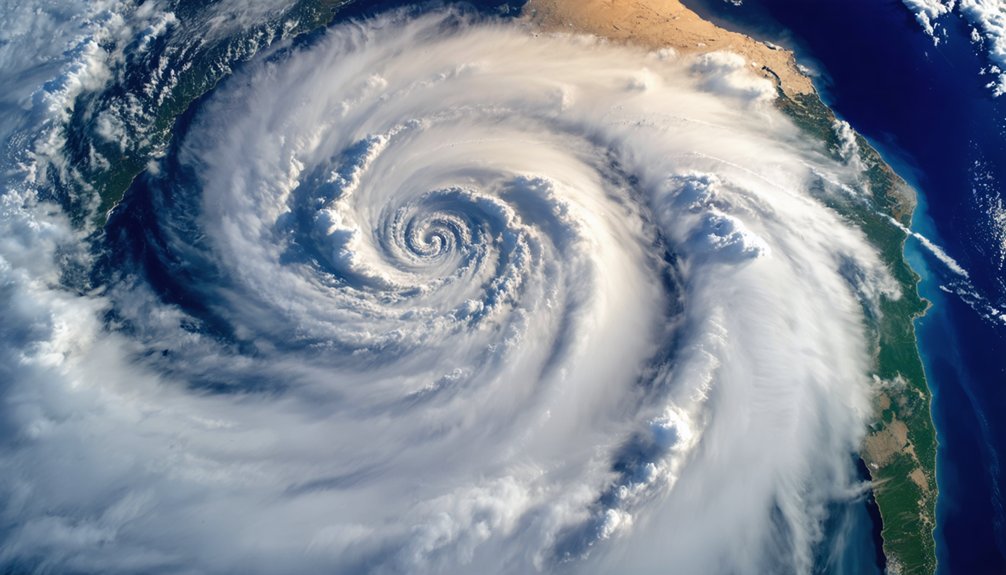
As you look ahead, hurricane science must close the persistent gap between expert risk models and the mental frameworks the public actually uses to make evacuation and preparation decisions.
You’ll need to push coastal resilience models further by integrating real-time oceanographic data, sociobehavioral inputs, and infrastructure stress variables into unified predictive systems.
Achieving this requires you to build interdisciplinary research frameworks that systematically connect meteorology, engineering, sociology, and communication science through iterative, decision-centered collaboration.
Bridging Science Communication Gaps
Despite remarkable advances in hurricane modeling and physical science, a persistent gap remains between what experts know and what the public understands about storm risk and uncertainty. Bridging this divide demands intentional communication strategies that respect your autonomy while improving risk perception.
Consider three critical priorities:
- Strengthen science literacy through targeted educational initiatives that counter media influence and misinformation.
- Improve messaging effectiveness by designing HCI-informed interfaces that translate complex probabilistic data into actionable guidance.
- Prioritize public engagement and trust building through transparent, two-way dialogue between researchers and communities.
Survey studies tracking behavior before, during, and after hurricanes reveal how people actually process risk information.
You’re better protected when communication frameworks align expert knowledge with your real-world decision-making needs.
Advancing Coastal Resilience Models
Building on the communication strategies discussed previously, the next frontier in hurricane science centers on developing coastal resilience models that integrate meteorological, sociological, economic, and engineering factors into unified, actionable frameworks.
You’ll find that advancing coastal infrastructure requires vulnerability assessment tools that connect real-time ocean data with community-level emergency preparedness systems. Adaptive strategies must align flood management protocols with restoration initiatives, ensuring that resilience planning reflects both technical forecasting advancements and local behavioral patterns.
You can’t separate engineering solutions from community engagement—interdisciplinary collaboration drives meaningful progress. ALAMO float data feeding predictive storm models exemplifies how scientific precision translates into stronger evacuation recommendations.
When you combine these technical capabilities with stakeholder-driven adaptive strategies, you’ll build coastal communities genuinely equipped to withstand, recover from, and adapt to increasingly intense hurricane threats.
Integrating Interdisciplinary Research Frameworks
The next frontier for hurricane science demands that you move beyond siloed disciplinary work and commit to genuinely integrated research frameworks that treat meteorology, sociology, psychology, engineering, and communication as mutually reinforcing rather than parallel tracks.
Collaborative frameworks built on interdisciplinary synergy reveal holistic perspectives that no single discipline can produce alone. Research convergence happens when teams pursue shared objectives through integrative methodologies and genuine knowledge exchange.
Three systemic approaches accelerate progress:
- Align geographic scale and temporal resolution across all contributing disciplines
- Formulate problem statements around agreed-upon decision-making agents before research begins
- Evaluate team readiness across spatial, cognitive, social, and institutional proximity dimensions
These steps transform disconnected expertise into coordinated action, producing societally relevant, freedom-preserving solutions for communities facing catastrophic hurricane impacts.
Frequently Asked Questions
How Do Research Team Proximity Dimensions Affect Interdisciplinary Hurricane Study Outcomes?
You’ll find that spatial, cognitive, social, and institutional proximity dimensions directly shape team dynamics, either breaking down communication barriers or reinforcing them, ultimately determining how effectively you’ll integrate meteorological, sociological, and engineering insights in interdisciplinary hurricane research.
What Specific Evaluation Methods Track Cognitive Proximity Changes Among Hurricane Researchers?
You’ll track cognitive proximity changes through cognitive mapping exercises and structured research collaboration assessments, measuring shifts in shared mental models and disciplinary understanding across successive evaluation cycles within your interdisciplinary hurricane research team’s program methodology.
How Do ALAMO Floats Get Retrieved After Hurricane Data Collection Missions End?
Coincidentally, the knowledge base doesn’t detail ALAMO float retrieval methods. You’ll find deployment strategies focus on data recovery through real-time transmission, meaning the floats autonomously broadcast ocean temperature data directly into predictive models during hurricane missions.
What Institutional Barriers Prevent Meteorologists and Sociologists From Collaborating Effectively?
You’ll find that disciplinary silos, funding disparities, and communication barriers create significant collaboration challenges. Different methodological languages, misaligned institutional incentives, and separate grant structures actively prevent meteorologists and sociologists from building effective interdisciplinary research partnerships together.
How Does Geographic Scale Alignment Differ Between Engineering and Sociobehavioral Hurricane Research?
Over 90% of evacuation failures stem from scale discrepancies. You’ll find engineers model infrastructure at local resolutions while sociobehavioral researchers capture regional patterns—aligning these scales drives effective research integration across both disciplines.
References
- https://pmc.ncbi.nlm.nih.gov/articles/PMC8361963/
- https://web.uri.edu/hurricane-research/
- https://www.coastalstudiesinstitute.org/collaboration-understanding-are-key/
- https://www.nist.gov/blogs/taking-measure/storm-measuring-and-predicting-hurricanes
- https://www.youtube.com/watch?v=yLUsNRTZlhM
- https://news.ucar.edu/132956/hurricane-experts-available-explain-storm-behavior-potential-impacts
- https://www.whoi.edu/ocean-learning-hub/ocean-topics/ocean-human-lives/natural-disasters/hurricanes/
- https://climateandlife.columbia.edu/news/understanding-and-predicting-hurricanes-warmer-world