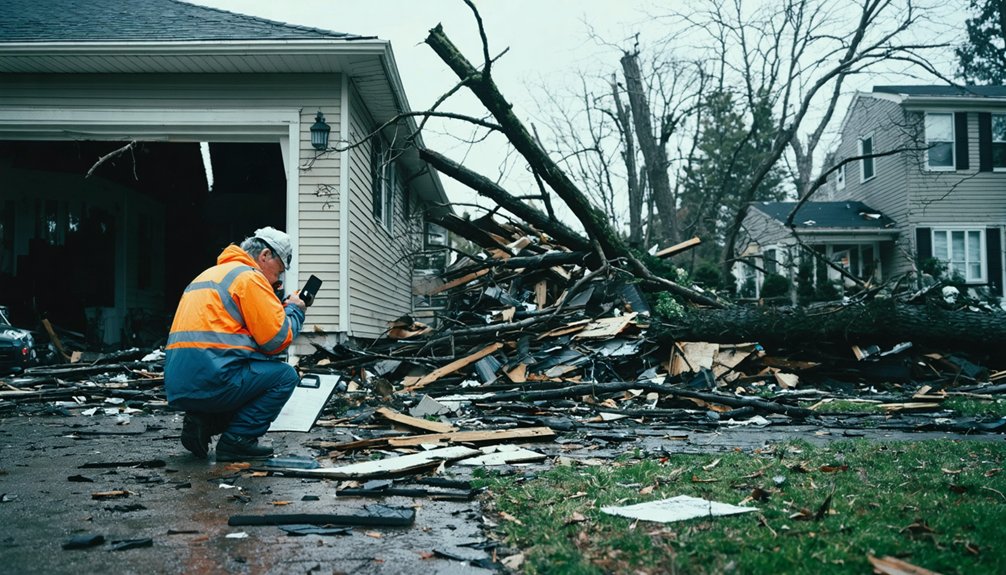
To find a storm shelter fast, text “SHELTER” plus your ZIP code to 43362—it works without internet and returns up to three nearby locations instantly. You can also open the FEMA app, which uses GPS to display real-time shelter maps and operational status. Specialized apps like Bunker Atlas and the Red Cross shelter finder provide capacity details and location data in seconds. Keep exploring to discover which shelter options truly keep you safe.
Key Takeaways
- The FEMA app uses GPS to provide real-time shelter maps and weather alerts, offering the fastest digital method for locating nearby shelters.
- Text “SHELTER” plus your ZIP code to 43362 to receive up to three nearby shelter locations without needing internet access.
- Specialized apps like Bunker Atlas and the Red Cross shelter map provide real-time shelter locations and capacity details instantly.
- Local government websites list official shelter locations and allow pre-storm registration, ensuring verified and accurate shelter information.
- Bookmarking shelter locations and downloading apps before a storm significantly reduces response time when emergencies occur.
How to Prepare Your Storm Shelter Plan Before Disaster Strikes
Before disaster strikes, you’ll want to download the FEMA App and Bunker Atlas to locate nearby shelters and receive real-time weather alerts. These tools give you immediate access to shelter locations without depending on unreliable emergency communication channels during a crisis.
Register your household through municipal storm shelter programs to secure guaranteed access to specific facilities with known capacity limits. Visit your local government portal, like Duncan, Oklahoma’s official site, to complete shelter registration before storms develop.
Establish your emergency communication plan by saving FEMA’s text service — 43362 — in your phone. Text “SHELTER” plus your ZIP code to retrieve up to three nearby shelters instantly. Text “PREPARE” to the same number for all-encompassing disaster readiness guidelines. Acting before the storm hits keeps you in control.
Use the FEMA App to Locate Storm Shelters Near You
When disaster looms, the FEMA App becomes your fastest tool for pinpointing emergency shelters in your immediate area. Download it free from any major app store, and you’ll instantly access real-time weather alerts alongside shelter locations mapped directly to your GPS position.
The app delivers critical shelter safety data, including facility addresses and operational status, so you’re never guessing under pressure. It also provides guidance on emergency supplies you’ll need before arriving, helping you pack efficiently and move quickly.
You maintain full control over your evacuation decisions because the app updates continuously as conditions change. Rather than depending on unreliable word-of-mouth or outdated lists, you’re working with live federal data.
In a genuine emergency, that precision directly protects your safety and your family’s freedom to act fast.
How Texting SHELTER to 43362 Finds Nearby Storm Shelters
FEMA’s text messaging system gives you shelter access without requiring a smartphone or internet connection. Text “SHELTER” followed by your ZIP code to 43362, and you’ll receive up to three nearby shelter locations instantly. This cuts through storm shelter myths suggesting you need internet access or special apps to find safety during severe weather.
The system works independently of weather forecasting apps and data-heavy platforms, making it reliable when cell networks are strained. You can also text “DRC” plus your ZIP code to locate Disaster Recovery Centers post-storm, or text “TORNADO” for targeted safety tips.
This SMS-based method gives you actionable location data fast, without downloading anything. It’s a straightforward, low-bandwidth tool that works when conditions make everything else unreliable.
Government Websites That List Local Storm Shelter Locations
Local government websites give you direct access to storm shelter registries that federal platforms don’t always capture. Municipal portals like Duncan, Oklahoma’s official site let you register for designated shelters and view specific addresses with capacity limits. This community outreach approach guarantees residents know their options before a storm hits.
You’ll also find legal considerations embedded in these listings—some municipal shelters enforce restrictions on prohibited items, including weapons and controlled substances. These rules exist to maintain order during high-stress emergencies.
Search your city or county’s official website directly and navigate to emergency management sections. Many municipalities maintain updated shelter databases that include public buildings, police facilities, and parks.
Don’t wait until severe weather threatens—locate and bookmark your local government’s shelter registry now.
Other Apps That Find Storm Shelters in Real Time
Beyond FEMA’s official app, you’ve got specialized tools that zero in on storm shelters with real-time precision. Bunker Atlas: Shelter Finder, available on Google Play, covers shelters across the U.S. and Canada, giving you location data when you need it fast.
For tornado-specific threats, the Survive-A-Storm Tornado Shelter Finder delivers pinpoint accuracy, including shelter registration details and capacity data for specific facilities. If you’re near Wichita, you can pull up verified locations with exact addresses instantly.
The American Red Cross shelter map adds another layer, using color-coded pins to distinguish overnight shelters from other relief services. These apps streamline emergency communication, cutting the time between a storm warning and your arrival at a secure location. Download them before you need them.
Where to Take Cover When No Storm Shelter Is Nearby
If you can’t reach a storm shelter, move to an interior room on the lowest floor of a sturdy building, such as a bathroom or closet, where multiple walls block debris.
Avoid windows entirely and get under something solid, covering your head and neck with a mattress or pillows.
If you’re caught outdoors with no structure nearby, lie flat in a ditch or low-lying area, staying clear of vehicles and elevated structures like bridges.
Interior Rooms Offer Protection
When no storm shelter is nearby, interior rooms offer your best chance of survival. Move immediately to a basement for maximum basement safety, positioning yourself beneath sturdy furniture or stairs.
If no basement exists, interior protection depends on choosing the lowest floor’s most central room — a bathroom or closet works well because surrounding walls absorb debris impact.
Avoid windows entirely. A tornado’s wind pressure shatters glass instantly, turning fragments into projectiles.
Bathrooms provide additional protection because plumbing infrastructure reinforces surrounding walls structurally.
Cover your head and neck with pillows, mattresses, or heavy blankets. Every additional barrier between you and flying debris increases survival odds.
Don’t hesitate — when severe weather strikes, seconds matter. Move fast, stay low, and protect your most vulnerable points immediately.
Outdoor Low-Lying Areas
Sometimes, no building stands between you and a tornado’s path — and that’s when outdoor terrain becomes your only defense. If you’re caught outside with zero shelter options, outdoor safety depends on one crucial move: get low immediately.
Find a ditch or depression in the ground and lie flat, face-down. Low-lying areas reduce your exposure to wind-driven debris, which causes most tornado fatalities. Cover your head and neck with both arms to protect essential areas.
Stay completely clear of vehicles — they overturn easily under high wind loads. Never position yourself under bridges or overpasses, where wind accelerates and debris concentrates dangerously.
Avoid trees and utility poles that collapse under storm pressure. Distance yourself from standing water in low-lying areas during flood-producing storms.
Check Storm Shelter Capacity Before You Arrive
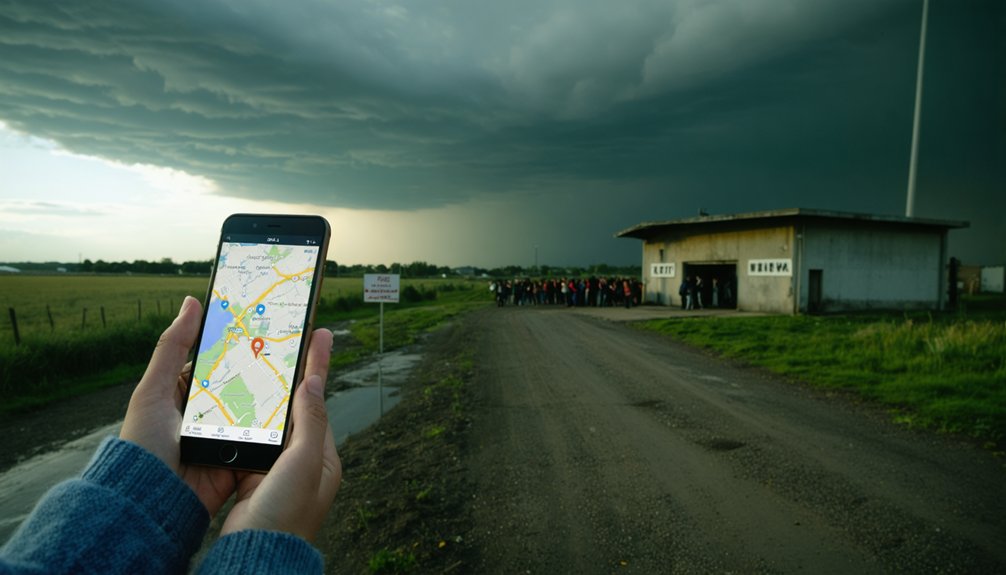
Knowing a shelter’s capacity before you leave home can save you from arriving at a full facility during a crisis. Effective capacity management means you choose a location that’s ready to receive you without delay.
- Wichita’s 225 W Douglas Ave holds 1,500 people — a high-capacity option during large-scale emergencies.
- O.J. Watson Park Shelter accommodates 300 residents, offering a mid-range alternative with reliable shelter maintenance standards.
- Andover Police Department provides 50+ capacity, suitable for smaller surrounding communities needing quick access.
Use the Survive-A-Storm Tornado Shelter Finder website to view real-time capacity data before you travel.
Don’t waste critical minutes arriving at an overcrowded site — verify your destination first and move with purpose.
Locations That Won’t Protect You During a Storm
Choosing the wrong shelter can be just as deadly as having no shelter at all. Certain locations create dangerous illusions of safety while leaving you fully exposed to lethal forces.
The wrong shelter doesn’t save you — it just gives danger a more convincing disguise.
Avoid these inadequate shelter options immediately:
- Mobile homes — Unstable structures that high winds overturn instantly
- Vehicles — Easily displaced and offer zero debris protection
- Bridges and overpasses — Wind speeds accelerate through these corridors, increasing debris impact
- Large open-span buildings — Gymnasiums, shopping malls, and big-box stores have roofs prone to catastrophic collapse
- Ditches near roads — Vehicle traffic adds risk during emergency evacuations
Your instinct to seek cover anywhere can work against you. Prioritize verified, structurally sound shelters.
A basement or reinforced interior room without windows remains your strongest defense against storm-force conditions.
What to Bring When You Reach a Storm Shelter
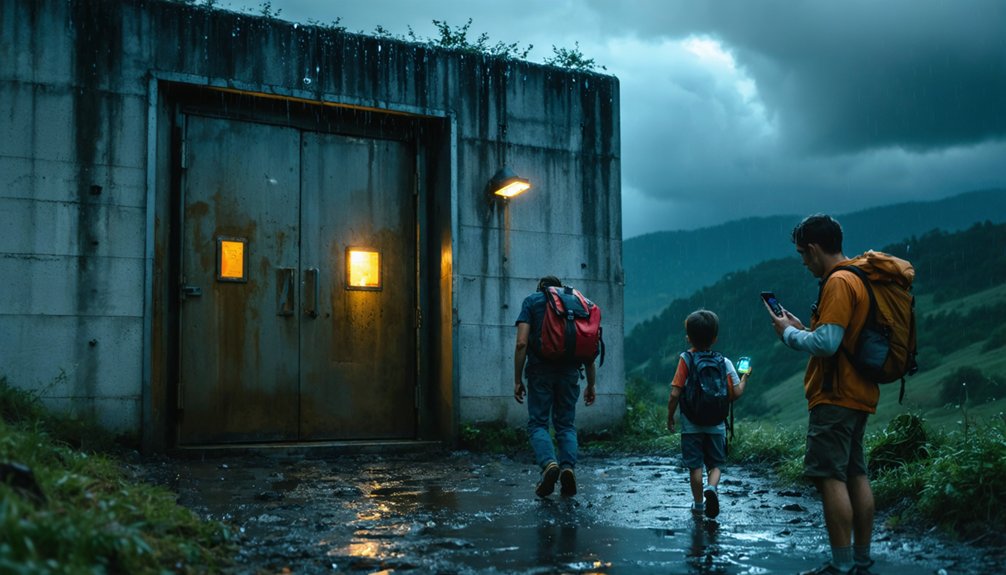
Reaching a storm shelter is only half the battle — what you bring determines how well you’ll manage until conditions stabilize. Pack smart, move fast, and prioritize these essentials:
- Emergency supplies — medications, water, non-perishable food, a flashlight, and a charged power bank keep you self-sufficient when shelter resources run thin.
- Bedding and clothing — a change of clothes, sturdy shoes, and a blanket maintain your physical comfort and readiness to move once conditions clear.
- Emotional comfort items — a stuffed animal or familiar blanket helps children stay calm under stress, reducing panic for the entire group.
Leave weapons, alcohol, and illegal substances behind — shelters prohibit them. Travel light, stay focused, and you’ll maintain control when it matters most.
Frequently Asked Questions
Can Pets Accompany Owners Inside Public Storm Shelters During Emergencies?
Pet policies vary by location, so you shouldn’t assume shelter accessibility includes animals. Contact your local shelter directly before emergencies strike. Many public shelters exclude pets, so you’ll want a separate pet-friendly emergency plan ready.
How Long Can Storm Shelters Remain Open After a Disaster Passes?
The ball’s in officials’ court—duration varies by need. You’ll find storm shelter maintenance and shelter location planning determine how long facilities stay open, often days to weeks post-disaster based on community recovery demands.
Are Storm Shelters Accessible for Individuals With Physical Disabilities or Mobility Limitations?
Many storm shelters provide accessibility accommodations for individuals with disabilities. You’ll find ramps, wide doorways, and mobility assistance from trained staff. Contact your local shelter ahead of time to confirm specific accessibility features that meet your needs.
Do Storm Shelters Provide Food and Water During Extended Disaster Situations?
Like a ship’s provisions sustaining voyagers through storms, shelters typically provide emergency supplies during extended disasters. You’ll find food and water availability varies by shelter capacity, so pack your own essentials to maintain true self-reliance.
Can Undocumented Individuals Safely Access Public Storm Shelters Without Legal Concerns?
You can access public storm shelters regardless of immigration status. Legal concerns don’t apply during life-threatening emergencies, and access restrictions aren’t enforced at disaster shelters. Your safety takes absolute priority over any documentation requirements during storm events.
References
- https://www.duncanok.gov/321/Storm-Shelters-and-Shelter-Registration
- https://survive-a-storm.com/tornado-shelter-finder/
- https://www.fema.gov/node/how-do-i-find-emergency-shelter-near-me
- https://www.redcross.org/get-help/disaster-relief-and-recovery-services/find-an-open-shelter.html
- https://www.fema.gov/about/news-multimedia/mobile-products
- https://play.google.com/store/apps/details?id=com.kloverdevs.bunkeratlas&hl=en_US