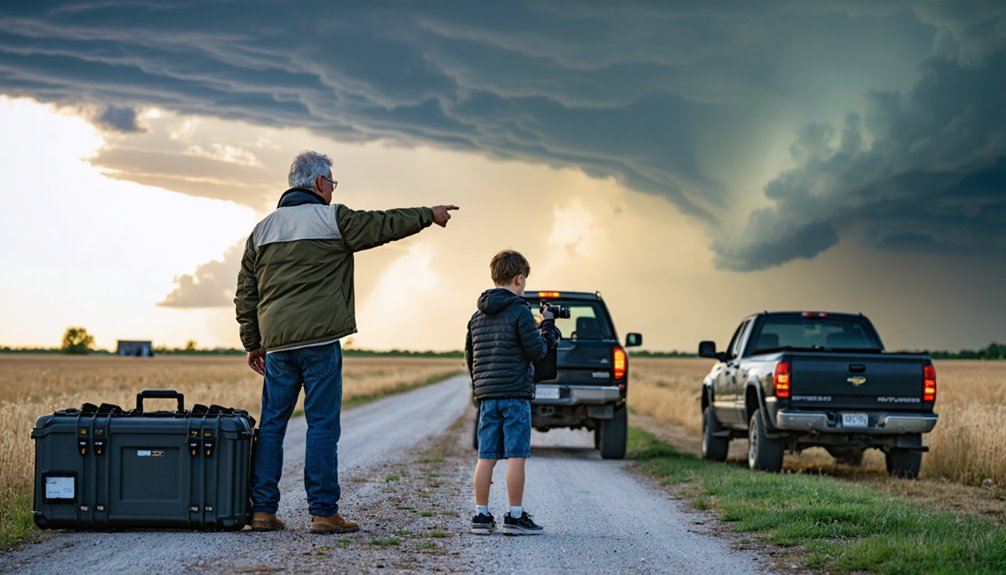
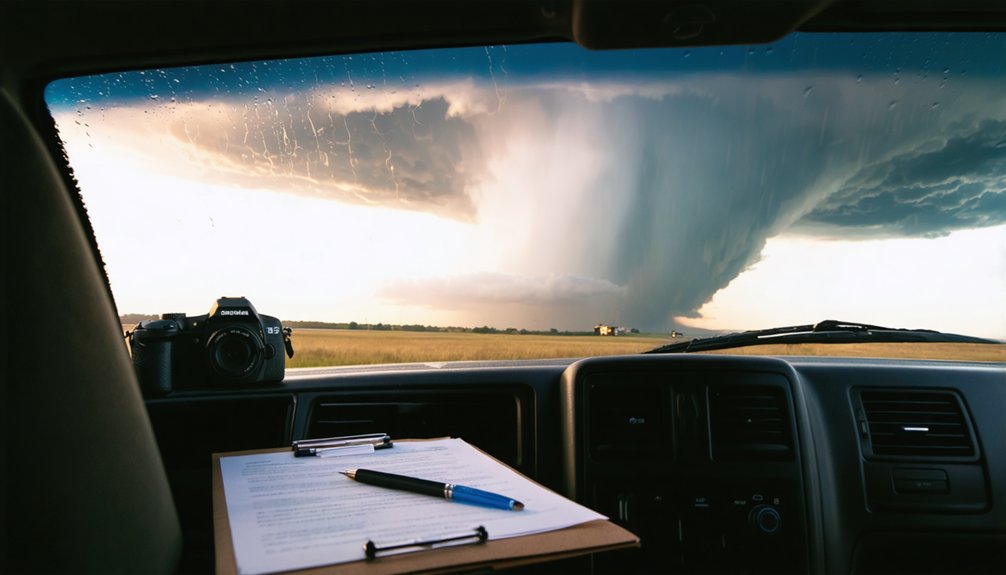
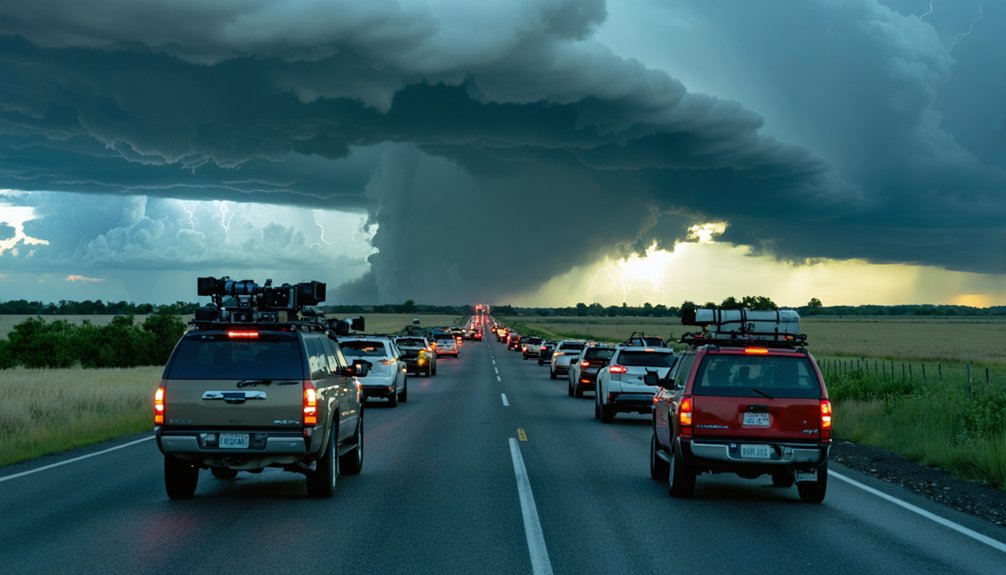
Storm chasing contests carry a surprisingly significant environmental toll that you shouldn’t overlook. Multi-day chase routes burn excessive fuel, convoy-style operations multiply emissions, and stop-and-go repositioning slashes fuel efficiency. Converging vehicles overwhelm rural roads, block emergency access, and damage soil and wildlife habitats. Competitive upgrade cycles generate substantial electronic waste. Climate change is actively expanding chase distances, compounding these costs season after season—and the full picture gets more complex from here.
Key Takeaways
- Multi-day storm chasing trips significantly increase fuel consumption and tailpipe emissions, with convoy-style operations multiplying the overall carbon footprint.
- Concentrated vehicle activity near storms causes rural road congestion, blocking emergency responders and increasing secondary collision risks.
- Off-road driving and roadside stops cause soil compaction, habitat fragmentation, and damage to farmland and ecologically sensitive areas.
- Frequent equipment upgrades driven by competition generate significant electronic waste, adding to the storm chasing ecosystem’s environmental burden.
- Climate change intensifies storm frequency and shifts storm corridors, forcing longer chase routes and increasing cumulative greenhouse gas emissions.
Storm Chasing Contests and Their Environmental Stakes
Storm chasing contests demand long-distance, multi-day driving across sprawling geographic corridors, and that operational profile carries a measurable environmental cost. You’re looking at cumulative fuel consumption, tailpipe emissions, and repeated repositioning cycles that compound across entire contest seasons.
Historical storm patterns once concentrated activity within a defined Great Plains corridor, but shifting climate dynamics are expanding target zones, stretching your travel footprint further than previous generations of chasers faced.
Meteorological innovations have improved intercept precision, yet that same technology drives equipment-heavy operations with significant material and energy demands.
Convoy-style participation multiplies these impacts across multiple vehicles tracking identical storm paths.
Understanding these stakes isn’t optional if you value both the freedom to chase and the environmental integrity of the landscapes you’re moving through.
Vehicle Emissions From Multi-Day Storm Chasing
Multi-day chasing operations put you behind the wheel for hundreds of miles per session, and that mileage accumulates into a carbon output profile that’s hard to ignore.
Storm emissions compound across consecutive chase days because you’re not completing a single-event trip — you’re executing repeated long-distance repositioning cycles tied to shifting storm tracks.
Real-time routing forces stop-and-go patterns and extended idling, both of which degrade fuel efficiency and spike per-mile emissions.
If you’re running convoy-style with multiple vehicles, every truck and SUV multiplies that output along the same route.
You control how that footprint grows. Choosing fuel-efficient vehicles, carpooling when feasible, and planning routes strategically before deployment are measurable interventions that directly reduce the environmental cost of your chase season.
Road Congestion and Traffic Disruption Near Storms
When you concentrate dozens of vehicles near the same storm cell, you create chaser convergences that overwhelm rural road networks and compress available lanes into gridlock.
You can see the operational consequences clearly: congestion blocks emergency access routes, delays first responders, and raises the probability of secondary collisions during already hazardous conditions.
Researchers have documented turning away from viable intercept targets because traffic density made positioning impossible, meaning congestion doesn’t just disrupt safety—it actively undermines scientific data collection.
Chaser Convergence Crowds Roads
Chaser convergence—where dozens or even hundreds of vehicles descend on the same rural corridor to intercept a single storm—creates measurable road congestion that undermines both safety and operational efficiency. When storm prediction tools pinpoint a high-probability intercept zone, you’ll see multiple teams racing toward identical coordinates, compressing traffic onto narrow back roads ill-equipped for that volume.
Storm intensity draws more participants, amplifying congestion proportionally. Scientists have abandoned intercepts entirely because gridlock made positioning impossible, directly compromising data collection.
You’re also looking at blocked emergency corridors, delayed first-responder access, and elevated collision risk during low-visibility conditions. The convergence problem isn’t incidental—it’s a structural consequence of competitive chasing formats that concentrate participants geographically, producing traffic disruption that extends well beyond the storm’s immediate footprint.
Congestion Blocks Emergency Access
Storm-chasing congestion doesn’t just slow traffic—it directly compromises emergency access on the same rural corridors first responders depend on during severe weather. When chasers cluster near active storms, they effectively block ambulances, fire crews, and rescue teams from reaching affected areas.
You’re looking at a compounding hazard: blocked lanes, roadside litter scattered across drainage paths, and storm drain pollution from fluid leaks and runoff redirected by stationary vehicles. These aren’t abstract risks—researchers have documented turning away from storms because traffic rendered interception impossible.
Every vehicle you add to a convergence reduces operational freedom for emergency responders who need clear corridors to function. The result is measurable disruption that extends well beyond inconvenience, directly elevating casualty risk during the most critical response window.
Traffic Disrupts Research Operations
Traffic convergence doesn’t just create safety hazards—it actively degrades the scientific value of storm-chasing contests. When amateur chasers flood rural corridors, professional researchers lose operational flexibility. Community awareness of this tradeoff matters because compromised data collection weakens the forecasting infrastructure resilience communities depend on.
Documented operational impacts include:
- Blocked interception routes — Scientists have abandoned storm targets entirely because traffic made positioning impossible.
- Reduced instrument deployment windows — Heavy congestion shortens the time you have to place equipment before a storm passes.
- Compromised data integrity — Stop-and-go movement disrupts sensor calibration and continuous measurement sequences.
You can’t separate recreational overcrowding from research failure. When roads become gridlocked near active storms, scientific output drops measurably, and that loss carries real public safety consequences.
Land and Habitat Disturbance From Storm Chasing Activity
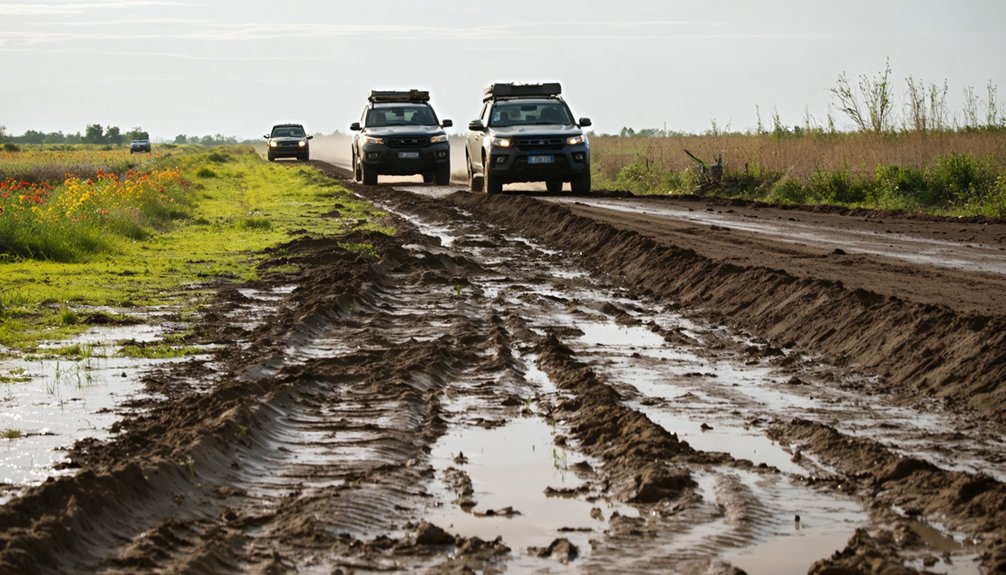
When you drive off-road or stop along roadsides to intercept a storm, you risk compacting soil, damaging farmland, and fragmenting habitat in ecologically sensitive corridors.
Your vehicle’s presence and noise can amplify stress on wildlife already responding to barometric pressure shifts and severe weather cues.
Recognizing that your spatial footprint extends beyond the pavement is the first step toward quantifying and reducing land disturbance tied to contest-driven chasing.
Off-Road Vehicle Damage
Although storm-chasing contests concentrate most of their activity on paved rural roads, off-road movement and unplanned roadside stops introduce measurable land and habitat disturbance that extends beyond the storm’s natural footprint. When you’re repositioning fast under pressure, you risk cutting across sensitive habitats and degrading off-road trails that weren’t built for heavy traffic.
Three key damage vectors you should recognize:
- Soil compaction from repeated tire contact weakens ground structure and reduces vegetation recovery rates.
- Wildlife disruption intensifies when vehicles enter areas where animals are already stressed by severe weather conditions.
- Farmland and pasture intrusion creates friction with landowners and damages privately managed ecosystems.
Maintaining strict route discipline isn’t just responsible—it’s how you protect the freedom to chase without regulatory backlash.
Wildlife Disruption During Storms
Soil compaction and farmland intrusion aren’t the only consequences of off-road vehicle movement—wildlife disruption compounds the ecological cost in ways that are harder to quantify but no less significant.
When you factor in concentrated vehicle presence during active severe weather, wildlife stress intensifies precisely when animals are already responding to atmospheric pressure shifts, high winds, and flooding. Your vehicle’s noise and motion can trigger displacement behaviors that push species into already compromised terrain, accelerating habitat fragmentation beyond what the storm itself would produce.
Contest-driven chasing concentrates this pressure across repeated days and overlapping routes, compounding cumulative exposure. Maintaining strict route discipline and avoiding unnecessary off-road movement are your most direct tools for limiting ecological disruption that extends well past the storm’s natural footprint.
The Equipment and Waste Footprint of Competitive Chasing
Because competitive storm chasing relies heavily on GPS units, radar systems, cameras, batteries, and data hardware, its equipment footprint carries real material and energy costs that are easy to overlook. Frequent upgrades driven by competition pressure accelerate electronic waste generation, and wealthier chasers gain advantages through more power-intensive tools.
Storm chasing’s hidden cost isn’t danger — it’s the quiet accumulation of discarded hardware powering every competitive advantage.
You can reduce your footprint by making deliberate equipment choices:
- Prioritize recyclable gear to minimize landfill contributions after each season.
- Deploy biodegradable probes instead of conventional field instruments that leave persistent debris.
- Resist unnecessary upgrades unless performance gaps genuinely compromise your data collection.
These decisions compound across hundreds of competitors. Collectively, the contest ecosystem generates a measurable waste stream that responsible chasers have both the freedom and the obligation to address strategically.
How Reckless Driving Compounds Environmental Harm
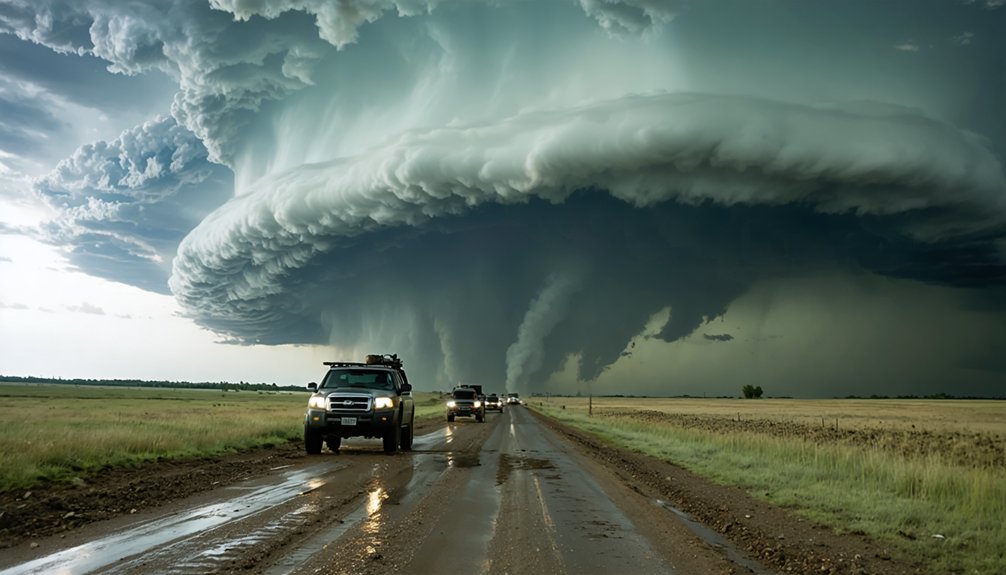
Beyond gear and waste, your driving behavior carries its own environmental cost—one that compounds quickly under contest pressure. Reckless driving—aggressive repositioning, high-speed lane changes, roadside stops in live traffic—raises crash risk and, with it, environmental damage to surrounding land and infrastructure.
When you block rural roads or cut across fields to reposition faster, you’re compounding local disruption beyond what the storm itself causes. Crowded chasing conditions intensify this dynamic, pushing competitors toward higher speeds and tighter margins.
Storm-chasing fatalities have been overwhelmingly driving-related, confirming that vehicle behavior—not equipment failure—drives the most consequential harm. You can’t separate competitive urgency from reckless outcomes.
Choosing disciplined routing, maintaining legal speeds, and avoiding terrain intrusion directly limits your environmental footprint during active chasing operations.
Why Climate Change Is Expanding Storm Chasing’s Environmental Cost
As climate change intensifies severe weather and shifts storm tracks, the environmental cost of contest chasing scales up alongside it. Longer travel distances, faster storm intensification, and expanding chase corridors compound fuel consumption and emissions.
Three key pressure points to recognize:
- Extended range – Shifting storm tracks into the Southeast force longer drives, widening your carbon footprint beyond traditional Great Plains routes.
- Compressed decision windows – Faster intensification pushes you into fuel-intensive repositioning, burning more fuel per intercept.
- Higher seasonal volume – More frequent severe weather seasons multiply cumulative emissions across the chasing community.
Mitigating these trends requires integrating renewable energy solutions into chase operations and borrowing from urban planning principles to optimize routing efficiency—keeping your freedom to chase without accelerating the very conditions driving it.
Practical Ways to Reduce Storm Chasing’s Environmental Impact
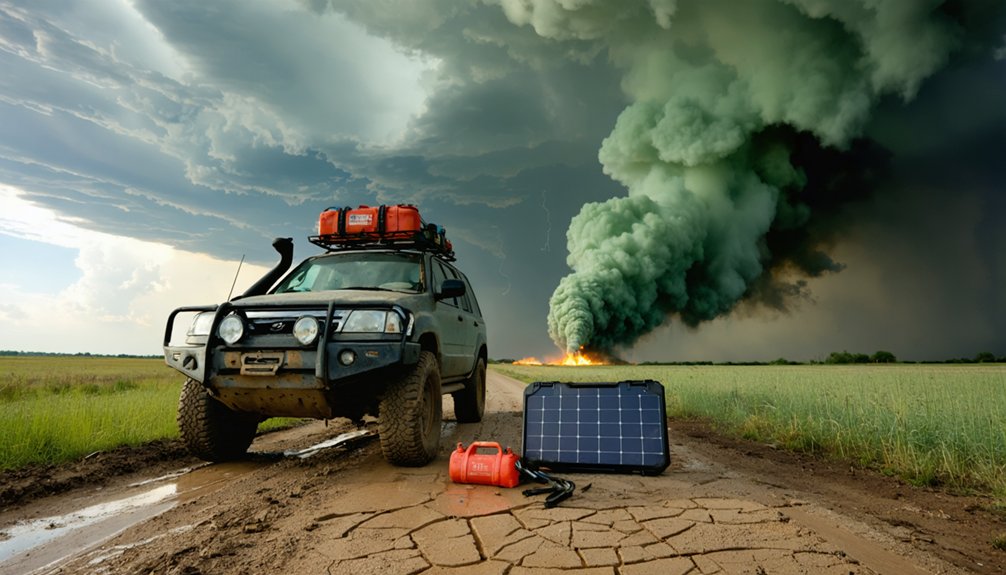
Reducing storm chasing’s environmental impact starts with vehicle choice and route discipline—two variables you directly control. Switching to hybrid or electric vehicles cuts tailpipe emissions directly, while carpooling reduces convoy sprawl on rural roads. Charging EVs through renewable energy sources further lowers your cumulative carbon output across a full season.
Route discipline matters equally. Avoid unnecessary off-road movement, minimize idling during repositioning, and resist aggressive repositioning that burns excess fuel chasing marginal intercepts.
On the equipment side, prioritize biodegradable probes and recyclable gear. Upgrade selectively rather than reflexively to reduce electronic waste.
Community engagement strengthens these efforts systemically. Coordinating with other chasers to consolidate vehicles, share data, and establish shared conduct standards multiplies individual choices into measurable, collective reductions in environmental harm.
Frequently Asked Questions
Are Storm Chasing Contests Regulated by Any Environmental Protection Agencies?
Currently, contests carry no direct environmental agency oversight. You’ll find that wildlife disruption and habitat destruction remain unaddressed by formal regulations, meaning you’re responsible for minimizing your chasing footprint through voluntary, self-governed sustainable practices.
Do Insurance Companies Penalize Storm Chasers for Environmentally Risky Behavior?
Insurance companies don’t typically penalize you specifically for environmentally risky behavior; however, their risk assessments and insurance policies can raise your premiums based on high-mileage driving patterns, hazardous-area frequency, and storm-chasing-related accident probability data.
Have Any Storm Chasing Contests Been Canceled Due to Environmental Concerns?
Like a storm itself leaving no clean path, you won’t find contests canceled strictly over wildlife disturbance or habitat destruction—though mounting environmental scrutiny’s reshaping how organizers address emissions, congestion, and ecological footprints within contest frameworks.
Do Local Communities Financially Benefit From Storm Chasers Passing Through Their Areas?
You’ll find that storm chasers provide an economic boost to local communities through fuel, food, and lodging purchases. This community engagement drives revenue into small towns, though it’s rarely sustained long enough to create lasting financial impact.
Are There Certifications Available for Environmentally Responsible Storm Chasers?
Certified chasers can’t currently claim a standardized credential, but you’ll find eco-friendly practices and sustainable storm chasing guidelines promoted through meteorological organizations, encouraging you to minimize emissions, reduce waste, and drive responsibly across storm corridors.
References
- https://en.wikipedia.org/wiki/Storm_chasing
- https://www.preventionweb.net/news/what-do-storm-chasers-really-do-two-tornado-scientists-take-us-inside-chase-and-tools-studying
- https://www.bbc.com/future/article/20240715-the-scientists-who-chase-tornado-twisters-across-the-usa
- https://crazystormchasers.com/what-is-the-influence-of-technology-on-storm-chasing-contests/
- https://crazystormchasers.com/exploring-storm-chasing-and-climate-change-impacts/
- https://www.nationalgeographic.com/travel/article/storm-chasing-is-an-exhilarating-rush-but-is-it-safe
- https://crazystormchasers.com/storm-chasing-and-climate-change-awareness/
- https://www.foxnews.com/science/scientists-warn-storm-chasers-are-hurting-research-causing-danger