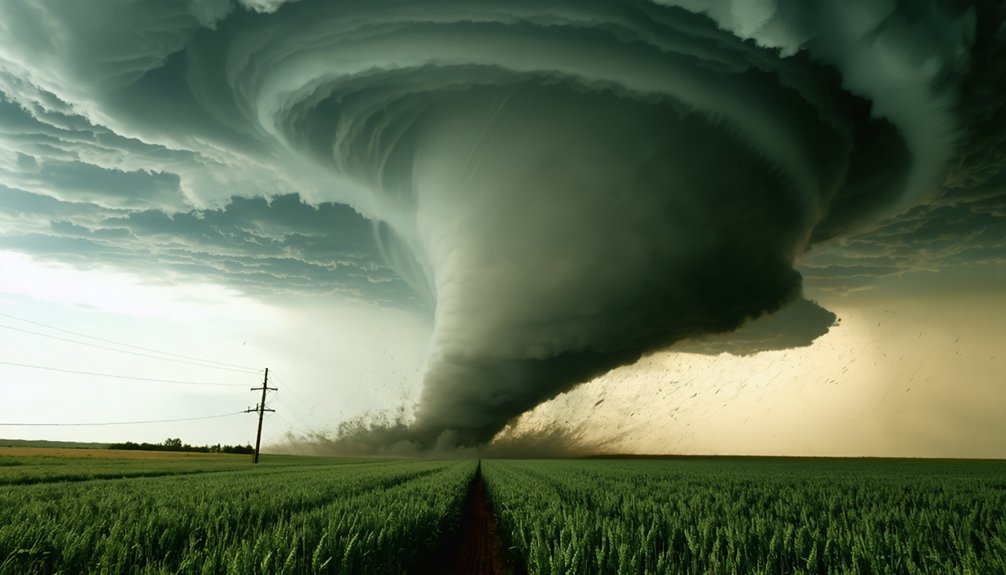
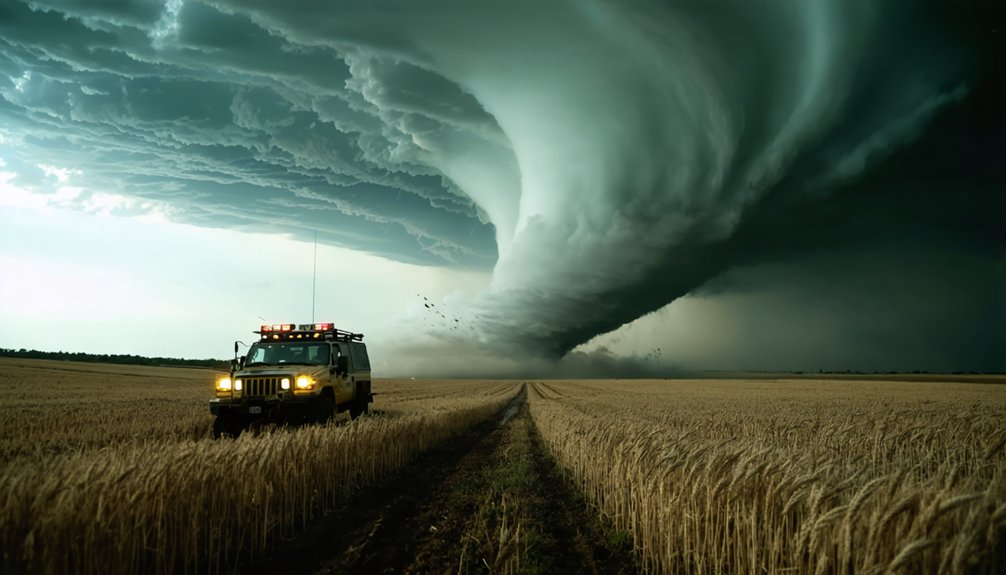
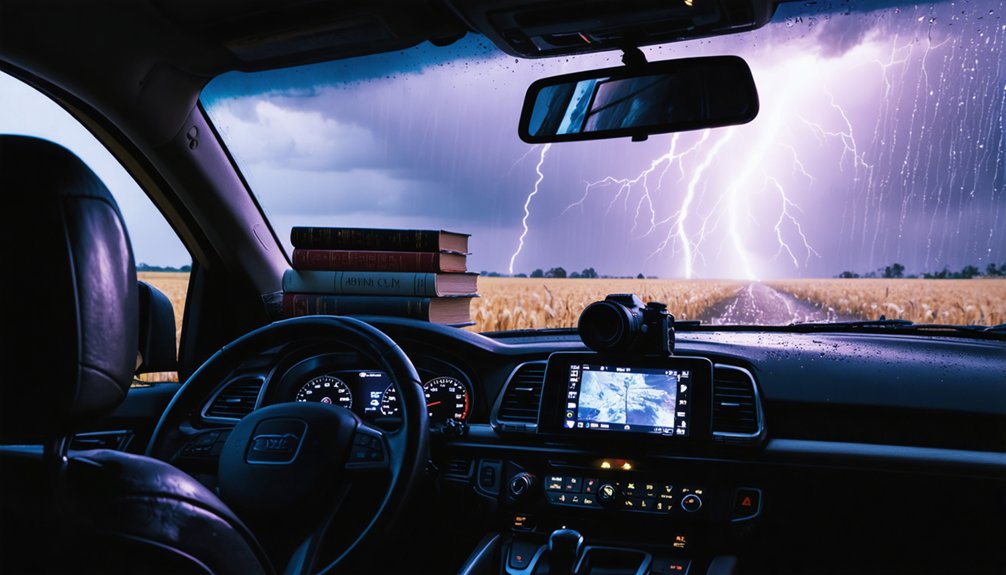
Before chasing tornadoes, you need to master four core disciplines: meteorology, radar interpretation, vehicle preparedness, and real-time decision-making. You’ll need to identify moisture, instability, lift, and wind shear before leaving your target area. You must read velocity couplets and hook echoes on radar to assess rotation. Equip your vehicle with GPS, weather radio, and emergency supplies. Plan escape routes perpendicular to storm motion before conditions deteriorate. Everything covered ahead will sharpen your chase strategy considerably.
Key Takeaways
- Tornado formation requires moisture, instability, lift, and wind shear; understanding these ingredients is essential before attempting any chase.
- Learn to read radar data, including hook echoes and velocity couplets, to assess storm rotation and tornado potential.
- Equip your vehicle with GPS, weather radio, first aid supplies, backup batteries, food, and water before departing.
- Plan primary and backup routes perpendicular to storm motion, identifying escape paths and shelter locations in advance.
- Avoid underpasses, respect traffic laws, yield to emergency responders, and never prioritize proximity to a storm over personal safety.
The Meteorology Behind Every Successful Tornado Chase
Before you ever get behind the wheel, you need to understand the atmospheric ingredients that make tornado development possible. Moisture, instability, lift, and wind shear are your four non-negotiables. Without all four converging, you’re wasting fuel and time.
Study historical tornado patterns for your target region. They’ll reveal climatological corridors where atmospheric pressure gradients and wind shear profiles repeatedly favor supercell development. The National Weather Service products and NOAA Storm Prediction Center outlooks give you real-time data to validate those patterns.
Learn to read radar reflectivity, velocity fields, and hook echoes. Understand how supercells form, evolve, and die. Storm motion dictates your positioning, and misreading it costs you the intercept or worse, puts you directly in the path.
Meteorological fluency isn’t optional. It’s your foundation.
How to Read Radar Before You Chase a Tornado
Radar fluency separates productive chases from wasted drives and dangerous miscalculations. Before you leave your staging point, pull reflectivity and velocity data to assess storm structure and rotation depth. A hook echo signals possible tornado development, while a tight velocity couplet confirms rotation. Watch debris signatures on dual-pol radar — they indicate an active tornado on the ground.
Integrate satellite imagery to track storm-scale organization, anvil spread, and updraft towers developing in real time. Pair that with active storm tracking tools to monitor cell movement, speed, and merger potential.
Identify where the forward-flank and rear-flank downdrafts are positioned so you’re never caught inside the core. Radar isn’t a guarantee — it’s your clearest, most actionable intelligence before committing to an intercept.
Gear Every Tornado Chaser Needs in the Vehicle
Knowing what’s on radar gets you to the right place — your gear determines whether you stay safe once you’re there. Pack your vehicle with intention. A GPS unit, weather radio, and charged mobile devices serve as primary communication devices for real-time tracking and warning updates. Carry backup batteries — dead electronics during intercept eliminate your situational awareness entirely.
Dead electronics kill situational awareness. Carry backup batteries — your gear determines whether you stay safe.
Your emergency supplies list should include a first aid kit, jumper cables, a tire jack, spare wiper blades, and headlight bulbs. Water and food matter when rapid storm motion forces unexpected route changes.
A dashcam documents conditions and supports post-chase analysis.
Don’t treat gear as optional. Every item solves a specific problem you’ll likely encounter. Preparation isn’t caution — it’s what keeps you mobile and independent when conditions deteriorate fast.
Plan Your Route and Escape Strategy Before You Leave
Every chase begins with a plan built before you leave the driveway. Study weather forecast updates and local storm history to identify your primary target and at least one backup.
Late repositioning puts you behind the core — early positioning keeps your options open.
Before moving, lock in:
- Primary and backup target areas based on current model data
- Multiple escape routes running perpendicular to storm motion
- Known shelter locations along rural road networks
- Road surface conditions including unpaved or flood-prone segments
Storm motion shifts fast. Debris, road closures, and rapidly changing warnings can cut off your exit without warning.
You’re responsible for your own decisions out there — build your route with precision, move early, and never commit to a position without a clear way out.
The Biggest Hazards Tornado Chasers Face on the Road
A solid route plan only protects you if you understand what’s actively trying to kill you out there. Tornadoes aren’t your only threat — wind-driven debris, lightning, and large hail can disable your vehicle before a funnel ever touches down.
Roadside hazards multiply fast: flooded low-water crossings, hydroplaning on rain-slicked highways, and dust walls that cut visibility to zero within seconds.
Communication failures compound every other risk. Dropped cell signals in rural corridors mean your radar feed goes dark exactly when you need it most. Carry a weather radio and a backup battery — don’t depend on a single data source.
Underpasses offer zero protection and funnel wind into lethal channels. Stay mobile, stay disciplined, and treat every hazard as a variable you must actively manage.
How to Drive and Behave Responsibly During a Chase
Responsible driving during a chase demands the same discipline as your weather analysis — sharp, deliberate, and continuously updated. You’re operating a vehicle in dynamic, high-risk conditions, so every decision carries weight.
Maintain strong storm etiquette and weather communication by following these core conduct rules:
- Obey traffic laws — use turn signals, avoid blocking intersections, and don’t park on active roadways
- Monitor weather communication channels continuously, including NWS alerts and spotter networks
- Respect private property; public roads give you the access you need without legal exposure
- Yield to emergency responders and never impede evacuation traffic
Your positioning should protect your escape routes, not just your camera angle.
Situational awareness isn’t optional — it’s your primary instrument. Stay mobile, stay legal, and prioritize public safety over proximity.
Frequently Asked Questions
Do Tornado Chasers Need Any Special Licenses or Certifications to Chase?
You don’t need special licenses to chase tornadoes, but you’ll want solid safety training and emergency preparedness skills. Master meteorology, radar interpretation, and storm mechanics before heading out independently.
How Do Tornado Chasers Typically Fund Their Chasing Trips and Equipment?
You’ll spend a fortune funding chasing through self-financing, sponsorships, or crowdfunding. You can monetize storm footage, offer weather forecasting consulting, or sell safety gear reviews to offset the endless costs of fuel, equipment, and travel.
Is Tornado Chasing Covered Under Standard Personal or Vehicle Insurance Policies?
Standard policies typically won’t cover tornado chasing. You’ll face significant liability concerns as insurers classify it high-risk. Verify your insurance coverage exclusions carefully, and consider specialized commercial or adventure-sport policies to protect your vehicle and assets.
What Physical Fitness Level Is Recommended Before Attempting Tornado Chasing?
While no formal fitness standard exists, you’ll need solid endurance and mobility for weather safety. Physical preparation matters — you’re sprinting, lifting gear, and driving long hours, so stay active and healthy before chasing.
Can Minors Legally Participate in Tornado Chasing With Adult Supervision?
Legal restrictions vary by jurisdiction, but you can involve minors with proper parental consent and adult supervision. Make certain you’re complying with local laws, prioritizing safety protocols, and maintaining full situational awareness throughout every active storm intercept.
References
- https://www.youtube.com/watch?v=nxPSFg2R8YY
- https://www.livingskytours.com/storm-chasing-101/
- https://www.wikihow.com/Storm-Chase
- https://www.atms.unca.edu/cgodfrey/courses/swfex/pdf/ChasingSafety.pdf
- https://www.texasmonthly.com/the-culture/how-to-chase-a-tornado/
- https://www.youtube.com/watch?v=6otZLjSZvPU
- https://www.tornadosimulator.net/storm-chaser-beginner-guide/
- https://imba.missouri.edu/how-to-chase-tornadoes-4092798650.html
- http://www.stormeyes.org/tornado/chasing/FAQ/
- https://www.pbs.org/newshour/science/inside-the-dangerous-and-unpredictable-science-of-storm-chasing