If you’re serious about storm-chasing content, skip the noise and go straight to the best. Reed Timmer delivers armored intercept data from inside violent tornadoes. Pecos Hank combines cinematic quality with three decades of field expertise. Ryan Hall, Y’all covers live events across multiple data sources. Skip Talbot keeps it purely observational — no filler, just precise documentation. Each creator brings something distinct to the field, and what sets them apart goes deeper than you’d expect.
Key Takeaways
- Reed Timmer delivers intense, field-level storm data through armored vehicle intercepts, making his channel essential for technical weather documentation.
- Pecos Hank combines cinematic production quality with accurate storm documentation, appealing to viewers wanting visually compelling yet scientifically grounded content.
- Skip Talbot focuses on precise, safety-oriented storm chasing with direct observational content and no entertainment-style padding.
- Ryan Hall, Y’all, aggregates multiple live data sources during storm events, offering comprehensive real-time coverage for serious weather followers.
- Freddy McKinney provides energetic live storm streams, balancing entertaining delivery with genuine field-level storm chasing content.
Reed Timmer: Armored Storm Chasing and EF4 Tornado Intercepts
Reed Timmer ranks among the most frequently recommended storm chaser channels on YouTube, and for good reason. His footage delivers raw, field-level data most viewers never access elsewhere.
Reed Timmer’s storm chasing channel delivers raw, field-level data most viewers never access elsewhere.
You’ll watch him deploy rocket sensors directly into EF4 tornadoes, capturing wind speed measurements that sharpen storm prediction techniques beyond standard Doppler readings. His armored Dominator vehicles aren’t theatrical props — they’re engineered platforms designed to hold position within extreme pressure gradients.
If you’re serious about understanding tornado safety from a structural and behavioral standpoint, Timmer’s intercept footage demonstrates real-time decision-making under life-threatening conditions. You’ll see how proximity changes the data, how storm prediction techniques evolve in the field, and why mobile radar systems matter.
His channel isn’t entertainment — it’s applied severe weather science you can actually learn from.
Pecos Hank: Three Decades of Cinematic Storm Chasing
Where Timmer prioritizes raw intercept data, Pecos Hank delivers three decades of field experience through documentary-grade cinematography that transforms severe weather footage into structured visual storytelling.
His channel operates at the intersection of cinematic storytelling and technical precision, producing long-form content that documents supercell structure, tornado development, and atmospheric mechanics with exceptional visual clarity.
If you’re serious about understanding severe weather beyond raw footage, Pecos Hank’s weather photography sets a measurable benchmark.
Each video sequences storm evolution systematically, giving you a field-level perspective grounded in real observational data.
You’re not watching reactive content — you’re watching calculated positioning, disciplined composition, and deliberate documentation.
For viewers who want both scientific accuracy and high-production storm coverage, his channel delivers consistent, uncompromised quality across every upload.
Ryan Hall, Y’all: Live Storm Chasing Coverage When It Matters
When a major severe weather outbreak is unfolding across multiple states simultaneously, Ryan Hall, Y’all delivers what single-chaser channels can’t — coordinated, multi-source live coverage that tracks several storm systems in real time.
His network of partnered chasers streams simultaneous intercepts, giving you ground-level data from multiple locations during the same event.
That multi-angle approach sharpens storm prediction accuracy by cross-referencing field observations with radar analysis as conditions evolve. You’re not waiting for edited highlights — you’re watching weather technology and human decision-making work together in real time.
When you need to understand a fast-moving outbreak without switching between a dozen feeds, Ryan Hall, Y’all consolidates that intelligence efficiently.
For live severe weather coverage that prioritizes situational awareness, his channel is a practical, high-value resource.
Freddy McKinney: Entertaining Live Storm-Chasing Streams
If you’re drawn to live storm-chasing content that balances field intensity with an engaging on-screen presence, Freddy McKinney’s channel delivers both. His streams track active severe weather in real time, giving you unfiltered access to rapidly evolving conditions as they develop across the field.
What separates Freddy from purely technical channels is his live storm reactions — you’re watching genuine, unscripted responses to shifting radar signatures, storm structure changes, and close intercepts. His storm chase humor keeps streams watchable during slow build-up phases without sacrificing situational awareness or meteorological focus.
If you want live coverage that doesn’t filter out the human element of chasing, Freddy’s channel is worth adding to your rotation. He’s a consistent presence during major severe weather outbreaks and keeps his audience accurately informed throughout.
Connor Croff: Real-Time Storm Chasing Built for Live Viewers
Connor Croff has built his YouTube presence around live storm-chasing coverage, making his channel a reliable destination when active severe weather is developing. His streams integrate live data analysis, giving you direct access to evolving storm conditions as they unfold in real time.
You’re not watching a polished recap — you’re tracking the chase alongside him as radar signatures shift and threats intensify. His use of interactive dashboards during broadcasts lets you interpret meteorological data without waiting for post-event breakdowns.
If you value unfiltered, real-time access to severe weather events, Connor’s channel delivers exactly that. His format suits viewers who want to engage independently with live conditions rather than rely solely on traditional broadcast coverage.
Skip Talbot: Dedicated Storm Chasing Without the Filler
If you’re tired of channels that pad their content with reaction segments and filler commentary, Skip Talbot’s channel delivers exactly what the name promises.
You’ll find dedicated storm-chasing coverage stripped down to the core footage and field observations that matter.
His channel stays focused on active chase events, making it a clean, efficient source for severe weather content without the noise.
Pure Storm Chasing Focus
While some YouTube channels blend weather analysis with storm chasing, Skip Talbot keeps it stripped down to pure field work. You won’t find lengthy studio segments or broad meteorological analysis padding his content. Instead, you get direct aerial reconnaissance of active severe weather systems, captured with precision and intent.
His channel suits viewers who want unfiltered chasing footage without commentary that slows the pace. Every upload focuses on what’s happening in the field, giving you a ground-level operational perspective that broader weather channels can’t replicate. There’s no filler between you and the storm.
If you’re building a reliable list of storm-chasing channels worth following, Skip Talbot earns his place by staying disciplined to his craft. He chases. He films. That’s the entire value proposition.
No Filler Content
What Skip Talbot strips out of his content matters as much as what he keeps in. You won’t find sponsored segments, lifestyle commentary, or padded runtime here. Each upload focuses on verified severe weather encounters, storm chase technology deployment, and precise field decisions.
That directness gives you faster access to the data that matters: storm structure, intercept positioning, and real-time risk assessment.
His approach also reflects serious tornado safety discipline. He documents proximity decisions transparently, letting you understand why certain intercepts proceed and others don’t. That context builds your situational awareness rather than just delivering adrenaline.
If you value efficient, no-nonsense storm-chasing content that respects both your time and the technical realities of severe weather fieldwork, Skip Talbot’s channel delivers exactly what it promises and nothing it doesn’t.
Dedicated Weather Coverage
Most storm-chasing channels split their focus across weather analysis, lifestyle content, and general meteorology updates. Skip Talbot doesn’t. His channel stays locked on active storm chasing, giving you dedicated severe weather footage without the distractions that dilute other creators’ content.
If you’re serious about storm prediction and want to study real intercepts rather than sit through commentary padding, Skip’s format delivers exactly that. You’re getting field-level documentation of severe systems from someone embedded in the storm-chasing community alongside other established creators.
His focus on weather safety through direct observation means you’re watching someone who treats every chase as a precision operation, not entertainment theater. For viewers who want concentrated, no-nonsense storm coverage, Skip Talbot’s channel earns a place on your subscription list.
Frequently Asked Questions
Is Storm Chasing on Youtube Safe to Attempt Yourself at Home?
Sure, grab your lawn chair! But seriously, don’t. Storm chasing risks are extreme—leave it to pros. Follow viewer safety guidelines: watch YouTube channels from your couch, where you’re statistically far less likely to die.
What Equipment Do Most Youtube Storm Chasers Typically Use in the Field?
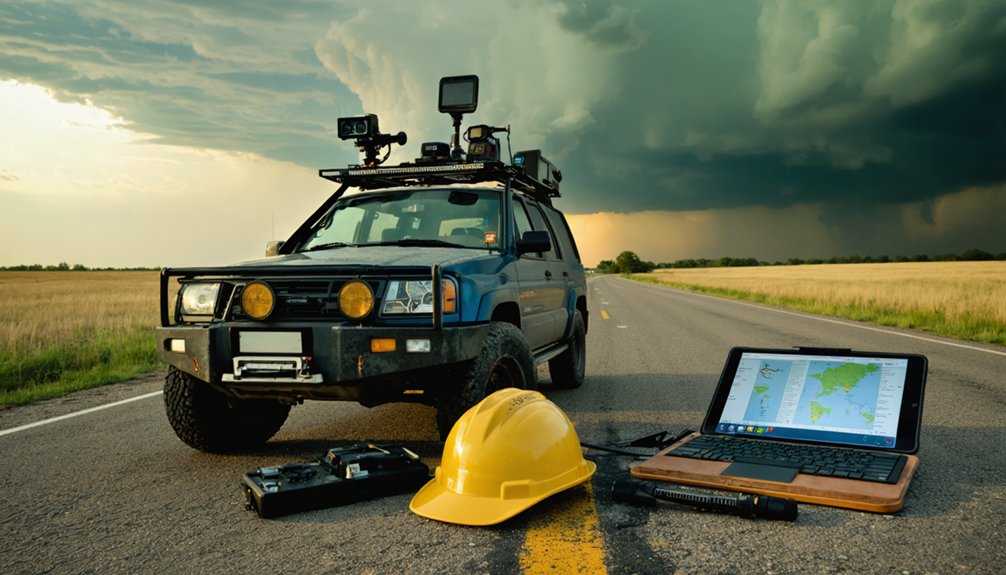
You’ll find most YouTube storm chasers rely on essential storm chasing gear like armored vehicles, mobile radar, and rocket sensors. Their weather monitoring devices include GPS systems, Doppler tools, and high-resolution cameras capturing real-time severe weather data.
How Do Storm Chasers Fund Their Youtube Channels and Chasing Operations?
You’ll find storm chasers fund operations through YouTube ad revenue, Patreon memberships, and sponsorship opportunities from weather tech brands. Storm chasing logistics costs get offset by merchandise sales, licensing dramatic footage, and crowdfunded community support.
Which Months of the Year Are Best for Watching Storm Chasing Content?
While year-round content exists, you’ll find peak storm chasing gear deployment and safety precautions showcased April through June, when Great Plains tornado season peaks. Secondary surges hit August–October during Atlantic hurricane season.
Are Any of These Youtube Storm Chasers Affiliated With Official Weather Agencies?
None of these creators hold official agency affiliations, but they contribute to storm chasing ethics and weather prediction accuracy by independently collecting real-time field data you won’t find through traditional governmental meteorological channels.
References
- https://www.reddit.com/r/tornado/comments/1cayibl/what_are_the_best_active_storm_chaser_channels_on/
- https://www.reddit.com/r/stormchasing/comments/1d5gnbz/im_new_to_watching_storm_chaser_stuff_what/
- https://www.reddit.com/r/tornado/comments/1ck3riz/who_are_your_favorite_chasers_on_youtube_for/
- https://www.reddit.com/r/tornado/comments/1ka91c6/maybe_a_bit_of_a_vague_question_but_which_storm/
- https://crazystormchasers.com/best-storm-chasing-youtube-channels/