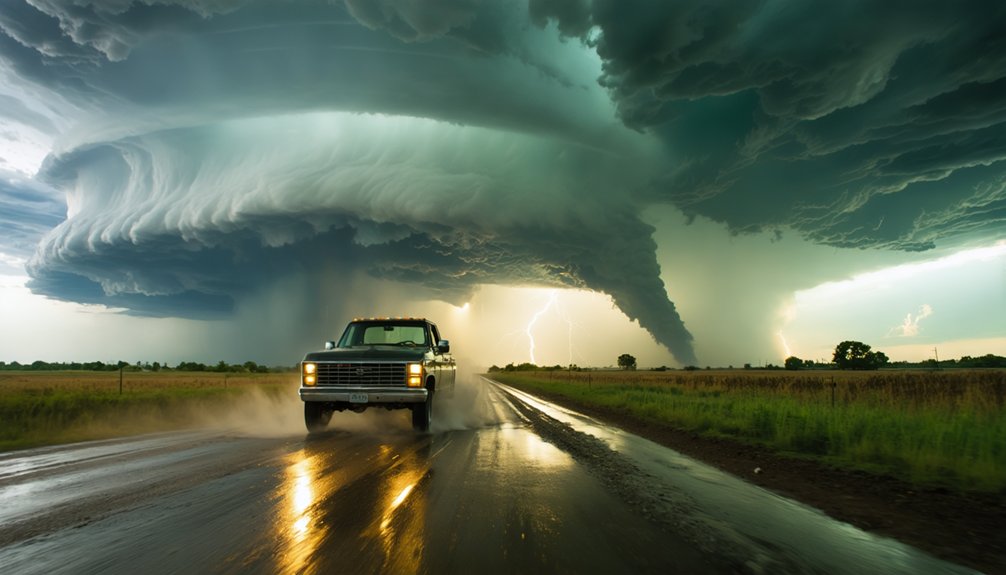
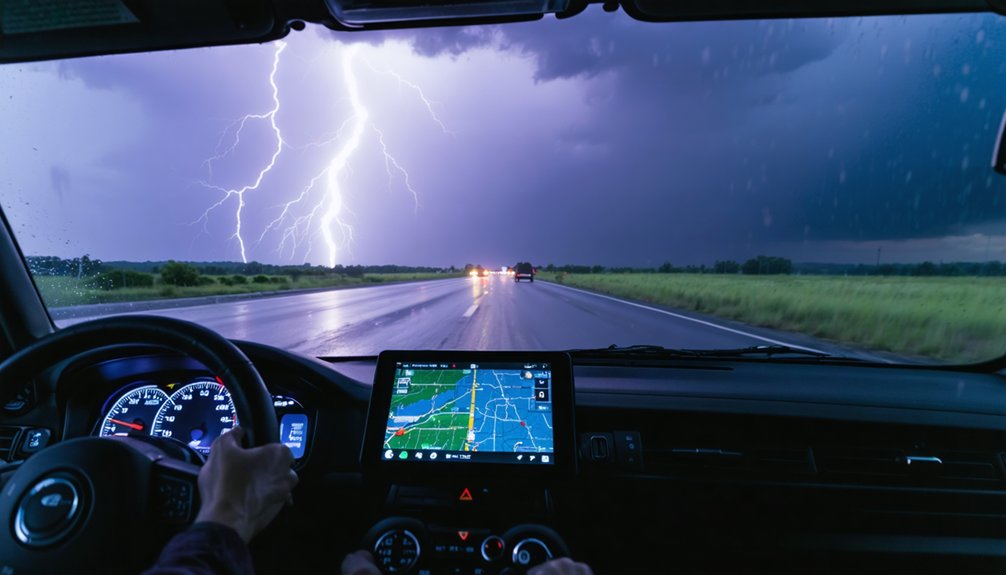
Storm chasing simulators look convincingly realistic, but they’re more visual spectacle than meteorological truth. You’ll find impressive supercell structures, dynamic debris fields, and atmospheric layering that mirror real footage closely. However, the underlying weather modeling cuts corners — storms spawn too fast, atmospheric boundaries are oversimplified, and forecasting complexity gets compressed. Titles like OUTBRK and Helicity lead the pack in accuracy. The full picture of what these simulators nail and miss is worth examining closely.
Key Takeaways
- Storm chasing simulators like Helicity and OUTBRK achieve high visual realism with convincing supercell structures, debris effects, and atmospheric layering.
- Weather modeling remains the weakest area, with most simulators using pre-set patterns instead of dynamic, data-driven atmospheric systems.
- OUTBRK leads in meteorological accuracy by incorporating real weather data and scientifically grounded atmospheric conditions across multiple scenarios.
- Simulators compress storm timelines and oversimplify growth dynamics, making storms spawn and intensify faster than real supercells.
- Despite limitations, simulators effectively build situational awareness and foundational storm behavior knowledge without real-world risk.
Do Storm Chasing Simulators Actually Look Realistic?
Storm chasing simulators have made striking visual progress, but the question of whether they actually look realistic depends on what you’re comparing them against.
Graphical fidelity in titles like Helicity reaches convincing levels, with dynamic supercell structure, debris effects, and atmospheric layering earning a 9/10 realism score in at least one 2025 review.
OUTBRK similarly prioritizes believable tornado shape and cloud behavior.
Sound design reinforces immersion through wind, rain, and hail audio that mirrors recorded storm footage.
However, you’ll notice that visual conviction doesn’t equal meteorological accuracy.
Developers often prioritize what looks believable over what behaves correctly.
Lightning, rotation, and rain can appear authentic while the underlying weather modeling stays simplified.
You’re seeing a curated version of storm aesthetics, not a precise atmospheric reconstruction.
How Accurate Is the Weather Modeling in Storm Chasing Games?
While visuals can mask deeper limitations, weather modeling is where most storm chasing simulators fall short of genuine meteorological accuracy. When you examine atmospheric dynamics beneath the surface, you’ll find significant compromises:
While visuals can impress, weather modeling is where storm chasing simulators most frequently fall short of true meteorological accuracy.
- Storm scripting: Many titles rely on pre-set weather patterns rather than dynamic, data-driven atmospheric behavior.
- Simplified growth cycles: Storms typically spawn and intensify faster than real supercells, compressing complex atmospheric dynamics into digestible gameplay loops.
- Reduced forecasting complexity: Real chasers analyze shifting atmospheric variables continuously; most games strip this process down considerably.
OUTBRK attempts to close this gap, using scientifically accurate scenario systems and real meteorological data. However, even strong implementations still simplify critical atmospheric processes.
You’re getting meteorologically *inspired* modeling, not true replication of weather patterns governing actual storm development.
Which Storm Chasing Games Are the Most Realistic?
When ranking storm chasing simulators by realism, two titles consistently rise above the rest: OUTBRK and Helicity.
OUTBRK distinguishes itself through scientifically grounded weather prediction, pulling from real meteorological data to model storm behavior across roughly 150 to 200 distinct scenarios. It recreates full atmospheric conditions rather than scripting isolated tornado events.
Helicity earns its position through exceptional visual fidelity, dynamic wind systems, and accurate supercell structure, scoring 9/10 for realism in at least one 2025 ranking.
Both titles outperform competitors that rely on scripted, predictable storm behavior with little atmospheric depth.
If you prioritize meteorological authenticity, OUTBRK leads. If you want visually precise storm structure combined with strong realism, Helicity competes closely.
Other titles fall short primarily in weather modeling complexity and storm behavior unpredictability.
What Storm Chasing Simulators Actually Get Right
Despite their limitations, storm chasing simulators do several things well. They give you access to storm environments that would otherwise require years of field experience and significant personal risk.
Three areas where simulators consistently deliver:
- Visual realism – Titles like Helicity replicate supercell structure, debris fields, and dynamic wind with strong historical accuracy to documented storm formations.
- Radar and atmospheric tools – Simulators introduce you to real-time data interpretation, mirroring actual chase instrumentation and decision-making workflows.
- Player immersion – Compressed scenario design drops you directly into high-intensity environments, building situational awareness faster than passive study allows.
These strengths make simulators genuinely useful for understanding storm behavior. You won’t replicate the full operational complexity of real chasing, but you’ll develop a solid foundational framework.
Where Every Storm Chasing Game Still Falls Short
Even the most technically ambitious storm chasing simulators compress, simplify, or omit the operational realities that define actual field chasing. You’ll encounter tornadoes far more frequently than any real season allows, collapsing hours of road travel and forecasting uncertainty into brief, event-dense sessions.
Meteorological accuracy weakens precisely where it matters most — storm growth timing, wind field behavior, and atmospheric boundary modeling remain simplified across every current title. Visual fidelity tends to receive the heaviest development investment, meaning storms look convincing while the underlying systems driving them don’t fully replicate real atmospheric mechanics.
Real hazards like hydroplaning, hail damage, and logistical decision-making under time pressure are consistently underrepresented. Even scientifically inspired titles still require gameplay compromises that widen the gap between simulation and genuine field chasing conditions.
Frequently Asked Questions
Can Storm Chasing Simulator Games Help Train Real-World Storm Chasers?
Like a flight simulator preparing pilots, virtual meteorology games can sharpen your pattern recognition and adrenaline simulation responses, but they won’t replace real-world logistics, hazard assessment, or the unpredictable pacing genuine storm chasing demands.
Are Storm Chasing Games Suitable for Younger or Inexperienced Players?
Yes, storm chasing games suit younger or inexperienced players well. You’ll find age appropriateness generally high, as safety considerations remain abstracted. You’re exposed to storm concepts without real-world hazards, making them accessible entry points.
How Long Does a Typical Storm Chasing Simulator Game Session Last?
You’ll typically spend 30–40 minutes per session—a striking contrast to real chasing’s hours of driving. OUTBRK’s weather accuracy sustains player engagement throughout, compressing unpredictable atmospheric events into a tight, analytically satisfying window of autonomous exploration.
Do Any Storm Chasing Games Feature Real Historical Tornado Events?
Some simulators do incorporate tornado data from real storms, but full historical accuracy is rare. You’ll find that most games prioritize scientifically modeled scenarios over direct recreations of specific documented tornado events.
Are Storm Chasing Simulators Available on Consoles or Only PC?
You’ll find most storm chasing simulators locked to PC, where virtual reality integration and multiplayer modes thrive. Console versions remain rare, limiting your platform freedom considerably compared to PC’s broader, more technically expansive storm simulation ecosystem.
References
- https://store.steampowered.com/app/1107320/OUTBRK/
- https://steamcommunity.com/app/1107320/discussions/0/4411921213493693572/?l=hungarian
- https://steamcommunity.com/app/1107320/discussions/0/596271170014189078/
- https://www.youtube.com/watch?v=ORbGYq2HzGI
- https://www.youtube.com/watch?v=YcJxg0OWY1c
- https://www.youtube.com/watch?v=E3uCL5pqsqo
- https://crazystormchasers.com/how-storm-chasing-games-compare-to-real-storm-chasing/
- https://www.youtube.com/watch?v=jicZqx2P5TU
- https://www.youtube.com/watch?v=bMdOS-sWDlE