When you chase hurricanes without proper safety gear, you’re putting yourself directly in the path of wind-driven debris, structural collapses, and life-threatening conditions that can escalate faster than you can react. Deteriorating visibility, failed communication networks, and inaccessible medical help amplify every risk exponentially. Your gear isn’t optional equipment — it’s your primary defense system. Understanding exactly which protections matter most, and why each one is non-negotiable, can mean the difference between surviving a landfall and becoming a casualty of one.
Key Takeaways
- High-velocity debris and wind-driven rain pose life-threatening risks that certified helmets and protective eyewear directly mitigate.
- Weather-resistant clothing and puncture-resistant boots maintain operational endurance across debris-filled and flooded terrain.
- Redundant communication tools ensure situational awareness when cellular networks fail and conditions rapidly deteriorate.
- Vehicle recovery gear enables self-rescue when roads close and infrastructure collapses during landfall.
- Unprotected gaps in gear increase injury risk and liability when medical help remains distant and inaccessible.
What Makes Hurricane Chasing Dangerous Without Protection?
Hurricane chasing exposes you to a cascade of simultaneous hazards that compound rapidly when you lack proper protection. High-velocity debris, wind-driven rain, and sudden structural collapses create immediate threats to your head, eyes, and body. Without adequate barriers, weather-related injuries escalate from minor cuts to life-threatening trauma within seconds of storm contact.
Storm visibility drops sharply as conditions intensify, stripping your ability to identify downed lines, flooded roadways, and unstable terrain. You’re steering through a dynamic, hostile environment where every unprotected gap in your gear becomes a liability.
Cellular networks fail, roads close, and medical help stays distant. Unprotected chasers face compounding risks because each hazard reinforces the next. Proper safety gear doesn’t limit your operational freedom—it’s what sustains it when conditions deteriorate fastest.
Head and Eye Protection Every Hurricane Chaser Needs
Your head and eyes sit at the center of the risk profile when storm conditions collapse around you. Flying debris accelerates fast enough to cause permanent damage before you can react, so passive protection isn’t optional—it’s tactical.
Wear a certified helmet designed for impact absorption, not just comfort. Helmet comfort matters here because you’ll wear it for extended periods under physical stress, and discomfort causes you to remove it at the worst moments. Choose a fit that stays secure under high wind loads.
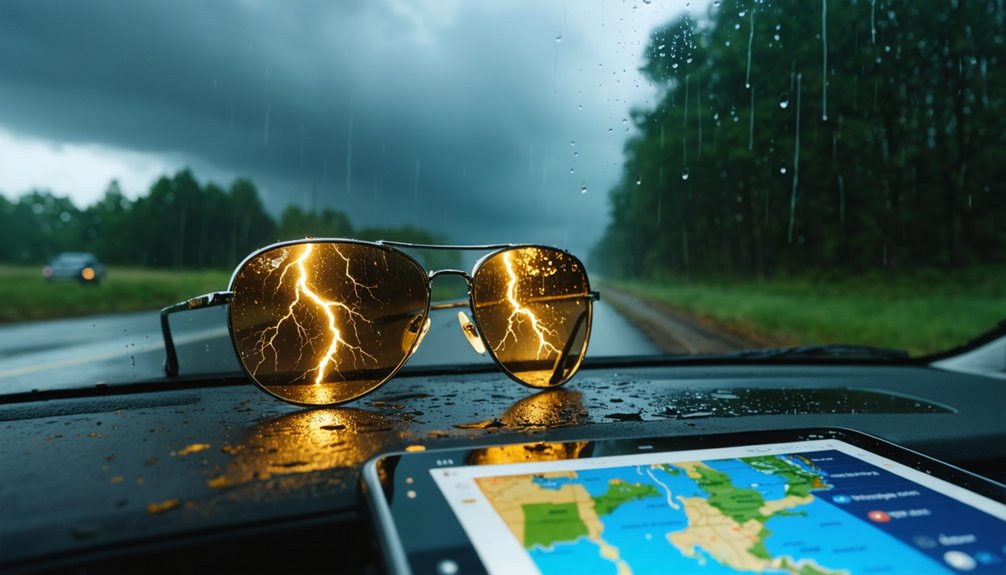
For eyes, ANSI Z87+ rated eyewear is your baseline. Eyewear innovations now offer wraparound ballistic designs that block wind-driven particulates without sacrificing peripheral vision. Standard sunglasses don’t qualify.
Debris moving at hurricane velocity turns inadequate eyewear into a liability rather than a safeguard.
Clothing and Body Gear for Hurricane Chasing Conditions
What you wear determines how long you can operate safely in deteriorating conditions. When storm surge advances and wind damage escalates, inadequate clothing becomes a liability.
Layer moisture-wicking base materials beneath weather-resistant outer shells to manage wet, rapidly shifting conditions. Your outer layer must block wind-driven rain without restricting movement during fast repositioning.
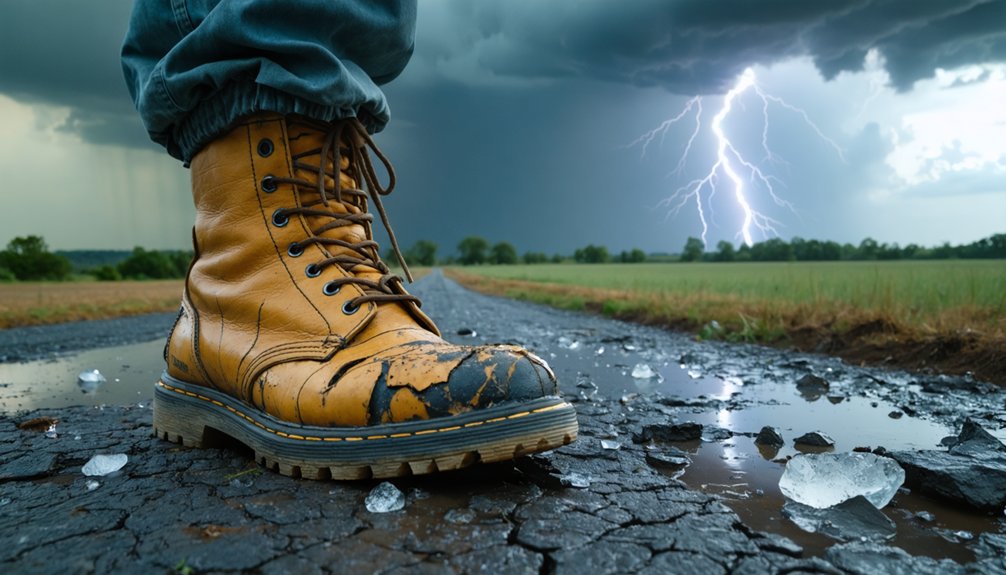
Wear sturdy, puncture-resistant boots with aggressive traction. Debris-covered ground, saturated soil, and flood margins create serious slip and puncture hazards.
Secure work gloves before handling displaced materials or assisting others near damaged structures.
Every garment choice directly affects your operational endurance. Wet, cold, or injured, you lose decision-making capacity precisely when conditions demand it most.
Dress for the worst-case scenario before you reach your position, not after conditions deteriorate.
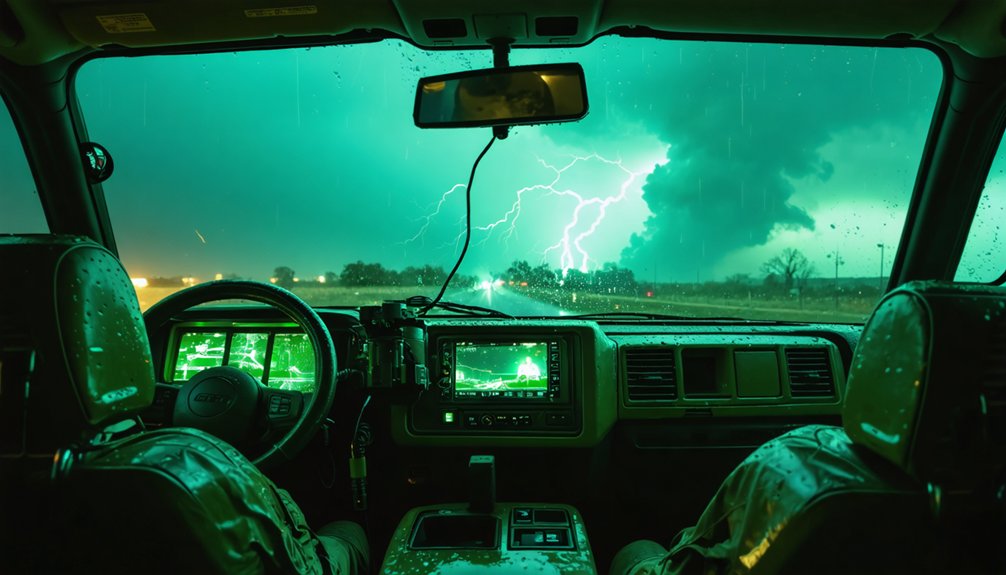
When storm structure shifts faster than cellular networks can keep up, your communication and navigation systems become the difference between a controlled repositioning and a dangerous miscalculation. Real-time radar lets you track storm surge advancement and wind damage corridors before they cut off your escape routes.
Don’t rely solely on cellular data — weather radios and two-way radios give you redundant channels when towers fail. GPS navigation paired with offline maps keeps you mobile across rural roads where data coverage collapses entirely.
Pre-plan multiple exit routes and update them continuously as conditions evolve. Mount all electronics securely so wind damage to your vehicle doesn’t compromise your instruments mid-operation.
Situational awareness isn’t optional — it’s the operational foundation that keeps every other safety measure functional when the storm intensifies.
Vehicle Recovery Gear to Carry on Every Hurricane Chase
Getting your vehicle stuck in mud, a flooded ditch, or debris-covered ground during a hurricane chase isn’t just an inconvenience — it’s a life-safety failure. Storm surge can reshape roadways within minutes, and wind damage leaves unpredictable obstacles across escape routes.
You need a tow rope, recovery straps, and a quality traction board rated for your vehicle’s weight. Carry a hi-lift jack for debris-covered or uneven terrain. Pack extra fuel because storm-damaged infrastructure closes stations fast.
Keep a spare tire, plug kit, and portable inflator accessible — not buried under gear. Maintain your vehicle on a strict schedule before every chase deployment. Mechanical failure compounds weather exposure directly.
Your mobility is your margin of safety, and losing it during landfall isn’t recoverable.
Frequently Asked Questions
What First Aid Supplies Should Hurricane Chasers Always Keep Accessible?
A lifeline in the storm: You should always keep a first aid kit, emergency blankets, water, and food accessible. These storm preparedness essentials and safety equipment protect you when hurricanes isolate you from immediate medical help.
How Do Reflective Vests Improve Safety During Nighttime Hurricane Chasing Operations?
Reflective visibility vests alert drivers and responders to your position during nighttime safety operations. You’ll reduce collision risk when storms cut daylight, rain obscures roads, and emergency crews navigate debris-covered terrain around your vehicle.
Should Hurricane Chasers Carry Emergency Food and Water During Operations?
Yes, you should always carry emergency food and water during hurricane tracking operations. Storm preparedness demands it—road closures, vehicle failures, or rapid storm shifts can strand you far from help, making these supplies critical.
How Can Offline Navigation Tools Help Chasers in Rural Areas?
Offline navigation tools keep you moving when cellular networks fail. You’ll maintain GPS accuracy without data coverage, access satellite imagery of rural roads, and navigate blocked routes confidently—preserving your freedom to escape rapidly shifting storm conditions.
What Emergency Blanket Features Matter Most for Stranded Hurricane Chasers?
You’ll want emergency blanket durability and material reflectivity above all else. Choose heavy-duty mylar that retains 90%+ body heat, resists tearing in wind-driven debris, and reflects enough thermal energy to signal rescuers when you’re stranded.
References
- https://www.facebook.com/groups/327727507385830/posts/2961680903990464/
- https://stormtrack.org/threads/recommended-chaser-equipment-list.23013/
- https://svinews.com/2024/featured/97765/things-every-storm-chaser-needs-in-their-truck/
- https://www.livingskytours.com/storm-chasing-101/
- https://www.youtube.com/watch?v=JzbmIA7soMo
- https://crazystormchasers.com/essential-safety-gear-for-storm-chasers/
- https://crazystormchasers.com/storm-chaser-safety-gear-essentials/
- https://www.youtube.com/watch?v=e2mzk1dklIA
- https://crazystormchasers.com/best-storm-chaser-safety-gear-essentials/