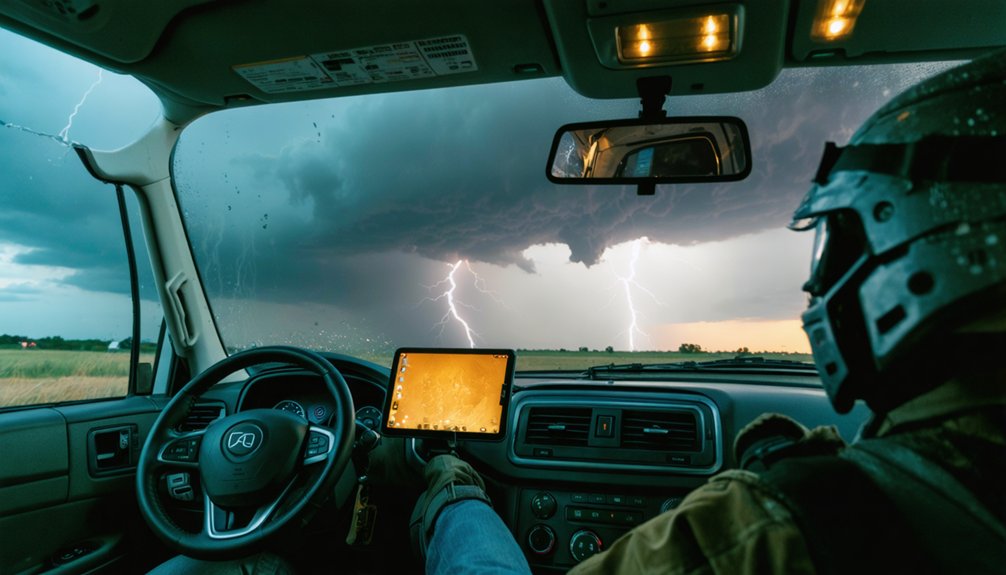
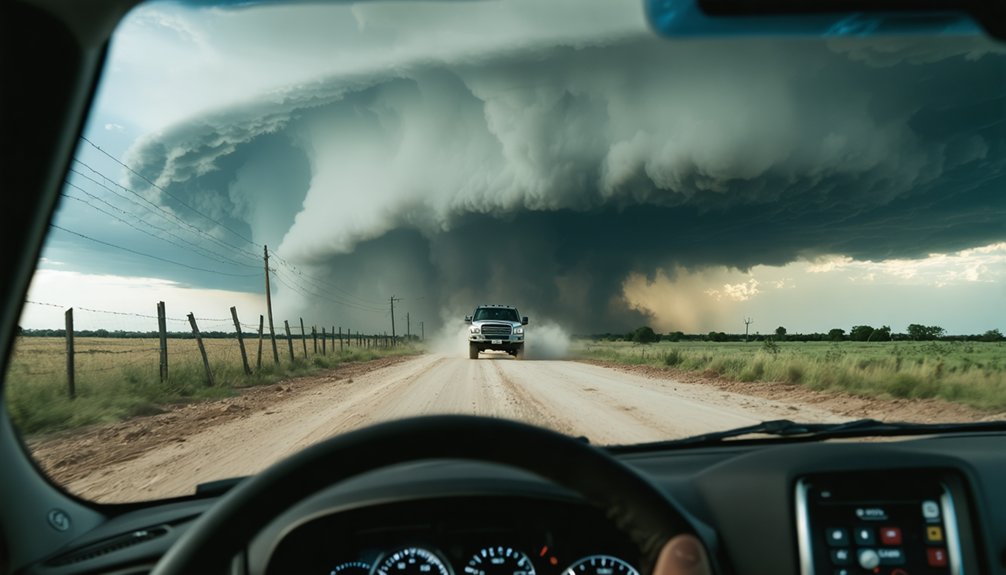
Proper training is essential because without it, you’ll misread storm motion, misjudge radar signatures, and react too slowly when conditions deteriorate fast. You won’t recognize tornadic threats before they escalate, and you’ll struggle to assess risks like flooded roads or downed power lines. Training builds the forecasting skills, decision frameworks, and instinctive responses that keep you alive. Everything covered ahead will sharpen your ability to chase responsibly and survive it.
Key Takeaways
- Untrained chasers lack the storm dynamics knowledge needed to accurately judge storm motion, radar data, and rapidly evolving hazardous conditions.
- Training builds essential forecasting skills using professional tools like surface maps, upper-air charts, and radar signatures for precise decision-making.
- Proper preparation develops instinctive, informed responses rather than panic-driven reactions during life-threatening severe weather situations.
- Skywarn training and ride-alongs with experienced chasers provide critical foundational skills in storm identification and hazard recognition.
- Trained chasers use pre-established decision frameworks, escape route planning, and communication protocols to significantly reduce field risks.
Why Is Storm Chasing So Dangerous Without Training?
Storm chasing without proper training puts you directly in the path of rapidly evolving hazards you’re not equipped to recognize or respond to.
Without understanding storm dynamics, you can’t accurately interpret a supercell’s structure, mesocyclone behavior, or directional shift. That gap in knowledge turns manageable risk into life-threatening exposure.
Untrained chasers consistently misjudge storm motion, misread radar, and position themselves in dangerous quadrants.
Effective risk assessment requires more than instinct — it demands meteorological knowledge, situational awareness, and practiced decision-making under pressure. You need to evaluate road networks, escape routes, and storm behavior simultaneously.
Without training, you’re not exercising freedom in the field — you’re operating blind.
Every uninformed decision compounds your vulnerability and removes your ability to respond when conditions deteriorate rapidly.
How Does Training Build the Forecasting Skills Chasers Need?
Forecasting is the foundation of every safe chase decision, and training builds that skill by walking you through the core tools professionals rely on daily. You’ll study surface maps, upper-air charts, Skew-T diagrams, and hodographs — each one sharpening your weather analysis capability before you ever leave the driveway.
These forecasting techniques teach you to interpret convective outlooks, forecast discussions, and radar signatures with precision.
Mastering convective outlooks, forecast discussions, and radar signatures turns raw atmospheric data into precise, confident chase decisions.
Training also connects atmospheric theory to real decisions. You’ll learn how mesocyclones develop, what conditions permit tornado formation, and how updraft and downdraft dynamics evolve during a chase.
Virtual drill sessions and forecast comparisons against actual outcomes accelerate your skill development. That structured repetition transforms raw data into actionable intelligence, giving you the freedom to make confident, informed positioning choices when conditions intensify rapidly.
The Hazards That Kill Unprepared Storm Chasers
Unprepared chasers don’t die from bad luck — they die from preventable errors in hazard recognition.
Tornadoes aren’t always the primary killer. Flooded roads, downed power lines, gas leaks following structural damage, and high-speed debris claim lives when chasers lack hazard awareness and skip emergency preparedness fundamentals.
You need to recognize when a standard thunderstorm escalates into a tornadic threat before it’s directly overhead.
You must identify escape route closures caused by flooding or emergency vehicle movement.
Training teaches you to read storm motion, assess road conditions, and anticipate rapid structural changes in a storm’s behavior.
Without that foundation, you’re reacting instead of deciding.
In severe weather, reaction is almost always too slow.
Training keeps you ahead of the storm — not trapped beneath it.
Before you chase your first storm, you’ll need a mechanically sound vehicle with quality tires capable of handling muddy, rain-soaked back roads.
You should equip yourself with a smartphone or dedicated tablet running real-time radar applications so you can track storm movement, velocity, and structure as conditions evolve.
Pair that technology with solid map-reading fundamentals and GPS proficiency, because when a storm accelerates and roads become disorienting, your navigation skills determine whether you escape or get trapped.
Essential Vehicle Preparation Tips
When heading into severe weather, your vehicle isn’t just transportation—it’s your primary safety system. Prioritize vehicle maintenance before every chase. Check your brakes, fluids, belts, and fuel level. A mechanical failure during a fast-moving storm puts you in serious danger.
Tire readiness is non-negotiable. Inspect tread depth and pressure, and carry a spare with proper inflation. Muddy rural roads can destroy a worn tire fast, leaving you stranded in a dangerous position.
Keep your fuel tank above half at all times. Rural chase environments often lack nearby gas stations.
Store emergency supplies—jumper cables, a flashlight, basic tools, and water—in your vehicle consistently. Your car needs to perform under stress, so treat preparation as a core discipline, not an afterthought.
Real-Time Weather Data Tools
Three tools define your real-time situational awareness in the field: a radar application, a weather data feed, and a reliable GPS navigation system.
Real time radar gives you storm position, velocity, and rotation data you can’t afford to guess at. Mobile apps like RadarScope deliver professional-grade data visualization, letting you interpret reflectivity and velocity scans quickly. Weather alerts push critical NWS warnings directly to your device, keeping you informed when conditions shift fast.
Pair these tools with a dedicated GPS unit—don’t rely solely on your phone for navigation. Data connections drop in rural areas, so download offline maps before you deploy.
Training teaches you to read this data correctly under pressure, turning raw information into sharp, confident decisions that keep you mobile and free.
Navigation And Map Skills
Reliable navigation demands more than a smartphone with a data signal. When you’re chasing, GPS navigation gives you real-time positioning, but it won’t replace your ability to read a paper map when technology fails. You need map interpretation skills to quickly identify road networks, dead ends, and alternative corridors under pressure.
Terrain awareness is equally critical. Low-water crossings, unpaved roads, and elevated ground all affect your positioning decisions during a rapidly evolving storm. You can’t afford hesitation when a tornado’s path shifts unexpectedly.
Route planning before the chase reduces reactive decision-making in the field. Study your target area thoroughly—know your primary exit routes and backup options.
Pairing strong navigation skills with your radar tools keeps you mobile, strategic, and in control when conditions deteriorate fast.
Core Safety Rules Beginners Must Follow Before Their First Chase
Before your first chase, you must internalize three non-negotiable rules: never chase alone, always pre-plan escape routes, and recognize basic severe weather signals before you commit to a target.
A chase partner provides a critical second set of eyes, helps manage navigation and radar interpretation, and improves judgment when conditions escalate quickly.
You should also study local road networks in advance, identify multiple exit options from your planned intercept area, and learn to read visible storm cues—such as wall clouds, inflow bands, and shifting winds—so you’re never caught reacting too late.
Never Chase Alone
Chasing alone is one of the most dangerous mistakes a novice can make in the field. When severe weather shifts unexpectedly, you need a second set of eyes monitoring radar, road conditions, and storm motion simultaneously.
Chase partnerships divide critical responsibilities — one person drives while the other tracks data and communicates position. These teamwork benefits become especially clear when escape routes close quickly or hazards emerge without warning.
An experienced partner also improves your decision-making under stress, helping you avoid positioning errors that solo chasers frequently make. They can recognize when you’re getting too close or misjudging storm motion.
Always establish clear communication protocols and defined roles before the chase begins. Your freedom in the field depends on maintaining the judgment that a reliable partner helps protect.
Know Your Escape Routes
Every chase begins before you leave the house — studying road networks, identifying paved escape routes, and marking potential shelter locations in your target area.
Escape planning isn’t optional; it’s the foundation of every responsible positioning decision you’ll make in the field.
During route assessment, prioritize roads that run perpendicular to storm motion. Tornadoes typically track northeast, so southward or eastward exits often give you the cleanest separation.
Avoid dead-end roads, flooded low-water crossings, and gravel paths that deteriorate under rain.
Update your escape options continuously as the storm evolves. What works at intercept won’t work thirty minutes later.
Keep your GPS active, know your cardinal directions without it, and never let a single route become your only option.
Flexibility preserves your freedom to move fast when conditions demand it.
Understand Basic Weather Signals
Three foundational weather signals separate a manageable chase from a fatal one, and you need to recognize them before you ever leave your driveway.
First, study rotating wall clouds — they indicate mesocyclone development and rising tornado probability.
Second, monitor storm motion relative to your position; weather patterns shift faster than most beginners expect.
Third, watch for a rear-flank downdraft wrapping around the updraft base, which signals imminent tornado potential.
You must also interpret storm signals through radar before field positioning.
Velocity scans showing tight rotational couplets demand immediate conservative repositioning.
Don’t rely solely on visual cues — atmospheric conditions can obscure structure rapidly.
Cross-reference what you see with live radar data, ensuring your situational awareness stays sharp, accurate, and ahead of the storm’s next move.
How Experienced Chasers Make Decisions Under Pressure
When pressure builds in the field, experienced chasers rely on pre-established decision frameworks rather than in-the-moment guessing. Their decision making strategies aren’t improvised — they’re built through repeated forecasting drills, post-chase reviews, and ride-alongs with seasoned veterans.
Your pressure response improves when you’ve already mapped escape routes, identified core storm structure, and established clear abort criteria before the chase begins.
Experienced chasers mentally rehearse scenarios so that when conditions shift rapidly, they act on trained instinct rather than panic.
They also use partners to cross-check positioning calls and radar interpretation in real time.
You’ll make sharper, faster decisions when you’ve committed those frameworks to habit.
Training isn’t optional — it’s what separates a controlled, disciplined chase from a dangerous, reactive one.
Skywarn, Ride-Alongs, and Other Training Paths for Beginners
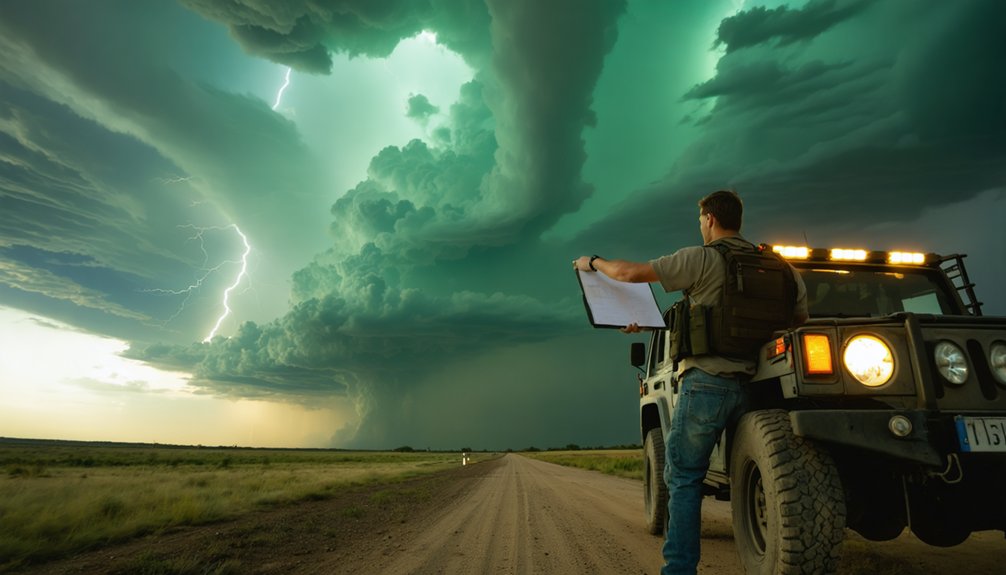
Structured training programs give you a clear, low-risk entry point into storm chasing before you ever position near a severe storm.
Skywarn training teaches you spotter fundamentals, including storm identification, radar interpretation, and hazard reporting, giving you a verified baseline before fieldwork begins. You’ll learn to distinguish a garden-variety thunderstorm from a tornadic supercell, which directly sharpens your decision-making.
Ride-along experiences accelerate that development considerably. Positioning alongside a seasoned chaser exposes you to real-time targeting, escape route selection, and storm-relative positioning under actual field conditions. You absorb judgment calls that no classroom replicates.
Beyond these two paths, studying forecast discussions, reviewing chase footage, and running practice forecasts build analytical independence.
Combining structured instruction with supervised field experience gives you the competence to chase responsibly on your own terms.
Frequently Asked Questions
Can Storm Chasing Experience Substitute for Formal Meteorology Education or Degrees?
Storm chasing experience can’t fully substitute formal education, but it’s invaluable. You’ll sharpen your understanding of storm behavior and safety protocols through fieldwork, yet theoretical meteorology knowledge gives you the scientific foundation experience alone can’t replace.
Are There Age Restrictions or Legal Requirements for Novice Storm Chasers?
Like the open road stretching endlessly before you, storm chasing regulations remain largely ungoverned federally. You’ll find no universal age restrictions, but you must follow local safety guidelines and exercise disciplined, informed judgment independently.
How Much Does Proper Storm Chasing Training Typically Cost Beginners?
You’ll find training costs vary widely—free Skywarn classes exist, while chase tours run hundreds to thousands. Smart budgeting tips include starting with no-cost online resources before investing in paid ride-alongs or advanced meteorology courses.
Is Storm Chasing Covered Under Standard Personal or Vehicle Insurance Policies?
Over 90% of standard policies exclude storm chasing. Your personal and vehicle insurance won’t cover storm damage or insurance liabilities incurred while actively chasing. You’ll need specialized coverage to protect yourself legally and financially.
Do Professional Storm Chasers Earn Income, and How Do They Start?
You can earn through storm chasing careers via media licensing, research contracts, and tour guiding. Start by building forecasting skills, documenting chases, and networking. Income opportunities grow as you establish credibility through consistent, safety-focused field experience.
References
- https://www.stormchasingusa.com/blog/learning-the-basics-about-storm-chasing/
- https://www.gabegarfield.com/blog/zerotohero
- https://www.youtube.com/watch?v=6otZLjSZvPU
- https://www.youtube.com/watch?v=6otZLjSZvPU&vl=en
- https://www.reddit.com/r/stormchasing/comments/1boanfg/how_do_i_get_started_storm_chasing/
- https://www.youtube.com/watch?v=FJWWHDFBRLI
- https://stormtrack.org/threads/classes-for-beginning-storm-chasers.2921/
- https://stormtrack.org/threads/chaser-training.13245/page-2
- https://www.foxweather.com/learn/storm-chasing-advice-from-the-pros
- https://www.reddit.com/r/stormchasing/comments/12c4wgs/how_do_people_become_storm_chasers_like_officially/