Your best eco-friendly storm chasing alternatives are electric hybrid SUVs, fuel-efficient modified sedans, and sustainable RV conversions. Hybrid SUVs deliver 250 miles of electric range with 15% lower carbon output over a decade. Modified sedans achieve 50 MPG combined, ideal for flat terrain operations. Sustainable RVs cut fuel consumption by 20% through retrofitting while handling varied terrains. Each option balances emissions, payload, and budget differently, and the distinctions become critical once you explore the technical details further.
Key Takeaways
- Electric hybrid SUVs offer 250 miles of electric range, making them reliable for extended storm chasing missions.
- Modified fuel-efficient sedans achieve 50 MPG and handle volatile weather conditions effectively.
- Sustainable RV conversions provide solar-powered charging, offering terrain flexibility ideal for unpredictable storm paths.
- Military surplus vehicles feature improved ground clearance, suiting rugged backcountry storm chasing needs.
- Carbon-neutral trailer systems can slash fuel consumption by 60%, reducing long-term operational costs significantly.
Top 3 Eco-Friendly Storm Chasing Vehicles
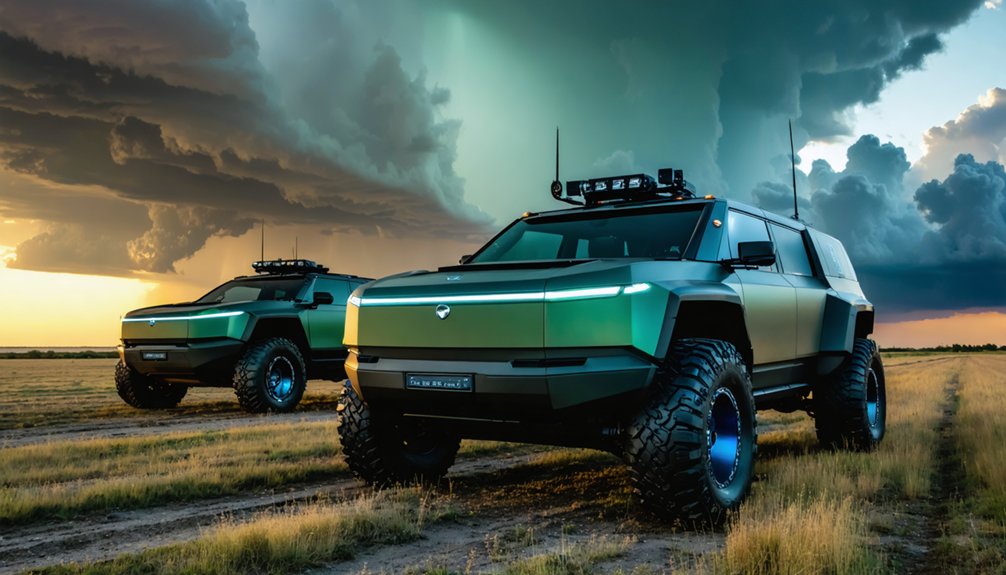
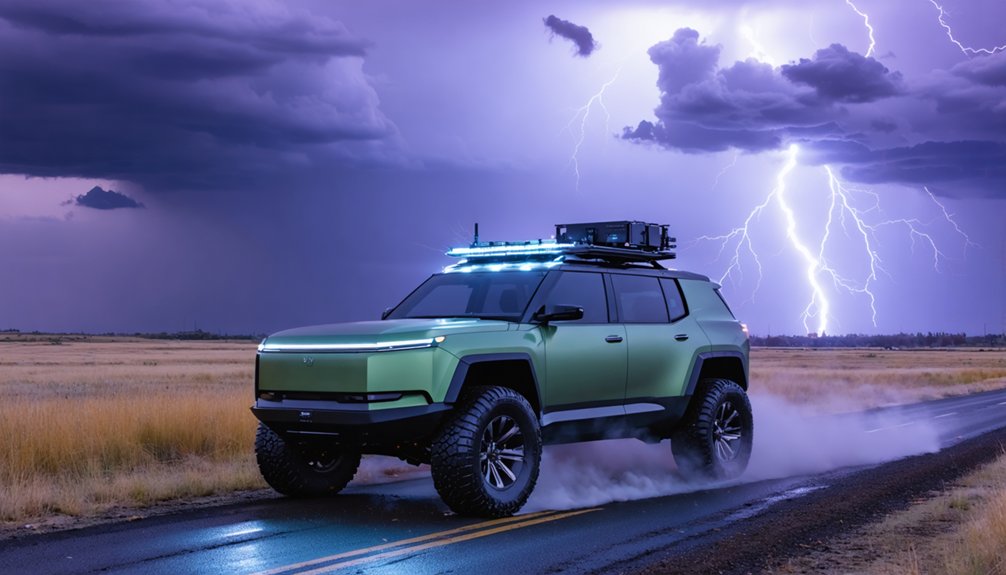
When selecting an eco-friendly storm chasing vehicle, three options stand out for their balance of sustainability, performance, and operational efficiency: electric hybrid SUVs, modified fuel-efficient sedans, and sustainable RV conversions.
Electric SUVs deliver 250 miles of electric range and 40% lower fuel consumption, giving you zero tailpipe emissions during urban segments.
Electric SUVs offer 250 miles of range and 40% lower fuel consumption, eliminating tailpipe emissions on urban routes.
Modified sedans achieve 50 MPG combined, with 12% lighter builds improving handling in volatile conditions.
Sustainable RVs offer solar-powered charging, aerodynamic retrofitting reducing fuel usage by 20%, and 40% lower long-term operational costs.
While Military Surplus vehicles and Trailer Systems serve niche operational needs, these three primary options maximize fuel efficiency without sacrificing storm-chasing capability.
You’re not locked into legacy, high-emission platforms when superior, freedom-preserving alternatives exist.
Which Storm Chasing Vehicle Matches Your Terrain, Budget, and Team Size?
Matching the right eco-friendly vehicle to your specific operation requires weighing three variables: terrain demands, budget constraints, and team size.
For terrain considerations, flat plains suit fuel-efficient sedans delivering 50 MPG, while rugged backcountry demands military surplus vehicles with 30% improved ground clearance.
Budget constraints shape your options sharply: carbon-neutral trailer systems offer 40% cost savings for solo operators, whereas hybrid SUVs require higher upfront investment with long-term 15% carbon footprint reduction.
Team dynamics determine payload requirements — larger crews need the Humvee’s 5,000-pound capacity, while two-person teams operate efficiently within converted RVs.
Cross-reference vehicle features against all three variables simultaneously. A mismatch between terrain capability and team size creates operational liability.
Prioritize vehicles whose specifications directly align with your mission profile, not general popularity.
How These Vehicles Perform on Emissions, Range, and Payload
Performance metrics across emissions, range, and payload reveal clear tradeoffs between these six vehicle categories.
Emission comparisons show hybrid SUVs cutting carbon output by 15% over a decade, while military surplus units achieve only 25% diesel-electric reductions.
You’ll find electric hybrids deliver 250 miles of range, outpacing every other option.
Fuel-efficient sedans hit 50 mpg but sacrifice payload capacities notably.
Eco-friendly military surplus vehicles carry 5,000 pounds, making them your heaviest-duty choice for storm gear.
Carbon-neutral trailers slash fuel consumption by 60% when paired with efficient tow vehicles, maximizing your operational flexibility.
Sustainable RVs reduce fuel usage by 20% through aerodynamic retrofitting.
Match your emission targets, range requirements, and payload demands against these figures before committing to any single platform.
Frequently Asked Questions
How Do Eco-Friendly Storm Chasing Vehicles Handle Extreme Weather Conditions?
Like Odysseus traversing treacherous seas, you’ll find eco-friendly storm chasing vehicles deliver exceptional weather resilience and vehicle performance through electronic stability control, anti-lock braking, and reinforced drivetrains, ensuring you’re always in command during extreme conditions.
Can Solar-Powered Systems Fully Charge Vehicles During Consecutive Storm Chasing Days?
Solar-powered systems won’t fully charge your vehicle during consecutive storm days due to limited solar efficiency under cloud cover, but you’ll maintain operational capacity through weather adaptability via hybrid power, cutting long-term costs by 40%.
What Maintenance Schedules Are Recommended for Hybrid Storm Chasing Vehicles?
Can you afford downtime mid-chase? You can’t. Prioritize monthly battery care checks, quarterly hybrid efficiency inspections, and regular fluid cycles—boosting fuel performance by 50%—keeping your vehicle storm-ready and operationally free.
Are There Insurance Differences Between Traditional and Eco-Friendly Storm Chasing Vehicles?
You’ll find insurance premiums vary considerably between traditional and eco-friendly storm chasing vehicles. Eco-friendly coverage often reflects lower risk profiles, as hybrid systems and advanced safety features can reduce claim frequency, potentially lowering your overall costs.
How Do Biodegradable Trailer Components Hold up Over Multiple Storm Seasons?
“Rome wasn’t built in a day”—you’ll find biodegradable materials require consistent maintenance across storm seasons. They’re engineered with weather resistance coatings, but you should inspect seals annually, as degradation accelerates under repeated high-wind and moisture exposure.
References
- https://www.facebook.com/groups/1821133111780534/posts/2065668000660376/
- https://www.reddit.com/r/stormchasing/comments/w42cwc/ideal_vehicle_for_storm_chasing/
- https://www.reddit.com/r/stormchasing/comments/1puf46a/got_into_chasing_now_looking_for_a_better_chasing/
- https://crazystormchasers.com/affordable-tornado-intercept-vehicle-options/
- https://www.youtube.com/watch?v=Ex0hd-NG224
- https://www.reddit.com/r/stormchasing/comments/1ayy2nq/chase_vehicle_ideas/
- https://crazystormchasers.com/storm-chaser-environmental-impact-analysis/
- https://www.reddit.com/r/stormchasing/comments/1ptfvdw/stormchasers_cars/
- https://www.reddit.com/r/stormchasing/comments/12ykc89/what_are_some_good_vehicles_to_go_storm_chasing/
- https://www.jalopnik.com/i-need-an-affordable-car-that-can-outrun-a-tornado-wha-1788380072/