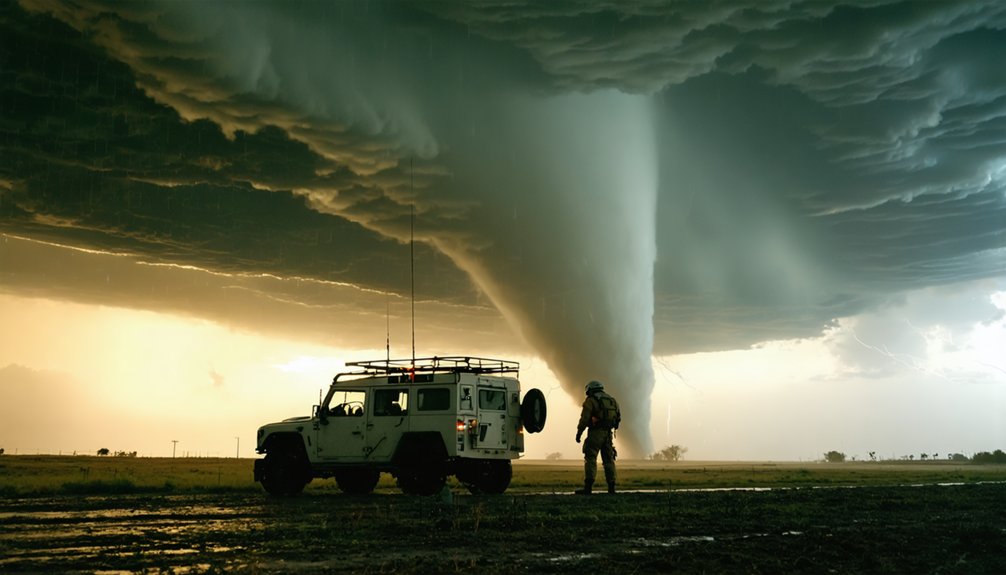
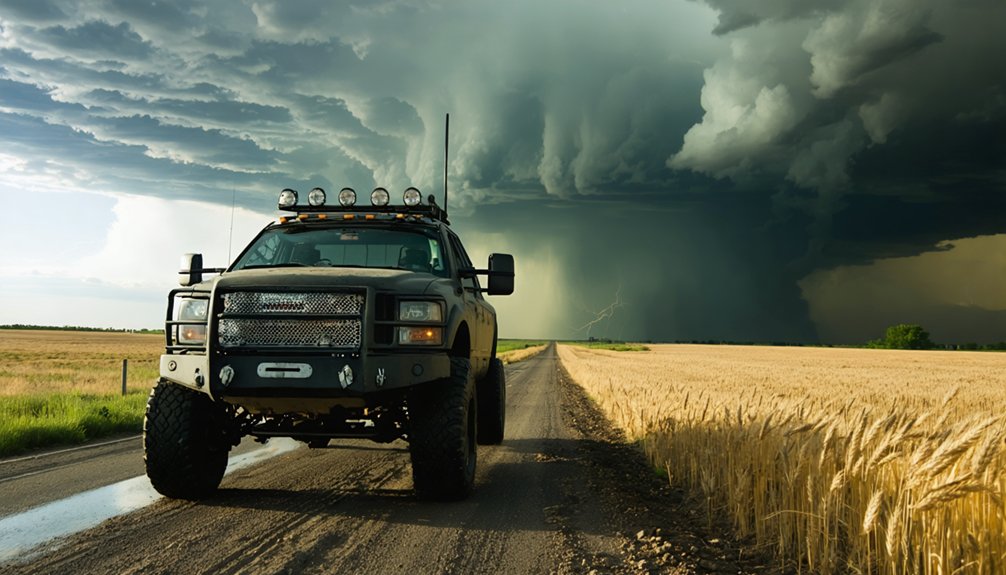
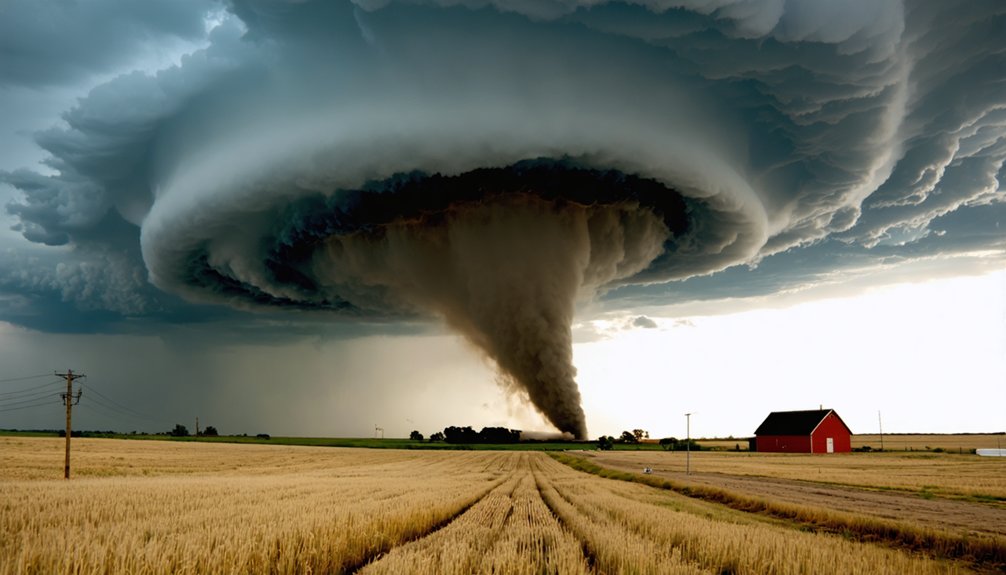
To chase storms safely, you need to master mesocyclone anatomy, recognize wall clouds, and track rear-flank downdrafts before you deploy. Pre-load your GPS with multiple egress corridors and identify hard shelters along each route. Carry communication tools, navigation gear, and proper visibility equipment. Start with pulse thunderstorms to sharpen your radar and positioning skills. Apply ethical field practices on every outing. There’s considerably more technical ground to cover ahead.
Key Takeaways
- Learn storm anatomy basics, including inflow bands, wall clouds, and rear-flank downdrafts, to interpret real-time visual cues accurately.
- Pre-load GPS with multiple escape routes and identify hard shelters before deploying into the field.
- Start with simple pulse thunderstorms to practice radar management, positioning, and repositioning drills safely.
- Pack essential gear including communication devices, navigation tools, cameras, and safety equipment before every chase.
- Follow ethical guidelines by staying on public roads, obeying traffic laws, and sharing data with fellow chasers.
Master Storm Structure Before You Chase
Before you chase a single storm, you need to master its anatomy. Storm anatomy isn’t optional knowledge—it’s your primary survival tool.
Study inflow bands, which feed moisture into a storm’s base. Analyze wall clouds, the lowered rotating formations signaling intense updrafts. Understand rear-flank downdrafts (RFDs), which can rapidly shift wind direction and trap unprepared chasers.
Storm anatomy saves lives—inflow bands, wall clouds, and RFDs are non-negotiable knowledge before you chase.
Cloud formations communicate critical data in real time. A striated supercell signals strong rotation; a ragged, fragmented base indicates turbulent, unpredictable behavior. Cross-reference what you observe visually against live radar to confirm storm structure and movement vectors.
Resources like Tim Vasquez’s *Storm Chasing Handbook* and Skywarn training programs provide structured, technical frameworks. You can’t make independent decisions in the field without first building this analytical foundation.
Plan Your Storm Chasing Escape Routes Before You Arrive
Knowing storm structure means nothing if you’re boxed in with no way out. Before you deploy, load your GPS with multiple egress corridors and identify hard shelters along each vector.
Route mapping isn’t optional — it’s a core safety protocol executed before ignition, not during a tornado intercept.
Study road networks using satellite imagery and county maps. Paved perpendicular roads offer the cleanest exits from a storm’s forward path. Avoid dead-ends, low water crossings, and rural dirt roads that deteriorate under heavy rainfall.
Pre-position yourself upwind and southeast of your target zone, maintaining constant awareness of storm motion vectors. If your primary route becomes compromised, you need two alternatives already loaded.
Freedom in the field comes from preparation, not improvisation.
Gear Every Beginning Storm Chaser Actually Needs
Five core gear categories separate a functional storm chaser from a liability in the field: communication, navigation, documentation, visibility, and emergency response. Each category demands specific essential tools you can’t improvise under rotating supercells.
For communication, carry emergency devices and mobile weather apps with NOAA integration.
Navigation requires a GPS preloaded with shelter locations and alternate exit routes.
Documentation means high-quality cameras plus field notebooks for logging real-time observations.
Visibility demands protective gear suited for blowing debris, heavy rain, and low-light conditions.
Your safety gear checklist must include hazard lights, emergency communication equipment, and vehicle emergency supplies.
Your safety gear checklist isn’t optional — hazard lights, emergency communication, and vehicle supplies are non-negotiable field essentials.
Keep your engine running when stationary near active storms.
You’re operating in a dynamic, high-consequence environment — your gear configuration determines whether you maintain freedom of movement or become a rescue statistic.
Start Small: Simple Storms Beat Tornadoes for Beginners
Most beginners underestimate how much operational load a simple thunderstorm generates before tornadoes ever enter the equation.
You’re managing radar, positioning, escape routes, and real-time atmospheric shifts simultaneously. Skipping foundational storm types creates beginner mistakes that compound fast under pressure.
Start with pulse thunderstorms and multicell clusters before touching supercell territory.
You’ll build genuine situational awareness without catastrophic consequences.
Prioritize these developmental milestones first:
- Track inflow and outflow boundaries on radar before interpreting wall cloud rotation
- Practice repositioning drills during non-severe storms to sharpen escape route execution
- Log observational field notes documenting storm structure, movement, and visual cues each chase
You earn autonomy in severe weather by demonstrating competence in controlled scenarios.
Tornadoes don’t reward ambition — they punish gaps in your operational foundation.
What Storm Chasers Owe the Road, the Land, and Each Other
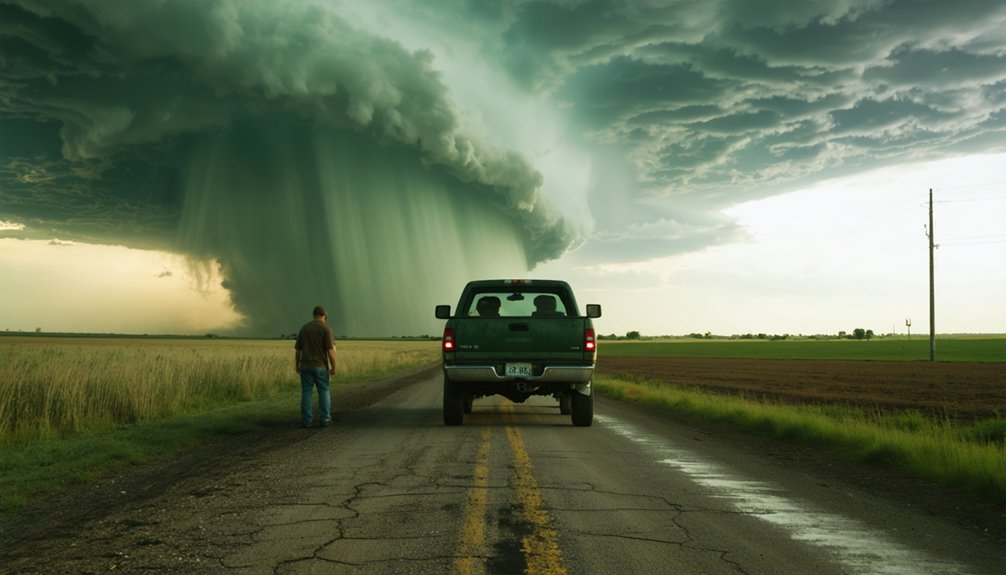
Storm chasing operates inside a shared ecosystem — one where your decisions ripple outward to other chasers, landowners, emergency responders, and the public traversing the same roads.
Ethics awareness isn’t optional; it’s operational infrastructure. Stay on public roads, obey traffic laws, and never block lanes during active observation. Your vehicle positioning affects emergency response corridors directly.
Environmental stewardship demands equal discipline. Avoid driving across undeveloped land without explicit permission, and never disturb wildlife habitats or sensitive ecosystems during repositioning.
Pack out everything you bring in.
Toward fellow chasers, maintain mutual accountability. Share positional data, communicate hazards, and never prioritize footage over someone’s safety.
The freedom to chase depends entirely on how responsibly the community collectively exercises it — protect that freedom through consistent, measurable conduct.
Frequently Asked Questions
How Do Storm Chasers Find Reliable Chasing Partners or Teams?
You’ll find reliable partners through storm chaser networking via SpotterNetwork and Skywarn programs. Join reputable tour groups to assess team dynamics firsthand, analyzing each member’s forecasting skills, safety protocols, and real-time decision-making under pressure.
Which Storm Chasing Tours Are Best for Absolute Beginners?
Over 100 tours run annually—you’ll want Tempest Tours or Tornadic Expeditions for storm chasing essentials and beginner gear. They’re expertly guided, data-driven experiences that’ll give you the freedom to chase safely and confidently from day one.
How Far in Advance Should Hobbyists Monitor Weather Forecasts?
You should monitor storm patterns up to 8 days in advance using the Storm Prediction Center’s daily convective outlooks. Pair that with weather apps pulling GFS and HRRR data to sharpen your targeting decisions independently.
What Training Programs Help Beginners Become Certified Storm Spotters?
Sure, just *wing it* out there! But seriously, you’ll want spotter certification through Skywarn or SpotterNetwork training resources. Both programs teach safety protocols and storm observation techniques, equipping you with analytical skills to responsibly identify and report dangerous weather.
How Do Chasers Stay Updated on Storm Activity While Driving?
You’ll stay updated through radar apps, mobile alerts, and real-time storm tracking feeds. Use communication tools like ham radios, follow safety protocols, and integrate route planning with NOAA data to adapt dynamically as conditions evolve.
References
- https://www.reddit.com/r/stormchasing/comments/1ooimws/does_anyone_have_tips_for_a_storm_chasing/
- https://www.youtube.com/watch?v=6otZLjSZvPU&vl=en
- https://www.flame.org/~cdoswell/chasesums/Chase_safety.html
- https://www.reddit.com/r/stormchasing/comments/1boanfg/how_do_i_get_started_storm_chasing/
- https://www.youtube.com/watch?v=FJWWHDFBRLI
- http://www.stormeyes.org/tornado/chasing/FAQ/
- https://www.wiu.edu/SevereWeather/images/presentations/How_to_Effectively_Storm_Chase.pdf
- https://www.wikihow.com/Storm-Chase
- https://stormtrack.org/threads/basic-storm-chasing-process.29691/
- https://www.youtube.com/watch?v=BNEUlaqywpU