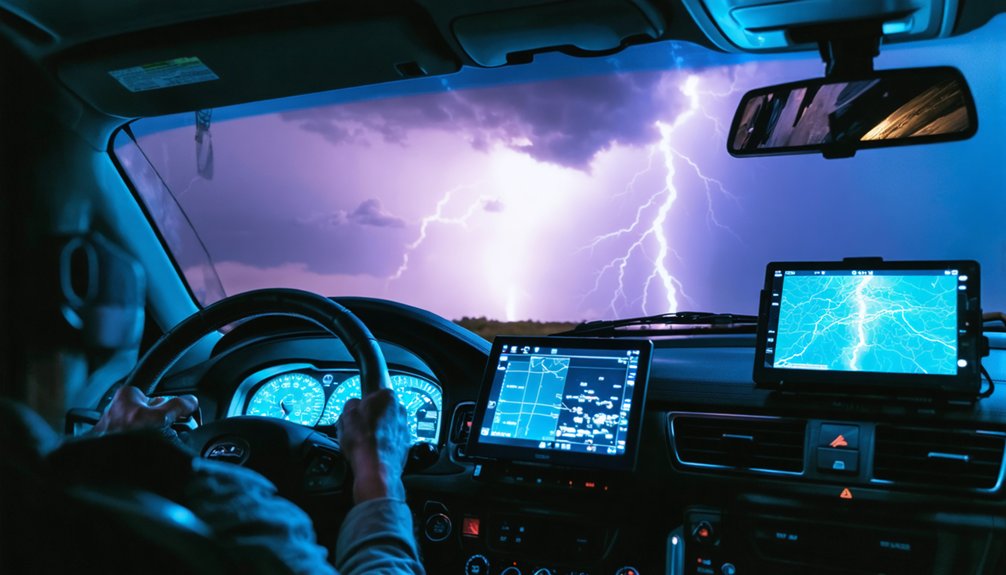
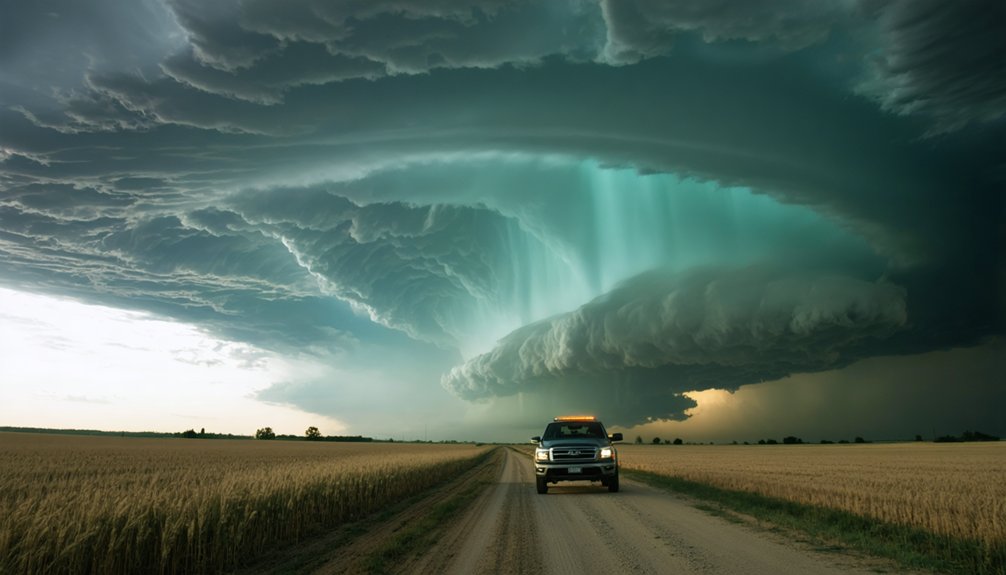
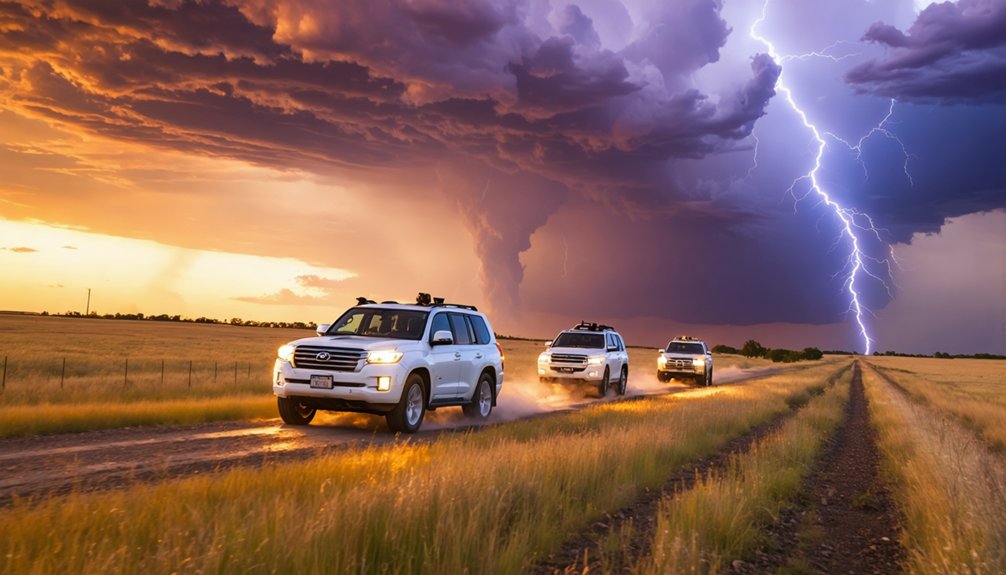
When you trace storm chasing’s evolution, you’ll find it shifted from David Hoadley’s methodical 1950s data collection to a media-driven spectacle amplified by *Twister* (1996) and Discovery Channel’s *Storm Chasers*, which averaged 1.4 million viewers per episode. That cultural pressure spawned over 30 tour operators by 2010. Yet no governing body sanctions competitive formats, since scientific integrity and safety protocols remain the field’s foundation. There’s far more complexity behind this tension worth uncovering.
Key Takeaways
- Storm chasing originated in the 1950s as a scientific pursuit, focused on collecting atmospheric data unavailable through standard weather stations.
- The 1996 film *Twister* and reality TV shows like *Storm Chasers* transformed storm chasing from science into a spectacle-driven cultural phenomenon.
- Social media algorithms rewarding consistency and dramatic footage have turned many storm chasers into media personalities rather than scientists.
- No governing body sanctions competitive storm chasing formats, as competitions conflict with data integrity, safety protocols, and scientific methodology.
- Competition proximity requirements dangerously clash with evacuation protocols, while rapidly shifting storm behavior makes standardized risk assessment nearly impossible.
The Origins of Storm Chasing
Storm chasing’s roots trace back to the 1950s, when meteorologist David Hoadley began systematically pursuing severe weather across the Great Plains to collect observational data that standard weather stations couldn’t capture.
You can trace storm chaser origins directly to this era, when individuals prioritized raw, field-collected data over passive observation. Historical anecdotes from early practitioners reveal that equipment was minimal — cameras, notebooks, and personal vehicles replaced sophisticated instrumentation.
By the 1970s, NOAA’s National Severe Storms Laboratory formalized mobile data collection, deploying researchers directly into tornado corridors.
By the 1970s, NOAA’s formalized mobile data collection sent researchers directly into the heart of tornado corridors.
You’re looking at a discipline born from scientific necessity, not spectacle. These pioneers established methodologies still used today, proving that direct atmospheric engagement yields measurements no remote sensor can fully replicate.
Freedom to pursue data defined the craft from its inception.
When Storm Chasing Became a Cultural Obsession
What began as field meteorology in the 1950s shifted dramatically in 1996, when the film *Twister* grossed over $490 million worldwide and reframed storm chasing as spectacle rather than science.
You can trace the cultural fascination directly through measurable indicators: Discovery Channel’s *Storm Chasers* averaged 1.4 million viewers per episode between 2007 and 2012, and storm chasing tour operators expanded from a handful to over 30 companies by 2010.
Social media accelerated this further — tornado footage routinely generates millions of views within hours.
Storm chasing transformed from niche scientific pursuit into a freedom-driven, adrenaline-coded identity.
You’re now traversing a landscape where cultural momentum, not just meteorological data, defines participation.
That shift fundamentally altered how enthusiasts, scientists, and media engage with extreme weather events.
Early Media’s Myths and Accuracies About Storm Chasers
Media misconceptions compounded quickly. Broadcasts framed chasers as thrill-seekers, stripping away the methodological rigor behind GPS triangulation, radiosonde data analysis, and mesocyclone tracking.
Media misconceptions spread fast, reducing disciplined storm science to mere spectacle and ignoring the rigorous methodology chasers actually employed.
You’d rarely see the hours of pre-storm atmospheric modeling that preceded any intercept.
What early media did capture accurately was geographic scope — tornado alley‘s role as a prime observation corridor was consistently represented.
However, the motivational framing remained distorted, prioritizing spectacle over the legitimate meteorological science that actually drove most chasers into the field.
How Reality TV Turned Storm Chasers Into Celebrities
You watched real deployments, real instrumentation, and real risk — but framed through media portrayal that prioritized character-driven storytelling.
- Named individuals replaced faceless science teams, creating parasocial connections.
- Episode-based formatting built viewer investment across seasonal arcs.
- On-screen data collection added technical credibility to dramatic sequences.
- Personal rivalries and contrasting methods gave audiences ideological stakes in outcomes.
This shift didn’t create competitions — it created icons. You now recognized storm chasers by name, not just by function.
How New Technology Turned Storm Chasers Into Media Figures
As smartphones, dashcams, and affordable 4K drones entered the consumer market, storm chasers gained direct broadcast capability without network gatekeepers. You now control your narrative, pushing raw footage directly to YouTube, Twitch, and social platforms in real time.
That technology impact reshaped public perception entirely. Previously, networks filtered storm content through editorial layers.
Today, you’re streaming 4K tornado intercepts with GPS-tagged metadata, Doppler-integrated overlays, and live audience interaction. Algorithms reward consistency and spectacle, converting dedicated chasers into verified media figures with monetized channels and sponsorship pipelines.
Media influence now flows horizontally. You don’t wait for broadcast approval — you build subscriber bases, license footage independently, and establish authority through data transparency.
Technology didn’t just amplify storm chasing; it restructured who controls the story.
Why Storm Chasing Is Still Science, Not Sport?
When you examine storm chasing’s core purpose, you find that scientific data collection—atmospheric pressure readings, Doppler velocity measurements, and thermodynamic profiles—drives every pursuit, not competitive outcomes.
You’ll notice that no governing body sanctions competitive formats precisely because researchers prioritize data integrity over performance metrics.
Safety protocols further reinforce this reality, as proximity to a tornado carries lethal risk that no sport-based framework can responsibly standardize or incentivize.
Scientific Roots Remain Strong
Despite the dramatic footage and viral moments that dominate storm chasing media, the activity’s scientific foundation hasn’t wavered. You’ll find that serious chasers prioritize scientific methodology and rigorous data collection over spectacle every time.
Core priorities driving storm chasing today:
- Atmospheric pressure readings feed directly into forecasting models that save lives
- Doppler radar cross-referencing validates ground-level observations with precision
- GPS-tagged video footage provides measurable storm structure data, not entertainment metrics
- Thermodynamic profiling captures temperature, humidity, and wind shear data in real time
You’re looking at an activity governed by research institutions, not scoreboards. No rankings exist. No judges evaluate proximity or bravery.
Storm chasers answer to peer-reviewed journals and verified datasets, keeping the discipline grounded in evidence rather than competition.
Data Over Competition Always
Storm chasing’s scientific foundation doesn’t just coexist with its public image—it actively defines every operational decision made in the field.
When you enter a storm environment, data collection drives every choice you make. You’re deploying instruments, logging atmospheric readings, and adjusting positioning based on real-time analysis—not chasing proximity for spectacle.
Safety measures aren’t optional guidelines; they’re operational requirements embedded in every protocol you follow. Your margin for error tightens the closer you get, and scientific discipline is what keeps that margin controlled.
No governing body scores your performance. No rankings measure your output against another chaser’s. What matters is the quality of the data you retrieve and whether you return with it intact.
Science doesn’t reward recklessness—it demands precision, and that distinction separates legitimate storm chasing from pure spectacle.
Safety Discourages Sporting Format
Safety constraints eliminate any realistic pathway toward a competitive storm chasing format. When you factor in risk assessment demands, you’ll quickly recognize that no governing body can responsibly sanction events where participants deliberately close distances with violent, unpredictable atmospheric systems.
Safety protocols don’t bend to competitive frameworks — they actively dismantle them.
Consider why sporting formats collapse under scientific field conditions:
- Proximity requirements in competition contradict mandatory evacuation thresholds
- Dynamic storm behavior invalidates pre-set safety protocols instantly
- No standardized risk assessment metric exists to equalize competitor exposure
- Scientific organizations explicitly oppose competitive chasing due to liability and fatality risk
You’re operating in environments where conditions shift within seconds.
Science demands measured retreat; competition demands advancement.
That fundamental contradiction keeps storm chasing permanently outside sporting classification.
Frequently Asked Questions
Are There Any Legal Liabilities for Storm Chasers Who Cause Accidents?
Dust swirling around a wrecked vehicle—you’re liable. As a storm chaser, you’ve got storm chaser accountability under negligence laws. You’ll need liability insurance to cover damages if you’ve caused accidents on public roads.
How Do Storm Chasers Financially Sustain Themselves Between Active Weather Seasons?
You sustain yourself between seasons through sponsorship opportunities from weather-related brands and freelance photography sales. You’ll license storm footage, write grant proposals, consult meteorologically, and leverage data collection contracts to maintain financial stability year-round.
What Mental Health Challenges Do Storm Chasers Commonly Face After Dangerous Encounters?
Like shadows that linger, you’ll face PTSD and acute trauma response after dangerous encounters. You’re building psychological resilience through debriefing, peer support, and cognitive behavioral therapy, which actively counteracts anxiety, hypervigilance, and emotional numbness common among storm chasers.
Do Storm Chasers Collaborate With Emergency Responders During Active Disaster Events?
Yes, you’ll find storm chasers actively engaging in collaboration dynamics with emergency responders, sharing real-time storm data and location intel. You’re contributing directly to emergency protocols, enhancing situational awareness and enabling faster, more precise disaster response decisions.
How Do Insurance Companies Handle Coverage for Professional Storm Chasing Equipment?
Like traversing a financial tornado, you’ll find insurance companies handle storm chasing equipment through rigorous equipment valuation assessments and strict policy limitations, often requiring specialized riders that account for high-risk field exposure and precise replacement cost documentation.
References
- https://www.rmets.org/metmatters/history-storm-chasing
- https://www.youtube.com/watch?v=uRQ-nTTCazo
- https://en.wikipedia.org/wiki/Storm_chasing
- https://stormtrack.org/threads/history-of-storm-chasing-back-to-day-one.32873/
- https://www.nationalgeographic.com/science/article/130604-storm-chasing-dangers-samaras-weather-tornadoes
- https://www.stmweather.com/blog/a-history-of-tornado-chasing-and-upcoming-girls-who-chase-training
- https://www.iheart.com/podcast/1333-environment-nature-storm-300954045/episode/the-birth-of-storm-chasing-from-300954060/
- https://journals.ametsoc.org/view/journals/wefo/14/4/1520-0434_1999_014_0558_ahossi_2_0_co_2.xml
- https://www.youtube.com/watch?v=NQDfS3DMCHc
- https://thelaker.com/2019/storm-chasing-a-twisted-pleasure