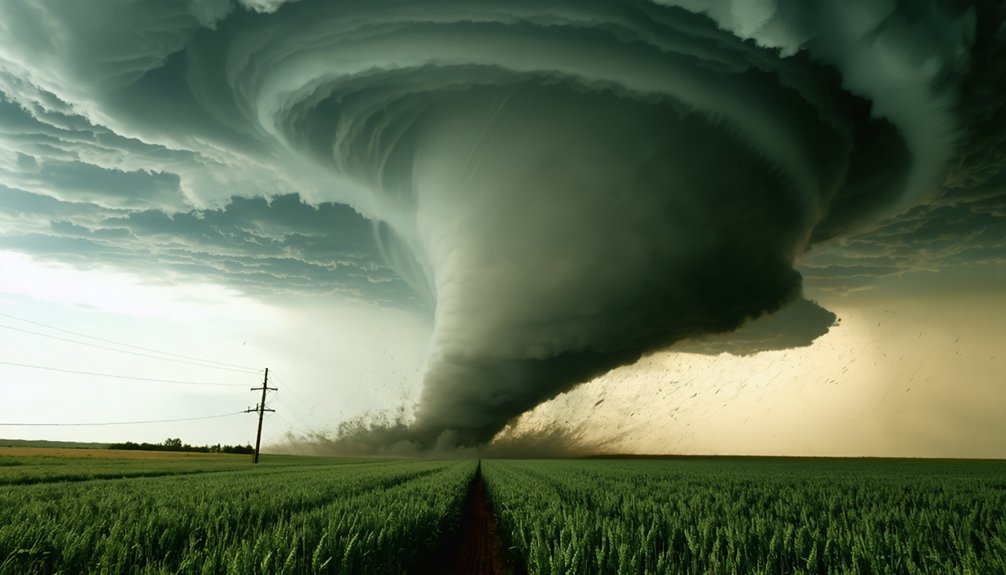
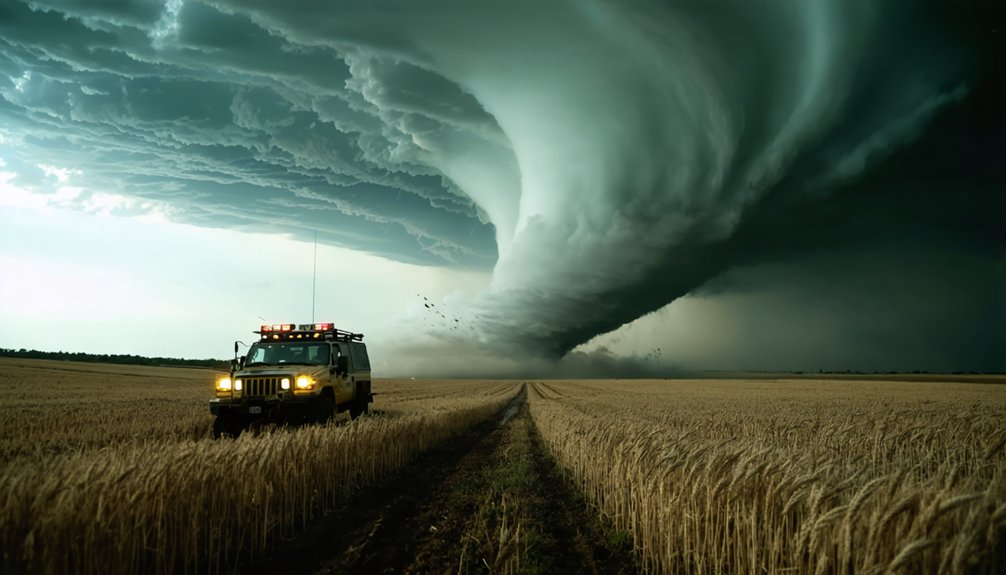
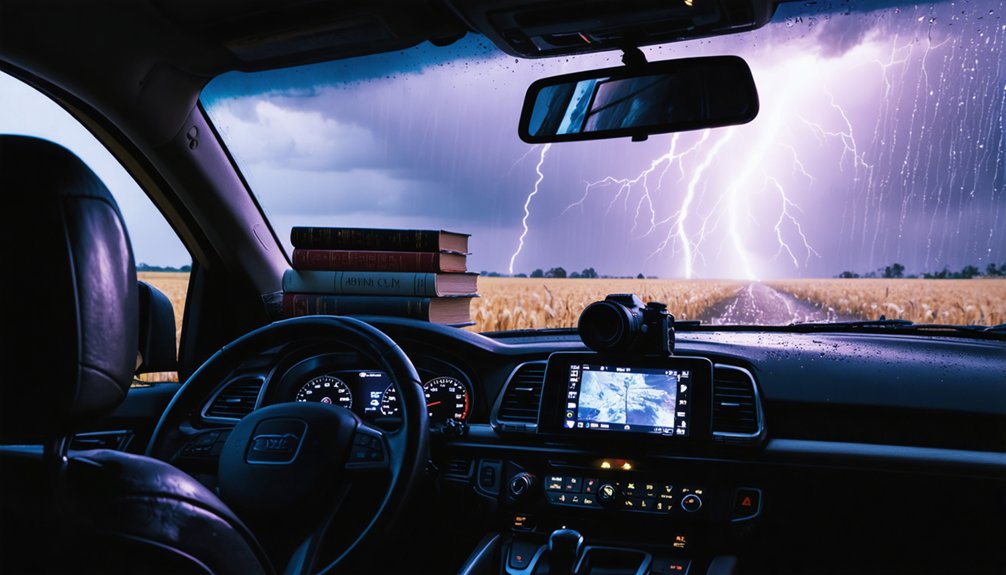
Storm chasing draws roughly 5,000 people to the Great Plains each year, and you’re likely fascinated by more than just adrenaline. Most chasers prioritize scientific curiosity, precise positioning, and visual documentation over thrill-seeking. You’ll need core gear like weather radios, anemometers, and dash cameras to operate safely and effectively. Locations like Tornado Alley offer consistent supercell activity with flexible road networks. There’s much more to uncover about how serious chasers operate at every level.
Key Takeaways
- Around 5,000 hobbyists, meteorologists, and weather tourists visit the Great Plains annually, driven by scientific curiosity and a passion for atmospheric spectacle.
- Essential gear includes weather radios, dash cameras, anemometers, and safety equipment, enabling accurate documentation and personal protection during storm events.
- Tornado Alley remains the premier destination, offering open roads, clear sightlines, and consistent supercell and tornado activity for chasers.
- Safety depends on disciplined positioning, approaching storms from the west or south, maintaining distance, and identifying multiple escape routes beforehand.
- Hobbyists collect wind speed, barometric pressure, and visual data, contributing valuable insights that improve severe weather understanding and forecasting models.
What Actually Draws People to Storm Chasing?
What pulls roughly 5,000 people to the Great Plains each year isn’t just adrenaline — it’s a precise convergence of scientific curiosity, visual documentation, and raw atmospheric spectacle.
You’re not simply chasing weather; you’re positioning yourself at the intersection of data and experience.
The adrenaline rush is real, but it’s secondary to weather fascination for most participants. Hobbyists, meteorologists, and weather tourists primarily pursue storms to photograph, record, and analyze them.
For most storm chasers, the rush is secondary — documentation, analysis, and atmospheric fascination drive them forward.
You’re collecting visual evidence of cumulonimbus formations, wall clouds, and dynamic pressure systems that radar alone can’t fully capture.
A small segment chases competitively or commercially, but the majority value precision — knowing when to move, where to position, and how to document what you’re witnessing.
That calculated freedom is the actual draw.
Must-Have Gear for Every Storm Chasing Hobbyist
Before you chase your first storm, your gear determines whether you collect clean data or put yourself at unnecessary risk. Your core Weather Technology stack should include a weather radio for real-time alerts, a dash camera to document cloud structures, and an anemometer to measure wind speed and direction accurately.
These tools transform raw field exposure into actionable meteorological data.
Your Safety Equipment layer is equally non-negotiable. Pack a first aid kit, wear a helmet, and use reinforced clothing designed to absorb impact debris.
Cutting corners here directly raises your risk profile.
Together, these two categories create a functional, mobile kit that keeps you informed and protected simultaneously.
Investing in quality gear upfront gives you the operational freedom to chase effectively without compromising your personal safety.
Where Storm Chasers Go to Find the Best Storms
Once your gear is locked in, your next variable is location. Storm patterns dictate where you’ll find the most productive chasing opportunities, so you need to analyze conditions before committing to a route.
Tornado Alley, spanning the Great Plains, remains your highest-probability target. Open roads give you flexible positioning and clean sightlines, both critical to effective chasing techniques.
Thousands of chasers converge here annually because the atmospheric dynamics consistently produce supercells and tornadoes.
If lightning hotspots interest you, Venezuela’s Lake Maracaibo delivers extraordinary electrical storm frequency, making it a global benchmark for lightning chasers.
Wherever you chase, prioritize locations with multiple exit routes and minimal obstructions.
Your positioning determines both your safety margin and your data quality, so choose deliberately.
How to Chase Storms Without Getting Killed
Staying alive while storm chasing comes down to disciplined positioning and route planning. Your chase strategies must prioritize approaching storms from the west or south—never cross north of a storm’s path.
Always identify multiple escape routes before you commit to any position, because traffic bottlenecks kill faster than wind.
Storm safety requires maintaining several miles of distance if you’re still developing your situational awareness. Monitor weather radar continuously and reassess your risk profile as conditions evolve.
Stay current on weather outlooks before you ever leave your vehicle.
Keep your movement options open by positioning on roads with clear sight lines and minimal obstacles.
The data supports one clear conclusion: disciplined chasers survive. Emotional decisions—pushing too close, ignoring escape routes—are what get people killed.
What Do Storm Chasers Actually Capture and Record?
Disciplined positioning keeps you alive, but it also puts you in the right place to collect meaningful data. When you’re in the field, your dash camera continuously documents storm structure, capturing wall clouds, rotating updrafts, and precipitation shifts in real time.
Your anemometer logs wind speed and direction, generating ground-level data that radar simply can’t replicate. That raw data directly supplements forecasting models.
You’ll also use your camera for lightning photography, timing exposures to isolate strike patterns against darkened skies.
Beyond visuals, you’re recording barometric pressure drops, temperature gradients, and humidity fluctuations. Each data point you gather contributes to a broader understanding of severe weather behavior.
You’re not just witnessing the storm — you’re quantifying it, building a personal dataset that carries genuine scientific and documentary value.
Frequently Asked Questions
How Did Storm Chasing Originate as a Scientific and Recreational Pursuit?
Seeking severe weather secrets, you’ll find storm chasing started in the 1950s with meteorologists using basic radar. It’s evolved into an adrenaline rush-driven hobby, blending scientific data collection with recreational adventure across the Great Plains.
Who Is Considered the Founding Figure of Modern Storm Chasing History?
You’ll find that David Hoadley’s pioneering work in storm forecasting and tornado research established him as the founding figure of modern storm chasing, utilizing early radar data and manual observation techniques to analytically track and document severe weather systems.
How Many People Die Annually While Actively Chasing Severe Storms?
“Better safe than sorry” — historically, only a handful of chasers have died. You’ll find storm safety and risk awareness keep fatalities remarkably low, proving it’s far less deadly than media portrays.
What Is the Success Rate of Finding a Targeted Storm?
You’ll find a storm in roughly one out of every ten attempts. Mastering chasing techniques and reading storm patterns improves your odds, but data confirms it’s a challenging, analytically demanding pursuit requiring precision and adaptability.
How Has Storm Chasing Technology Evolved Since Its Earliest Beginnings?
You’ve seen storm chasing technology transform dramatically. Early chasers relied on basic manual observation, but you now utilize radar advancements and mobile applications, integrating satellite imagery and real-time communication to pursue storms with remarkable precision and analytical confidence.
References
- https://en.wikipedia.org/wiki/Storm_chasing
- https://www.stripes.com/living/2026-06-01/web-weather-lifestyle-living-tracking-tornados-storms-trackers-21844405.html
- https://www.nationalgeographic.com/travel/article/storm-chasing-is-an-exhilarating-rush-but-is-it-safe
- http://www.youtube.com/watch?v=u4C00BiOWUc
- https://www.nature.com/articles/494312a
- https://roadtrippers.com/magazine/american-storm-chasing/
- https://www.popsci.com/science/real-storm-chasers-tornadoes/
- https://www.abc.net.au/news/2020-07-26/weather-storm-chasers/12491378
- https://www.nationalgeographic.com/environment/article/chasing-tornadoes
- https://www.reddit.com/r/tornado/comments/15m7zmq/tell_me_like_it_is_how_feasible_is_it_to_be_a/