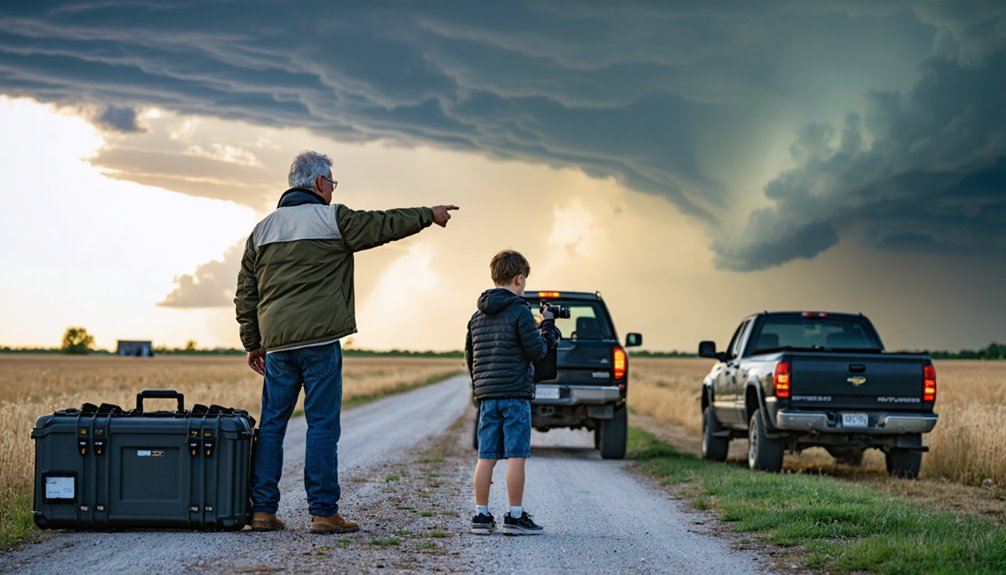
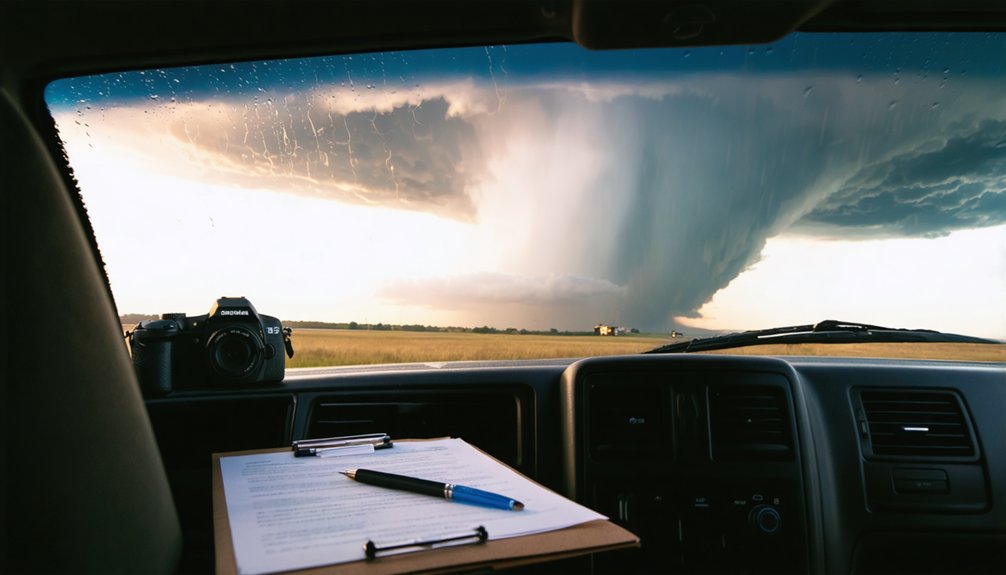
Social media has fundamentally reshaped storm chasing in ways you can’t ignore. It’s transformed real-time reporting, turning chasers into instant data sources for meteorologists and the public alike. It’s also lowered the barrier to entry, pulling in thousands of new participants who lack formal training. That shift brings both crowdsourced value and serious safety concerns. The full picture is more nuanced than a single viral video suggests, and every angle deserves a closer look.
Key Takeaways
- Social media enables storm chasers to share real-time updates, providing meteorologists and the public with immediate ground-truth data during severe weather events.
- Online accessibility and social media visibility have grown the storm chasing community, removing barriers like formal meteorology training or institutional support.
- Viral competition for likes and views drives reckless chasing behavior, increasing safety risks for inexperienced chasers and bystanders.
- Live streams and crowdsourced reports help meteorologists validate radar data, improving the accuracy of severe weather warnings and decisions.
- Social media fame and sponsorships have introduced ethical dilemmas, with financial incentives often prioritizing dramatic content over responsible, safety-conscious behavior.
How Social Media Transformed Real-Time Storm Reporting
Before social media, storm chasers relied on radio communications and post-event reporting to share field observations — a process that introduced significant delays between ground-level data collection and public awareness.
Platforms like Twitter, Facebook, and YouTube changed that completely. You can now watch a tornado develop in real time updates streamed directly from the field, giving meteorologists, emergency managers, and the public immediate access to ground-truth data.
This shift accelerated warning awareness and strengthened community engagement between chasers, researchers, and citizens monitoring dangerous weather.
Mobile internet made live streaming practical, collapsing the gap between observation and response. The National Weather Service can now receive direct field reports during active events, improving decision-making when minutes matter.
Social media didn’t just change how chasers share data — it redefined the entire reporting pipeline.
The Surge in Storm Chasers That Social Media Made Possible
The internet didn’t just connect storm chasers — it multiplied them. Beginning in the mid-to-late 1990s, online access triggered rapid community growth by putting forecasts, chase reports, and veteran analysis within reach of anyone willing to learn.
You no longer needed a meteorology degree or institutional backing to participate.
Social media accelerated amateur involvement further by giving new chasers immediate visibility and credibility. Platforms let you document your own chases, build an audience, and engage directly with experienced chasers — pathways that simply didn’t exist before.
Social media handed new chasers something unprecedented: instant visibility, instant credibility, instant community.
Television exposure reinforced this momentum, framing storm chasing as accessible and thrilling.
The result was a larger, faster-moving, and increasingly open community. That openness democratized the field, but it also introduced new challenges around experience, judgment, and accountability in the field.
Has Social Media Made Storm Chasing More Dangerous?
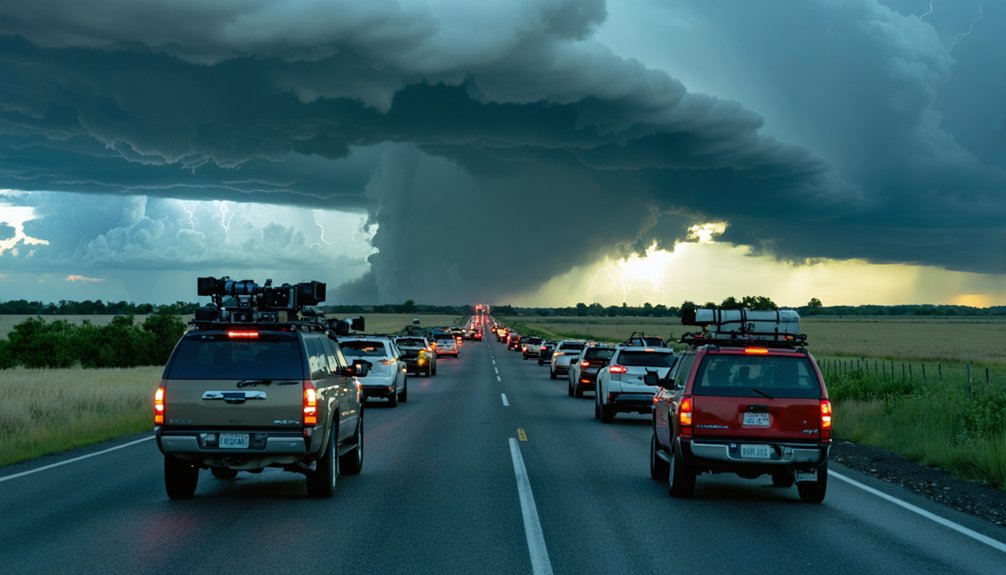
As the storm chasing community grew, so did the risks tied to how chasers use social media in the field. When you post dramatic, close-range tornado footage, you’re not just sharing a moment — you’re potentially pulling inexperienced chasers toward the same storm.
That congestion creates dangerous road conditions and limits experienced chasers’ ability to maneuver safely.
Viral competition has pushed some chasers to close distances that compromise their safety and others’. Risk awareness suffers when likes and views become the priority over sound judgment.
Responsible sharing means you’re thinking about what your content signals to a growing audience that may lack the field experience to replicate it safely.
Social media didn’t create recklessness, but it’s given it a much larger stage.
Do Storm Chaser Posts and Streams Actually Help Meteorologists?
When a tornado touches down, storm chasers posting real-time location data and structural observations can reach the National Weather Service faster than traditional reporting channels.
You’re fundamentally watching crowd sourcing reshape how meteorologists receive ground-truth information. Live streams and field reports confirm or challenge radar interpretations, supporting faster, more accurate warning decisions.
However, the value depends heavily on data validation. Not every chaser accurately identifies storm features or reports positions correctly.
Meteorologists must cross-reference field reports against official instruments before acting on them. When chasers are reliable and well-positioned, their contributions genuinely strengthen nowcasting.
When they’re not, noise enters the system. The practical benefit is real, but it’s conditional on the quality and credibility of whoever’s posting from the field.
Storm Chasing Fame, Sponsorships, and Where the Ethics Get Complicated
Social media didn’t just expand storm chasing’s audience—it turned individual chasers into brands. Fame dynamics now shape decisions that once belonged purely to science and safety.
Sponsorship impacts are real: gear deals, ad revenue, and platform growth create financial incentives tied directly to views.
Here’s where the ethical dilemmas sharpen:
- Chasers risk their lives closer to tornadoes for more dramatic footage.
- Influencer culture rewards spectacle over responsible positioning.
- Sponsors benefit from danger without bearing its consequences.
- Audiences unknowingly reinforce reckless behavior through engagement.
You’re part of this system every time you click, share, or subscribe.
Recognizing how influencer culture intersects with life-or-death decisions matters. The freedom to chase comes with responsibility—both for chasers and the audiences who fuel their reach.
Frequently Asked Questions
What Equipment Do Storm Chasers Typically Use to Document Severe Weather?
As lightning splits the sky, you’d rely on high-resolution camera technology to capture nature’s fury while using mobile devices and sensors for precise data collection, documenting every rotation, funnel, and wall cloud in real time.
Are There Legal Regulations Governing How Close Chasers Can Get to Tornadoes?
You won’t find federal laws dictating tornado proximity, but you’re still subject to legal implications like trespassing on private land or obstructing emergency responders. Local authorities can restrict access during active severe weather events.
How Do Storm Chasers Fund Their Travel and Equipment Costs?
You fund your chasing through sponsorship deals with weather gear brands, crowdfunding campaigns via Patreon or GoFundMe, YouTube ad revenue, and selling footage to media outlets—each stream giving you financial independence and operational freedom.
What Basic Training Should Beginners Complete Before Chasing Storms Independently?
“Walk before you run” — master weather forecasting, safety protocols, and navigation skills first. You’ll also want to develop photography techniques through guided courses, ensuring you’re chasing storms independently with confidence, precision, and the awareness to stay alive.
How Has Storm Chasing Coverage Influenced School Weather Education Programs?
Storm chasing’s media impact has reshaped storm education by bringing real footage into classrooms. You’ve seen viral videos spark student curiosity, pushing educators to integrate authentic severe weather content into science curricula more dynamically and effectively.
References
- https://hull-repository.worktribe.com/preview/4415817/Hunter_ Nicolle – Storm Chasing in Contemporary American Society and Culture.pdf
- https://nebraskapublicmedia.org/es/news/news-articles/a-changing-profession-social-medias-impact-on-storm-chasing/
- https://okmag.com/blog/eyes-on-the-storm/
- https://nebraskapublicmedia.org/en/news/news-articles/a-changing-profession-social-medias-impact-on-storm-chasing/
- https://opensiuc.lib.siu.edu/cgi/viewcontent.cgi?httpsredir=1&article=1895&context=gs_rp
- https://en.wikipedia.org/wiki/Storm_chasing
- https://stormtrack.org/threads/the-impact-of-social-media-on-storm-chasing.32536/
- https://crazystormchasers.com/media-influence-on-storm-chaser-decision-making/
- https://www.youtube.com/watch?v=p-Z21Ub_PJ8
- https://www.foxnews.com/science/scientists-warn-storm-chasers-are-hurting-research-causing-danger.print