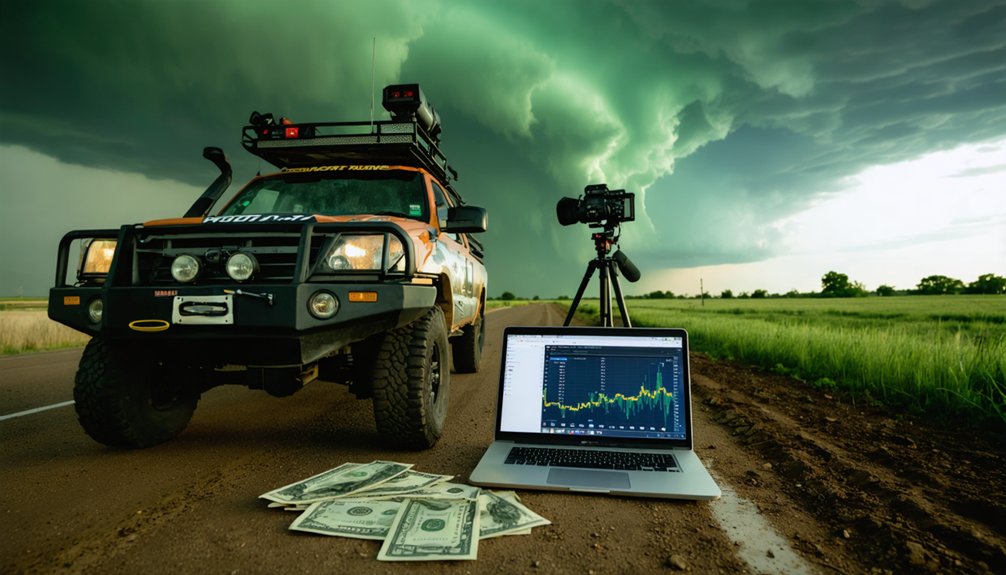
Monetizing a storm chasing YouTube channel means stacking multiple revenue streams instead of relying on ad revenue alone. You can license raw footage to news networks for $100–$300 per clip, run multi-platform live streams, sell branded merch, and earn passive income through affiliate marketing. Once you hit 1,000 subscribers, channel memberships add recurring income. Treat every chase day like a business opportunity, and the full strategy ahead will show you exactly how.
Key Takeaways
- Enable YouTube channel memberships at 1,000 subscribers, offering perks like early access and Q&As for recurring monthly income.
- License stabilized, high-quality storm footage to news networks and TV shows for payments ranging $100–$300 per clip.
- Multi-platform live streaming during severe weather events maximizes ad revenue and accelerates subscriber growth simultaneously.
- Incorporate affiliate marketing by recommending storm-chasing gear, generating passive income alongside your primary YouTube revenue.
- Sell branded merchandise through platforms like Shopify or Fourthwall to add a reliable supplemental revenue stream.
Why Most Storm Chasers Struggle to Earn Real Money
While storm chasing looks thrilling on screen, the financial reality is far harsher than most people expect. You’re facing only five legitimate revenue streams, and none guarantee consistent income. Weather pattern analysis and storm tracking software demand upfront investment before you earn a single dollar.
The YouTube Partner Program requires 1,000 subscribers and 4,000 watch hours before monetization even activates. New channels generate minimal ad revenue from edited footage, and video licensing pays between $100 and $300 per clip — often two months after the sale.
Liability insurance, vehicles, and quality equipment drain your budget fast.
Most chasers underestimate these barriers and quit early. Understanding exactly where the money comes from — and when — is the strategic foundation you need before hitting the road.
What Gear, Insurance, and Training You Need First
Before you chase a single storm, you’ll need to invest in three non-negotiable foundations: proper gear, liability insurance, and verified training.
Camera stabilization equipment ensures your footage stays sellable — shaky clips won’t attract licensing deals worth $100–$300 per sale.
Stabilized footage isn’t optional — it’s the difference between a $200 licensing deal and a worthless clip.
Weather sensors provide real-time data that builds credibility during live streams and drives viewer retention.
Without liability insurance, one incident ends your operation permanently.
A written business plan isn’t optional; it’s required to secure funding and outline your execution strategy.
Complete SKYWARN training and consult experienced chasers before working independently.
These foundations aren’t bureaucratic hurdles — they’re your competitive advantage.
Chasers who skip them produce unsellable content, face legal exposure, and lose audience trust fast.
Build the infrastructure first, then chase the revenue.
How to Hit YouTube’s Monetization Thresholds Faster
Once your gear’s ready and your insurance is locked in, the clock starts on your biggest platform challenge: hitting YouTube’s monetization thresholds. You need 1,000 subscribers and 4,000 watch hours within 12 months.
Storm chasing gives you a natural edge — live streams during active severe weather events accelerate both metrics simultaneously.
Maximize your growth with these strategic moves:
- Stream multi-platform across YouTube and Facebook to drive traffic back to your main channel
- Deliver real-time weather analysis and storm prediction commentary during chases to boost viewer retention
- Upload edited highlight clips immediately after events while interest peaks
Consistent output compounds faster than sporadic uploads. Every live stream, every weather analysis breakdown, every storm prediction call builds watch hours and subscriber trust simultaneously.
License Your Storm Footage to News Networks and TV Shows
Beyond ad revenue, licensing your storm footage to news networks and TV shows can earn you $100–$300 per clip, depending on length and newsworthiness.
To maximize your reach, partner with reputable brokering agencies that pitch your footage directly to production companies and major networks.
Before submitting any clips, confirm your footage meets media licensing standards—steady shots, minimal noise, and verified subject identification if interviews are included.
Finding Reputable Brokering Agencies
Finding a reputable brokering agency is one of the most strategic moves you can make to turn raw storm footage into real income. Agencies pitch your storm chasing clips directly to news networks, production companies, and TV shows, expanding your reach far beyond YouTube.
When evaluating agencies, prioritize these criteria:
- Track record: Confirm they’ve successfully placed weather forecasting and severe weather content with major media outlets.
- Contract transparency: Guarantee licensing terms clearly define revenue splits, usage rights, and payout timelines—typically two months post-sale.
- Content standards alignment: Verify they require steady, professional footage matching broadcast-quality expectations.
Partnering with the right agency transforms isolated clips into scalable income streams, giving you the financial independence to keep chasing without depending solely on ad revenue.
Pricing Your Storm Clips
Pricing your storm clips correctly can mean the difference between leaving money on the table and building a sustainable licensing income. Single clips of tornadoes, hail, or flooding typically sell between $100 and $300, depending on length and newsworthiness. Your weather pattern analysis skills and storm tracking technology directly influence clip value — footage capturing rare or destructive events commands premium rates.
Steady, noise-free video increases sellability significantly. Shaky or muffled clips lose value fast, so prioritize quality during capture. Newsworthiness drives negotiation leverage, meaning a historic tornado outbreak outprices a standard thunderstorm every time.
Research recent news cycles before pitching. If your footage aligns with breaking coverage, demand higher rates confidently. Understanding market timing transforms raw storm clips into consistent, independent income that supports your freedom on the road.
Meeting Media Licensing Standards
Meeting media licensing standards separates sellable footage from clips that news networks and TV shows reject outright. Your storm tracking technology and weather pattern analysis mean nothing if your raw footage is shaky, noisy, or legally incomplete. Networks pay between $100 and $300 per clip, but only when you deliver broadcast-ready material.
Hit these three non-negotiable standards before pitching:
- Stabilized footage: Keep your camera steady, eliminate panning, and minimize background noise
- Verified interviews: Use quality microphones and collect verified identification from any on-screen subject
- Clean licensing documentation: Confirm you own full rights before submitting to brokering agencies
Agencies handle distribution across networks and production companies, but you control quality. Meet the standard, and your footage becomes a legitimate, recurring revenue asset.
Stream Live Storms Across Multiple Platforms for More Revenue
When you stream live storms across YouTube, Facebook, and other platforms simultaneously, you maximize your audience reach and increase your potential ad share considerably.
Real-time ground truth and dependable storm insight drive viewer retention, which directly boosts your monetization metrics across every platform you’re active on.
The immediate community interaction that live streaming enables builds the loyal subscriber base you’ll need to sustain long-term revenue growth.
Multi-Platform Streaming Maximizes Revenue
Streaming live storm coverage across YouTube, Facebook, and other platforms simultaneously multiplies your audience reach and boosts your potential ad share without requiring additional content creation. Multi-platform streaming lets you own your distribution, delivering real-time weather prediction and ground truth to diverse audiences while your equipment maintenance keeps streams uninterrupted and professional.
Maximize your streaming revenue by focusing on these strategic advantages:
- Diversified income streams: Each platform generates independent ad revenue, reducing your dependence on any single source.
- Expanded audience reach: Simultaneous broadcasts capture viewers across demographics who prefer different platforms.
- Stronger monetization metrics: Higher concurrent viewership drives better ad rates and long-term subscriber growth.
You’re not locked into one platform’s algorithm. Spread your signal, grow your independence, and let every storm work harder for your bottom line.
Real-Time Engagement Builds Loyalty
Real-time engagement during live storm coverage converts casual viewers into loyal followers who return stream after stream. When you’re presenting live storm data and walking your audience through weather visualization tools, you’re giving them something no replay can replicate — raw, unfiltered truth as it unfolds.
Respond to comments directly during your stream. Call out usernames, answer questions about storm movement, and explain what the data means. That interaction creates a personal connection that transforms passive viewers into active community members.
Loyal followers don’t just watch — they subscribe, join memberships, and share your content across platforms. You’re not just chasing storms; you’re building an independent audience that funds your freedom.
Consistent real-time engagement is your most powerful monetization strategy, and it costs nothing but attention.
Sell Storm Chaser Channel Memberships for Recurring Income
Channel memberships transform your storm chasing content into a reliable, recurring income stream that isn’t dependent on ad revenue fluctuations. Once you hit 1,000 subscribers, you can activate memberships and offer exclusive perks that reward your most loyal followers.
Structure your tiers strategically to maximize conversions:
- Basic Tier: Early access to storm footage and weather app recommendations for tracking severe weather
- Mid Tier: Behind-the-scenes content covering safety protocols, gear setups, and chase preparation
- Premium Tier: Live Q&A sessions, personalized shoutouts, and direct community engagement
Members contribute monthly funds directly to your channel, giving you financial independence while you chase.
Consistent value delivery keeps members subscribed long-term, compounding your recurring revenue and accelerating your freedom from traditional income constraints.
Affiliate Marketing for Storm Chasers With Zero Subscribers
Affiliate marketing lets you start generating commissions before you earn a single subscriber, making it the most accessible monetization method available to new storm chasers. You simply recommend weather forecasting tools, cameras, or equipment maintenance supplies using unique affiliate links embedded in your video descriptions.
When viewers click those links and purchase products, you earn a commission automatically. Platforms like Amazon Associates or specialized weather gear retailers offer competitive commission rates, turning every video into a passive revenue stream from day one. You don’t need YouTube Partner Program approval or a massive audience to begin.
Focus on recommending gear you actually use in the field. Authentic product endorsements build trust faster, driving higher click-through rates and consistent commissions that compound as your channel eventually grows.
Sell Branded Merch Through Shopify, Spreadshirt, or Fourthwall
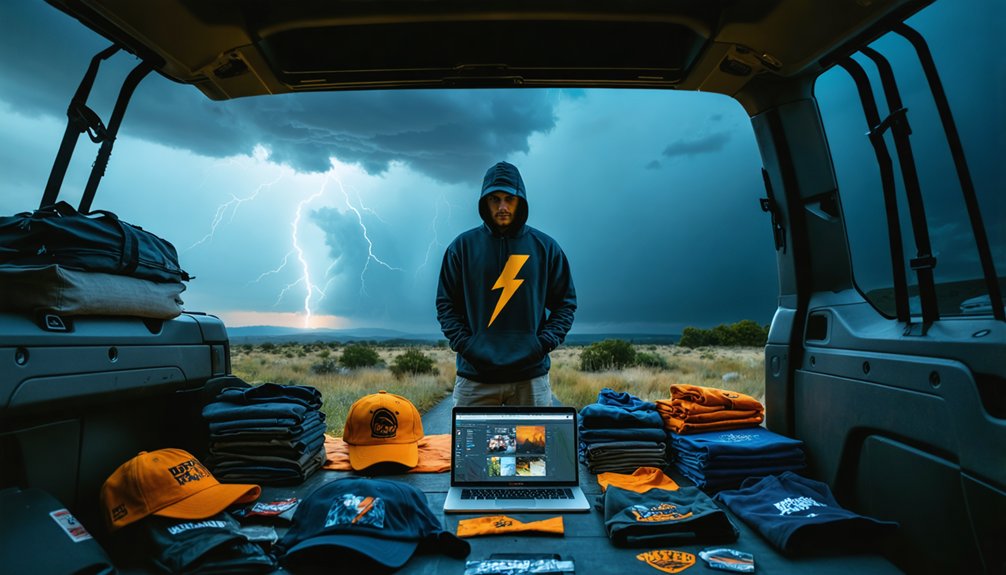
Once your channel hits 1,000 subscribers and 4,000 watch hours, you enable shop integration with platforms like Shopify, Spreadshirt, or Fourthwall, turning your brand into a direct revenue stream beyond ad income. You’re no longer dependent on algorithm-driven payouts—you control the product, pricing, and profit margin.
Leverage your storm-chasing identity to sell items your audience already wants:
- Branded apparel featuring weather data visuals like radar maps or storm signatures
- Safety gear bundles co-marketed through your shop and affiliate links simultaneously
- Digital products such as chase guides or weather-tracking templates for aspiring chasers
Each platform offers print-on-demand fulfillment, eliminating inventory risk. Your brand does the selling while you’re in the field chasing the next storm.
How to Stack Five Revenue Streams From a Single Chase Day
A single chase day holds five distinct monetization opportunities if you execute each layer strategically.
Live stream across YouTube and Facebook simultaneously to capture real-time ad revenue and viewer donations.
License raw tornado or hail footage to brokering agencies for $100–$300 per clip.
Sell affiliate-linked gear recommendations during your broadcast, requiring zero subscriber minimums.
Activate channel memberships so loyal followers contribute monthly funds while watching your coverage unfold.
Finally, integrate drone integration into your workflow to capture aerial perspectives that command premium licensing fees from production companies.
Wildfire prevention organizations also license dramatic weather footage for public awareness campaigns, expanding your buyer pool considerably.
Stack these five layers consistently, and a single chase day transforms into a diversified, freedom-building income engine.
Frequently Asked Questions
How Long Does It Take to Receive Payment for Licensed Storm Footage?
You’ll typically wait two months after the sale to receive payment for storm footage licensing. Understanding payment processing times helps you plan your cash flow strategically, so you’re never caught off guard while chasing your next big storm.
Can Storm Chasers Earn Money Without Showing Their Face on Camera?
Like a shadow commanding attention, you can absolutely earn money while protecting your privacy concerns — affiliate links, licensed footage, and voiceover commentary all drive audience engagement without ever revealing your face on camera.
What Tax Obligations Apply to Income Earned From Storm Chasing Content?
You’ll report all storm chasing income as self-employment, paying quarterly estimated taxes. Factor in insurance requirements as deductible business expenses, protect your footage through copyright considerations, and track every revenue stream strategically to maximize your financial freedom.
Do Brokering Agencies Take a Percentage of Licensed Storm Footage Sales?
Yes, brokering agencies take a cut of your stock footage licensing deals. Their agency commission rates typically reduce your payout, so factor that in strategically when pitching tornado, hail, or flooding clips to maximize your earned revenue.
Can Minors Legally Operate a Monetized Storm Chasing Youtube Channel?
Yes, you can monetize as a minor, but you’ll need parental consent for legal permissions and AdSense accounts. Prioritize storm safety, and let a guardian manage contracts while you build your channel strategically.
References
- https://www.youtube.com/watch?v=K1gkje3ic2Q
- https://www.youtube.com/watch?v=6QEkT5PEG8o
- https://www.youtube.com/watch?v=PHcQu8L5nMw
- https://vling.net/en/channel-calculator?ids=UCMkBzGwRMVNemHeLq4xSyJA
- https://www.youtube.com/watch?v=OyNhwKYxUws
- https://www.youtube.com/watch?v=0ANwzKcNm8Y
- https://www.homeowner.com/weather/how-to-become-a-storm-chaser-and-get-paid
- https://www.noodletomato.com/niches/travel-architecture/storm-chasing-and-tornadoes
- https://stormhighway.com/chasingfaq.php
- https://support.google.com/youtube/answer/94522?hl=en