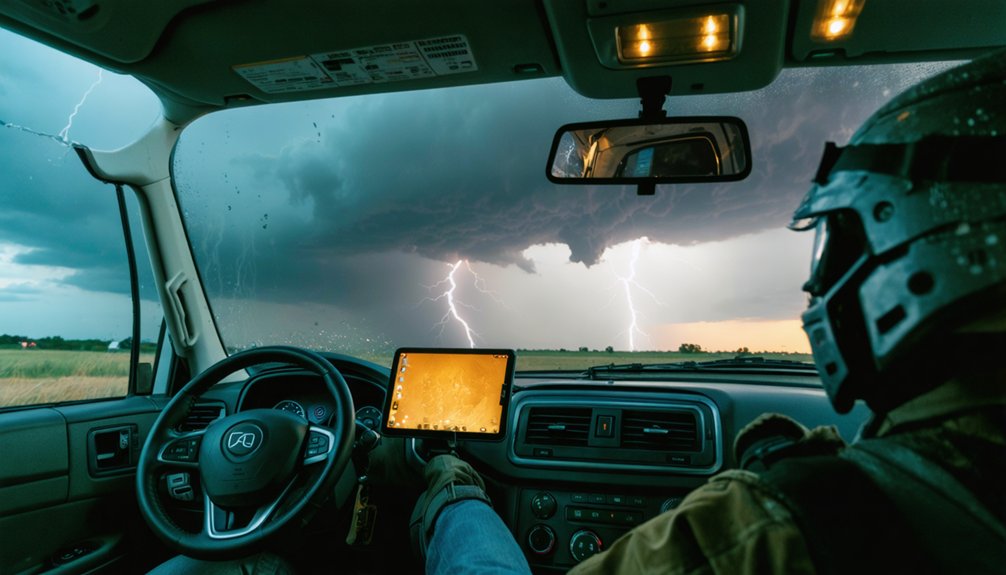
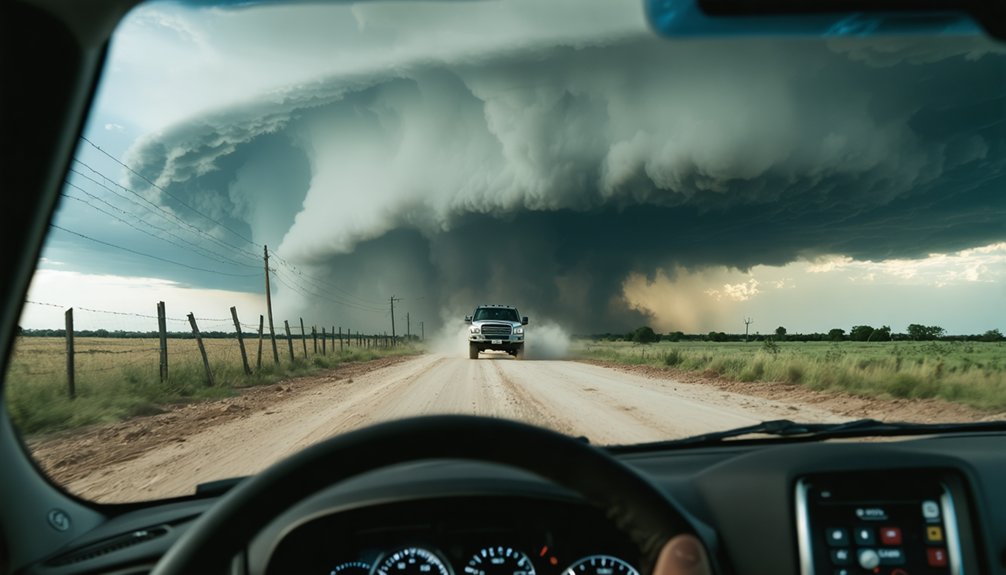
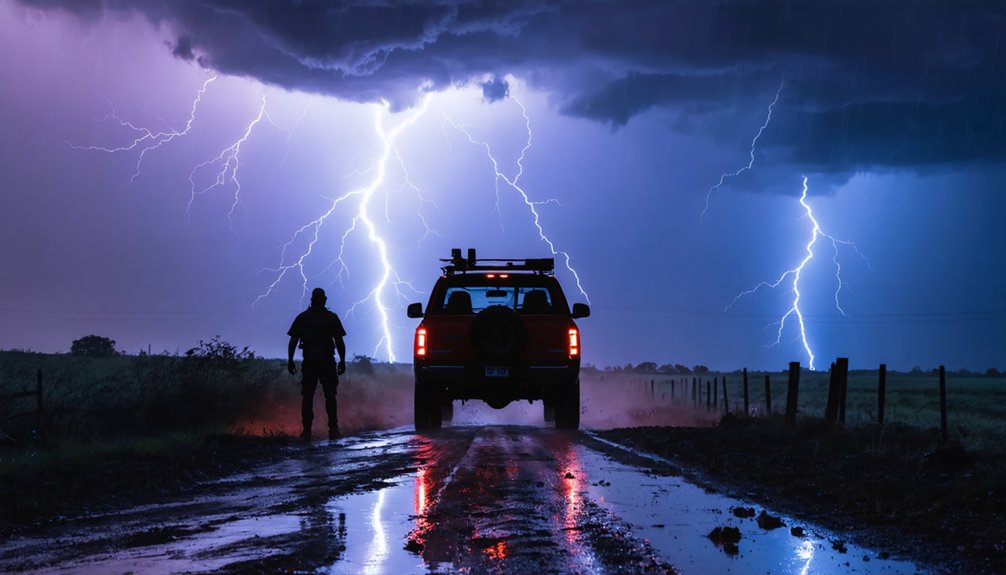
Urban storm chasing demands risk assessment that prioritizes road networks over storm proximity. You’ll face dense traffic, blocked sightlines, and limited escape routes that open-country chasers never encounter. Pre-plan at least two verified escape routes, assign a dedicated radar observer, and maintain signal redundancy through ham radios and GPS tracking. Traffic incidents kill more chasers than tornadoes do. The strategies that keep you operational in an urban environment go much deeper than most chasers expect.
Key Takeaways
- Pre-plan at least two escape routes, verifying they remain clear of projected tornado and mesocyclone paths before entering the chase area.
- Assign a dedicated team member to monitor radar and storm movement, preventing the driver from losing focus on road hazards.
- Identify road hazards including flooding, hail-reduced traction, storm debris, and high winds that can compromise vehicle control before tornadoes arrive.
- Urban road networks limit positioning and escape options, making dead ends and narrow streets especially dangerous during rapidly evolving storm conditions.
- Use redundant communication systems, pairing smartphones with ham radios, and share your route with a trusted contact before chasing begins.
Urban Storm Chasing Puts You in More Danger Than You Think
Urban storm chasing amplifies nearly every risk factor that makes storm chasing dangerous in the first place. Dense traffic forces compromised positioning, limits escape routes, and pressures you into poor decisions under time constraints.
Urban clutter—buildings, overpasses, signage, and power lines—blocks critical sightlines, cutting your situational awareness exactly when you need it most.
Storm fatigue compounds these hazards. Extended chases through congested environments degrade your reaction time and judgment, increasing crash probability well beyond tornado-related danger. Traffic incidents statistically threaten chasers more than the storms themselves.
You lose the operational freedom that rural chasing provides. Road networks constrain your movement, dead ends appear without warning, and repositioning becomes nearly impossible.
Urban environments don’t forgive miscalculations—they punish them immediately and severely.
Map Your Urban Storm Chasing Escape Routes Before You Leave
Before you enter a chase area, identify at least two viable escape routes and verify they don’t cross the projected path of the tornado or mesocyclone. Pre-planned routes aren’t optional in urban environments—they’re critical.
Before entering any chase area, two escape routes minimum—verified clear of the tornado’s projected path. Non-negotiable.
Urban road networks create bottlenecks, dead ends, and traffic congestion that can eliminate your exit options fast.
Conduct thorough hazard assessments before committing to any route. Check for flooded crossings, bridge weight limits, unpaved sections, and road closures.
Prioritize intersections that allow movement in multiple directions, giving you flexibility when storm motion shifts unexpectedly.
Avoid narrow streets that trap your vehicle if conditions deteriorate. Urban traffic pressure can push you into poor decisions, so lock in your routes before the storm forces a reaction.
Plan ahead or don’t chase.
Road Hazards Urban Storm Chasers Face Before the Tornado Does
Traffic crashes kill and injure storm chasers more often than tornadoes do, and urban environments amplify every hazard before you’re anywhere near the storm’s damage path. Heavy rain triggers hydroplaning on sealed surfaces, while road flooding cuts off routes you’ve already committed to.
Storm debris — downed signs, broken glass, displaced construction materials — appears with almost no warning across lanes you thought were clear.
Hail reduces traction and shatters visibility simultaneously. High winds push your vehicle laterally, particularly on elevated roads and open intersections.
Traffic complexity forces sudden braking decisions that rural chasers rarely face. You’re also contending with panicked drivers making unpredictable moves.
Slow down aggressively in reduced visibility, avoid flooded crossings regardless of apparent depth, and keep your eyes on the road — not your radar display.
Track Storm Movement Without Losing the Road
Keeping your vehicle out of hazards is only half the job — you also need to know where the storm is going before it decides your route for you. Tracking storm structure while driving urban streets demands split focus you can’t afford.
Assign a dedicated observer to monitor radar and movement while you drive.
Maintain visual awareness of the storm’s tornadic region at all times. Losing sight of it means it’s time to disengage.
- Never fixate on radar; road hazards don’t pause for your instruments
- Watch for deviant storm motion — urban storms can shift direction fast
- Keep a buffer zone so storm structure changes don’t eliminate your escape options
Your freedom to maneuver depends on staying ahead of the storm, not reacting to it.
Communication Tools Urban Storm Chasers Cannot Afford to Skip
Urban storm chasing strips away your margin for error fast, so your communication setup can’t have gaps. Cellular networks fail under storm load or infrastructure damage, making signal redundancy non-negotiable. Pair your smartphone with a ham radio or push-to-talk device so you’re never dependent on a single channel.
Before you move into your target area, share your route, position, and estimated return time with a trusted contact. Use real-time GPS tracking to keep that contact updated without requiring constant manual check-ins.
Emergency communication isn’t optional when traffic complexity and rapid storm motion collide in dense urban terrain. Monitor NOAA Weather Radio continuously alongside your radar app. Two independent systems working together give you the situational awareness you need to stay mobile and make clean decisions.
Frequently Asked Questions
Should Urban Storm Chasers Avoid Chasing Alone at Night?
Like flying blind through a canyon, you shouldn’t chase alone at night — nighttime visibility cripples your awareness. Take personal safety precautions: partner up, because urban traffic complexity and darkness compound every decision’s danger exponentially.
How Close Can You Safely Park Near Rotating Wall Clouds?
You shouldn’t park anywhere near rotating wall clouds. Wall cloud proximity poses extreme danger, so prioritize parking safety by maintaining maximum distance. Drive away immediately—you’re preserving your freedom to escape when conditions deteriorate rapidly and unpredictably.
Can Downbursts Affect Vehicle Control During Urban Storm Chasing?
Like a phantom ambush, downbursts can absolutely hijack your vehicle’s control. You’ll face sudden wind shear, abrupt visibility loss, and hail damage simultaneously—all while maneuvering urban traffic. Maintain speed discipline and secure your escape route immediately.
Should Chasers Avoid Stopping Near Power Lines During Storms?
Yes, you should avoid stopping near power lines. Power line hazards and storm debris risks become critical during storms—high winds can topple lines and hurl debris, stripping you of safe positioning and escape options instantly.
Does Lightning Pose a Serious Threat to Urban Storm Chasers?
Crackling bolts splitting the sky remind you that lightning safety is critical—yes, it’s a serious threat. In urban environments, storm proximity amplifies your exposure risk profoundly, so you must maintain constant vigilance and distance.
References
- https://www.reddit.com/r/stormchasing/comments/1cj0s0h/what_are_some_tips_and_tricks_for_storm_chasing/
- https://www.youtube.com/watch?v=nxPSFg2R8YY
- https://will.illinois.edu/weatherrealness/episode/storm-chasing-can-be-deadly-heres-how-to-stay-safe
- https://www.weather.gov/spotterguide/safetyfirst
- https://www.atms.unca.edu/cgodfrey/courses/swfex/pdf/ChasingSafety.pdf
- https://crazystormchasers.com/essential-tips-for-storm-chasing-risk-assessment/
- https://crazystormchasers.com/best-practices-for-storm-chasing-risk-assessment/
- https://www.youtube.com/watch?v=h28hru7UhY8
- http://www.stormeyes.org/tornado/chasing/FAQ/