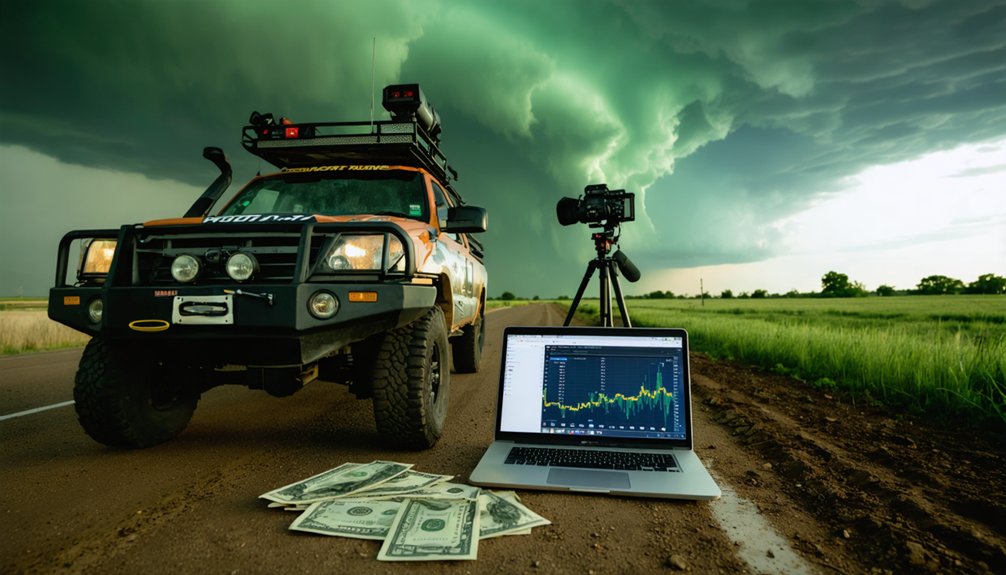
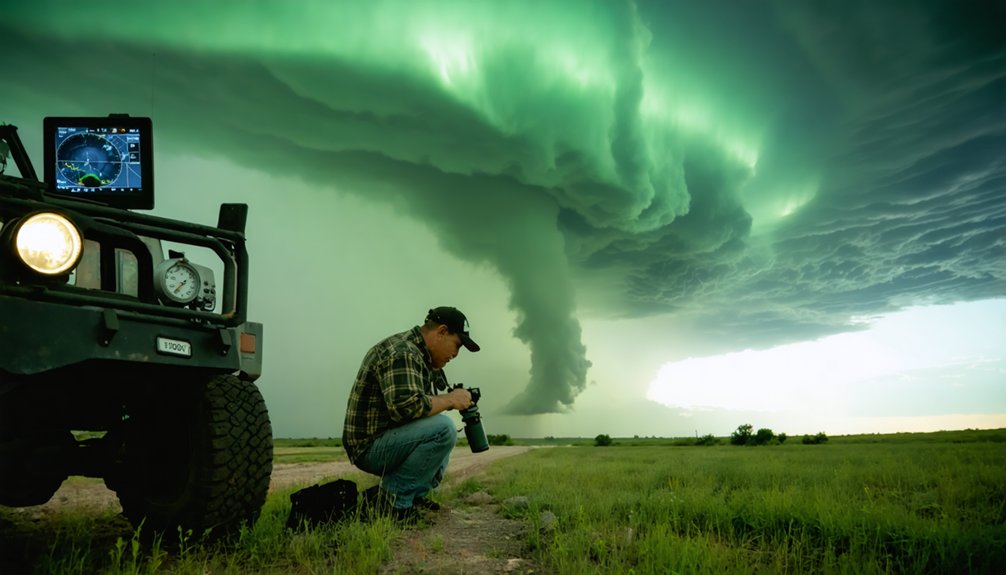
To break into storm chasing internships, you’ll need a bachelor’s degree in meteorology or atmospheric science, plus a Skywarn Storm Spotter Certification before you apply. Register on SpotterNetwork.org to establish your operational presence. You’ll also need hands-on radar interpretation skills and proficiency with DSLR cameras, GPS systems, and weather radios. Entry-level salaries start near $66,200 annually. Every requirement, certification, and strategy you need to launch your career is covered ahead.
Key Takeaways
- Earn a bachelor’s degree in meteorology or atmospheric science, with coursework in thermodynamics, synoptic meteorology, and numerical weather prediction.
- Obtain Skywarn Storm Spotter Certification and register on SpotterNetwork.org to establish your operational presence before applying.
- Develop hands-on skills in radar interpretation, DSLR cameras, GPS systems, and weather radios to meet employer expectations.
- Find opportunities through the National Weather Service, Storm Prediction Center, university field programs, and private storm chasing organizations.
- Carry essential gear including a two-way radio, first aid kit, helmet, reflective gear, and GPS with offline maps.
What a Storm Chasing Internship Actually Requires of You
Storm chasing internships aren’t casual field trips—they demand a verified academic foundation, starting with a bachelor’s degree in meteorology or atmospheric science.
Internship expectations go beyond classroom knowledge; you’ll need hands-on storm chasing skills, including radar interpretation using tools like GRLevel2 or RadarScope, real-time data analysis, and situational awareness in severe weather environments.
You’ll also need Skywarn Storm Spotter Certification before most programs consider your application.
Equipment proficiency matters—you’re expected to operate DSLR cameras, GPS navigation systems, and weather radios without supervision.
Advanced research roles may require a master’s degree. Meeting these standards isn’t optional; it’s the baseline.
If you’re serious about earning field access, you’ve got to arrive prepared, certified, and technically sharp from day one.
The Meteorology Degree That Gets You in the Door
Before you can chase a single supercell, you need the academic credentials that open program doors—and that starts with a bachelor’s degree in meteorology or atmospheric science. This foundation covers meteorology fundamentals including weather prediction, data analysis, and atmospheric dynamics—core competencies that internship coordinators actively screen for.
Degree pathways vary, but most competitive applicants hold coursework in thermodynamics, synoptic meteorology, and numerical weather prediction. If you’re targeting advanced research roles at institutions like the Storm Prediction Center, a master’s degree considerably strengthens your application.
A master’s degree doesn’t just strengthen your application to advanced research roles—it separates serious candidates from the rest.
Your degree signals technical credibility. Program directors at the National Weather Service and university departments aren’t accepting hobbyists—they want candidates who understand atmospheric science at a structural level.
Build that foundation first, and the internship doors follow.
Certifications You Need Before Your First Storm Chase
Certifications aren’t optional—they’re the baseline credibility check every serious internship program runs before considering your application. Your first priority is completing Skywarn storm spotter training, a free program coordinated through the National Weather Service that covers severe weather identification, reporting protocols, and field safety fundamentals.
Once certified, register on SpotterNetwork.org to activate your operational presence within the broader chaser network. Programs like MetEd offer supplemental storm spotter training modules that sharpen your technical edge without cost.
In Canada, Canwarn spotter certification mirrors Skywarn’s framework and satisfies regional certification requirements for northern internship placements.
These credentials don’t just satisfy application checklists—they demonstrate you understand real-time hazard communication, situational awareness, and the disciplined reporting structure that separates credible field contributors from unprepared observers chasing adrenaline.
Where To Find Storm Chasing Internship Programs
With your Skywarn certification active and your SpotterNetwork profile live, the next operational move is identifying where legitimate internship placements actually exist.
Target these five proven sources when beginning your internship application process:
The National Weather Service posts structured internship cycles annually.
The Storm Prediction Center in Norman, Oklahoma offers research-focused placements.
University meteorology departments run field programs tied directly to atmospheric science coursework.
Private storm chasing organizations recruit interns for documentation, data collection, and equipment operations.
Regional news stations hire weather interns supporting live broadcast meteorology.
Cross-reference each storm chasing organization’s posting schedule against your academic calendar.
Application windows close fast, and competition runs high.
Prioritize programs that place you in active field environments rather than purely administrative roles.
How To Land Your First Ride-Along as an Intern
To land your first ride-along, you’ll need to actively connect with experienced chasers through platforms like SpotterNetwork.org and regional Skywarn networks.
You can impress seasoned professionals by demonstrating proficiency with radar software like GRLevel2 or RadarScope and holding a valid Skywarn Storm Spotter Certification.
Chasers prioritize interns who bring technical competence and situational awareness into the field, so sharpen your data analysis and weather prediction skills before making contact.
Finding Ride-Along Opportunities
Landing your first ride-along as a storm chasing intern requires a strategic, multi-channel approach. You’ll need to actively leverage networking strategies across meteorology forums, social media groups, and university departments.
Contact experienced chasers directly through platforms like SpotterNetwork.org, where vetted professionals frequently coordinate field operations.
Attend Skywarn certification classes to connect with local spotter networks — these events routinely attract seasoned chasers seeking trained observers. Storm chasing tour companies also offer structured entry points, pairing beginners with experienced mentors during active chase operations.
Master ride-along etiquette before your first deployment. Communicate clearly, follow the lead chaser’s directives without hesitation, and prioritize situational awareness over documentation.
Demonstrating technical competency with radar software like RadarScope signals to mentors that you’re operationally prepared and worth investing their time in.
Impressing Experienced Chasers
Impressing experienced chasers hinges on demonstrating operational readiness before you ever set foot in their vehicle. Show up with sharpened data analysis skills—know how to interpret hodographs, CAPE values, and shear profiles independently.
Don’t wait for someone to explain the setup; analyze it yourself and present your read confidently.
Your storm prediction techniques need to hold up under scrutiny. Reference SPC outlooks, mesoscale discussions, and model soundings fluently.
Chasers respect interns who’ve already logged hours on RadarScope and can articulate why a particular storm mode favors supercell development.
Equally critical: communicate concisely in the field. Avoid guessing aloud. Verify data, then speak.
Experienced chasers aren’t looking for enthusiasm—they’re looking for competence, situational awareness, and someone who won’t create unnecessary risk during a dynamic chase.
Gear Every Storm Chasing Intern Needs in the Field
Once you’re in the field, your safety and situational awareness depend entirely on the gear you carry.
You’ll need a 4-wheel drive vehicle equipped with high-traction tires, a weather radio for real-time warning alerts, and a DSLR camera mounted on a stabilizing tripod.
For navigation and storm analysis, you’ll rely on updated GPS maps alongside radar software like GRLevel2 or RadarScope to track supercell dynamics in real time.
Essential Field Safety Gear
Field safety gear isn’t optional for storm chasing interns—it’s the difference between a productive chase and a life-threatening mistake.
You’ll need a NOAA weather radio for real-time warning alerts, keeping you updated when radar access is limited. A 4-wheel drive vehicle with high-traction tires gives you escape route flexibility across unpredictable terrain.
For field communication, carry a two-way radio or satellite communicator—cell towers fail in severe weather zones. Your personal safety depends on knowing your exit before conditions deteriorate.
Always pack a first aid kit, reflective gear for low-visibility situations, and a helmet rated for debris impact.
GPS navigation devices with updated offline maps guarantee you’re never disoriented mid-chase.
Preparation isn’t paranoia—it’s the technical discipline that keeps you operational in extreme conditions.
Critical Navigation And Software
Three core software tools define your navigation stack as a storm chasing intern: GRLevel2 or RadarScope for real-time radar analysis, and a GPS device loaded with updated offline maps.
These navigation tools and software applications give you situational awareness when cell service drops mid-chase.
Deploy these five essentials before every chase:
- RadarScope or GRLevel2 – pulls live dual-pol radar data with sub-minute refresh rates
- Offline GPS maps – navigate rural routes without signal dependency
- Weather Radio – receives real-time NWS warning alerts independently
- SpotterNetwork app – broadcasts your position to active spotter networks
- Backup power bank – keeps devices running during extended deployments
Master each tool before your first internship chase.
Your safety and accuracy depend on it.
What Senior Chasers Actually Want From Interns
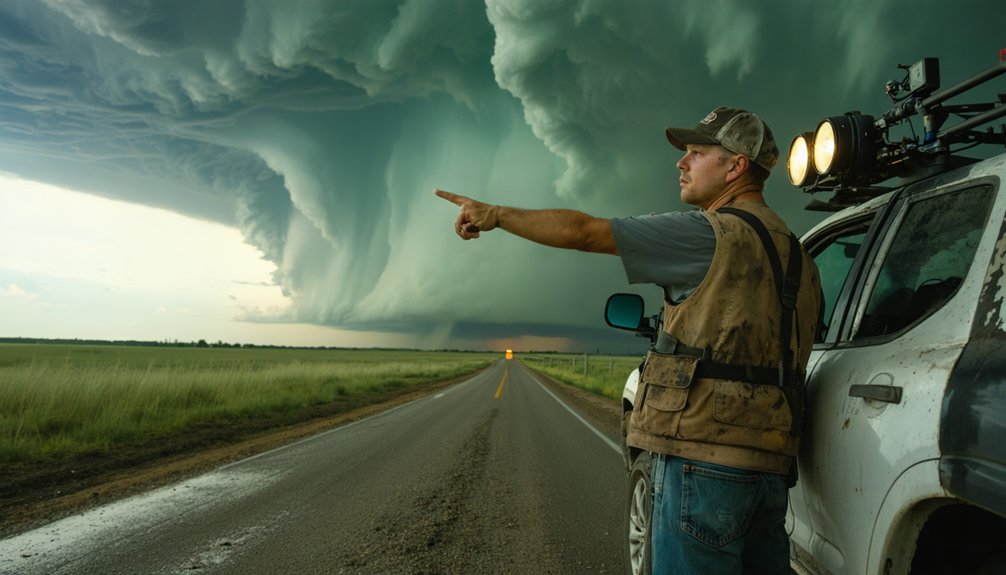
Senior chasers aren’t looking for raw enthusiasm—they want interns who’ve already built a functional foundation.
Senior chasers don’t want excitement—they want interns who show up already knowing what they’re doing.
Intern expectations are precise: you need operational radar literacy, storm-scale pattern recognition, and situational awareness before you arrive. Mentoring dynamics shift dramatically when you walk in prepared.
Senior chasers invest deeper guidance into interns who already interpret supercell hodographs, read SPC outlooks independently, and understand mesocyclone structure without hand-holding.
You should demonstrate comfort with GRLevel2 or RadarScope, execute clean data pulls under pressure, and communicate threats concisely.
Experienced chasers value calm decision-making over excitement. They’re watching how you process rapidly evolving conditions, not how loudly you react to them.
Show discipline, situational competence, and a willingness to subordinate your instincts to field-tested judgment—that’s what earns real mentorship access.
Storm Chasing Salaries at the Entry Level and Beyond
Compensation in storm chasing follows a clear trajectory tied to experience, specialization, and employer type. Understanding industry salary trends helps you position yourself strategically from day one.
Key figures shaping your earning potential:
- Entry level salaries start near $66,200 annually, or roughly $32/hour.
- Advanced salary potential reaches $90,210/year for experienced professionals.
- Hourly averages climb to $43 for established chasers.
- Geographical salary differences favor regions with active severe weather markets and federal research hubs.
- Employer type — private firms, NWS, and media outlets — each offer distinct pay scales.
You’re entering a sector where atmospheric science job growth remains consistent. Your specialization, certifications, and field hours directly accelerate your movement through these salary tiers.
Track the data, build your credentials, and negotiate accordingly.
Frequently Asked Questions
Can International Students Apply for Storm Chasing Internships in the United States?
Despite visa hurdles, you can pursue U.S. storm chasing internships as an international student. Confirm your international eligibility, secure proper visa requirements like J-1 or F-1 status, and apply directly to National Weather Service or university programs.
Are Storm Chasing Internships Available During Seasons Other Than Spring?
Yes, you’ll find summer opportunities at the National Weather Service and Storm Prediction Center beyond spring’s peak season. These alternative internships let you analyze atmospheric data year-round, expanding your field experience across diverse meteorological conditions.
Do Storm Chasing Internships Require Prior Volunteer Experience With Spotter Networks?
Like a blank canvas awaiting your first brushstroke, you don’t always need prior spotter network experience requirements to apply—but earning Skywarn certification strengthens your candidacy and sharpens your field readiness considerably.
Can Storm Chasing Internship Credits Count Toward a Meteorology Degree Requirement?
Yes, your storm chasing internship benefits can count toward meteorology degree requirements. You’ll want to confirm credit transfer with your university’s atmospheric science department, ensuring field experience aligns with approved Weather Prediction and Data Analysis curriculum components.
Is Physical Fitness Ever Evaluated Before Accepting Storm Chasing Internship Applicants?
Surprisingly, no formal fitness assessment appears in standard internship requirements. You’ll find most programs prioritize your meteorological knowledge, radar software proficiency, and field safety awareness over physical evaluations, giving you freedom to pursue storm chasing regardless of athletic ability.
References
- https://www.careervillage.org/questions/1138348/how-to-be-a-storm-chaser
- https://www.uwo.ca/cssl/internships/faq.html
- https://www.youtube.com/watch?v=OP4NgrM2Xb4
- https://www.foxweather.com/learn/storm-chasing-advice-from-the-pros.amp
- https://www.reddit.com/r/stormchasing/comments/1k4rbn9/getting_into_the_stormchasing_career/
- https://www.youtube.com/watch?v=m2eGsq13iz8
- https://www.stormchasingusa.com/blog/learning-the-basics-about-storm-chasing/
- https://himalayas.app/career-guides/storm-chaser
- https://www.onlinedegree.com/careers/life-physical-science/storm-chaser/
- https://www.gabegarfield.com/blog/zerotohero