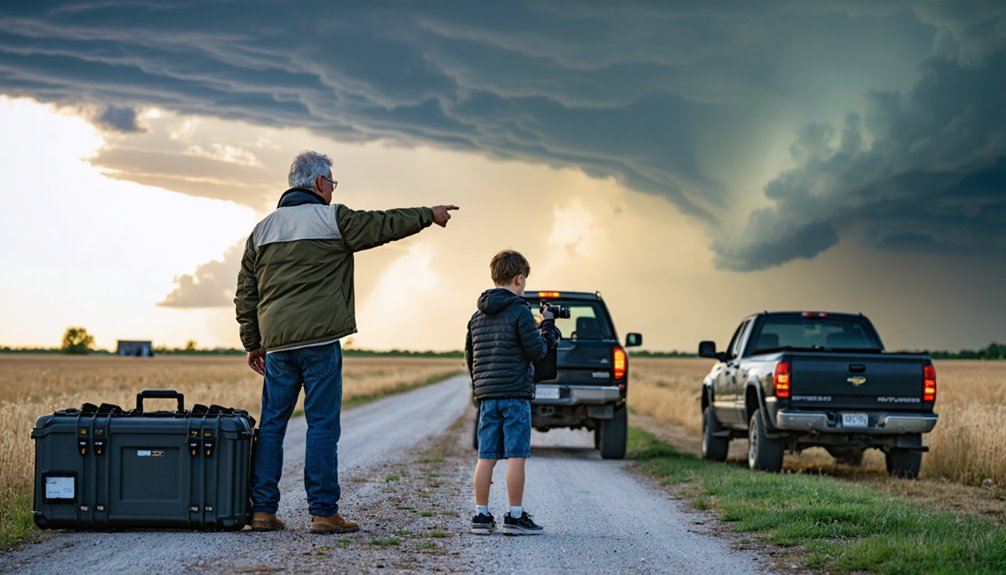
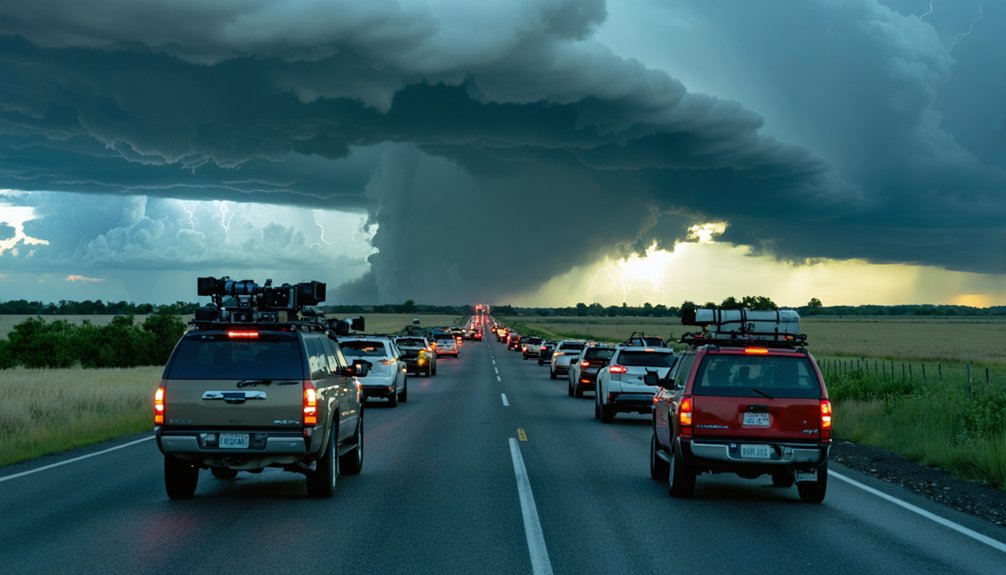
Storm chasing isn’t federally banned, but you’re still bound by traffic laws, FAA drone regulations, property rights, and emergency orders the moment you begin a chase. You must obey roadblocks, stay off private land without permission, and follow evacuation directives—no credentials exempt you from these rules. Some states, like Oklahoma, have proposed formal licensing systems. The regulations go deeper than most chasers expect, and knowing them fully could define your entire operation.
Key Takeaways
- No federal law explicitly bans storm chasing; it is governed by general conduct, road use, and airspace statutes.
- Drone operators must hold FAA Part 107 certification, register equipment, and comply with airspace restrictions, including Temporary Flight Restrictions.
- Some states, like Oklahoma, have proposed licensing systems requiring background checks and fees up to $500 for professional chasers.
- Trespassing on private property is illegal regardless of storm chasing intent; always secure explicit landowner permission.
- Emergency orders, evacuation directives, and law enforcement roadblocks are hard legal boundaries that must be immediately obeyed.
Is Storm Chasing Actually Legal?
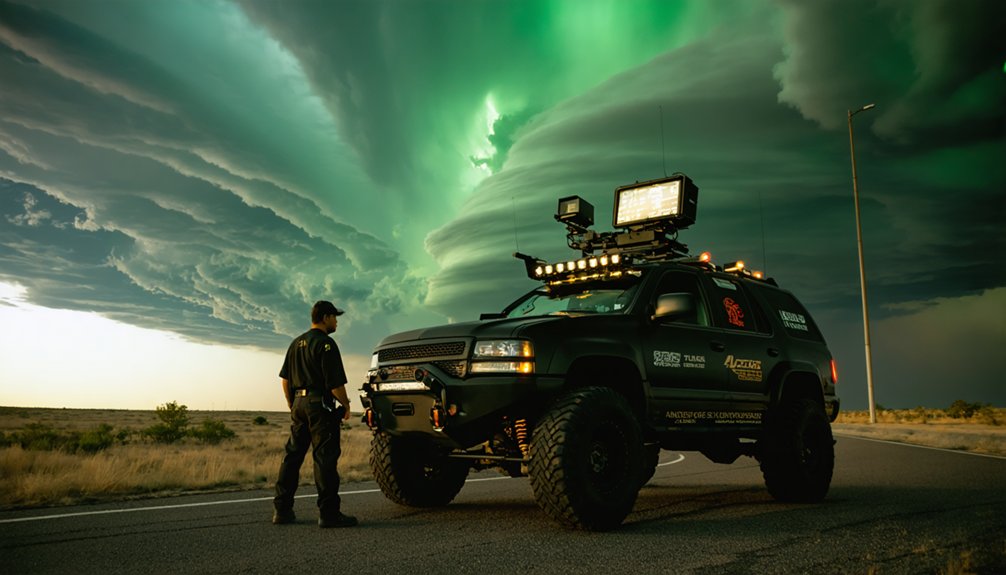
Storm chasing isn’t federally illegal in the United States, but that doesn’t mean you’re operating in a legal vacuum. You’re still bound by state traffic laws, private property rights, and emergency directives.
Trespassing on private land is illegal regardless of your intent, and reckless driving remains chargeable even during an active chase.
Storm chase permits don’t exist at the federal level, but some states are developing frameworks that could require credentials for professional chasers.
Insurance requirements aren’t universally mandated either, yet operating without coverage exposes you to serious financial liability if you damage property or cause an accident.
If you’re flying a drone, FAA regulations add a separate compliance layer.
Stay on public roads, obey all traffic laws, and respect emergency roadblocks — your freedom depends on it.
Federal Laws That Apply to Storm Chasers
At the federal level, no law specifically prohibits storm chasing, so you’re operating under general statutes that govern public conduct, road use, and airspace.
If you deploy a drone during a chase, you’re subject to FAA regulations, which add a distinct federal compliance layer beyond ordinary traffic rules.
You must treat FAA drone rules as non-negotiable, since violations carry federal penalties that no state exemption can override.
Federal Storm Chasing Status
Although no federal law explicitly prohibits storm chasing, you’re still bound by a set of federal rules that apply the moment you step into the field.
Freedom to chase doesn’t mean freedom from federal oversight.
- FAA Drone Regulations — Flying a drone during a chase requires FAA compliance, regardless of your purpose or location.
- Historical Storm Data Access — Using federal meteorological predictions and historical storm data from NOAA is legal, but commercial redistribution may carry restrictions.
- Emergency Authority Orders — Federal emergency declarations can restrict access to affected zones, overriding your personal chase objectives.
You’re free to pursue storms on public roads, photograph from public property, and analyze meteorological predictions — but the moment you operate a drone or enter a restricted zone, federal rules take over.
FAA Drone Compliance Rules
When you fly a drone during a storm chase, FAA regulations apply immediately and without exception. Drone regulations require you to hold a valid Part 107 remote pilot certificate before operating any unmanned aircraft commercially or for data collection.
FAA licensing isn’t optional—flying without it exposes you to federal penalties that no state law can override. You must register your drone, follow airspace restrictions, and maintain visual line-of-sight during operations.
Storm conditions don’t suspend these rules. If temporary flight restrictions exist near active emergency response zones, you’re legally prohibited from entering that airspace.
Respecting FAA drone regulations isn’t just about avoiding fines; it’s about preserving your freedom to chase. One violation can ground your entire operation permanently.
FAA Rules for Drones During Storm Chasing
If you fly a drone during a storm chase, you’re operating under FAA jurisdiction, which adds a federal compliance layer on top of state and local traffic rules. You must follow Part 107 regulations, including registration, remote pilot certification, and airspace authorization requirements.
Strong winds, precipitation, and rapidly shifting conditions near a storm make drone operation especially hazardous, so you should assess whether flight is safe and legally permissible before launching.
FAA Compliance Requirements
Drone use during storm chasing adds a distinct federal compliance layer that ground-based chasing doesn’t trigger. The FAA governs your aerial photography, not state traffic codes. Non-compliance risks fines, grounded equipment, and criminal charges.
Before launching, confirm these three requirements:
- Register your drone with the FAA if it weighs over 0.55 pounds — no exceptions apply during storm operations.
- Hold a Part 107 Remote Pilot Certificate if you’re conducting any commercial aerial photography or media work.
- Respect active TFRs (Temporary Flight Restrictions), which emergency managers can issue over disaster zones, directly restricting your operational airspace.
Public safety justifies these federal controls. Your freedom to chase doesn’t override airspace law. Know the rules before you fly, not after enforcement contacts you.
Drone Operation Safety Limits
Flying a drone near an active storm means operating under strict FAA limits that don’t bend for weather conditions or chase urgency. You must keep your drone within visual line of sight at all times, stay below 400 feet, and avoid controlled airspace without prior authorization.
Aerial safety isn’t optional — it’s federally enforced.
Storm conditions dramatically increase drone malfunction risk. High winds, moisture, and rapid pressure changes can overwhelm your equipment mid-flight, creating hazards for ground crews and bystanders.
A downed drone near an active chase corridor is a liability you can’t afford.
You’re also prohibited from flying over people or moving vehicles without a waiver. Emergency airspace restrictions can activate quickly during severe weather events, grounding all unauthorized drone operations immediately.
Know the rules before you launch.
State-Level Rules and the Oklahoma Licensing Debate
Although storm chasing carries no federal licensing requirement, state-level frameworks can add compliance layers you’ll need to understand before you chase. Oklahoma has led the most discussed storm chasing regulations debate, proposing a formal Oklahoma licensing structure targeting professional chasers tied to media or academic institutions.
Storm chasing lacks federal licensing, but state frameworks like Oklahoma’s proposed structure can complicate professional operations significantly.
Here’s what that proposed framework includes:
- Background checks and professional recommendations as entry requirements
- An initial fee of $500, plus recurring annual fees
- Formal credentials distinguishing professional chasers from recreational operators
These proposals haven’t become universal law, so you must distinguish between current statutes, pending legislation, and informal summaries circulating online. Treating unverified sources as binding rules can create false confidence.
Always verify your state’s current legal requirements directly before operating, especially if you’re chasing professionally or crossing multiple state lines.
Do You Need a License for Storm Chasing?
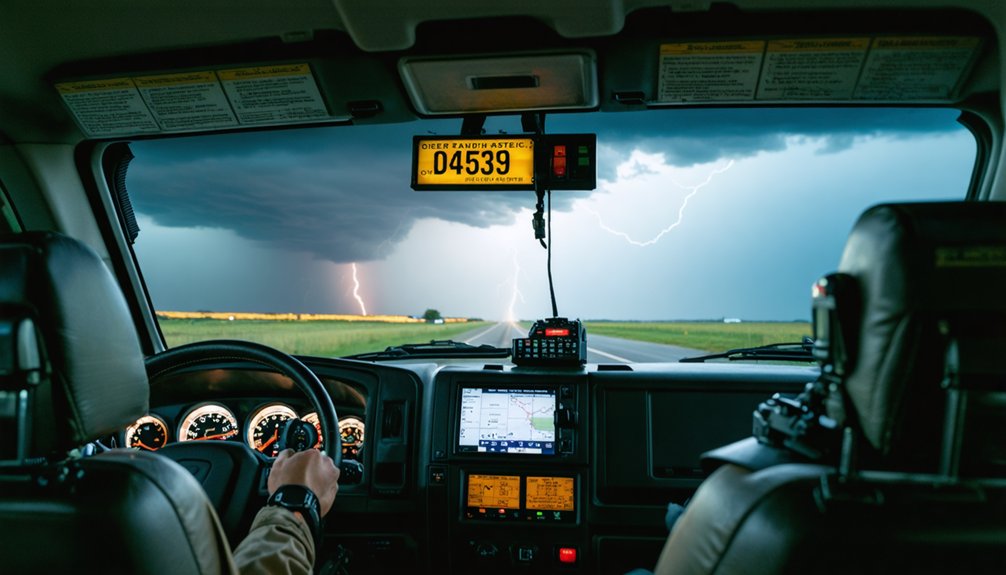
When it comes to storm chasing, no federal license or certification is required to operate on public roads. You’re free to pursue weather forecasting and storm tracking activities as a private citizen without obtaining special credentials.
That freedom, however, doesn’t exempt you from standard traffic laws, property rights, or FAA drone regulations.
Oklahoma has proposed a formal licensing framework targeting professional chasers working with media or academic institutions. That proposal includes background checks, professional recommendations, and a $500 initial fee, along with annual renewal requirements.
It hasn’t become universal law, so you’ll need to distinguish between current statutes and proposed legislation before assuming compliance requirements apply to you.
Know your jurisdiction, stay on public roads, and verify any state-specific rules before you chase.
Traffic Laws Storm Chasers Actually Get Charged With
Storm chasing doesn’t suspend traffic law, and chasers face the same charges as any other driver who breaks it. Weather prediction doesn’t grant legal immunity, and storm safety never justifies endangering others on public roads.
Three violations repeatedly result in actual charges:
- Reckless driving — exceeding safe speeds or ignoring conditions like flooding, hail, or blowing dust
- Road obstruction — stopping or parking in ways that block traffic flow during active weather events
- Failure to comply with emergency orders — ignoring law enforcement roadblocks or evacuation instructions
You keep your freedom to chase by staying legally clean. The moment you treat traffic laws as optional, you risk losing your license, your vehicle, and your access to public roads entirely.
Flooding, Hail, and Dust: Road Hazards That End Chases
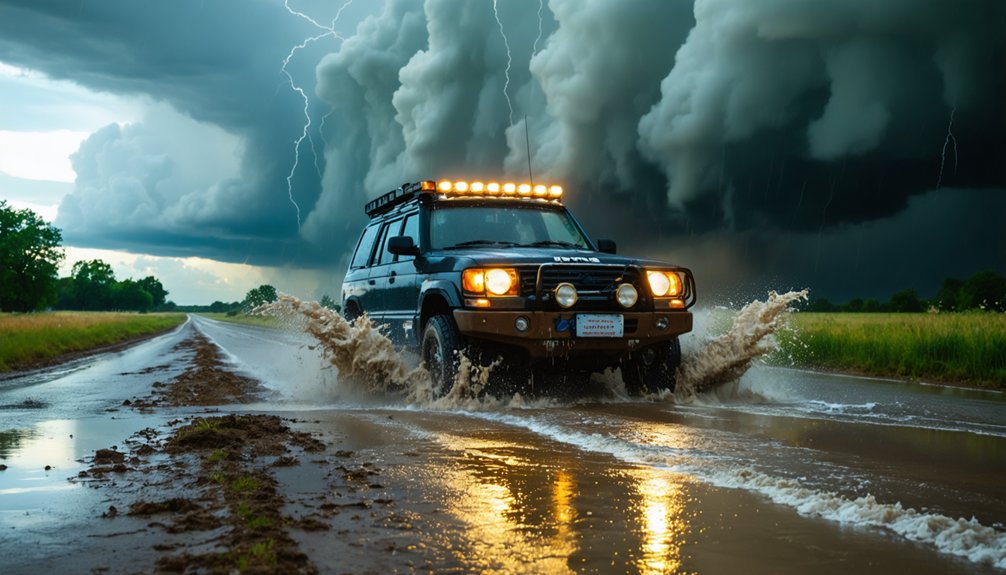
Legal violations aren’t the only thing that ends a chase early — road conditions can make a route impassable within minutes. Flooding, hail accumulation, and blowing dust each eliminate escape routes fast.
Road conditions can shut down a chase just as fast as breaking the law — sometimes faster.
You should never drive into rising water; storm surge conditions can overwhelm low-lying roads before you recognize the depth. Hail strips visibility and damages vehicles, while wind shear can push debris across your path unpredictably.
Muddy back roads become traps after heavy rain. Dust storms reduce visibility to near zero, making roadside stops dangerous without proper lighting.
You’re responsible for continuous real-time hazard assessment throughout the chase. When conditions deteriorate, retreating isn’t optional — it’s operationally required.
Maintaining your freedom to chase long-term depends on making disciplined decisions when a route becomes unsafe.
Property Rights and Where Storm Chasers Can Legally Operate
When you chase storms, you’re legally free to observe and photograph from any public road, but you have no right to cross onto private land without the owner’s permission.
Trespassing exposes you to criminal liability regardless of your intent, and any crop, fence, or property damage you cause compounds that legal exposure.
You must also recognize law enforcement roadblocks as a hard boundary—when officers close a route due to severe weather, your observation objectives don’t override their authority.
Public Roads Versus Private Land
One of the clearest legal boundaries in storm chasing separates public roads from private land. You can photograph and observe freely from any public road in all 50 states. Cross onto private land without permission, and you’re trespassing — regardless of your intentions.
Stay sharp on these three rules:
- Public roads are yours to use — drive legally, keep headlights on in low visibility, and don’t obstruct traffic.
- Private land requires explicit permission — no exceptions for urgent weather conditions or better vantage points.
- Minimize environmental impact — avoid crop damage, fence damage, and wildlife disturbance when operating near field edges or rural properties.
Respecting these boundaries keeps you legally protected and preserves access for every chaser who follows.
Respecting Law Enforcement Boundaries
Even when storm activity is at its peak, law enforcement roadblocks and evacuation orders take absolute priority over your observation goals. Ignoring these boundaries isn’t a gray area — it’s a chargeable offense that can cost you access, credibility, and your right to chase.
Respecting law enforcement boundaries also extends to land access. No chase permit, media credential, or professional affiliation overrides a closed road or an officer’s direct instruction. If an area is locked down, you stay out.
Your freedom to chase depends on your compliance record. Chasers who push past roadblocks invite stricter regulations for everyone.
Treat every law enforcement boundary as a hard stop, not a negotiating point, and you protect both your operation and the broader chasing community.
When Emergency Orders Mean Your Chase Has to Stop
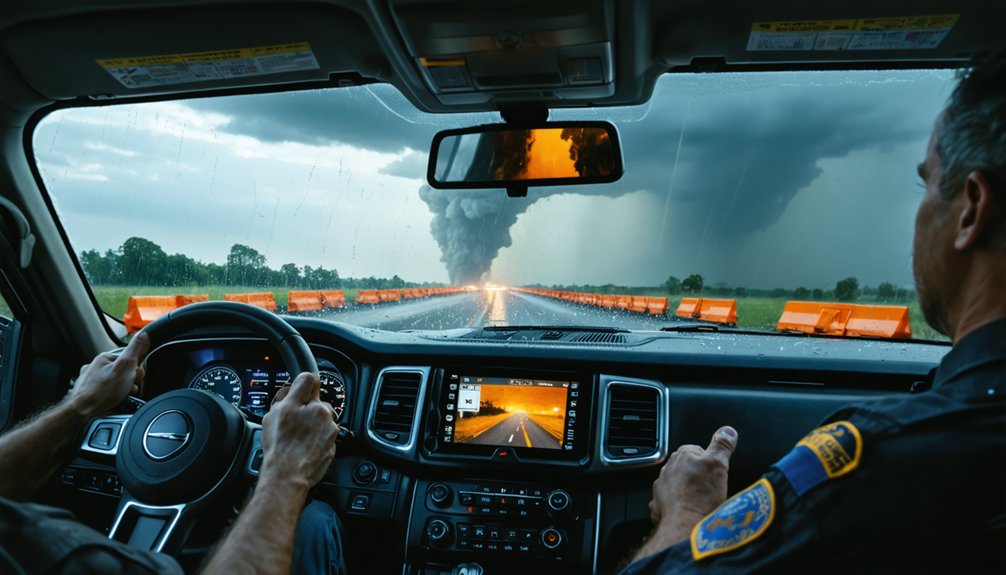
Emergency orders and law enforcement roadblocks legally override your chase objectives, and you must comply immediately. No storm tracking opportunity justifies ignoring an official evacuation or road closure. Your weather forecasting tools don’t grant you legal authority to bypass emergency directives.
Emergency orders override your chase. Comply immediately — no storm justifies bypassing official directives.
When an emergency order affects your chase, act on these three rules:
- Stop your approach — Turn around the moment officers signal a closure or issue an evacuation order for your area.
- Secure your equipment — Stow cameras, drones, and devices so you can exit quickly without obstruction.
- Follow the designated exit route — Use the path authorities specify; improvising alternate escapes can create additional hazards.
Compliance isn’t optional. Respecting these boundaries protects you, other drivers, and emergency responders working the same roads.
How to Storm Chase Responsibly and Stay Within the Law
Responsible storm chasing means operating within a clear legal framework while managing real-time hazards. You’ll need to stay on public roads, obey all traffic laws, and respect private property boundaries. Trespassing isn’t just discouraged — it’s illegal. Carry storm chase insurance to protect yourself, your equipment, and others if an incident occurs during a pursuit.
Use storm data analysis to plan your route, identify escape options, and assess storm motion before you deploy. Don’t rely solely on radar; visual conditions can deteriorate faster than data updates.
Avoid overpasses, rising water, and rotating wall clouds. Yield to law enforcement roadblocks without exception.
Drone operators must also comply with FAA regulations. Document conditions, drive with headlights on in low visibility, and never obstruct traffic. Your legal standing depends on every decision you make in the field.
Frequently Asked Questions
Can Storm Chasing Competition Results Be Used as Professional Credentials?
You can’t rely on competition results as formal credentials. No licensing framework recognizes them officially. Instead, prioritize storm chase ethics and weather data sharing—they’ll strengthen your professional standing far more than contest placements ever will.
Are There Age Restrictions for Participating in Storm Chasing Competitions?
Ready to chase? Age restrictions vary by competition, so you’ll need to check each event’s participant eligibility rules. Many require you to be 18+, though some allow minors with parental consent.
Do Storm Chasing Competitions Carry Their Own Liability Insurance Requirements?
Most competitions require you to carry your own insurance coverage and sign liability waivers before participating. You’ll want to verify each event’s specific requirements, as organizers don’t universally standardize these independent financial protections.
Can Competing Chasers Legally Share Private Radar Data During Events?
You can engage in radar sharing during events, but you must respect data privacy agreements tied to proprietary feeds. Always review licensing terms before sharing—violations could expose you to legal liability beyond standard chase regulations.
Are Organized Storm Chasing Competitions Required to Notify Local Authorities?
Like steering uncharted skies, you’ll find no federal mandate requiring notification, but you should secure local permits and follow safety protocols, as local authorities can enforce traffic and emergency rules affecting your competition.
References
- https://www.reddit.com/r/stormchasing/comments/k89wnc/safety_tips_for_storm_chasing/
- https://www.livingskytours.com/storm-chasing-101/
- https://en.wikipedia.org/wiki/Storm_chasing
- https://www.atms.unca.edu/cgodfrey/courses/swfex/pdf/ChasingSafety.pdf
- http://www.stormeyes.org/tornado/chasing/FAQ/
- https://www.tornadosimulator.net/state-storm-chase-laws/
- https://crazystormchasers.com/what-are-the-legal-storm-chasing-regulations/
- https://crazystormchasers.com/international-storm-chasing-laws-and-regulations-compared/