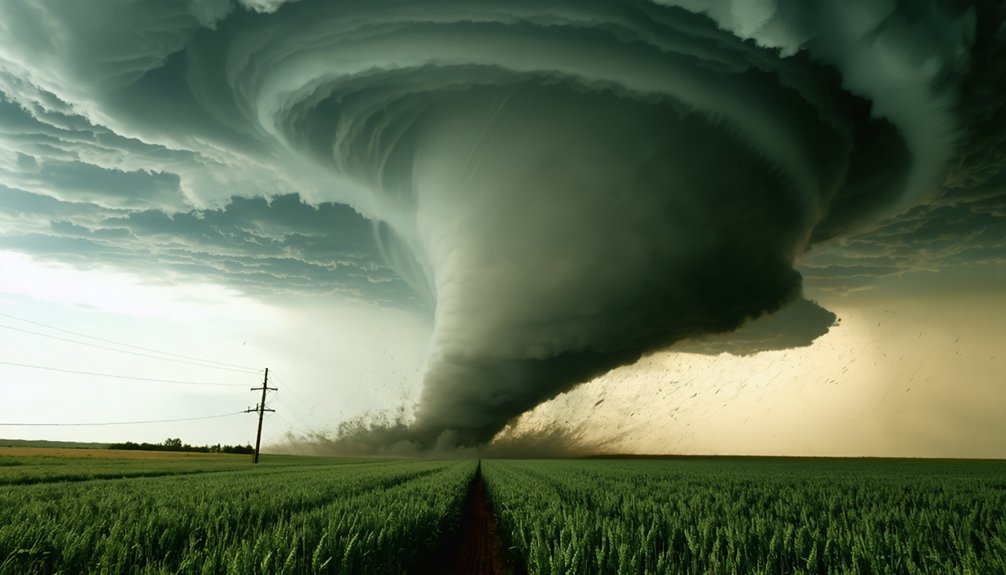
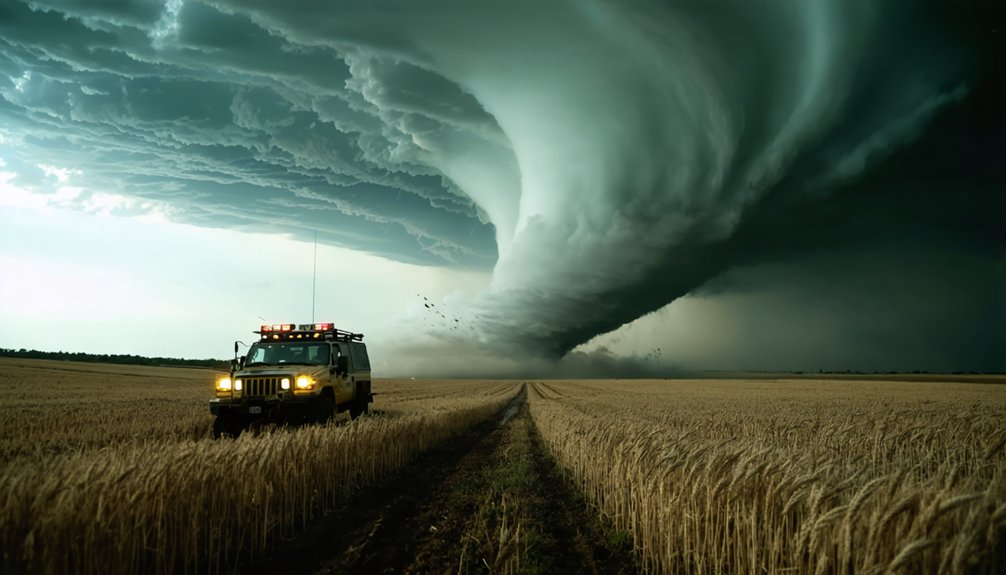
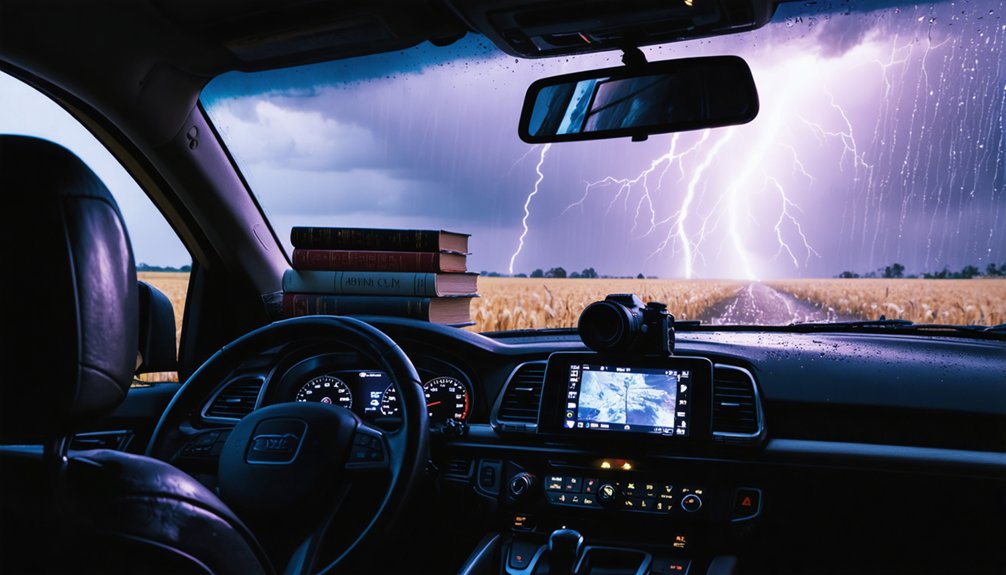
Storm chasers say their experiences go far beyond chasing adrenaline. You’ll find they’re driven by structured scientific goals, relying on teamwork, precision equipment, and calculated decision-making. They describe road traffic — not tornadoes — as their primary safety risk, and they’re often emotionally affected by destruction they witness in the field. Close calls force them to recalibrate risk thresholds entirely. Each deployment reshapes how they think, operate, and make decisions — and there’s much more to unpack about what they actually encounter.
Key Takeaways
- Storm chasers describe their motivation as scientific passion and structured research goals, not merely adrenaline-fueled recklessness.
- Road safety from distracted drivers poses the greatest risk, not direct tornado contact as commonly misconceived.
- Proximity to live storms generates intense adrenaline, demanding simultaneous emotional restraint and sharp analytical thinking.
- Close calls fundamentally reshape risk thresholds, shifting decision-making from analytical to instinctual and prompting stricter operational protocols.
- Field experiences build deep community bonds and personal growth, offering scientific insights unattainable in controlled environments.
What Actually Motivates Storm Chasers to Chase Tornadoes?
Passion, not recklessness, drives most storm chasers into the field. You’ll find that motivation factors vary, but scientific pursuit consistently ranks highest among experienced chasers. They’re documenting atmospheric data, refining risk assessment protocols, and advancing public safety research simultaneously.
Your emotional connection to weather phenomena develops quickly once you’re in the field. Chasing passion isn’t impulsive — it’s methodical, built on teamwork dynamics, equipment reliance, and precise decision-making under pressure.
You’re operating as part of a coordinated system, not a lone daredevil. Public perception often mischaracterizes chasers as thrill-seekers, but that’s inaccurate. The freedom you experience comes from disciplined preparation, not chaos.
Understanding storm behavior, trusting your team, and respecting nature’s power defines what actually pulls chasers back into the field repeatedly.
The Safety Risks Storm Chasers Actually Face on the Road
While scientific pursuit and disciplined preparation define why chasers enter the field, understanding what actually threatens them once they’re there reframes the entire risk profile.
Road Safety, not storm exposure, dominates the real fatality statistics. Since 1950, only three deaths resulted from direct storm contact. Driving Dangers, specifically deer, distracted, and drunk drivers, cause most Close Call Experiences and confirmed fatalities.
You’ll find that Public Misconceptions about chasers dying inside tornadoes are consistently wrong. Risk Assessment before approaching any system is mandatory, and Equipment Standards guarantee personnel operate within defined safety margins.
The danger level compares reasonably to your daily commute.
Safety Protocols exist precisely because chasers understand the road, not the storm, is where you’re most vulnerable. That’s where discipline matters most.
How Storm Chasers Describe the Adrenaline of Being Close
Beyond road hazards and protocol, the adrenaline rush of proximity to a live storm system defines why chasers keep returning. When you’re positioned within visual range of nature’s chaos, your risk awareness sharpens immediately.
Every sensory input intensifies — pressure shifts, wind direction changes, and the electromagnetic charge in the air demand your full analytical attention.
Chasers describe the emotional highs as inseparable from their chasing passion. You’re not simply a thrill seeker chasing spectacle; you’re a field operator documenting extreme weather with scientific precision. Nature’s power commands both respect and fascination simultaneously.
Storm beauty creates a paradox you’ll recognize quickly — you’re drawn closer while your training pulls you back.
That tension between field excitement and calculated restraint is exactly what defines serious storm chasing culture.
What Storm Chasers Feel When They See Tornado Destruction
Witnessing tornado destruction shifts your mental state from field operator to involuntary witness almost instantly.
You’ve trained for data collection, but the tornado aftermath confronts you with something your protocols don’t fully address. Structures reduced to foundations, personal belongings scattered across fields, and the silence following catastrophic wind exposure create an emotional impact that accumulates across multiple deployments.
You’re not simply documenting meteorological outcomes. You’re processing what unconstrained atmospheric force does to human environments.
Most chasers report compartmentalization as their primary coping mechanism during active documentation, with emotional processing occurring later, often unexpectedly.
Recognizing this psychological pattern matters. It doesn’t compromise your operational effectiveness; it confirms you’re accurately perceiving what you’re documenting.
Understanding the weight of that documentation is part of responsible field participation.
How Storm Chasers Cope With Emotional Trauma Over Time
Emotional trauma from repeated storm exposure doesn’t resolve on its own—you have to actively manage it through structured coping mechanisms that experienced chasers develop over time.
Your emotional resilience builds through deliberate trauma recovery strategies: debriefing sessions after intense operations, journaling observations, and maintaining psychological support networks. Mental health professionals familiar with high-risk occupations provide targeted stress management frameworks you can apply systematically between deployments.
Community bonding accelerates your recovery timeline considerably. Shared experiences among fellow chasers create accountability structures where psychological distress gets identified early rather than compounding silently.
You’ll find that discussing near-misses and aftermath documentation openly reduces their cognitive weight. Veteran chasers consistently report that integrating mental health practices directly into operational routines—not treating them as separate concerns—produces the most measurable long-term psychological stability.
The Close Calls Storm Chasers Say Changed Everything
When you’ve spent enough time in the field, a close call doesn’t just rattle you—it systematically dismantles your existing risk framework and forces a recalculation of every operational decision you make.
These near-miss events, whether a debris field crossing your escape route or a tornado’s sudden track shift, redefine your threshold for acceptable exposure.
You’ll find that chasers who’ve survived these moments don’t just adjust their protocols—they rebuild them entirely.
Surviving The Unexpected
Few moments define a storm chaser’s career more sharply than a close call. When unexpected encounters force you to abandon calculated storm strategies, your decision-making shifts from analytical to instinctual. You’re no longer running predetermined protocols — you’re surviving.
Near misses reshape how you assess risk. They expose gaps in your positioning, timing, and exit routes that no pre-chase briefing fully anticipates. Chasers who’ve faced sudden wind surges or rapidly shifting tornado paths consistently report recalibrating their entire operational approach afterward.
These experiences don’t break most chasers — they sharpen them. You learn that adaptability isn’t optional; it’s survival. Each close call becomes data, informing every subsequent deployment.
The field demands that you stay disciplined, stay mobile, and never assume a storm system behaves predictably.
Moments That Redefined Risk
Some close calls don’t just rattle you — they permanently restructure how you operate. When near misses strip away your confidence, you’re forced to rebuild your risk assessment framework from the ground up.
Veteran chasers describe moments where the adrenaline rush masked critical judgment errors, turning routine operational logistics into survival decisions. Those incidents exposed gaps in safety protocols they’d previously considered bulletproof.
You’ll also confront unexpected moral dilemmas — pushing closer for scientific documentation while knowing the margin for error has collapsed. That tension demands emotional resilience that no pre-season training fully prepares you for.
What separates experienced chasers from reckless ones isn’t fearlessness — it’s the disciplined recalibration after each near miss. Every close call becomes a data point that sharpens your decision-making and protects your freedom to keep operating.
When Nature Strikes Back
There’s a specific category of incident that storm chasers reference differently than standard close calls — the ones that fundamentally altered their operational methodology.
These aren’t routine near-misses. They’re encounters where nature’s unpredictability completely overrode calculated positioning strategies.
When storm dynamics shift unexpectedly, your exit routes compress within seconds. Chasers describe rapid mesocyclone reorganization forcing immediate repositioning decisions with zero margin for error. One miscalculation eliminates your options permanently.
These incidents share a common outcome: chasers completely restructured their approach protocols afterward. They abandoned assumptions about predictable storm behavior, implemented stricter distance thresholds, and developed redundant escape route planning.
What separates survivors isn’t luck — it’s disciplined adaptation. The chasers who continue operating successfully treat every near-miss as critical operational data, systematically incorporating those lessons into every subsequent deployment.
Why Storm Chasers Keep Coming Back Despite the Risks
Despite the inherent risks, storm chasers return to the field repeatedly because the combination of adrenaline, scientific purpose, and raw observational experience creates a feedback loop that’s difficult to abandon.
You’ll find that chase motivations extend beyond simple adrenaline rushes—they’re rooted in risk perceptions shaped by real data, where danger levels often compare to a daily commute.
Emotional rewards reinforce nature’s allure, pulling you back after each deployment. Community bonds strengthen your commitment, connecting you with others who share identical drives.
Personal growth emerges through documented close calls and refined safety protocols that sharpen your decision-making. Each successful chase validates your methodology, building disciplined confidence rather than recklessness.
Ultimately, you’re drawn back because the field delivers unmatched scientific value alongside experiences that no controlled environment can replicate.
What Storm Chasers Say the Public Gets Completely Wrong
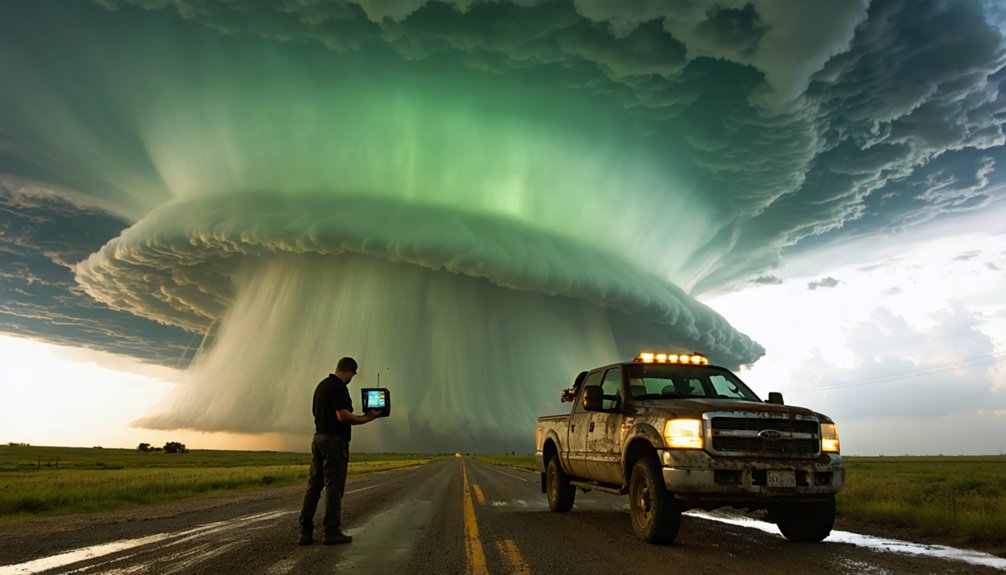
What draws you back to the field also shapes how you interpret public perception—and that gap between insider knowledge and outside assumption runs deep.
You’ll encounter public misconceptions constantly—most assume you’re chasing purely for the adrenaline rush or courting death recklessly. That’s analytically incorrect. Scientific documentation drives most operational decisions, while personal motivations typically involve structured research goals.
Near misses exist, yes, but fatalities from direct storm exposure remain statistically rare since 1950. Driving back from the site poses your greatest actual risk.
Emotional struggles surface regularly, particularly after witnessing aftermath destruction, but outsiders rarely factor that psychological dimension into their assumptions.
You’re not a thrill-seeker ignoring danger—you’re a field operator executing calculated risk assessments. The public’s framework simply doesn’t match operational reality.
Frequently Asked Questions
What Equipment Do Storm Chasers Typically Use During Field Operations?
You’ll rely on camera gear to document storms, tracking devices to monitor systems, communication tools to coordinate with teams, and you must follow safety protocols to manage risks effectively during intense field operations.
How Do Storm Chasers Coordinate Logistics and Navigation During a Chase?
You’re planning routes, you’re managing chase communication, and you’re adapting in real time. Effective route planning demands constant GPS monitoring, radio coordination, and rapid decision-making to intercept storm systems while maintaining safe, flexible positioning throughout dynamic field operations.
What Scientific Data Do Storm Chasers Collect and Who Receives It?
You’ll collect atmospheric pressure, wind speed, and temperature data, sharing it through research collaborations with NOAA, universities, and meteorological agencies. Your data sharing advances forecasting models, directly contributing to life-saving storm prediction systems.
How Do Storm Chasers Fund Their Expeditions and Field Operations?
Like a well-oiled machine, you’ll fund expeditions through crowdfunding platforms and sponsorship deals. You actively secure grants, sell footage, and leverage partnerships, ensuring your field operations stay financially viable while maintaining operational independence.
What Weather Patterns Do Storm Chasers Look for Before Deploying?
You’ll analyze tornado formation signals like wind shear, atmospheric instability, and moisture convergence. Assess storm structure for rotating supercells, identifying mesocyclones and hook echoes before you deploy, ensuring you’re targeting high-probability environments efficiently.
References
- http://www.youtube.com/watch?v=u4C00BiOWUc
- https://www.youtube.com/watch?v=tVYryPel0J8
- https://www.aip.org/inside-science/storm-chaser-firsthand-account
- https://www.nationalgeographic.com/environment/article/chasing-tornadoes
- https://www.accuweather.com/en/severe-weather/storm-chasers-from-the-field-weather-is-something-that-no-one-owns/1147617
- https://www.wanderlustmagazine.com/inspiration/tornado-chasing-in-the-usa/
- https://www.forbes.com/sites/jimclash/2025/04/22/storm-chasers-encounter-damaging-tornadoes-find-themselves-in-one/
- https://www.youtube.com/watch?v=SEB2JGTJ4tE
- https://www.reddit.com/r/stormchasing/comments/1cndsqh/storm_chasing_tours/
- https://www.youtube.com/watch?v=kXXzTXiknc4